Which Moon Rains Methane?
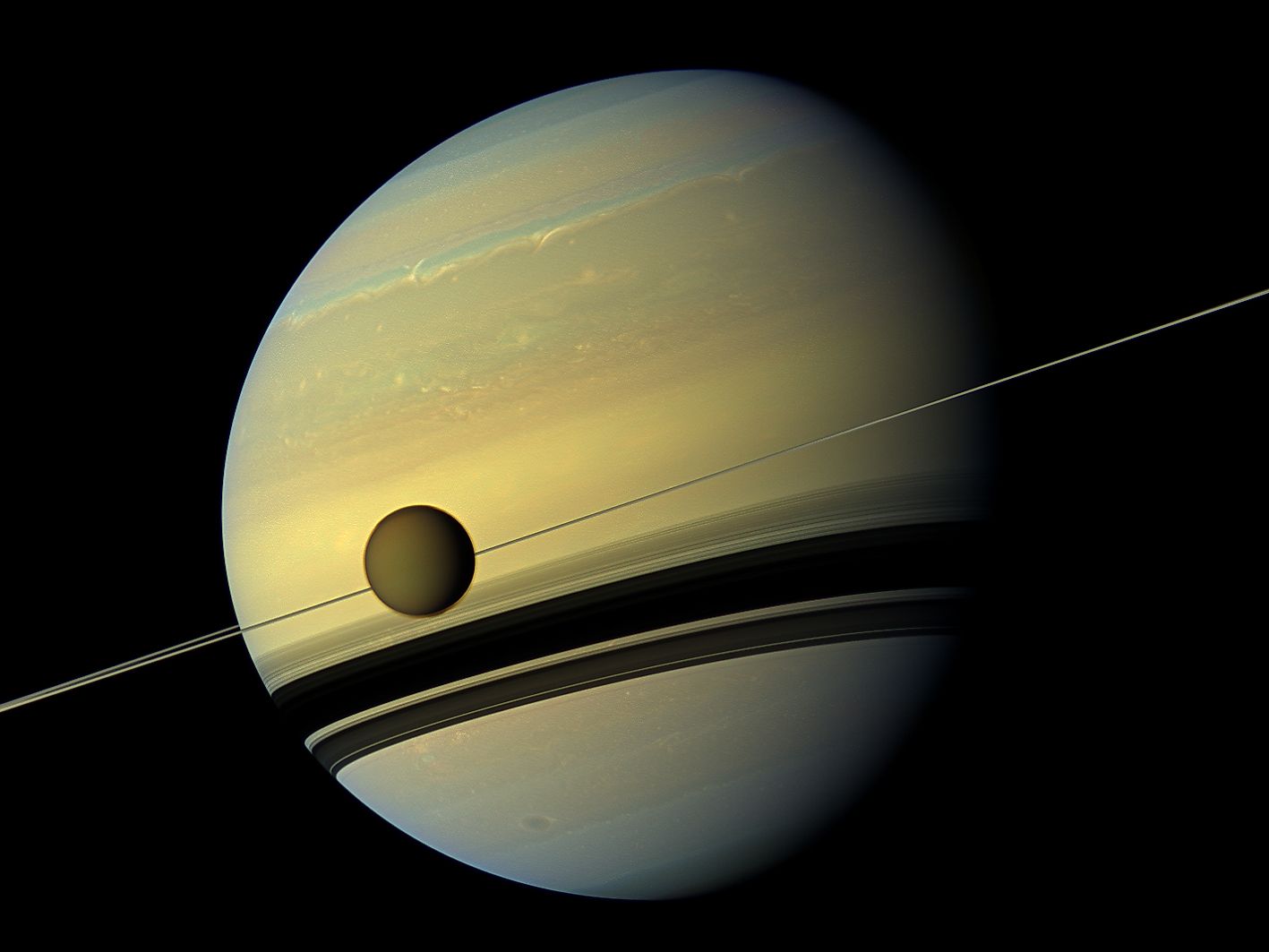
Titan, Saturn's largest moon, has a thick atmosphere, clouds that produce rain, rivers that flow through branching channels, and seas near its north pole. It is the only known moon with stable liquid on its surface, and its weather operates in ways similar to Earth's. Up close, though, Titan is a very different world. It sits nearly a billion miles from Earth, the temperature is -290°F, and the sky is orange. Perhaps even stranger, the liquid that falls as rain and fills its rivers, lakes, and seas is methane, which would ordinarily be a gas on Earth.
Why Does It Rain Methane On Titan?

It sounds like a contradiction, but methane boils at a chilling -259°F at Earth's standard atmospheric pressure. On Earth, that means it remains a gas at ordinary temperatures. Titan, however, is even colder, averaging around -290°F, allowing methane to exist as a liquid. At temperatures that would freeze anything familiar to us, methane can fill lakes and seas and circulate through a weather cycle that closely resembles Earth's. The cycle begins with the sun warming liquid methane on the surface, causing some of it to evaporate into the atmosphere. As the vapor rises and cools, it can condense into clouds and eventually fall as rain. The liquid then collects in lakes, flows across the landscape, or seeps into the ground. This is the same pattern water follows on Earth, except on Titan it is methane.
Titan's thick atmosphere helps support this cycle. Its atmosphere consists primarily of nitrogen, with smaller amounts of methane and other gases. Chemical reactions high in the atmosphere produce organic particles that create Titan's characteristic orange haze. The atmospheric pressure at the surface of Titan is also higher than Earth's, about 50% greater than Earth at sea level, making Titan's atmosphere surprisingly dense for a moon. Rain falls regularly on Earth, but Titan's methane storms appear to be seasonal and unevenly distributed. Near the moon's equator, years can pass without rain, and some models suggest droughts lasting centuries between major downpours. Scientists have found evidence that rainfall has carved channels and shaped parts of Titan's landscape over time.
What Is Methane Rain Like On Titan?

A rainstorm on Titan would look very different from one on Earth. Beneath the moon's hazy orange sky, methane raindrops could grow to more than 9 millimeters in diameter, larger than typical raindrops on Earth. Titan has only about one-seventh of Earth's gravity, and its dense atmosphere creates additional resistance as the drops descend, causing them to fall more slowly. Scientists have modeled these unusual conditions to predict how methane rain might behave, although no spacecraft has directly observed methane raindrops falling. What about the smell? Despite methane's association with foul-smelling natural gas and even intestinal gas, it is itself odorless. The unpleasant odors come from other compounds, particularly those containing sulfur. Titan's raindrops presumably have no smell of their own.
The rain might fall slowly, but the storms can be powerful. Titan can experience intense downpours that soak large areas of ground and send liquid methane rushing through channels. During NASA's Cassini mission, scientists observed changes on the moon's surface consistent with rainfall, including darkened areas that later dried out after storms. These observations suggest that Titan's weather can transform its landscape the way heavy rain does on Earth.
Titan's Rivers, Lakes, And Seas

Liquid methane does not simply get absorbed into Titan's frozen ground. It can flow through branching river channels and collect in lakes and seas, creating landscapes that resemble barren areas on Earth. Some channels wind through valleys, while others feed enormous bodies of liquid near the moon's poles. The difference is that Titan's rivers and lakes contain liquid methane and ethane rather than water, and their shorelines consist primarily of frozen water ice and other materials. Most of Titan's crust is made of frozen water. The ice is so hard that it serves as bedrock underneath the landscape. Rather than merely covering the ground as snow and ice do on Earth, the frozen water forms much of the ground itself. Titan has mountains and valleys carved into ice, with rivers of liquid methane flowing between them.
The largest known methane sea, Kraken Mare, stretches more than 600 miles across Titan's northern polar region. It covers an area roughly the size of the Caspian Sea, Earth's largest inland body of water. Scientists estimate that Kraken Mare's central basin may exceed 1,000 feet in depth, although Cassini could not directly measure the bottom there. Another, Ligeia Mare, covers approximately 49,000 square miles, an area larger than Lake Superior. Most of Titan's large lakes and seas cluster around the north pole, although scientists have identified smaller bodies of liquid near the south pole. Together, Titan's lakes and seas hold approximately 14 times as much liquid as Lake Michigan, with Kraken Mare accounting for about 80% of that. Beyond its lakes and rivers, Titan has mountains, broad plains, and vast fields of dunes made from dark, sandlike grains of organic compounds produced by chemical reactions in the atmosphere. These dunes cover portions of Titan's icy surface, stretching for hundreds of miles and forming deserts made of organic material rather than the mineral sand found on Earth.
How Scientists Discovered Titan's Methane Weather

For decades, Titan's thick, orange atmosphere prevented scientists from seeing its surface clearly. When NASA's robotic Cassini spacecraft arrived at Saturn in 2004, it began using radar to peer through the haze, revealing lakes, seas, river channels, vast dune fields, and mountains hidden under the clouds. In January 2005, the Huygens probe descended through Titan's atmosphere and became the first spacecraft to land on a moon in the outer solar system. During its descent, Huygens photographed branching channels resembling Earth's river networks. It landed on a surface scattered with rounded chunks of water ice that looked a lot like river stones. The images gave evidence that flowing liquid had shaped Titan's surface.
Cassini continued studying Titan until 2017, documenting clouds, seasonal weather changes, and surface features consistent with methane rainfall. It also detected mysterious bright patches that appeared and disappeared in the northern seas. Scientists nicknamed them "magic islands," although they were not necessarily islands at all. A 2024 study suggested that they could be floating chunks of porous, frozen organic material, somewhat like pumice floating on water. Scientists have not yet confirmed the cause of this strange phenomenon. Cassini's mission ended on September 15, 2017, when NASA deliberately sent the spacecraft plunging into Saturn's atmosphere. The maneuver prevented the aging spacecraft from potentially contaminating Titan or another moon that might have conditions suitable for life.
What Scientists Still Do Not Know About Titan's Rain

One of Titan's biggest mysteries is where all its methane comes from. Sunlight gradually breaks apart methane molecules in the upper atmosphere, meaning the moon should eventually run out of the gas unless something replenishes it. Scientists have proposed that methane may escape from reservoirs beneath Titan's frozen crust, but they have not confirmed a source.
The timing of Titan's rainstorms raises more questions. Cassini observed clouds and changes in the landscape, but its 13 years at Saturn covered less than half of a Titan year, which lasts about 29.5 Earth years. Scientists still do not know how often major storms occur, how much methane falls during them, or how rainfall varies across the moon's long seasons.
The Future of Methane Rain Research

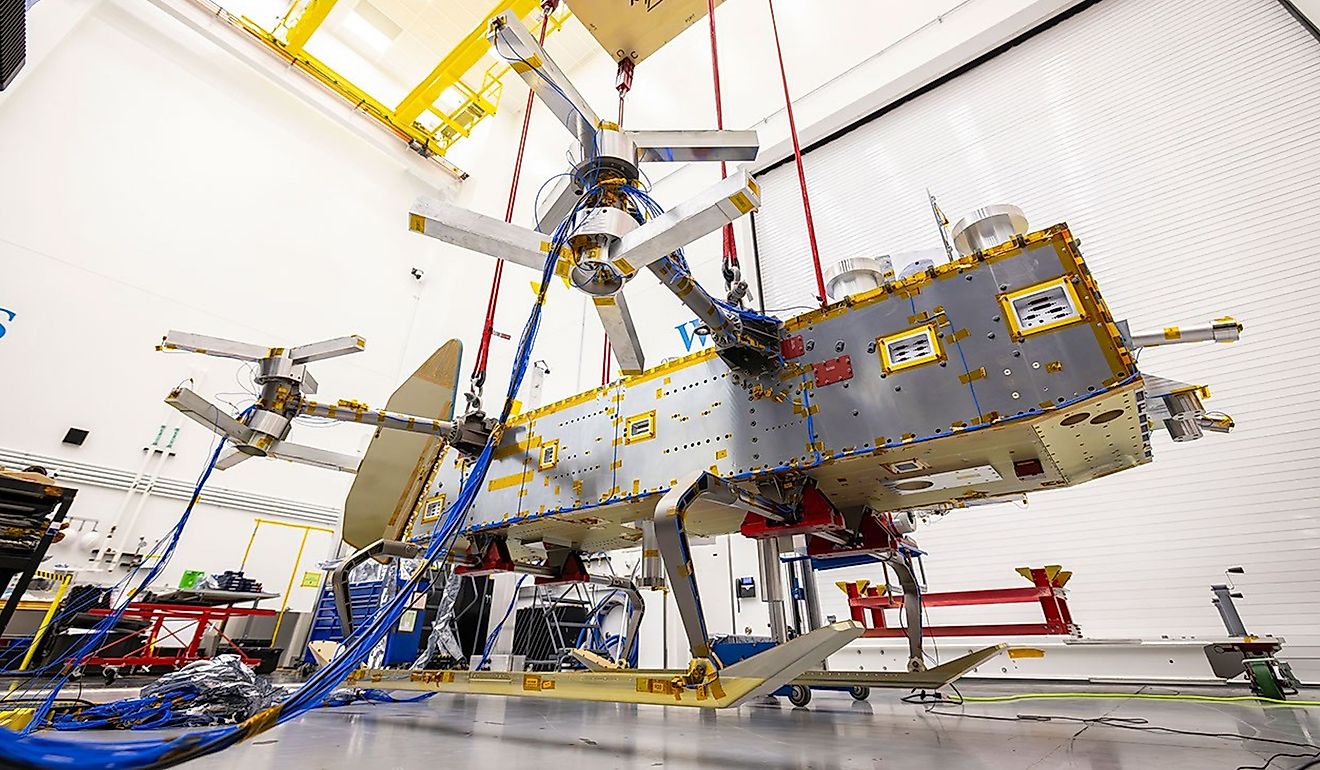
NASA's upcoming Dragonfly mission, scheduled to reach Titan in 2034, could help scientists understand Titan's unusual weather. The robotic rotorcraft will travel between locations on Saturn's largest moon, studying its atmosphere, surface, and chemistry. Its instruments will measure temperature, atmospheric pressure, methane abundance, and wind, providing new information about the conditions that produce methane rain.
Dragonfly may never encounter a methane storm during its mission, but its findings could help scientists determine when, where, and why methane rain falls on Titan. More than two decades after Huygens first touched down on Titan, scientists are preparing to explore a world where weather follows familiar patterns, but the rain itself is entirely alien.