Why Dragonfly Will Fly Instead Of Drive On Titan
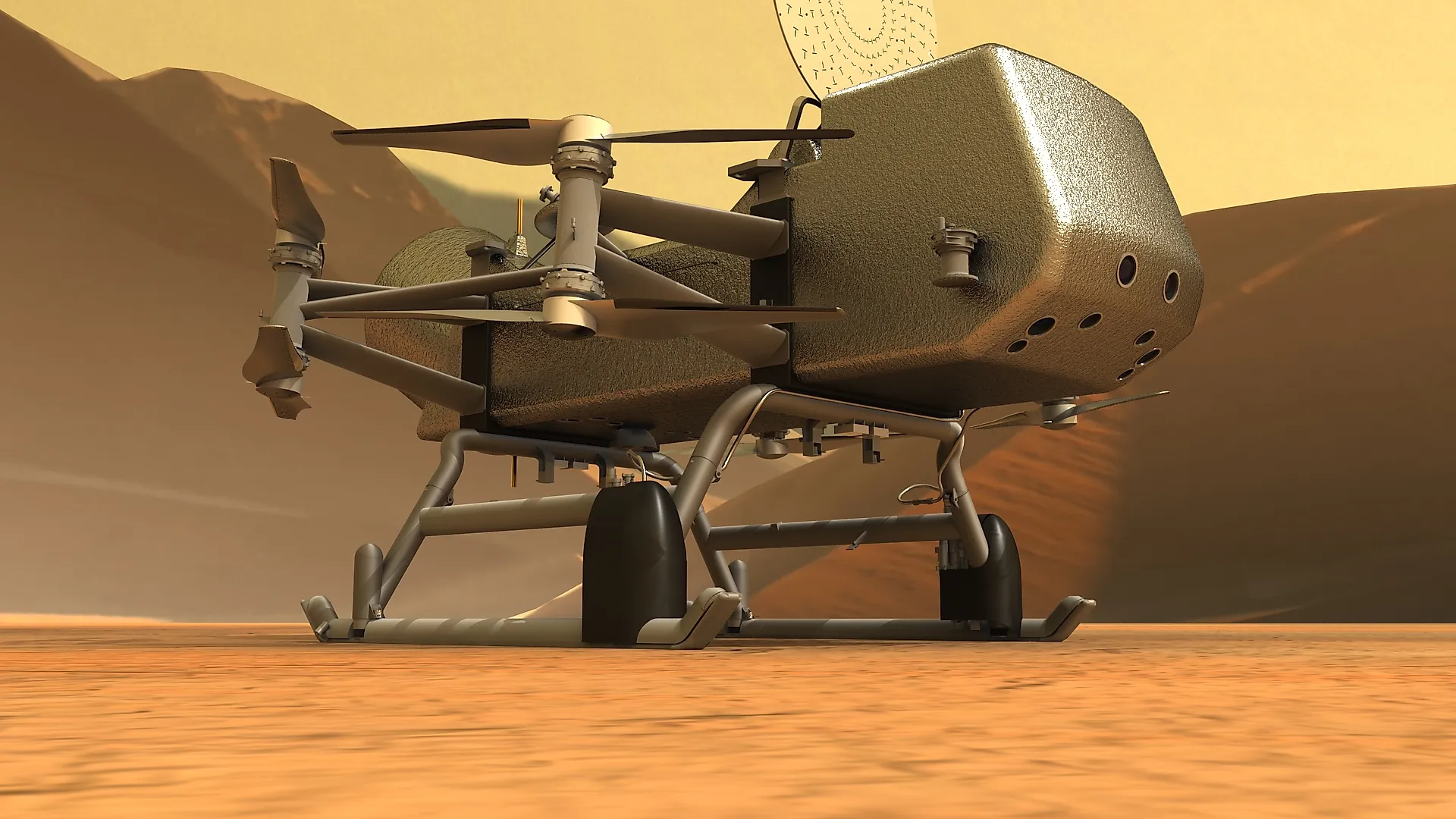
About the size of Perseverance, the Mars rover, is NASA's upcoming flying robot, Dragonfly. This impressive machine will scout Saturn's moon, Titan, which holds unique clues about the prebiotic chemistry of early Earth. Once it arrives in 2034, the robot will spend over three years collecting data while flying around the moon.
Titan has been a mystery for over 350 years, and soon scientists will know if the icy moon possesses the chemical building blocks of life, what the prebiotic conditions of early Earth may have been like, and how local weather and geological patterns shape its alien landscape.
Meet Dragonfly: NASA's Flying Robot

NASA's flying robot, Dragonfly, is much like a drone. It will use eight rotors in a quadcopter arrangement. At the end of each of its four arms, there will be two 53-inch counter-rotating rotors that provide lift. Dragonfly is expected to weigh around 1,900 pounds and be the size of the largest Mars rovers. The estimated launch date is July 2028, with an expected arrival on Titan in late 2034.
Unlike the normal rovers NASA has sent to space before, Dragonfly will have unmatched mobility. The Mars rover Opportunity averages only about 2 miles per Earth year as it travels across the planet. Dragonfly will be able to cover that distance in minutes. The robocraft is expected to make one flight every 1-2 Titan days, which is about 16 Earth days.
Most vehicles that travel among planets have wheels. The most famous ones are the Mars rovers. However, wheels wouldn't work that well on Titan.
Titan Is Surprisingly Earth-Like but Not Earth-Friendly

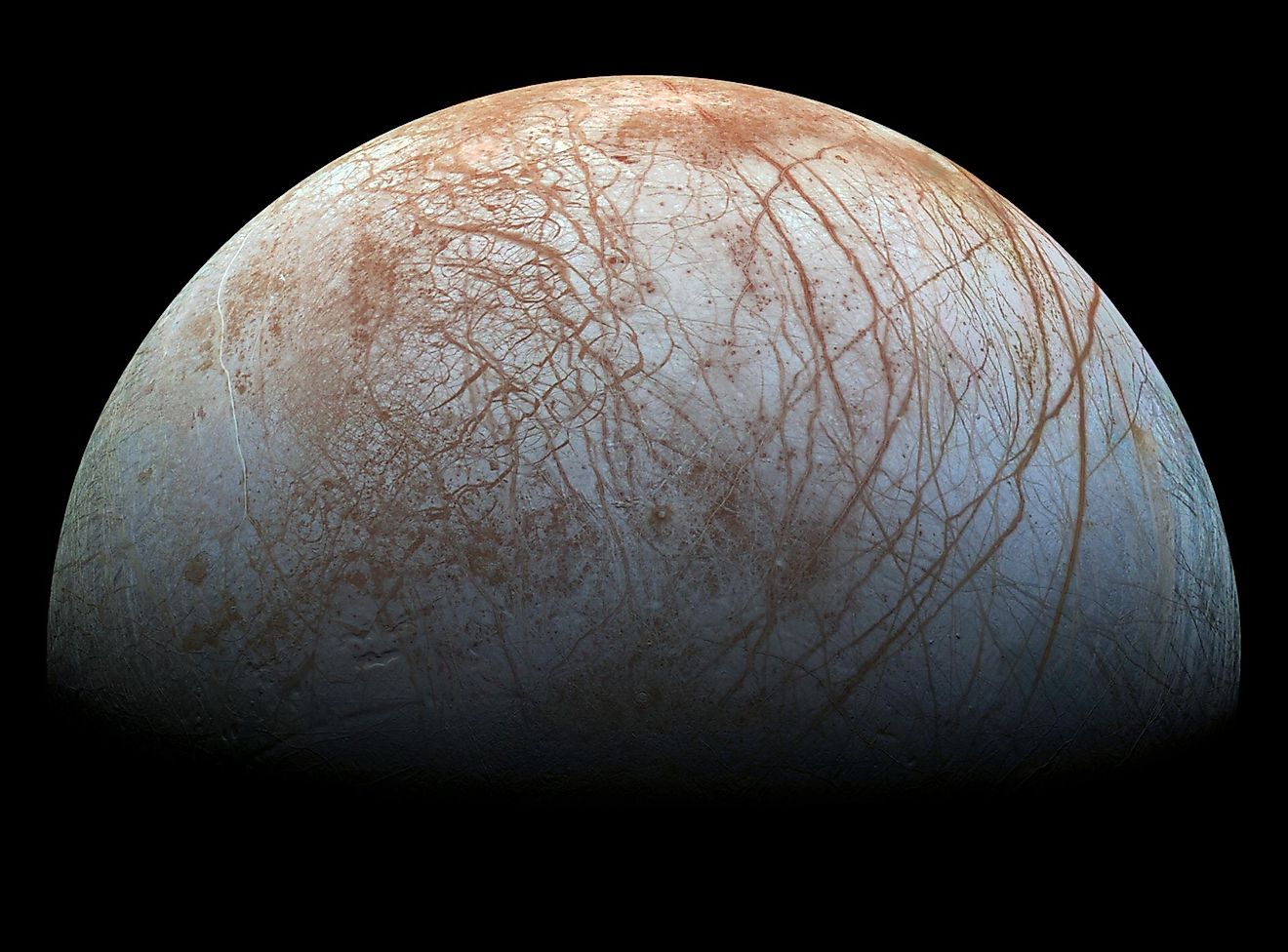
Titan is the world most similar to Earth that has been found. While it is a moon tethered to Saturn, Titan has all the trappings of a planet. It has clouds, rain, lakes, and rivers. However, because surface temperatures sit at a freezing -290 Fahrenheit (-179 Celsius), these weather systems and liquid bodies are made of hydrocarbons like liquid methane and ethane rather than water. Deep beneath its icy, rock-hard crust, Titan is also believed to hide a subsurface ocean of liquid water mixed with ammonia.
Many large moons have a trace exosphere, but Titan is the only moon in our solar system with a substantial atmosphere. It features a thick, opaque haze layer that is about 1.5 times as dense as Earth's at the surface. This shroud hid the moon's surface from traditional telescopes for centuries, until the Cassini spacecraft used radar and infrared imaging to pierce the clouds, followed by the Huygens probe landing on the surface.
Titan's dense atmosphere combined with its low gravity, which is about 1/7th of Earth's, and frigid temperatures make it extremely difficult to traverse. If you happen to be driving, that is. Those three features will help Dragonfly stay easily aloft above Titan's surface and fly faster and farther with far less energy than driving.
Flying Gives Dragonfly a Major Advantage

The thick atmosphere isn't the only thing that makes flying an advantage. Titan has extremely difficult terrain. Dragonfly's landing site is in the equatorial region called Shangri-La, which has dunes that average 300 feet (100 meters) in height. Unlike Earth, these dunes aren't made of sand; they are made of frozen bits of methane and ethane that resemble fine coffee grounds.
Titan is also carved by flowing rivers, lakes, and seas named after mythical sea creatures. Some of these bodies of liquid are as big as the North American Great Lakes. Just unlike Earth, the lakes are made of methane instead of water. As gas flows across the moon's surface, it wears away rocks, producing hills and valleys that resemble White Canyon, Utah.
The ground is also rocky, but these rocks are made of ice.
If the vehicle were unable to fly, it could easily get stuck in a valley, on a dune, or even in a methane lake. It is fully expected to travel more than 100 miles (160 kilometers) over a nearly three-year mission. That distance is more than any single planetary rover or surface mission has traveled in history.
What Dragonfly Will Learn From the Air

The goal of sending Dragonfly to Titan is to study the prebiotic chemistry to understand how complex carbon-based chemistry evolves. Titan is serving as a model for Earth before life began. It will also help us assess the habitability and potential chemical biosignatures in both water and organic materials that could support life.
The study will also allow us to monitor Titan's methane cycle, weather, and geological modifications across the different terrains. Dragonfly will stop at various geological sites, where it will collect surface samples and analyze them.
The Future of Flying on Other Worlds

Dragonfly could mark a major shift in how scientists explore other worlds. Instead of relying on wheels to slowly cross the surface, the rotorcraft will be able to take advantage of Titan's unusually thick atmosphere and weak gravity to fly between distant locations. This gives scientists access to a much larger area than a traditional rover could reasonably cover.
Titan also demonstrates why different worlds may require different approaches to exploration. A vehicle designed for Mars or the Moon would not necessarily be the best choice for Titan. Here, flying is particularly practical because the atmosphere provides plenty of air for Dragonfly's rotors to generate lift, while the moon's low gravity makes takeoffs and landings easier.
If the mission succeeds, Dragonfly could prove that aerial exploration has a much bigger role to play beyond Earth. Future spacecraft might use similar concepts to explore other moons, planets, and even asteroids where conventional rovers would struggle.