The Largest Asteroids That Will Pass Earth This Century
One asteroid scheduled to fly past Earth in 2093 is about 3.5 miles (5.6 km) across, wide enough to match more than 12 Empire State Buildings stacked on top of each other. Known as Phaethon, this enormous space rock will come within about 1.8 million miles (2.9 million km) of our planet, less than eight times the distance to the Moon. It is among several mountain-sized asteroids expected to make relatively close approaches to Earth before the end of the century. Some will pass much closer, including one that will travel inside the orbits of certain satellites.
Phaethon

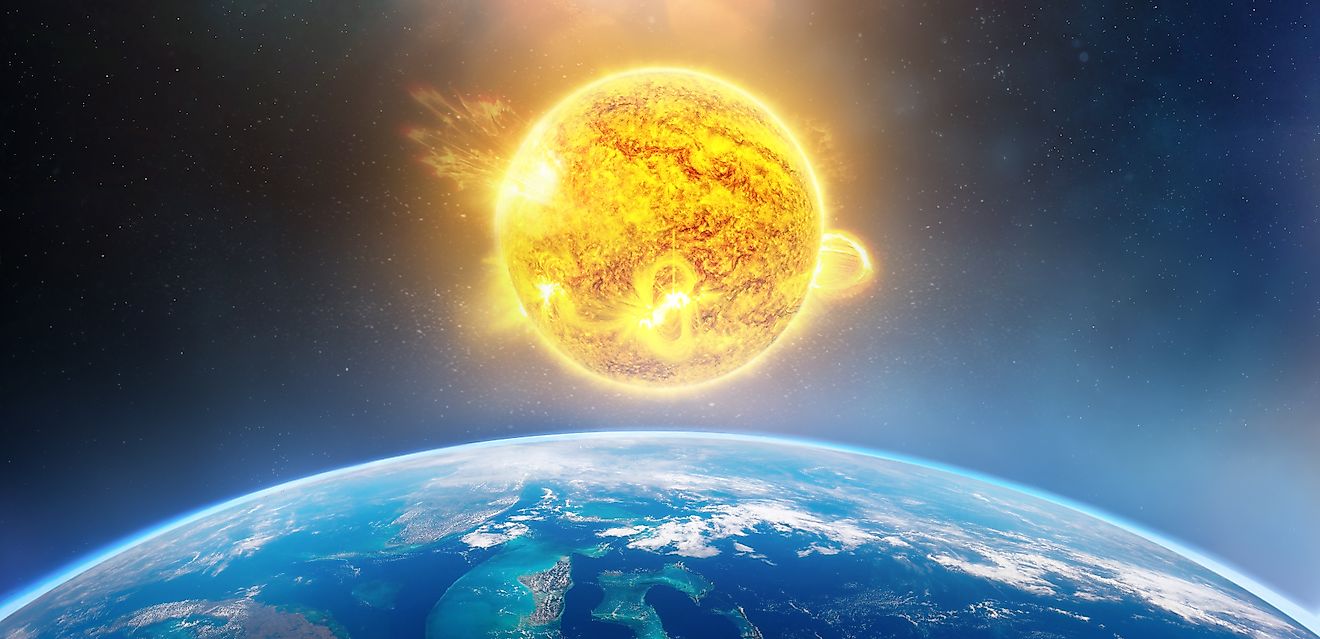
Phaethon is the largest asteroid on this list and one of the strangest. Measuring approximately 3.3 miles (5.4 km) across, it is about 12 times the height of the Empire State Building. It is also responsible for the Geminid meteor shower, which lights up Earth's skies every December. Most meteor showers originate from icy comets, but Phaethon is an asteroid that releases material into space.
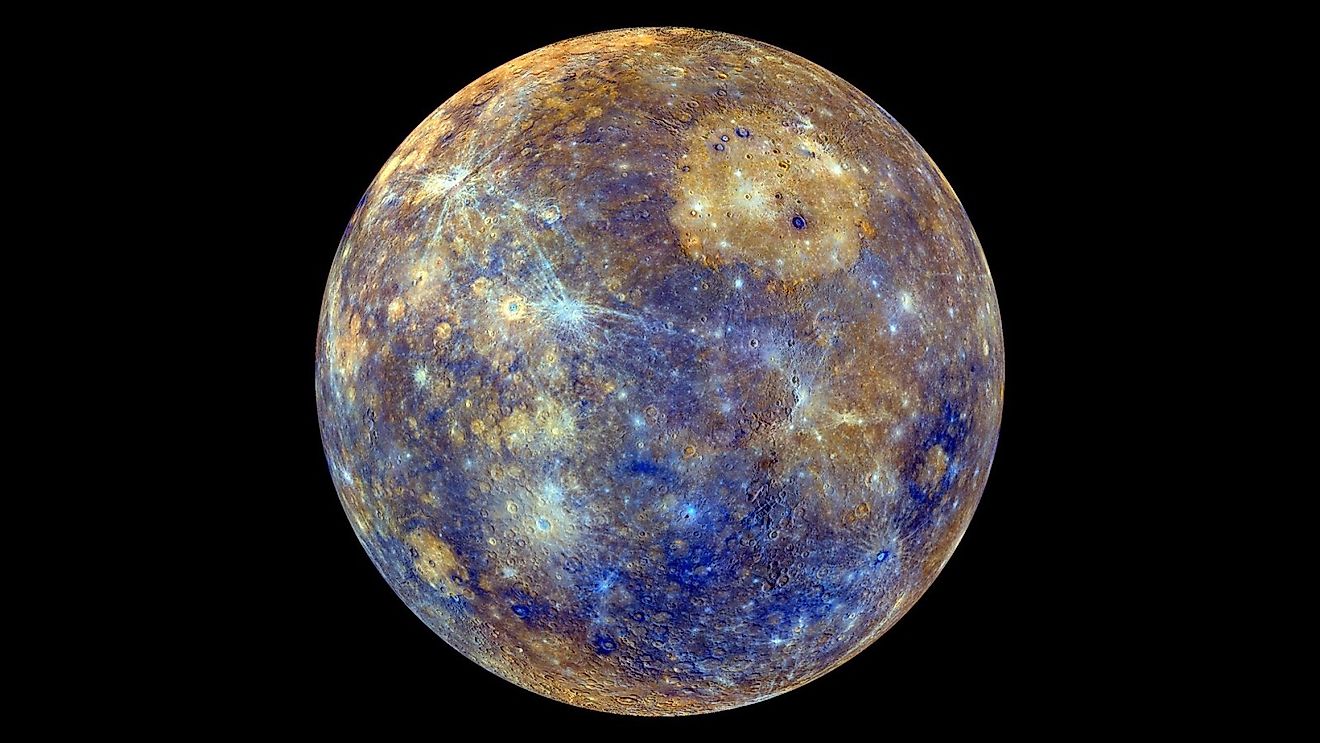
Its orbit takes it dangerously close to the Sun, much closer than Mercury. During these approaches, its surface can reach temperatures of approximately 1,400°F (760°C), hot enough to cause extreme stress to its rocky surface. Scientists are still investigating how Phaethon releases material and how it produced the debris responsible for the Geminids. On December 14, 2093, Phaethon will pass Earth at approximately 1.84 million miles (2.96 million km), roughly 7.7 times the distance to the Moon.
Toutatis

Toutatis tumbles through space, rotating in a complicated motion that causes its orientation to change continually. The asteroid is approximately 2.95 miles (4.75 km) long and has an unusual shape resembling two rocky lumps joined together. An astronaut standing on its surface would see the Sun follow a changing path across the sky rather than rise and set in a familiar pattern.
In December 2012, China's Chang'e 2 spacecraft flew past Toutatis, coming within approximately 0.5 miles (800 meters) of its surface. The resulting photographs revealed a heavily battered landscape with large depressions, boulders, and an irregular outline resembling a ginger root.
On November 5, 2069, Toutatis will pass Earth at approximately 1.85 million miles (2.97 million km). Its unusual rotation and elongated shape make it especially interesting to astronomers studying how asteroids respond to gravitational forces. During an even closer encounter in 2004, Earth's gravity influenced its tumbling motion. Future observations will help scientists understand how repeated planetary encounters change its rotation and orbit.
1990 MU

One of the largest approaching asteroids will arrive much sooner. On June 6, 2027, asteroid 1990 MU will pass approximately 2.87 million miles (4.61 million km) from Earth, about 12 times the distance to the Moon. It is estimated to measure around 1.7 miles (2.7 km) across, although its precise dimensions remain uncertain.
The asteroid follows an elongated orbit that crosses the orbital paths of Venus, Earth, and Mars. It takes approximately two years to travel around the Sun and rotates once every 14.2 hours. Observations suggest it may have an elongated shape rather than being perfectly round.
During its 2027 approach, 1990 MU is expected to brighten enough to be visible through small telescopes, reaching approximately magnitude 9.5. Astronomers also plan to use powerful radar systems to study its shape and surface features in greater detail. The asteroid will return in 2058, passing even closer at approximately 2.1 million miles (3.4 million km). Despite its size, neither encounter is expected to threaten Earth.
1998 OR2

Asteroid 1998 OR2 is roughly 1.2 miles (2 km) wide, making it larger than many mountains are tall. It completes a rotation approximately every 4.1 hours, meaning a day on its surface would last only a fraction of an Earth day.
In April 2020, the asteroid passed approximately 3.9 million miles (6.3 million km) from Earth. Radar observations from the Arecibo Observatory revealed an irregular, roughly rounded body with an uneven surface. Some images showed features that made the asteroid appear to be wearing a face mask, attracting attention during the early months of the COVID-19 pandemic.
Its next particularly close encounter will occur on April 16, 2079, when it passes approximately 1.1 million miles (1.77 million km) from Earth. That is less than five times the average distance to the Moon.
NASA classifies 1998 OR2 as a potentially hazardous asteroid because of its size and the proximity of its orbit to Earth's. However, this classification does not mean a collision is predicted. Astronomers have ruled out an impact for at least the next two centuries.
Apophis

Apophis is the smallest asteroid on this list, at approximately 1,100 feet (340 meters) across, but it will make by far the closest approach. On April 13, 2029, it will pass approximately 20,000 miles (32,000 km) above Earth's surface. That is closer than the geostationary satellites used for weather monitoring and communications.
Unlike the much larger asteroids discussed above, Apophis will be visible to the naked eye from parts of Europe, Africa, and Asia. Observers will see a moving point of light resembling a star traveling across the night sky. Scientists estimate that an asteroid of this size comes this close to Earth only once every several thousand years.
The encounter will also change Apophis itself. Earth's gravity will stretch and squeeze the asteroid, potentially causing landslides or small asteroid quakes. Its orbit around the Sun will change as well.
When Apophis was discovered in 2004, early calculations suggested a possible collision with Earth in 2029 or during later approaches. Subsequent observations eliminated those concerns, and NASA has ruled out an impact for at least 100 years. The United Nations has designated 2029 the International Year of Asteroid Awareness and Planetary Defence to coincide with the extraordinary flyby.
What Would Happen If One These Asteroids Hit Earth?

None of these approaching asteroids is predicted to hit Earth, but their sizes reveal why astronomers track them so carefully. According to NASA, an asteroid measuring approximately 0.6 miles (1 km) across could cause damage extending far beyond its impact site, potentially affecting Earth's climate and food production.
An asteroid the size of Phaethon would be considerably more destructive. For comparison, the object believed to have caused the extinction of the non-avian dinosaurs approximately 66 million years ago was roughly 6 miles (10 km) or more across. Although Phaethon is about half that diameter, a collision with an object of its size could still have devastating global consequences.
Fortunately, astronomers have already discovered more than 90% of the estimated near-Earth asteroids larger than one kilometer. The greater challenge involves smaller objects that are difficult to detect, particularly those approaching from the direction of the Sun.
Preventative Measures
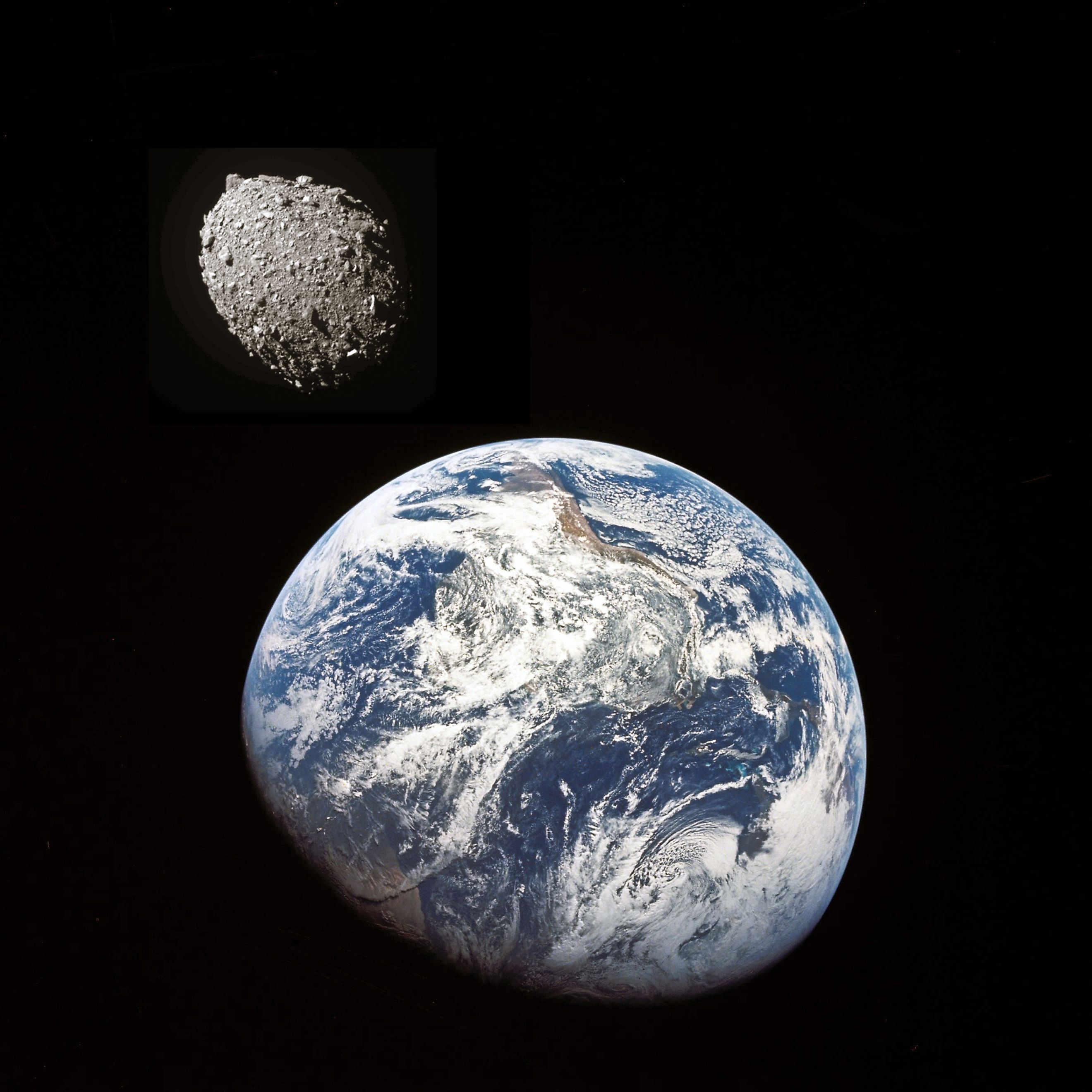
NASA's NEO Surveyor space telescope, scheduled for launch no earlier than September 2027, is designed to find many of these hidden objects by detecting the heat they emit. NASA has also demonstrated that a spacecraft can change an asteroid's motion, successfully altering the orbit of Dimorphos during its DART mission in 2022.
The largest known asteroids approaching Earth this century are not expected to collide with our planet. However, their flybys offer opportunities to study objects powerful enough to reshape Earth's surface. The next major threat, if one is discovered, could come from an asteroid far smaller than Phaethon. Finding it early enough to change its path will be the most important part of protecting Earth.