How Many Moons Are In The Solar System
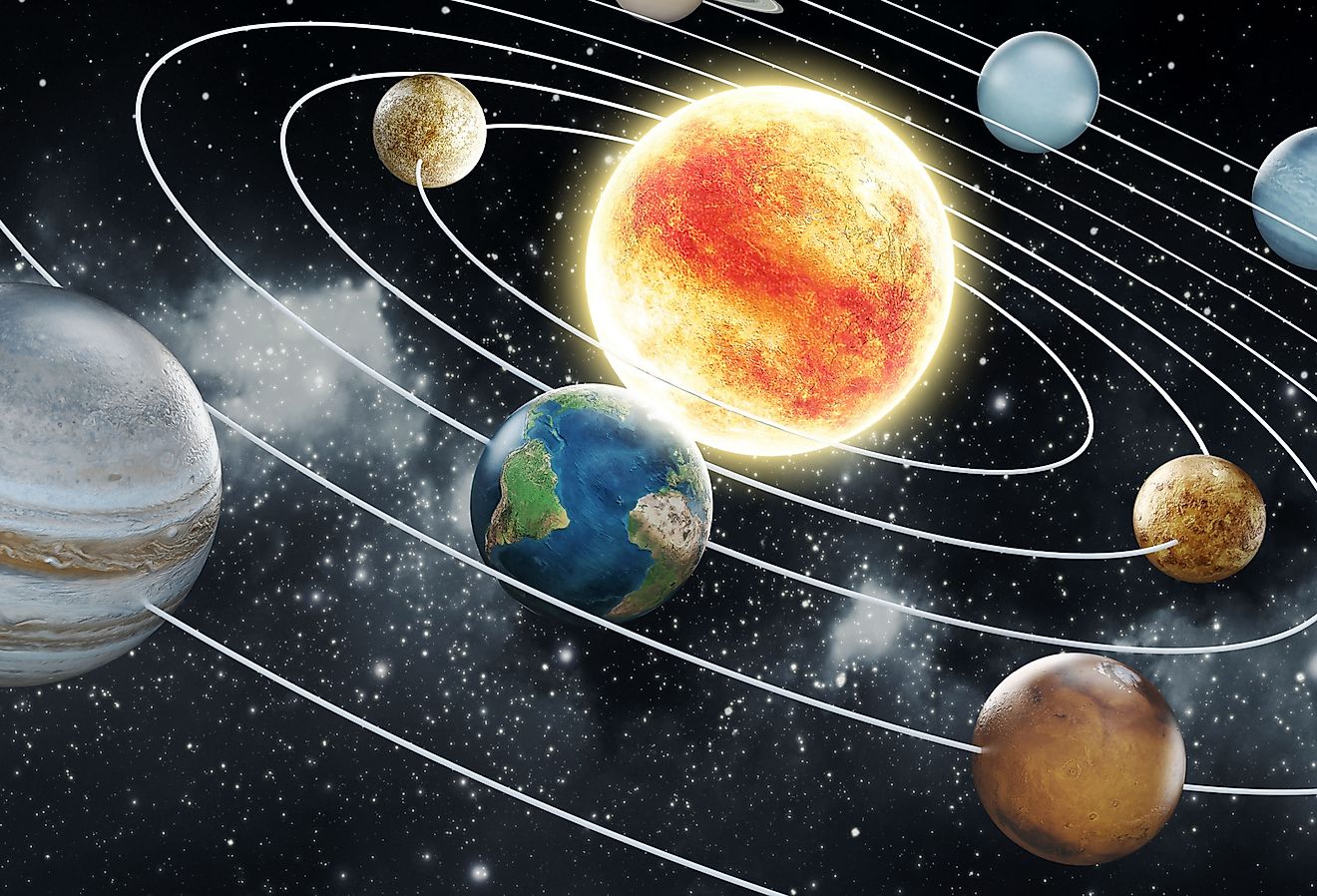
One planet in our solar system has more moons than all the other planets combined. Saturn has 285 confirmed moons, while Mercury, Venus, Earth, Mars, Jupiter, Uranus, and Neptune together have 149. The gap exists because Saturn's family is packed with tiny, distant fragments that telescopes only recently became sharp enough to detect, and the total keeps climbing every time astronomers look. As of the latest confirmed counts from March 2026, the eight planets have 434 known moons between them. Add the five dwarf planets and the total reaches 444. Earth has 1, Mars has 2, Jupiter has 101, Saturn has 285, Uranus has 29, and Neptune has 16. Mercury and Venus have none.
Why Moon Counts Vary

You will see different numbers depending on where you look. NASA's main moons page still lists an older tally of 293, which counts 95 moons for Jupiter, 146 for Saturn, and 28 for Uranus. Sky & Telescope's guide, last updated in November 2025, reached 429. The differences come down to timing. A moon only counts once the International Astronomical Union's Minor Planet Center confirms it, and pages across the web update on their own schedules.
Saturn

In March 2025, astronomers confirmed 128 new moons around Saturn in a single announcement, lifting its total from 146 to 274. A year later, in March 2026, the Minor Planet Center added 11 more, bringing the count to 285. Most of these newcomers are only 1 to 2 kilometers wide, roughly a mile, and about 100 million times fainter than anything the naked eye can see. They were found by taking many images of the same patch of sky, shifting each one slightly to follow a moving object, and stacking them until a faint dot emerged from the noise.
The system is also enormous in the sky. Saturn's moons are spread out so widely that, seen from Earth, they would cover an area about five full Moons across. Yet only 64 of the 285 have proper names, since the International Astronomical Union generally reserves names for the largest and brightest. The rest carry catalog codes. Almost all of the discoveries are irregular moons on distant, tilted orbits, and many travel backward compared with the planet's spin. Scientists think they are captured objects or fragments of larger bodies that broke apart long ago.
Jupiter

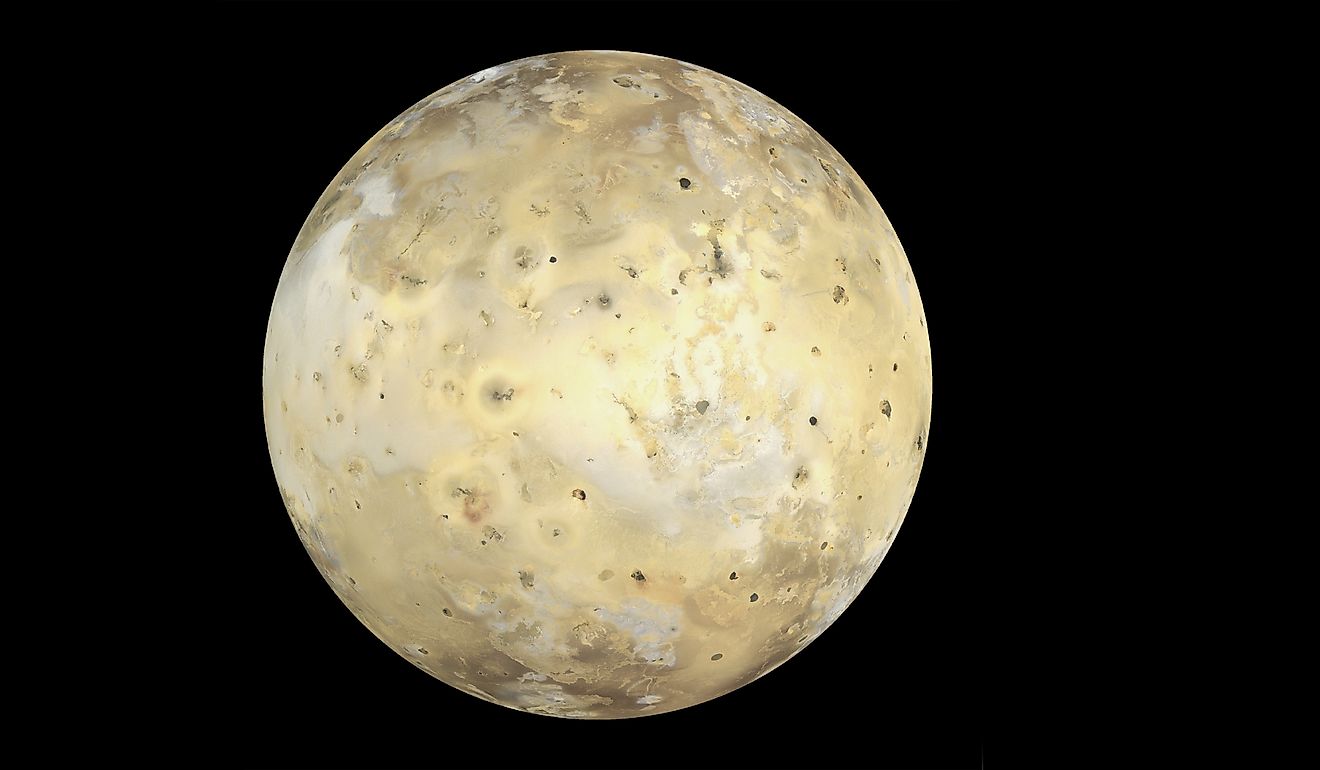
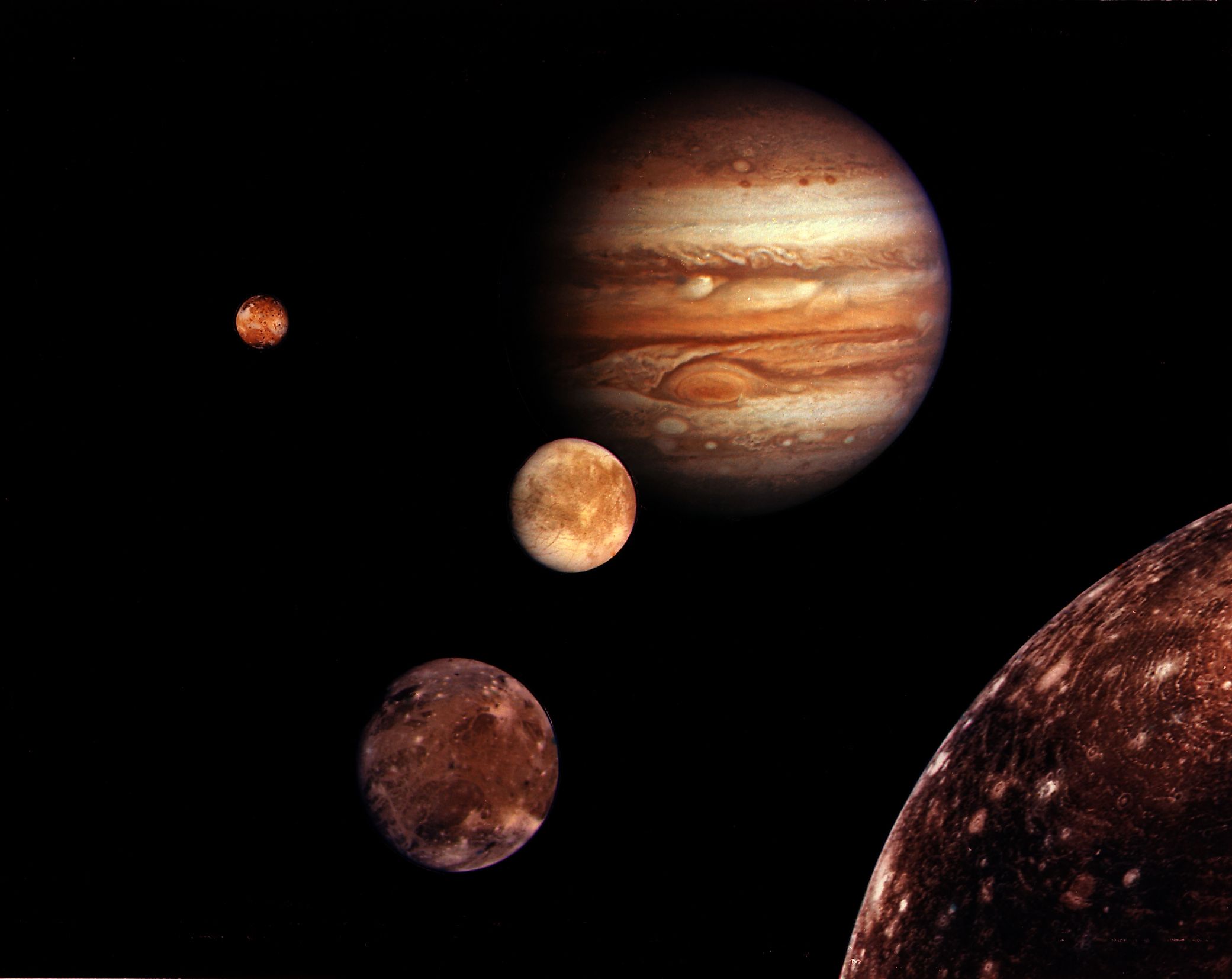
Jupiter has 101 known moons, and four of them are worlds in their own right. Io, Europa, Ganymede, and Callisto are large enough to spot with a pair of binoculars. Ganymede is the biggest moon in the solar system, larger than the planet Mercury. The other 97 are mostly small, irregular moons far from the planet, and they are being found quickly. Jupiter was listed at 95 moons not long ago, and four more were confirmed in March 2026 alone, pushing it past the 100 mark.
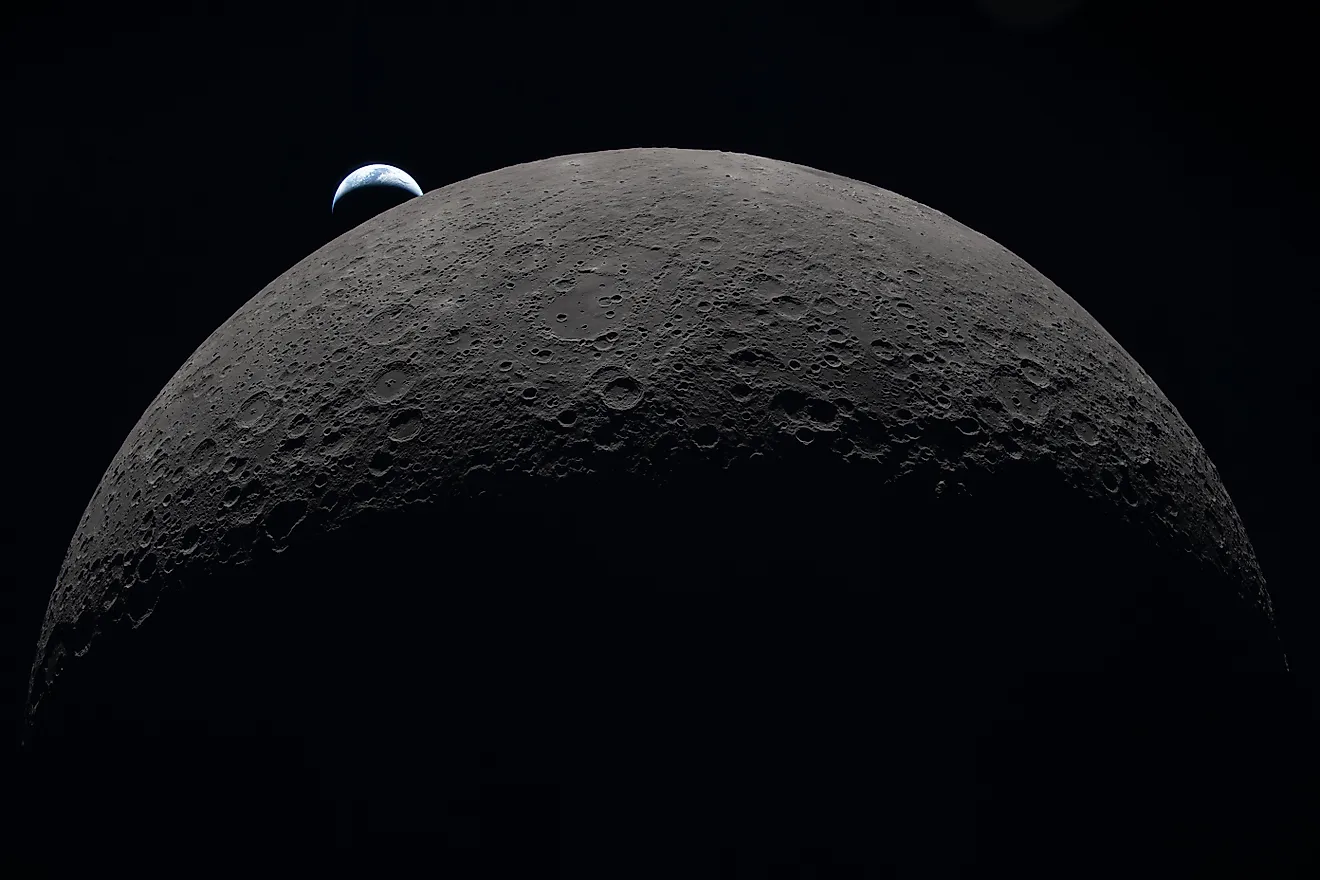
Earth's own Moon is not far behind the giants. At about 3,474 kilometers across, it ranks as the fifth largest moon in the solar system, behind only Ganymede, Titan, Callisto and Io. That makes our single companion a heavyweight, even if it looks lonely next to Saturn's crowd. It is also the only moon people have visited, with 12 American astronauts walking on its surface during NASA's Apollo program between 1969 and 1972.
Mars

Mars has just two moons, Phobos and Deimos, and both look more like lumpy potatoes than spheres. Phobos is only about 22 kilometers across, yet it circles Mars in 7 hours and 39 minutes, so a person standing on the surface would watch it rise in the west and set in the east. It orbits roughly 5,800 kilometers above the planet, compared with about 400,000 kilometers for Earth's Moon. Deimos, the smaller of the two, measures about 15 by 12 by 11 kilometers and takes about 30 hours to circle the planet.
That closeness is also its death sentence. Mars is pulling Phobos in by about six feet every century, and long grooves on its surface are the first signs of the stress. Researchers estimate it will break apart in 20 to 40 million years, scattering debris into a ring around Mars that could last for up to 100 million years. A few of the largest chunks would slam into the surface. Deimos faces the opposite fate, as its orbit is slowly widening and carrying it farther from Mars.
Uranus and Neptune
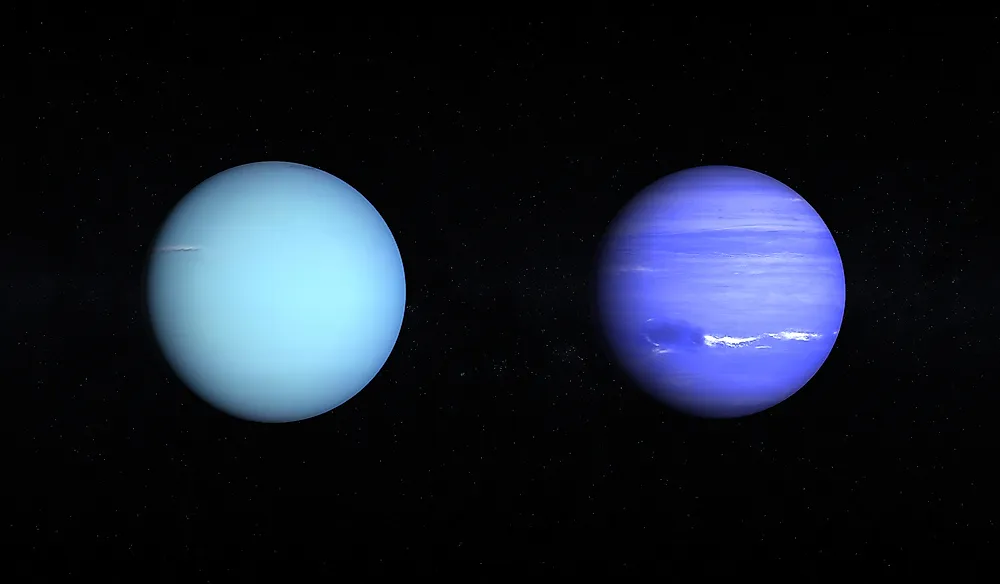
Uranus has 29 known moons, and the newest one was discovered by the James Webb Space Telescope. In February 2025, a team led by Maryame El Moutamid of the Southwest Research Institute found a moon about 10 kilometers across (roughly 6 miles) orbiting at a distance of about 56,000 kilometers from the planet's center. It sits at the edge of the inner rings, and Voyager 2 flew past in 1986 without seeing it. Uranus's moons are named for characters from Shakespeare and Alexander Pope, so the new one will need a literary name.
Neptune has 16 known moons. Its largest, Triton, is about as big as the dwarf planet Pluto. It is also the only large moon in the solar system that orbits backward, opposite to its planet's rotation, which is why scientists think Neptune captured it from the Kuiper Belt. Both ice giants are so far away and so dim that finding small moons requires the most powerful telescopes available, which is why their counts have grown far more slowly than Saturn's and Jupiter's.
Dwarf Planets

Pluto has five known moons. The largest, Charon, is about half the size of Pluto, and like Earth's Moon, it may have formed from debris thrown into orbit by an early collision. Haumea has two, and Makemake, Gonggong, and Eris each have one, which adds another 10 to the total. Beyond that, astronomers have documented more than 470 moons orbiting smaller objects, such as asteroids and icy bodies, beyond Neptune. NASA calls these small-body satellites, and they are not included in the planetary count.
The number keeps growing
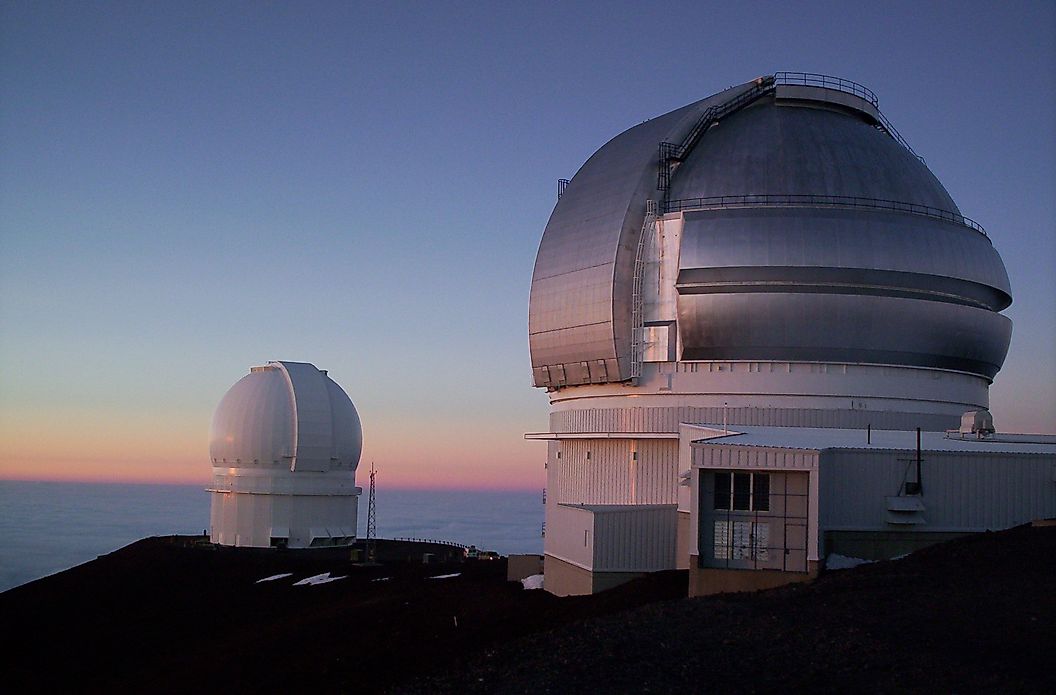
These moons were always there. What changed is our ability to see them. Larger telescopes, sensitive cameras, and the shift-and-stack technique now reveal objects only a few kilometers wide at distances of millions of kilometers. NASA says thousands more moons are likely waiting to be found, and so many tiny ones have turned up that the International Astronomical Union no longer names the smallest unless they are of significant scientific interest. The figure of 444 is a snapshot, not a final answer. Saturn's lead could grow again with the next announcement, and the true total may be many times larger than anything on record today.