Which Planet Is Most Like Early Earth Was?
Venus' surface temperature is hot enough to melt lead, and its atmosphere presses down with roughly 90 times the force of Earth's. Yet this deadly world may offer the closest planetary comparison to Earth's violent beginnings some 4.5 billion years ago. Long before oceans, forests, or life as we know it, our planet endured enormous asteroid impacts, widespread molten rock, and an atmosphere filled with volcanic gases. Venus shares Earth's size, rocky composition, and history of intense geological activity. Although it is not an exact picture of Earth's past, studying our scorching neighbor could help scientists understand how two remarkably similar planets developed into such different worlds.
Nearly Identical Size and Mass

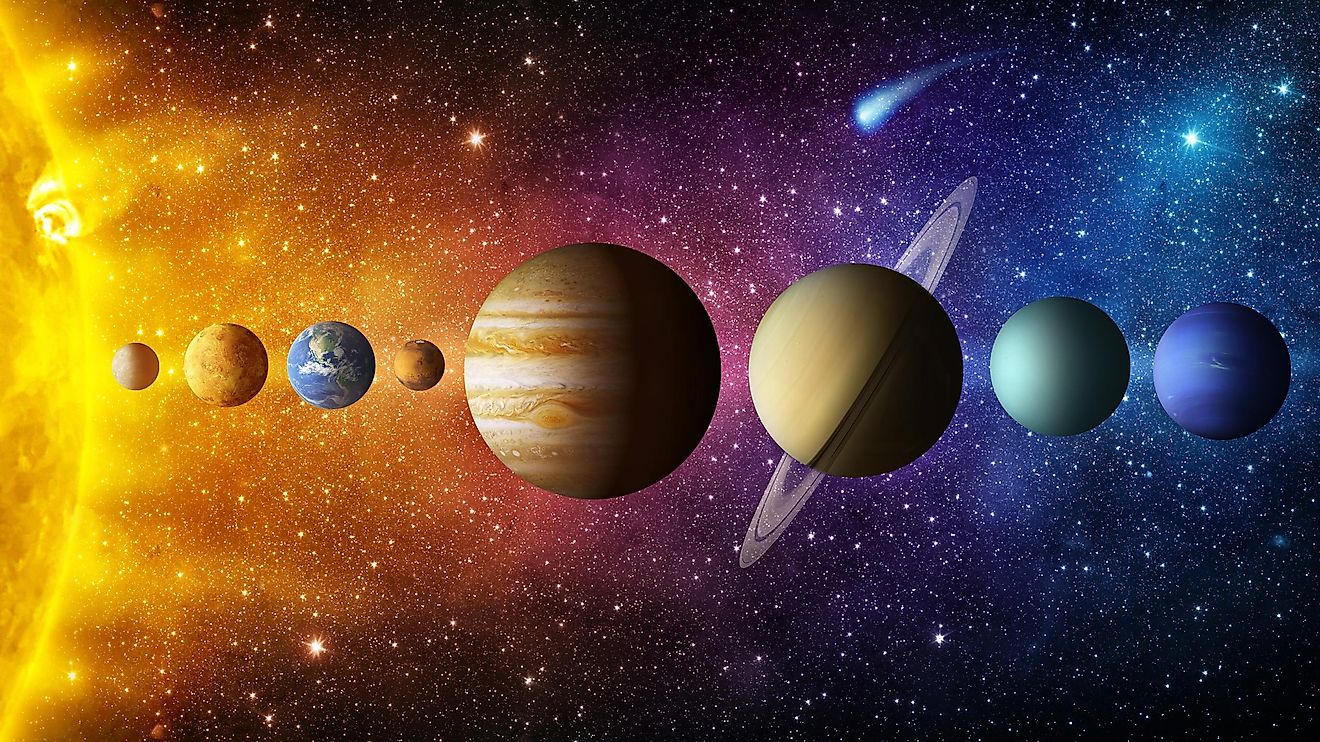
Venus is often called Earth's twin, and the comparison is remarkably accurate when it comes to size. Earth measures approximately 7,926 miles across at the equator, while Venus has a diameter of 7,521 miles. If Earth were the size of a basketball, Venus would be only slightly smaller. The neighboring planet also possesses about 82% of Earth's mass.
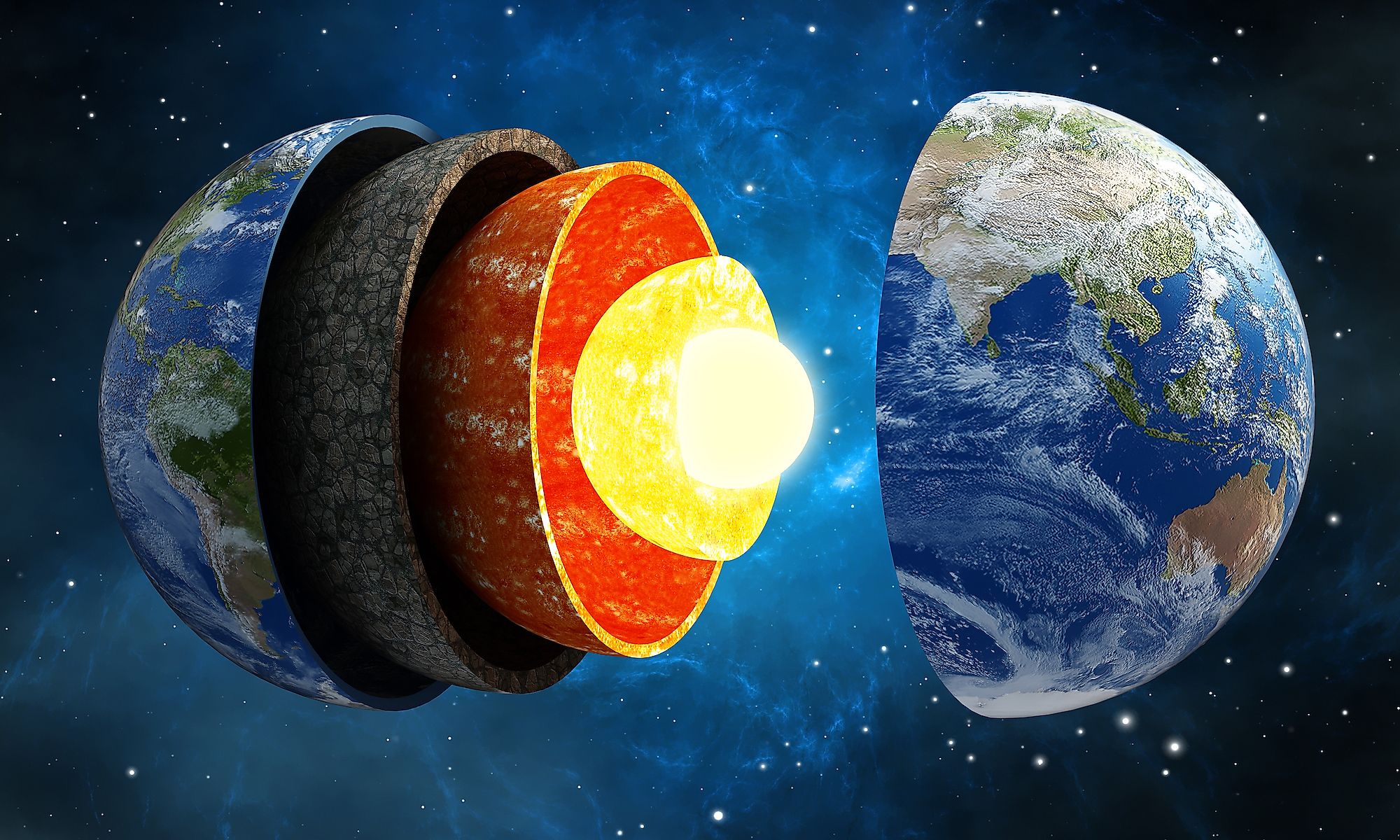
These similarities extend beneath the surface. Both planets have iron-rich cores surrounded by thick rocky mantles and relatively thin outer crusts. Gravity is also comparable, with Venus exerting about 90% of Earth's gravitational pull. Someone weighing 180 pounds on Earth would weigh approximately 163 pounds on Venus, assuming they could somehow survive the conditions.
When Earth Was Covered in Molten Rock

Around 4.5 billion years ago, Earth would have looked almost unrecognizable. Large asteroids and other objects frequently collided with the young planet, releasing tremendous amounts of energy. Some impacts were powerful enough to melt enormous portions of its rocky exterior, producing oceans of magma that glowed with temperatures exceeding 1,800 degrees Fahrenheit.
Scientists believe Venus also experienced a period when much of its surface was molten. During these early stages, heavy metals such as iron sank toward the centers of both planets, while lighter rocky materials remained above them. This process eventually helped establish the layered interiors that Venus and Earth possess today.
However, Venus is no longer covered by a global ocean of lava. Its present surface is largely solid rock, including vast volcanic plains, mountains, and fractured highlands. In 1982, the Soviet Venera 13 lander photographed flat, rocky slabs on Venus before losing contact after just 127 minutes. Those images revealed a landscape that resembles some volcanic regions of Earth, although the conditions are far more hostile.
An Atmosphere Thick Enough to Crush a Spacecraft

The atmosphere provides another important connection between Venus and early Earth. Before our planet developed its oxygen-rich air, volcanoes released enormous quantities of steam, carbon dioxide, and other gases. These emissions helped create a dense, hot atmosphere above the cooling surface.
Venus retains an exceptionally thick atmosphere dominated by carbon dioxide. Its surface pressure is approximately 93 times Earth's sea-level pressure, comparable to descending more than 3,000 feet beneath the ocean. Temperatures average around 867 degrees Fahrenheit, making Venus hotter than Mercury despite being farther from the Sun. Much of this extreme heat results from a runaway greenhouse effect. Carbon dioxide traps heat so effectively that Venus has become the hottest planet in the solar system. The planet also receives nearly twice as much sunlight as Earth because it orbits closer to the Sun.
Earth's atmosphere developed differently as the planet cooled. Water could accumulate in liquid form, allowing carbon dioxide to be removed from the air through interactions with oceans and rocks. Over billions of years, geological processes and eventually life transformed the atmosphere into the one humans breathe today.
Volcanoes Still Reshape Venus

Volcanoes once dominated Earth's early landscape, and they remain among the most recognizable features of Venus. The planet contains enormous volcanic mountains, broad lava plains, and unusual formations created by rising molten rock.
Some of these volcanoes appear to remain active. In 2023, scientists studying radar images captured by NASA's Magellan spacecraft identified changes to a volcanic vent on Maat Mons between observations made in 1991. The vent had expanded and changed shape, suggesting an eruption had occurred. A separate study published in 2024 identified apparent new lava flows around Sif Mons and Niobe Planitia, providing further evidence that Venus remains geologically active.
These discoveries are significant because they demonstrate that the planet's interior continues to release heat and reshape its surface. Earth experienced intense volcanic activity during its earliest history, and Venus may preserve evidence of some of the geological processes that operated on our planet billions of years ago.
Venus Has Its Own Version of Ancient Continents

One of the most surprising similarities between Venus and early Earth may be hidden in the planet's enormous highlands. Venus contains regions known as tesserae, where the crust has been folded, fractured, and compressed into complicated patterns of ridges and valleys.
In 2024, researchers published findings suggesting that some of these highlands formed through processes resembling those responsible for Earth's earliest continents. Their computer simulations examined Ishtar Terra, an enormous elevated region containing an Australia-sized plateau called Lakshmi Planum.
On Earth, the oldest stable portions of continents are called cratons. These ancient blocks of crust survived billions of years of geological change and formed the foundations of modern continents. The study suggested that rising hot material beneath Venus's crust may have helped create similarly thick, elevated regions.
Did Venus Ever Have Oceans?

Perhaps the greatest mystery surrounding Venus is whether it once possessed liquid water. Earth eventually cooled enough for water vapor to condense, creating oceans that would become essential to the development of life. Ancient mineral crystals found in Australia suggest that liquid water may have existed on Earth as early as 4.4 billion years ago.
Venus's history is considerably less certain. Some climate models have suggested that the planet could once have supported oceans under different atmospheric conditions. Others indicate that it remained too hot for water vapor to condense into liquid.
A study published in December 2024 in Nature Astronomy offered evidence supporting the second possibility. By examining the chemical composition of Venus's atmosphere and the gases likely released by its volcanoes, researchers concluded that the planet's interior is extremely dry. Their findings suggest that Venus may never have developed liquid-water oceans.
Why Venus Tells Us About Earth's History

Mars also provides clues about Earth's past. Its ancient river valleys, lakebeds, and water-altered minerals suggest that it once experienced conditions more comparable to those of a younger, water-bearing Earth. However, Mars is only about half Earth's diameter, making it considerably different in size and internal structure.
Venus offers a particularly valuable comparison when studying the earliest stages of rocky planet formation. Its dimensions, internal composition, atmosphere, and volcanic landscape preserve important clues about the processes that shaped Earth before it became habitable.
Important questions remain unanswered, especially concerning Venus's ancient atmosphere, geological activity, and potential history of water. Future investigations of its surface and atmosphere could reveal whether the two planets shared more of their early development than scientists currently understand.
Final Thoughts
Venus and Earth formed in the same solar system, from similar materials, and grew into planets of remarkably similar size. Yet today, a spacecraft landing on Venus must endure enough heat to melt lead and atmospheric pressure comparable to the depths of Earth's oceans. Earth, meanwhile, developed liquid oceans and became the only known planet capable of supporting life.
Understanding how these two neighboring worlds reached such different outcomes could prove crucial as astronomers discover more Earth-sized planets around distant stars. A planet's familiar size may conceal conditions as hostile as those on Venus, and learning why could help scientists determine which distant worlds might actually support life.