Which Moon Is The Most Cratered?
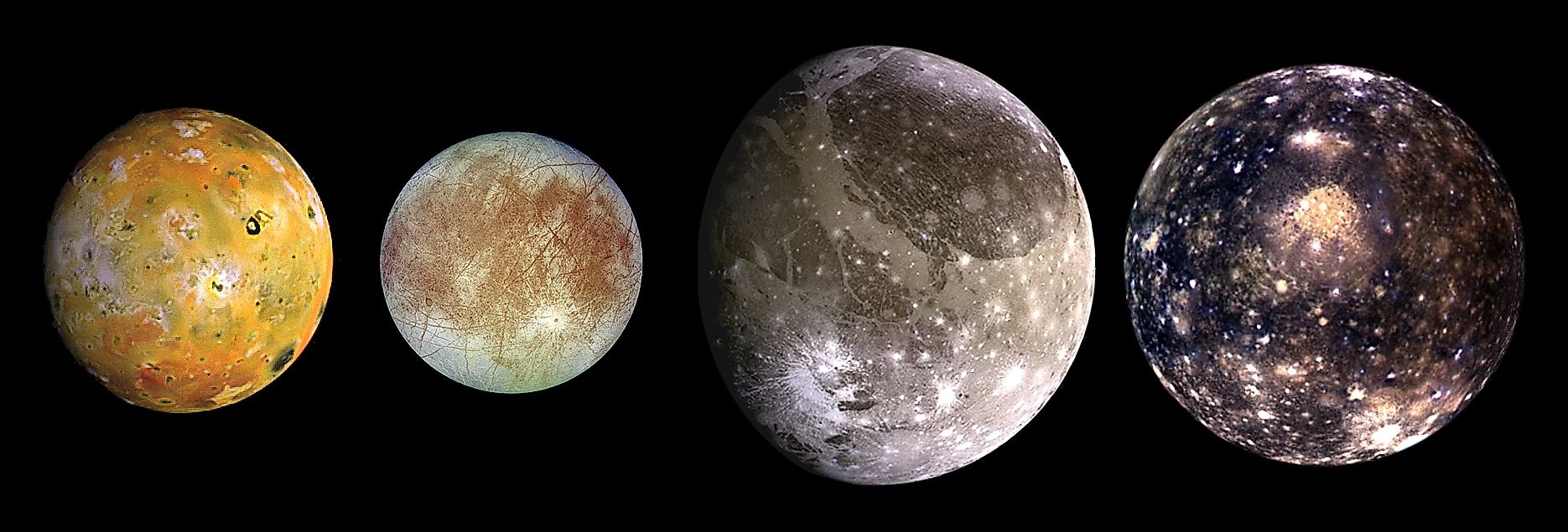
Jupiter's moon Callisto has a surface so battered that NASA calls it the most heavily cratered object in the solar system. A 2019 survey identified 7,159 craters wider than 9 miles (15 kilometers), and those are only the larger ones. Some of its impact scars stretch thousands of miles across an icy landscape that has remained largely unchanged for roughly 4 billion years. Unlike Earth, where erosion and geological activity have erased most evidence of ancient collisions, Callisto has preserved a record of impacts which date back to the early solar system.
Callisto's Surface Is Covered in Impact Scars

Callisto is the outermost of Jupiter's four large Galilean moons and is about 3,000 miles (4,800 km) across, making it slightly smaller than Mercury. Both worlds are heavily cratered, although Mercury also has vast volcanic plains. Impact craters cover Callisto so densely that newer craters often overlap older ones, creating a landscape dominated by circular scars and enormous impact basins.
An older Lunar and Planetary Institute database cataloged about 150 major impact craters, but that was never intended as a complete count. A 2019 study identified thousands of larger craters and classified 57 bright-rayed craters wider than 6 miles (10 km). These younger-looking scars have bright streaks of material thrown outward during impacts. Callisto's surface has accumulated impacts for billions of years without being extensively resurfaced, leaving one of the oldest visible landscapes known.
Its Surface Is About 4 Billion Years Old

A crater is almost like a timestamp for scientists. When an asteroid or comet slams into a solid world, it excavates a crater and leaves a scar that can remain visible until something erases or reshapes it. On Earth, erosion, weather, and plate tectonics continually destroy old impact evidence. Callisto lacks these powerful surface processes. NASA estimates that Callisto's surface is about 4 billion years old. There are no known active volcanoes or widespread tectonic shifts reshaping the landscape, so ancient craters can survive for enormous spans of time.
The largest crater on Callisto is Valhalla, a gigantic impact structure about 2,500 miles (4,000 km) across. Callisto itself is only about 3,000 miles (4,800 km) wide, meaning the structure's outer rings span most of the moon's diameter. Its bright central region is about 370 miles (600 km) across, surrounded by enormous concentric rings. Another giant structure, Asgard, measures about 1,050 miles (1,700 km) across.
Valhalla also produced a strange clue about what may lie inside Callisto. Scientists examined the terrain on the exact opposite side of the moon from the impact and found none of the dramatic disruption expected from seismic waves passing through a completely solid interior. Computer models suggest that a layer of liquid water could have weakened or dispersed those shock waves.
An Ocean May Lie Beneath the Ice

The most surprising part of Callisto may be invisible. Data from NASA's Galileo spacecraft suggest that a salty ocean could exist beneath the moon's icy crust. NASA estimates that a possible ocean may lie about 155 miles (250 km) below the surface, although researchers caution that it may be deeper than previously thought or may not exist at all.
If liquid water exists beneath the ice and interacts with rock, Callisto could have some of the conditions necessary for life. While the surface looks ancient, dark, and lifeless, an underground ocean could make the moon scientifically interesting for an entirely different reason.
Callisto Would Be a Harsh Place to Explore

A person standing on Callisto would experience only about one-eighth of Earth's gravity. Someone weighing 160 pounds on Earth would weigh roughly 20 pounds there, although their mass would remain unchanged. A jump that lifts someone a few feet on Earth could carry them considerably higher on Callisto.
Weak gravity is hardly the biggest problem. Callisto has only an extremely thin exosphere rather than a breathable atmosphere. The moon also orbits far from the Sun, where sunlight is much weaker than it is at Earth. With surface temperatures that can plunge below minus 300°F (minus 184°C), an unprotected visitor would have no chance of survival.
A human explorer would need a pressurized suit and a spacecraft or habitat capable of providing heat, air, and other life-support systems. Callisto is also far too distant for a simple expedition. Jupiter orbits the Sun at an average distance of about 484 million miles (778 million km), and spacecraft typically spend years traveling to the Jovian system.
A New Mission Will Study Callisto

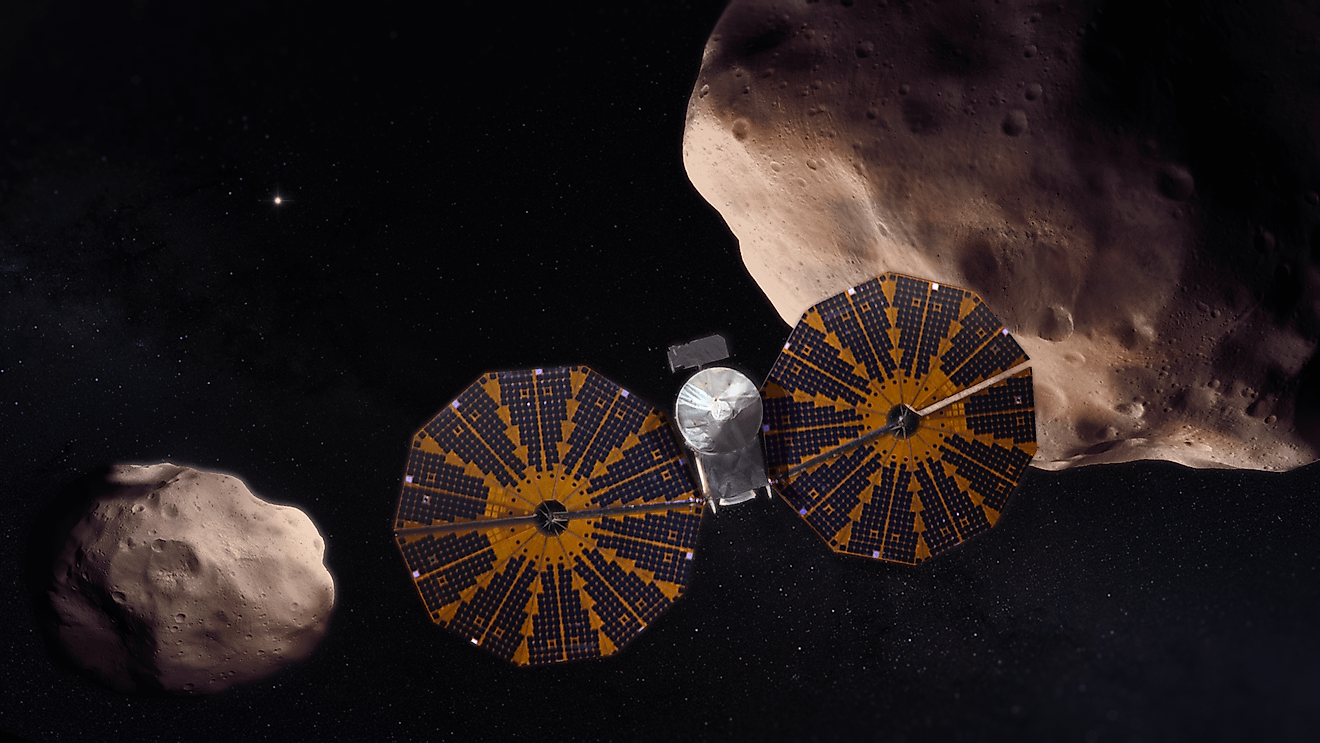
Callisto has been studied by several spacecraft, but it has never received the kind of sustained attention planned for Jupiter's icy moons. That is about to change. The European Space Agency launched its Jupiter Icy Moons Explorer, or JUICE, in April 2023. On September 28, 2026, the spacecraft successfully passed Earth for a gravity assist, using the planet's gravitational pull to alter its trajectory toward Jupiter. It is scheduled to arrive in the Jovian system in July 2031.
During its tour, JUICE is expected to make 21 flybys of Callisto between 2032 and 2034, coming as close as about 125 miles (200 km) from the moon's surface. Those encounters could help resolve some of Callisto's biggest mysteries, including whether its suspected ocean exists, how its interior is structured, and why its surface has remained so remarkably unchanged. JUICE will also study how Jupiter's environment has shaped the moon over billions of years.
Callisto's Ancient Scars May Hide Secrets
Callisto's distinction is not simply that its surface contains thousands of impact scars. It is that so many of those scars have survived. With a surface about 4 billion years old, enormous impact structures thousands of miles across, and comparatively little geological activity to erase the evidence, Callisto preserves a record of violent collisions from the solar system's distant past.
Yet the moon may still have surprises beneath that ancient crust. A possible underground ocean means Callisto could preserve evidence of the solar system's earliest collisions while concealing liquid water hundreds of miles beneath its frozen surface. By the 2030s, spacecraft observations may finally reveal how much of this battered moon's history remains hidden underground.