Why Evidence Suggests Dark Energy Is Weakening
Dark energy appears to make up about 68% of the universe, yet new measurements suggest its influence may have weakened since roughly the time Earth formed 4.5 billion years ago. If that result survives further testing, one of the biggest ingredients in the cosmos is changing when scientists had assumed it should stay exactly the same. For decades, the simplest explanation for dark energy has treated it as a constant property of empty space. As the universe expands, dark energy should continue driving that expansion without fading.
Dark Energy Makes Up Most Of The Universe

Dark energy appears to make up about 68% of the universe, yet new measurements suggest its influence may have weakened since roughly the time Earth formed 4.5 billion years ago. If that result survives further testing, one of the biggest ingredients in the cosmos is changing when scientists had assumed it should stay exactly the same. For decades, the simplest explanation for dark energy has treated it as a constant property of empty space. As the universe expands, dark energy should continue driving that expansion without fading.
Data from the Dark Energy Spectroscopic Instrument, or DESI, now hint at something stranger. When its observations are combined with other measurements of the universe, models in which dark energy changes over time sometimes fit better than ones in which it remains constant.
Imagine removing every star, planet, person, asteroid, black hole, and cloud of gas in existence. All of that familiar material would account for less than 5% of what scientists think fills the universe. Dark matter contributes roughly another quarter. Dark energy makes up about 68%. Gravity normally pulls matter together. On the immense scale separating galaxy clusters, something else appears to be winning. The mystery became impossible to ignore in 1998. Astronomers studying distant Type Ia supernovae expected to find that cosmic expansion had gradually slowed as gravity tugged on matter. Instead, the exploding stars were farther away than expected. The universe was speeding up.
The Simplest Explanation Says Dark Energy Should Never Change

The leading cosmological model is called Lambda-CDM. The "Lambda" represents the cosmological constant, the simplest explanation for dark energy. In this picture, empty space contains a fixed amount of energy. As the universe expands and creates more empty space, the density associated with dark energy remains constant. Matter becomes increasingly diluted as galaxies move apart, but dark energy does not fade away in the same fashion. Eventually it dominates the universe more and more completely.
If that continues forever, distant galaxies will disappear beyond our observable horizon. Star formation will eventually cease. Existing stars will burn out, leaving an increasingly cold and empty cosmos. This is the basis of the Big Freeze, one of the leading descriptions of the universe's distant future. There is one enormous problem: nobody knows why the cosmological constant should have the value astronomers observe. DESI has now raised an even more basic question. What if it is not constant at all?
DESI Built A Map From Nearly 15 Million Galaxies And Quasars

Trying to detect a change in dark energy means reconstructing how the universe expanded billions of years ago. DESI does this by measuring galaxies and quasars across immense distances. Looking farther into space also means looking farther into the past because their light can take billions of years to reach Earth. The instrument's first three years of cosmology observations involved nearly 15 million galaxies and quasars. Plot them in three dimensions and they produce an enormous map of the cosmic web, with galaxies clustered along gigantic filaments separated by immense voids.
Hidden inside that web is a kind of cosmic measuring stick. Very early in the universe's history, matter and radiation produced enormous pressure waves. Those waves left a subtle pattern in where matter later accumulated, known as baryon acoustic oscillations, or BAOs. An easier way to picture them is as fossilized ripples. If someone tossed a stone into a pond and froze the resulting ripples in place, the spacing between them could be used as a ruler. Astronomers do something similar with the ancient pattern left across the universe. By measuring the apparent size of that ruler at different distances, DESI can reconstruct how quickly space expanded at different stages of cosmic history.
The Data Fit A Universe Where Dark Energy Changes

DESI's measurements remain compatible with constant dark energy, but things get interesting when astronomers combine DESI with other ways of measuring the universe. These include Type Ia supernovae and the cosmic microwave background, the ancient light released when the universe was only about 380,000 years old. Scientists can also study how gravity bends the light of distant galaxies. Different combinations of those datasets have favored models in which dark energy changes over time.
The 2025 DESI analysis produced statistical preferences ranging between 2.8 and 4.2 sigma, depending on which measurements were combined. That sounds obscure, but the basic idea is simple. The higher the sigma value, the less likely it becomes that an apparent result emerged through random statistical fluctuations. Physicists traditionally demand 5 sigma before calling something a discovery.
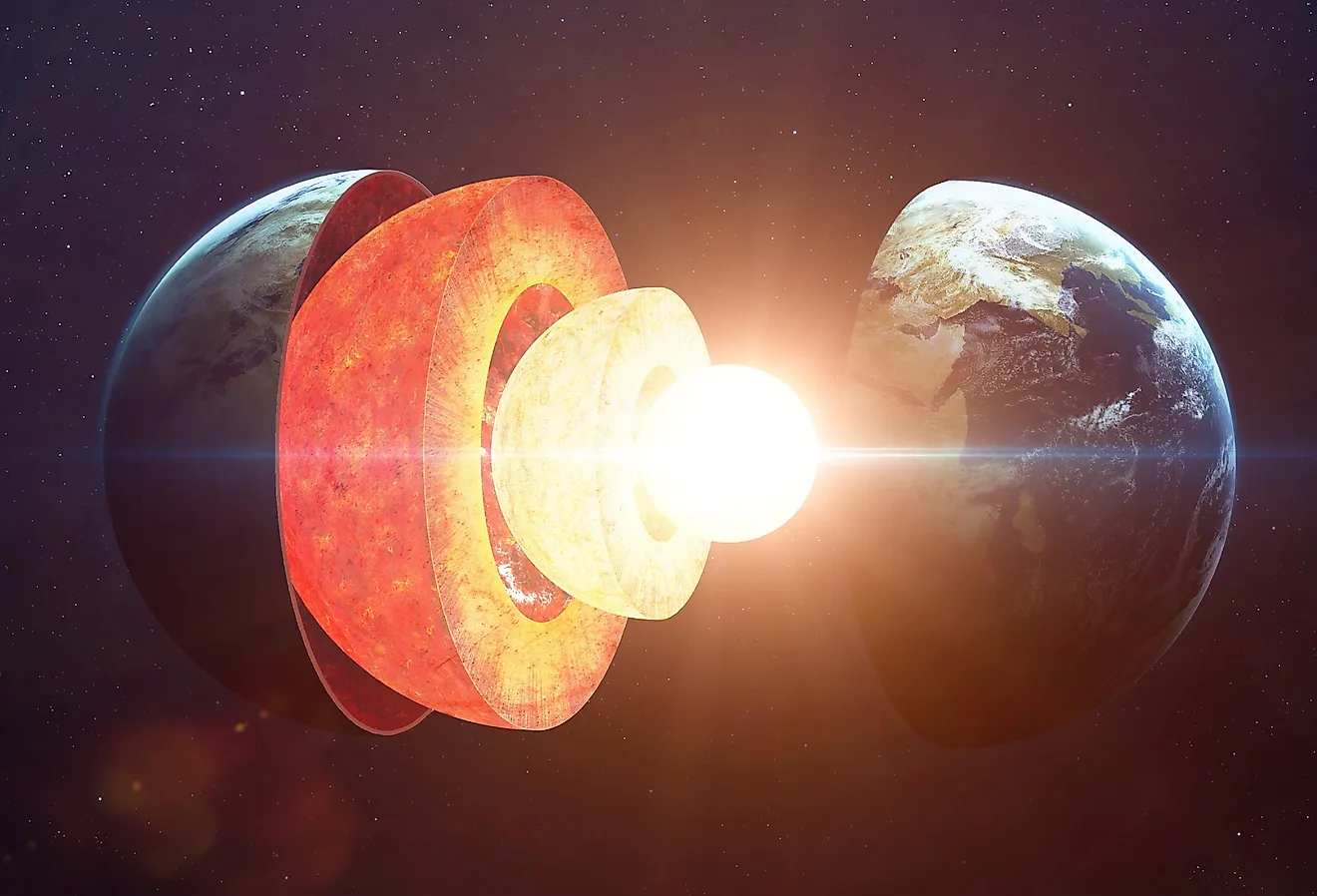
Dark energy is not there yet, but the pattern was strong enough to attract enormous attention because adding more DESI data had initially made the anomaly more noticeable rather than making it disappear. Some interpretations of the preferred model imply that dark energy's density has fallen by roughly 10% over approximately the past 4.5 billion years. Earth itself is about 4.5 billion years old. In other words, if that interpretation is correct, the dominant component of the universe may have measurably weakened over roughly the lifetime of our planet.
The Dark Energy Survey Added More Evidence

The Dark Energy Survey, or DES, spent six years observing hundreds of millions of galaxies across roughly 5,000 square degrees of sky. Its researchers used several techniques to track the expansion and growth of structure in the universe. Results released in 2026 again found some preference for evolving dark energy when DES measurements were combined with DESI and observations of the cosmic microwave background. The significance remained around the 3-sigma level in some combinations.
It also reveals one of the difficulties with the dark energy puzzle. The answer changes slightly depending on which cosmic measurements scientists combine and how those measurements are analyzed. If dark energy were dramatically changing, the evidence might be obvious. Instead, astronomers are hunting differences so small that two universes, one with constant dark energy and another with slowly evolving dark energy, could look almost identical to the human eye.
In July 2026, DESI researchers released improved measurements using what is known as the Lyman-alpha forest. Instead of relying only on galaxies, this method looks at patterns created as light from extremely distant quasars passes through clouds of hydrogen. Some of those quasars emitted the light we now see roughly 11 billion years ago. Each intervening cloud leaves a tiny absorption mark. String millions of those marks together and astronomers gain another way to reconstruct the structure and expansion of the early universe.
What Could Dark Energy Actually Be?

If dark energy changes with time, the cosmological constant becomes a less satisfying explanation. One possibility is that space contains some kind of dynamic field whose strength can evolve. Models of this general kind are sometimes called quintessence. Another possibility is more radical: the problem might not be dark energy at all. General relativity describes gravity extraordinarily well, but perhaps something about the theory needs modification when applied across billions of light-years. There could also be systematic errors hidden in one or more of the measurements. That is why scientists are reluctant to declare a revolution based on a few sigma. The unsettling possibility is that all the measurements are basically correct. If so, the model physicists use to describe the entire universe is missing something.
Is The Signal Real?

DESI finished its original survey observations ahead of schedule in April 2026 after mapping more than 47 million galaxies and quasars. Analyses using its full five-year dataset are expected to provide much stronger tests of dark energy. For almost three decades, the simplest picture has been that dark energy eventually wins, pushing galaxies farther apart while the universe becomes colder and emptier. Now scientists have evidence that the substance controlling the fate of the cosmos may itself be changing. The biggest mystery is no longer simply what dark energy is. It is whether the force shaping the future of everything has been quietly fading for billions of years.