Why China's Far Side Lunar Samples Matter
The Moon’s hidden face is an enigma that scientists are eager to understand. A crater about 1,550 miles wide scars the Moon’s far side, yet until 2024 scientists had never held a confirmed piece of this hidden hemisphere in their hands. China’s Chang’e-6 mission changed that by returning 1,935.3 grams, about 4.27 pounds, of rock and soil from the South Pole-Aitken Basin. Scientists believe this stepping stone will help answer some of our greatest cosmic mysteries, including the origins of our solar system and the future of lunar colonization.
The Hidden Hemisphere

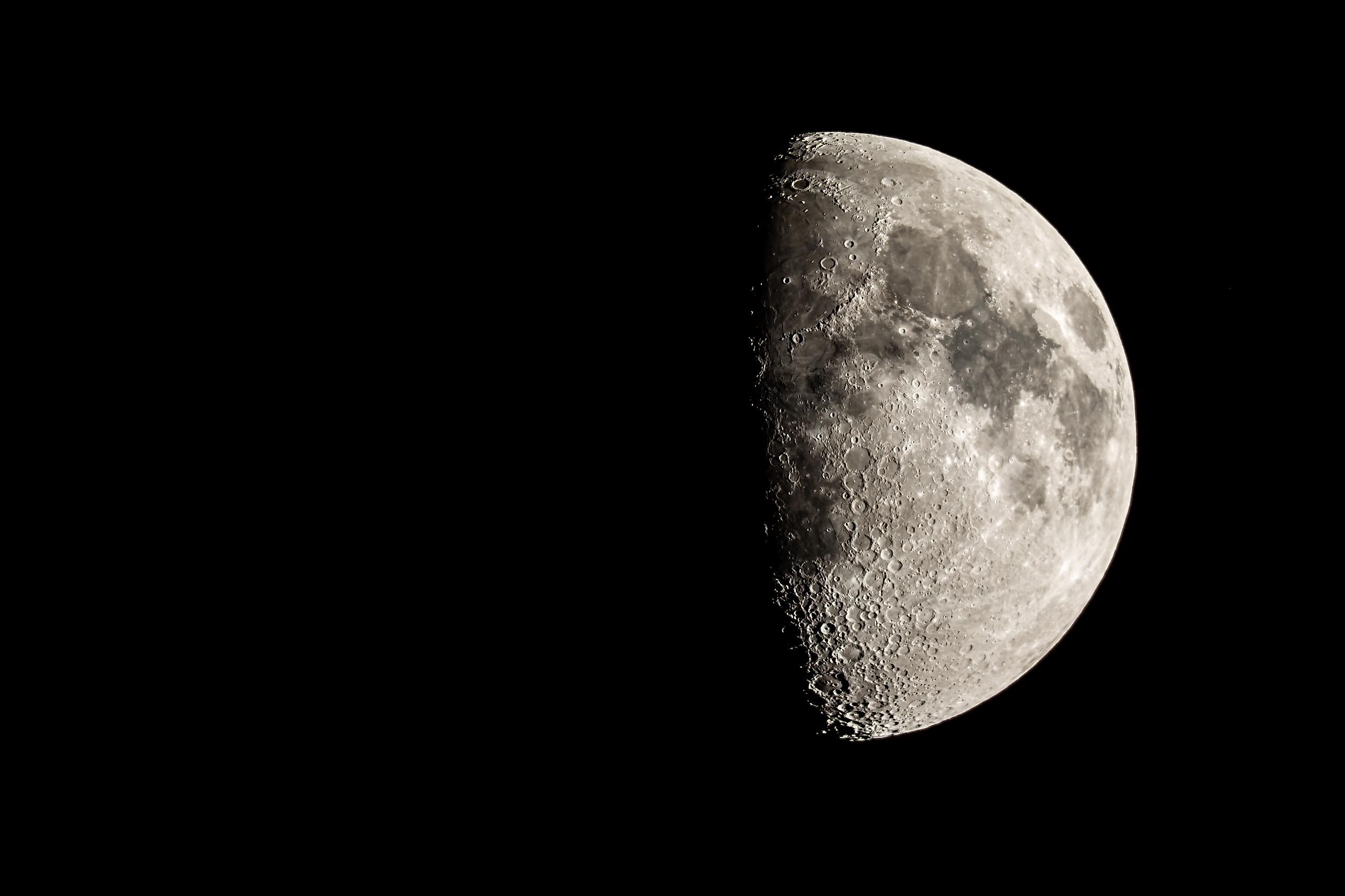
Synchronous rotation prevents us from seeing the Moon's far side from Earth. For most of human history, we had no idea what the Moon looked like. The expression “dark side of the moon” contributed to a myth that the far side is permanently dark. In reality, the phrase popularized by the 1973 Pink Floyd album shows humanity’s struggle to understand what it could not see.
We finally learned what the far side of the Moon looks like in 1959. Luna 3, the third spacecraft to ever reach the Moon, captured and returned the first photographs of the hidden lunar hemisphere. Although the photograph was blurry and indistinct, it set humanity on a course to seek out answers to the far side’s other mysteries.
Why Far Side Moon Samples Are So Rare

NASA's Apollo 11 mission retrieved the first lunar sample in 1969 from the near side of the Moon. Since then, nearly 10 additional samples have been brought back to Earth, all from the Moon’s near side. These results beg the question: if the far side of the Moon is so significant, why did we wait so long to get a sample?
Because the far side of the Moon never faces Earth, direct radio communication is impossible. If a rover or astronaut were to go “behind” the Moon, the rocky mass would block any signals and cut off communication. This is the main reason it’s taken so long to retrieve a sample from the Moon’s far side, as it poses a major dilemma for mission controllers.
How China Achieved The Impossible

China’s Chang'e-6 mission was the first of its kind, requiring extensive planning and innovation. The 53-day-long mission featured a complex sequence of 4 spacecraft. However, the true breakthrough was how China solved the formidable challenge of communicating with craft on the far side of the Moon.
In March 2024, China launched a relay satellite called Queqiao-2 to orbit the Moon. Strategic positioning allowed Queqiao-2 to act as a 2-way communication bridge between Earth and the Moon’s rear. Using this communication bridge, Earth-based controllers could communicate with the Chang'e-6 lander on the far side of the Moon to drill and collect the sample.
Solving The Two-Faced Moon Mystery

The near and far sides of the Moon are strikingly different. The side we see from Earth is covered in volcanic-formed dark patches, famous in folklore like “The Man In The Moon.” Meanwhile, the Moon’s far side has almost none of these dark spots, and scientists are still trying to understand why. In 2011, more questions arose when NASA's twin GRAIL orbiters revealed another significant contrast: the Moon’s far side is roughly 12 miles thicker on average than the near side.
Scientists believe this asymmetry is key to understanding the Moon’s evolution and its shared origin with Earth. Since China’s far-side lunar sample is the first of its kind, this is the first time in history scientists can compare the physical matter of the Moon’s 2 hemispheres. The sample totaled 68.3 ounces (4.3 lb) of fine lunar soil and solid rock fragments. By comparing it to near-side samples, scientists hope to definitively reveal why the 2 sides of the Moon are so different and what this means.
Unlocking Early Solar System History

Solving the two-faced Moon mystery could help unlock the early history of our solar system. Scientists believe many answers are tied to the South Pole-Aitken basin, where China retrieved the far-side lunar sample. The South Pole-Aitken basin is an enormous 4-billion-year-old crater primarily on the far side of the Moon. At 1,600 miles long, it is roughly the same length as a drive from New York City to Dallas, Texas. It is one of the oldest and largest impact scars in our solar system, covering a significant percentage of the Moon's total surface.
In 2026, researchers at the Institute of Geology of the Chinese Academy of Geological Sciences revealed a breakthrough in their study of the Moon’s 2 faces. The team used China’s first homegrown ion probe to examine the sample with extreme accuracy. The institute’s deputy director likened it to “shooting a basketball into a hoop from 3,000 meters away,” but the complex process paid off.
The study found that far side fragments contained more radioactive materials than the near side of the Moon. Scientists believe the same impact that caused this radioactive disparity also created the South Pole basin. The basin is the Moon's oldest impact, so scientists are eager to find out more about this cosmic time capsule. Since China’s sample is answering questions about the Moon’s evolution, the hope is that it can help us understand how other parts of our solar system formed as well.
Planning The Future Of Moon Colonization

Studying the world’s first far-side lunar sample is a critical measure for future lunar settlements. After NASA’s Apollo mission, many people believed that colonizing the Moon was impossible. Its lunar samples were extremely dry and completely lacked water, cementing the Moon’s reputation as a barren rock that could not sustain life. This consensus changed in 2008, when India’s Chandrayaan-1 probe discovered definitive proof of water and ice on the Moon. In 2024, the topic deepened with China’s far-side lunar sample.
China’s far-side samples also contained traces of water, and now researchers are trying to decipher a new space mystery. The new sample shows that the back of the Moon might be way drier than the front. Since more samples are needed to confirm these findings, research is ongoing. Regardless, understanding water sources on the far side of the Moon is another piece of the puzzle for planning future Moon bases and colonies.
A New Baseline For Lunar Science
There may not be a "dark side of the Moon," but the Moon’s far side remains shrouded in mystery. China’s Chang'e-6 mission was a feat in space exploration, catapulting our understanding of the previously unexplored hemisphere. Still, there is much more to explore and even more to understand.
As we’ve seen with near-side lunar samples, new discoveries are constantly changing our perception of Earth’s Moon. While we previously saw the Moon as a barren rock, the discovery of water proved otherwise. Likewise, China’s far-side lunar sample is a revolutionary baseline to compare all future findings to, whether it’s evidence of our solar system’s origins, proof that humanity can survive on the Moon, or something no scientist could have predicted.