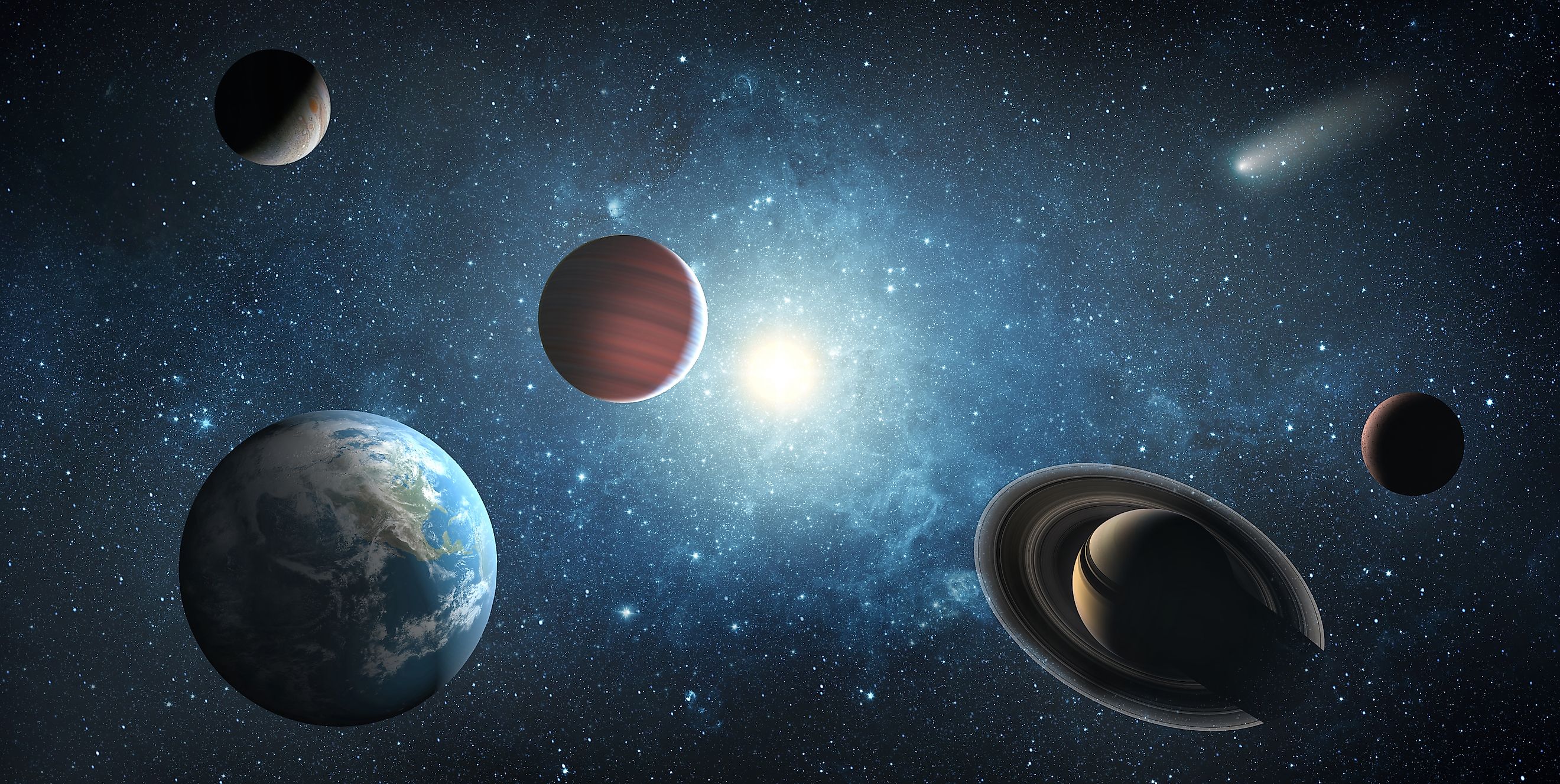
Why Earth Is The Only Planet Not Named After A God
For thousands of years, humans looked up at the night sky, identified the wandering points of light, and gave the planets names inspired by the gods they worshipped.
They named one for the swift messenger, another for the goddess of love, and another for the mighty ruler of the heavens.
However, there is one planet they overlooked: the one they were living on.
Earth: The Only Planet Without A Deity

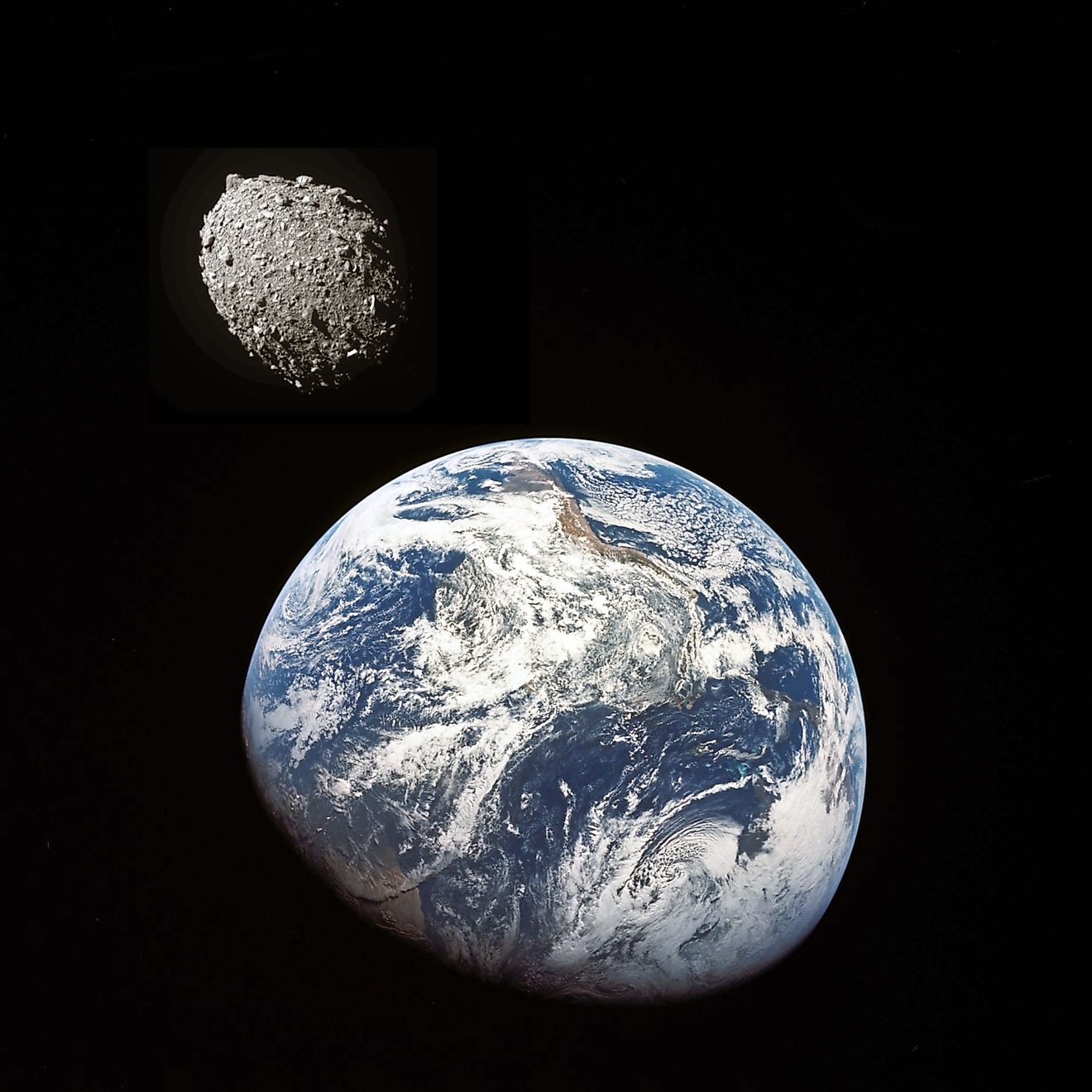
While the other worlds in our solar system received names honoring various deities, the world beneath their feet kept a more practical name. Earth is derived from the Old English word eorþe, which evolved into erthe in Middle English and eventually earth in modern English.
It refers to the soil, ground, or land beneath our feet. It is a fitting name for the planet that provides the ground on which we live, but it also makes Earth something of an exception.
Humans have always known about the world on which they lived, but recognizing it as a planet was another matter. For centuries, people believed Earth was the stationary center of the universe. That understanding started to change in 1543, when Polish astronomer Nicolaus Copernicus published his Heliocentric model, placing Earth among the planets orbiting the Sun.
Unlike its planetary neighbors, Earth kept a name that described what people knew long before they understood what it was.

Although the Ancient Greeks had a goddess named Gaia, the personification of Earth, and the Romans worshipped Terra Mater, or Mother Earth, by the time it was discovered that Earth was a planet, its name was well cemented.
It should be noted that Copernicus was not the first person to propose that Earth orbited the Sun. About 1,800 years earlier, Greek astronomer Aristarchus of Samos suggested a heliocentric model. However, in the third century BCE, such a radical notion was quickly dismissed. When Copernicus revived and further explored the idea, it started to gain acceptance.
Mercury, Venus, Mars, Jupiter, and Saturn were visible to the naked eye and had been observed by ancient civilizations for thousands of years. The names we use today largely come from Roman mythology, although the Ancient Romans borrowed heavily from earlier Greek astronomical traditions.
Mercury: The Swift Messenger

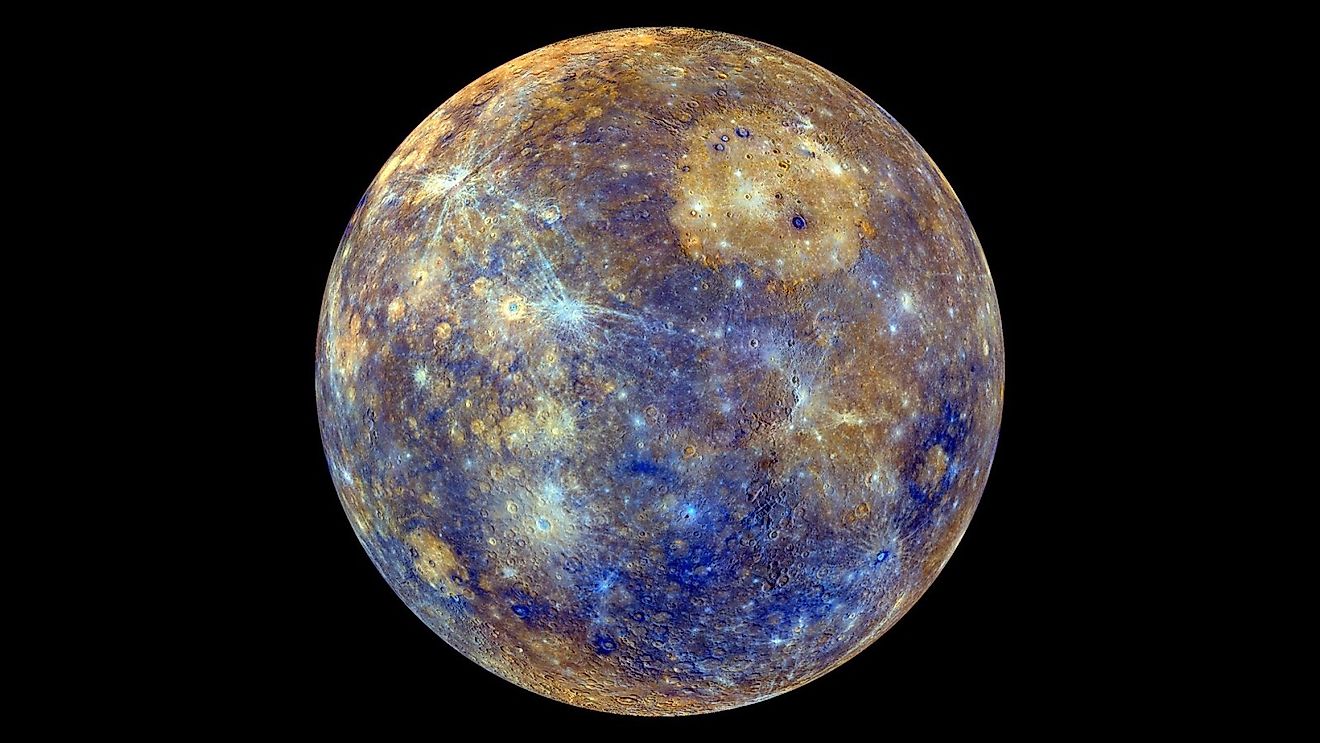
Mercury is the closest planet to the Sun and is the fastest-moving of the eight planets, completing an orbit in just 88 days. Its rapid movement across the night sky caught the attention of ancient astronomers, who associated it with the messenger of the gods.
The Romans named it Mercury, after their god of communication, travelers, commerce, and thieves. The Greeks associated the planet with Hermes, their counterpart to Mercury.

Babylonian astronomers recorded observations of the planet as early as the first millennium BCE, and Greek and Roman astronomers studied and recorded its movements. The Romans saw Mercury's speed as a fitting match for their winged messenger, who could travel between the worlds of gods and humans.
In mythology, Mercury was often depicted wearing a winged helmet, sandals, and carrying a staff called a caduceus. His name remains an appropriate choice for a planet that races around the sun faster than any other.
Venus: Goddess of Love and Beauty

Venus is the brightest planet in the Earth's night sky, often appearing as a brilliant point of light shortly before sunrise or after sunset. Its striking appearance inspired ancient civilizations to associate it with beauty and love.
The Romans named the planet after Venus, their goddess of love, beauty, and fertility. Her Greek counterpart is Aphrodite, who was also associated with love and physical beauty. Venus is the only planet named after a female deity.

Ancient astronomers did not initially realize the bright object appearing in the morning and the one appearing in the evening were the same planet. The Greeks called the morning appearance Phosphorus, meaning light-bringer, and the evening appearance Hesperus.
By the third century BCE, Greek astronomers recognized they were observing one celestial body. Pythagoras of Samos is credited with understanding this connection. Once the Romans adopted the Greek astronomical traditions, the planet became associated with Venus. Its brilliant appearance made the goddess of beauty a natural choice.
Mars: The Red Planet of War

Mars has fascinated skywatchers for thousands of years, partly because of its distinctive reddish appearance. Ancient Romans associated the color with blood and battle, making their god of war an appropriate namesake. The planet became known as Mars, after the Roman deity who represented warfare, military strength, and agriculture.
In Greek mythology, his counterpart is Ares, a god often portrayed as aggressive and destructive. Unlike some Roman gods, Mars was widely respected and played an important role in Roman religious life. He was considered the father of Romulus and Remus, the legendary founders of Rome.

The planet's visibility without a telescope meant that ancient civilizations could observe and track it across the sky. The Egyptians referred to it as Her Desher, meaning The Red One. Mars' distinctive color continues to influence how people describe it today.
Although modern astronomy has revealed a rocky world with enormous volcanoes, deep canyons, and evidence of ancient water, its association with warfare remains embedded in its name.
Jupiter: King of the Gods

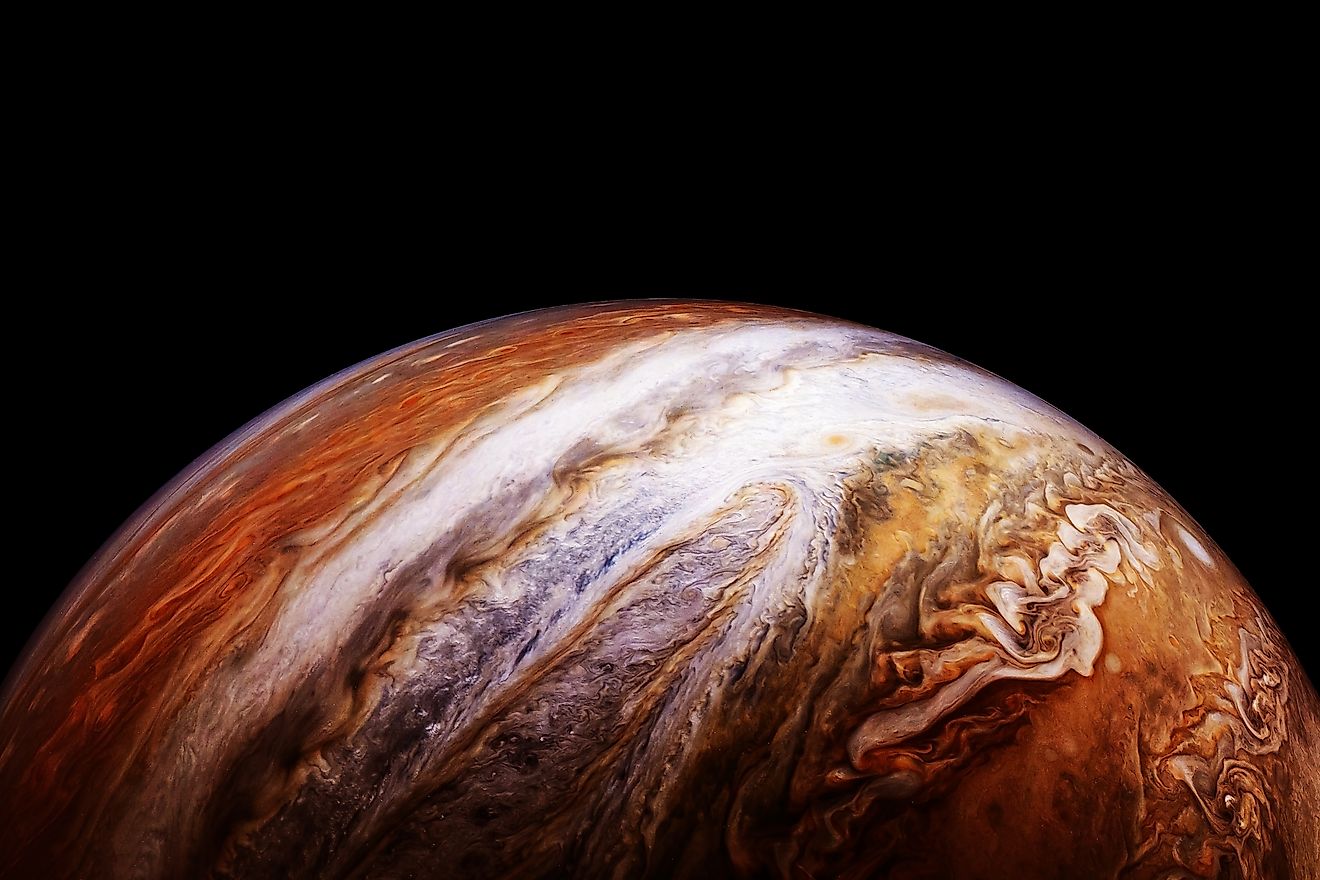
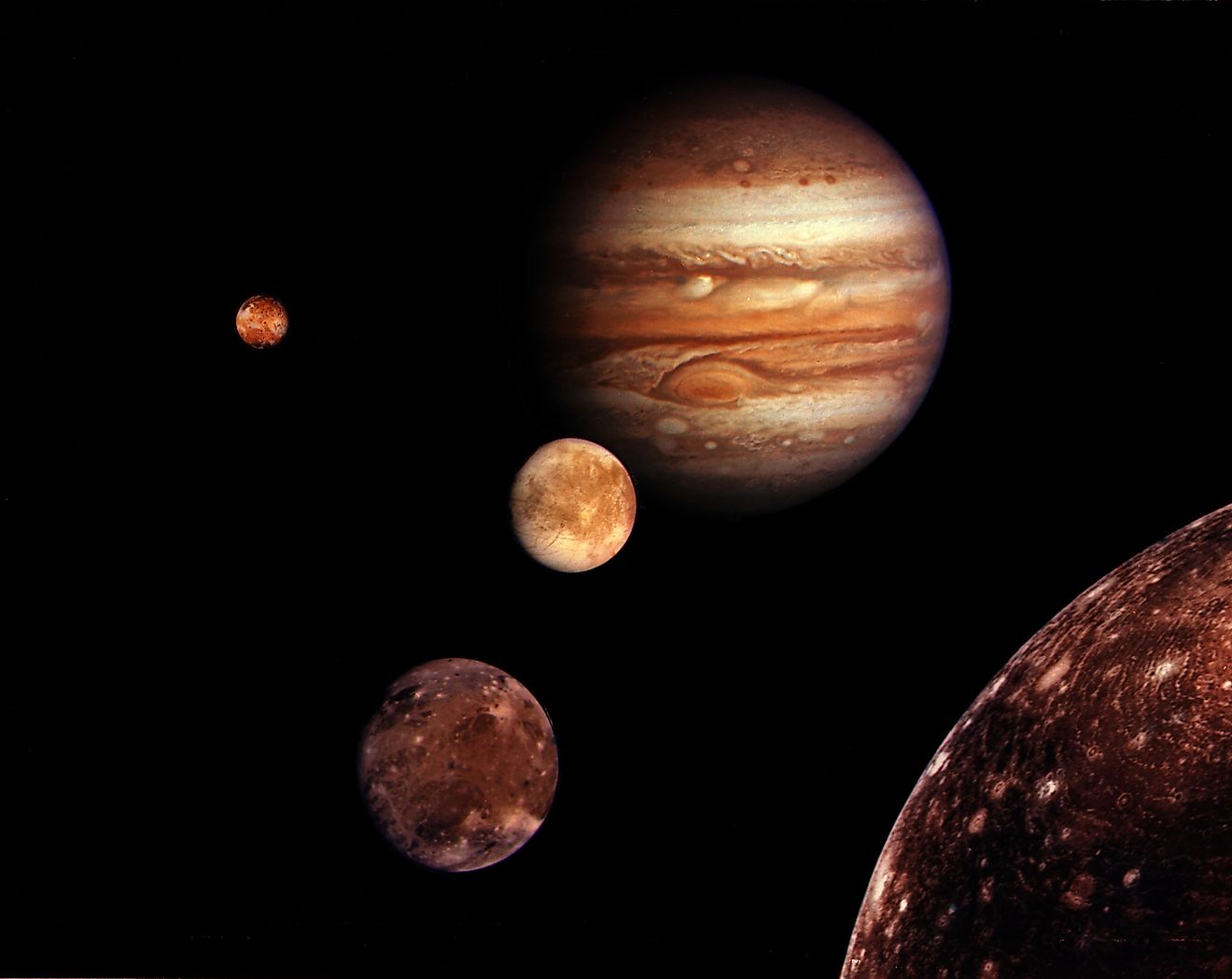
Jupiter is the largest planet in our solar system, so it seems fitting that it carries the name of the most powerful god in Roman mythology. Jupiter ruled over the gods and was associated with the sky, thunder, lightning, and justice. His Greek counterpart was Zeus, the king of Mount Olympus.
In Roman mythology, Jupiter was considered the protector of the Roman state and its people, making him one of the most important deities in the pantheon.

Like Mercury, Venus, and Mars, Jupiter was known to ancient civilizations long before the invention of telescopes. Babylonian astronomers carefully tracked its movements, while Greek observers recognized it as one of the five wandering planets.
The Romans eventually gave it the name of their supreme deity, likely reflecting its prominence and brightness in the night sky. Jupiter takes nearly 12 years to complete one orbit around the Sun, a slow, stately journey that seems fitting for the planet named after the ruler of the gods.
Saturn: Planet of Agriculture and Time

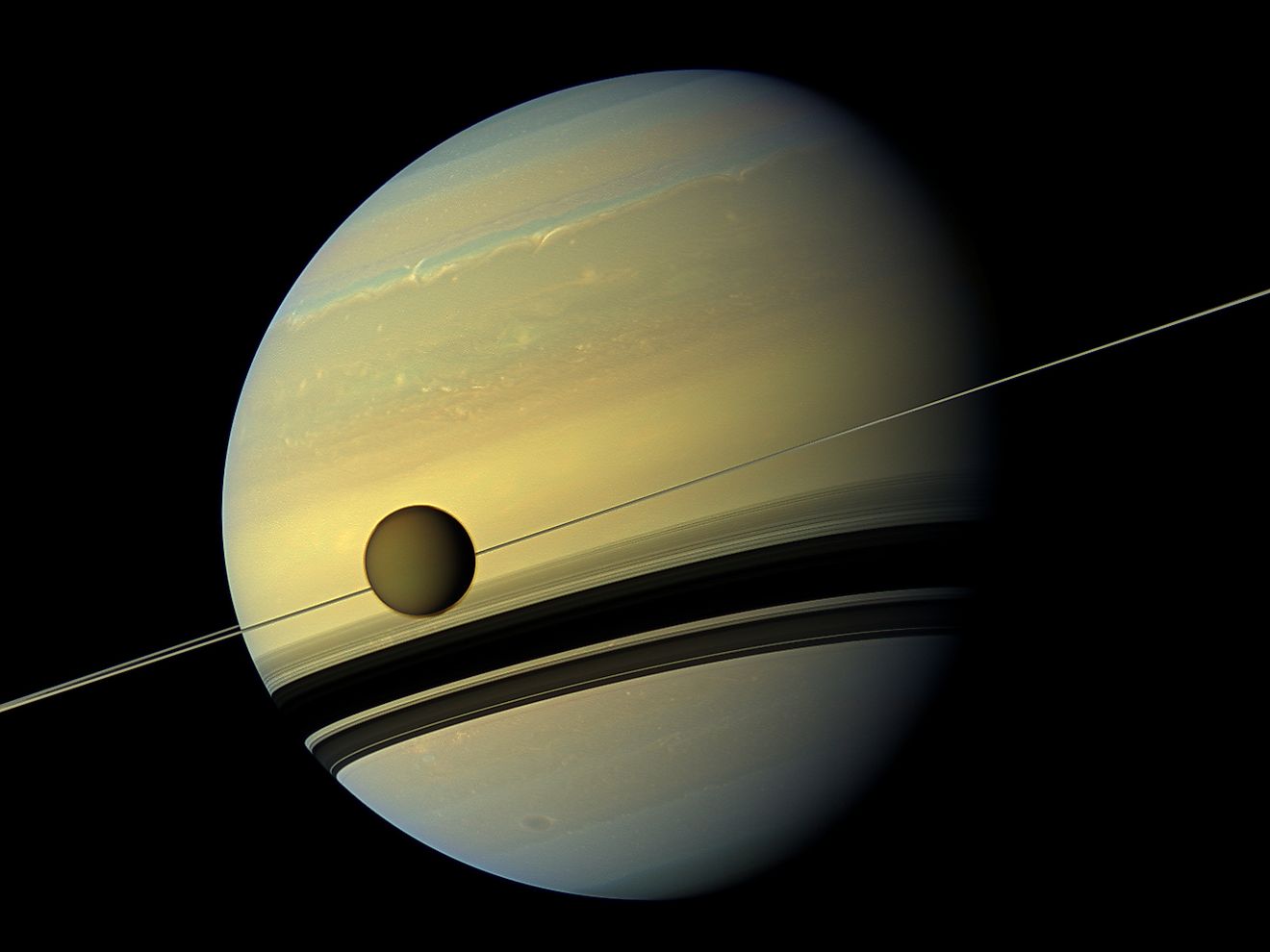
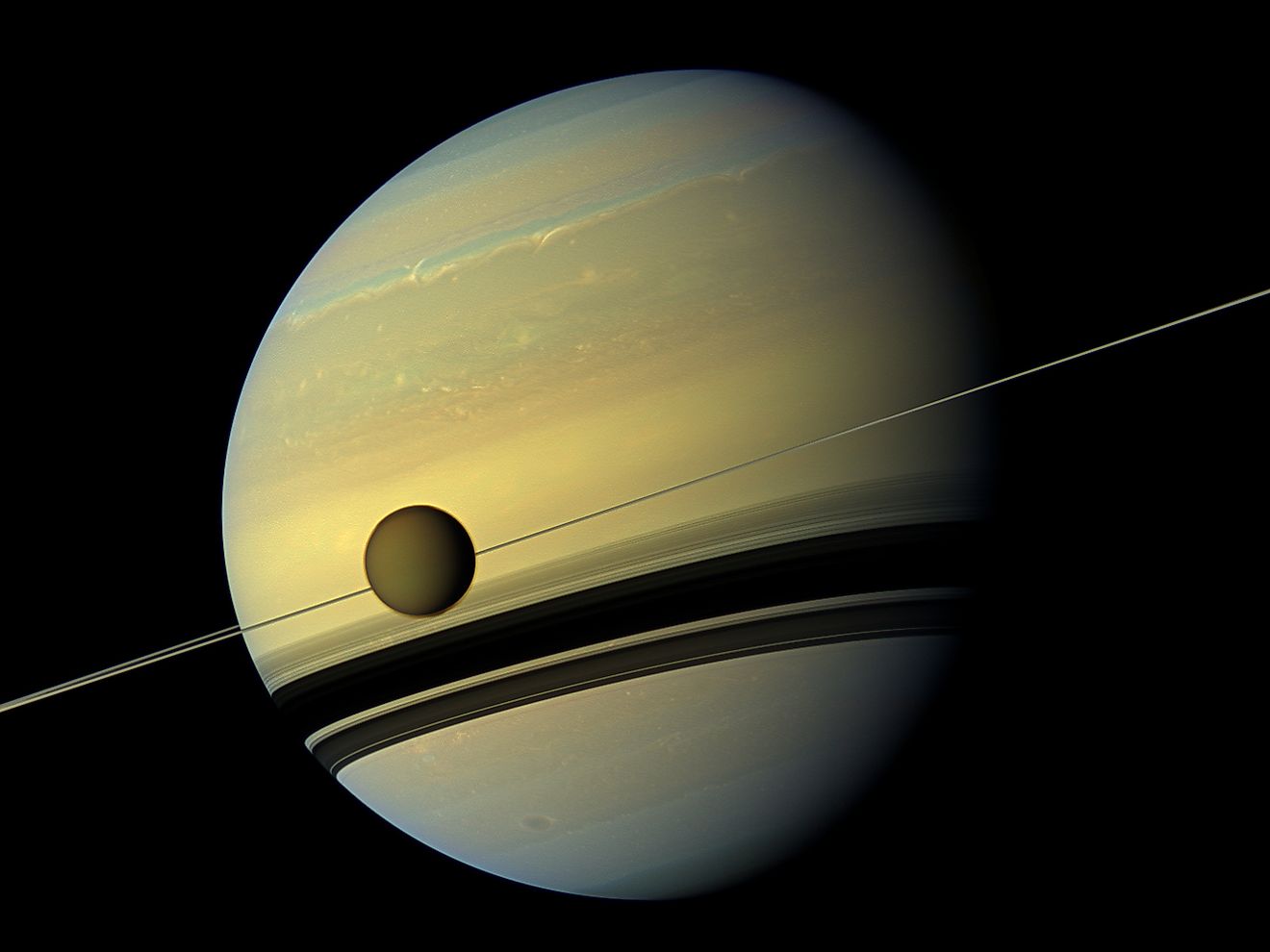
Saturn is the most distant planet visible to the naked eye under favorable viewing conditions, and ancient astronomers recognized its slow movement across the night sky. The Romans named it Saturn, after their god of agriculture, wealth, and time.
In Greek mythology, Saturn's counterpart was Cronus, a Titan who ruled before the Olympian gods. According to legend, Cronus was overthrown by his son Zeus, who then became the ruler of the gods. Saturn also held an important place in Roman culture, with the annual festival of Saturnalia honoring him through celebrations, feasting, and gift-giving.

Long before telescopes would discover additional planets, the Babylonians, Greeks, and Romans had been observing and recording the movement of Saturn. Its slow apparent movement helped distinguish it from the other visible planets, and its name reflected the importance of the agricultural deity in Roman society.
Today, Saturn is best known for its spectacular ring system, which wasn't observed until Galileo Galilei examined the planet through a telescope in 1610. Galileo initially struggled to understand what he was seeing, as his early telescope did not clearly show the rings.
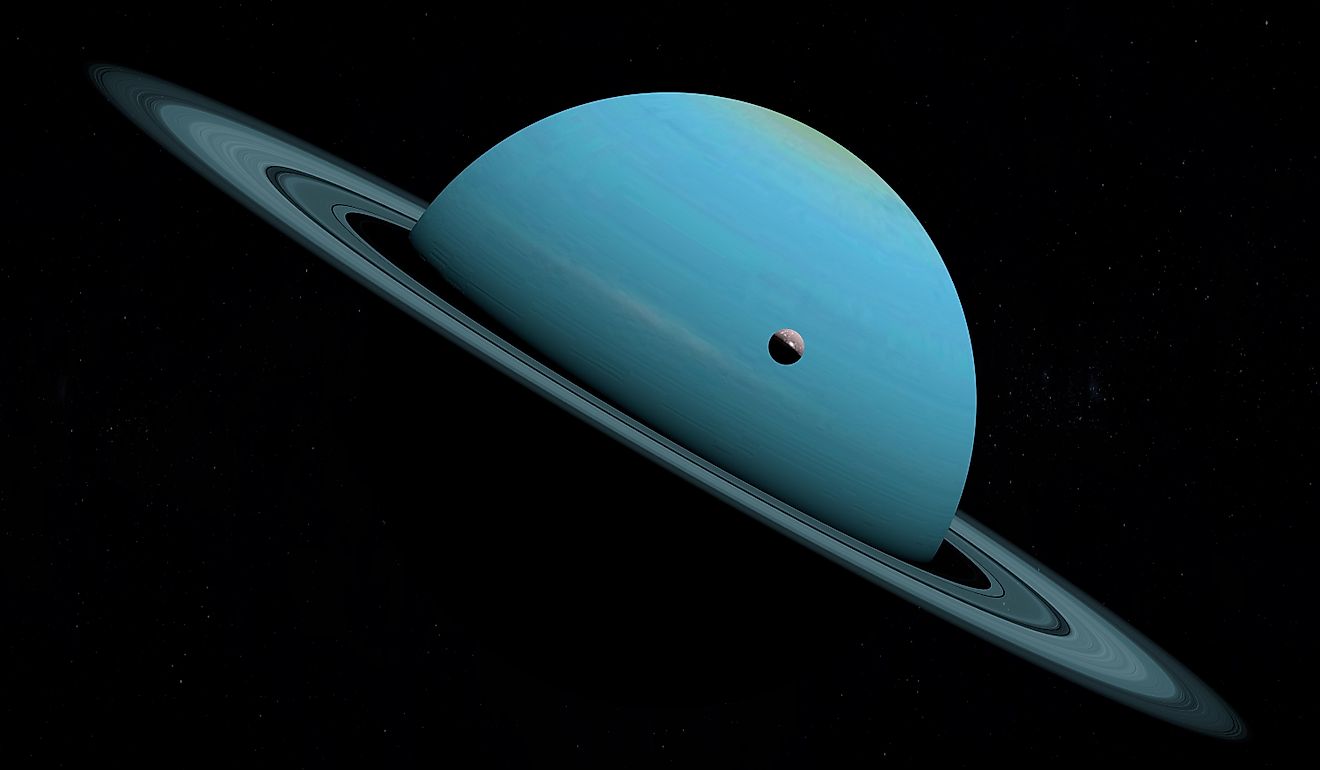
Uranus: First Planet Discovered with a Telescope

Unlike the five planets known since antiquity, Uranus wasn't recognized as a planet until March 13, 1781. British astronomer William Herschel spotted it while observing the sky from his home in Bath, England.
Initially, he thought he had discovered a comet, but further observation revealed the object was following a planetary orbit. Earlier astronomers had also observed Uranus without recognizing it as a planet, mistakenly recording it as a star.

Herschel initially wanted to name his discovery Georgium Sidus, or George's Star, in honor of King George III. However, other astronomers objected to naming a planet after a British monarch. German astronomer Johann Elert Bode suggested Uranus instead, continuing the tradition of using names of ancient deities.
Uranus was the ancient Greek god of the sky and the father of Cronus, known to the Romans as Saturn. The name also helped establish a mythological family connection between the planets. Uranus became the generally accepted name during the 19th century, although the British continued using Herschel's original suggestion for several decades.
Neptune: A Planet Found Through Mathematics

Neptune was discovered on Sept. 23, 1846, but its identification began with a mathematical puzzle. Astronomers noticed that Uranus wasn't following the precise orbital path predicted by existing calculations.
French mathematician and astronomer Urbain Le Verrier and British mathematician John Couch Adams independently calculated that the gravitational influence of another, undiscovered planet might explain the irregularities.
Le Verrier sent his predictions to German astronomer Johan Gottfried Galle, who used a telescope at the Berlin Observatory to locate the planet within the predicted area of the sky.

The new planet was named Neptune, after the Roman god of the sea. His Greek counterpart was Poseidon, who ruled the oceans and was often depicted carrying a three-pronged trident. The name was particularly appropriate for the distant planet, which appears blue because of methane in its atmosphere.
Le Verrier advocated the name Neptune shortly after the discovery. The name eventually gained widespread acceptance, continuing the tradition of naming planets after ancient deities, even as astronomy entered a more scientific era.