How Many Earths Could Fit Inside Jupiter
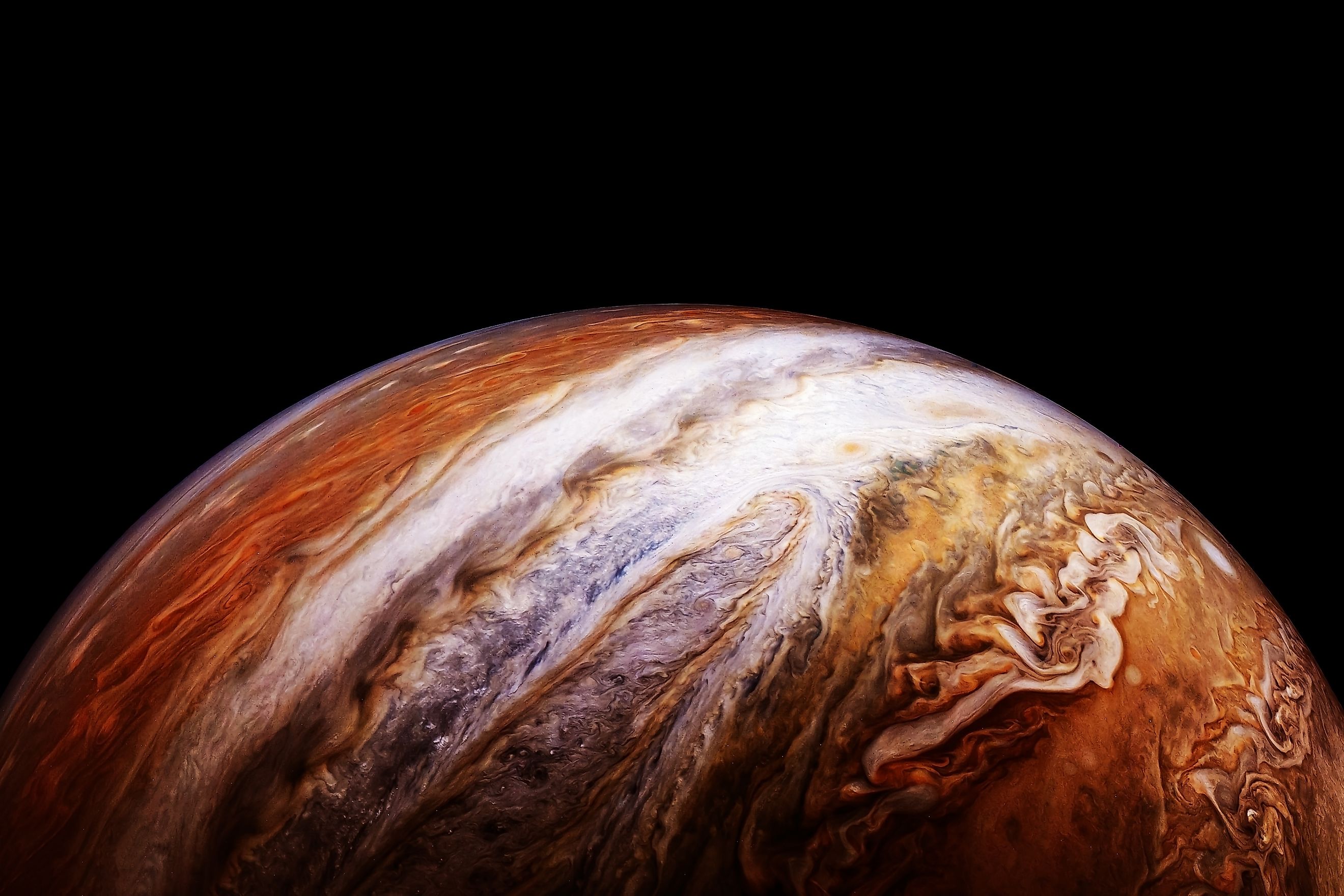
Crack Jupiter open like a giant hollow shell, and you could pour in more than 1,300 Earths. Line our planet up across Jupiter's middle, and it would take about 11 Earths to span its full width. Jupiter is the biggest planet in the solar system by a huge margin, a swirling ball of hydrogen and helium with no solid surface to stand on. Everything about this gas giant is supersized, including storms that could swallow our planet whole and moons bigger than Mercury. And yet next to the Sun, even this giant looks small.
The 1,300 Earth Answer

The number comes from volume, the amount of space an object fills. Because Jupiter is 11 times wider than Earth, and volume grows in three directions at once, that difference adds up fast, to more than 1,300 Earths, according to NASA.
There is a catch, though. Earths are round, and round objects never pack together perfectly. Stack them inside Jupiter like oranges in a crate, and the gaps between them would cut the real count to roughly 1,000. To hit the full 1,300, you would have to squish the Earths down and pour them in like liquid.
Picture It At Human Scale

Numbers that big are hard to imagine, so shrink everything down. According to NASA, if Earth were the size of a nickel, Jupiter would be about as big as a basketball. Set them side by side, and the difference is almost comical.
Distance stretches the scale even further. Jupiter orbits about five times farther from the Sun than Earth does. NASA's Juno spacecraft, launched in 2011, needed five years to get there. And Jupiter's gravity is about two and a half times stronger than Earth's at the top of its clouds, so a 150-pound person would feel like they weighed well over 350 pounds, if they had anywhere to stand.
Try going around it instead. Jupiter's equator stretches more than 270,000 miles (439,000 km), roughly 11 times the distance around Earth. A jetliner cruising nonstop at 550 miles per hour would need about three weeks to fly all the way around, assuming it could survive the winds, which can top 300 miles per hour in some of Jupiter's cloud bands.
Big But Not Very Heavy
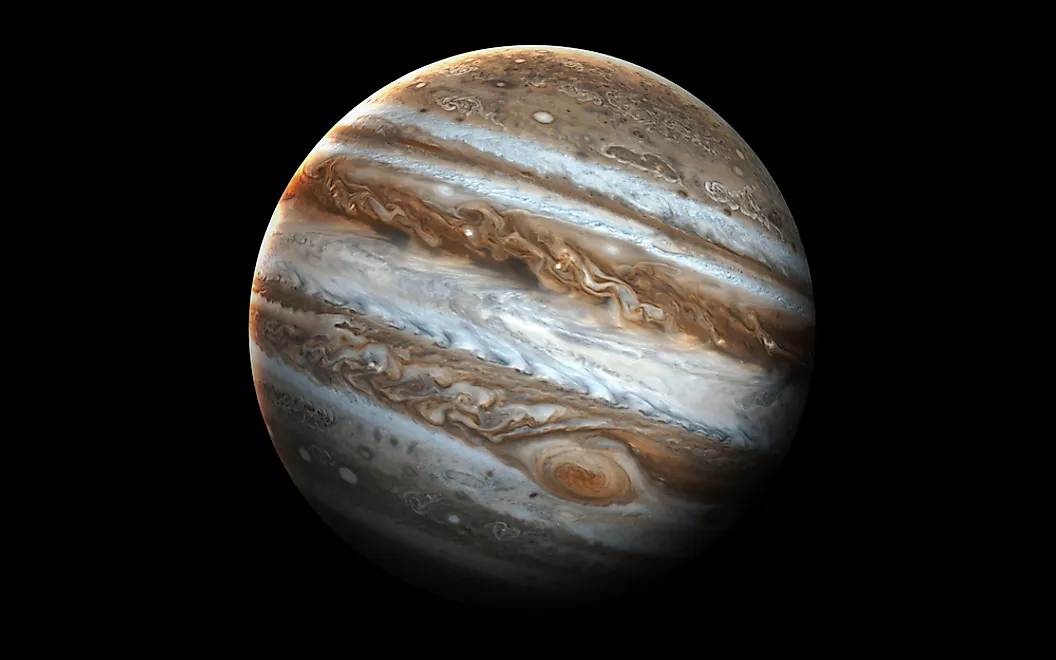
Here is a surprise. Jupiter has more than 1,300 times Earth's volume, but only about 318 times its mass. That is because Jupiter is made mostly of light gases, hydrogen and helium, while Earth is packed with heavy rock and metal. Scoop up a cup of Jupiter, and it would weigh about a quarter as much as a cup of Earth.
Even so, Jupiter is a heavyweight. It holds more than twice the mass of all the other planets in the solar system combined. It also spins faster than any other planet, completing a full day in about 10 hours. That rapid spin flattens it slightly, so Jupiter bulges noticeably at its equator.
No Ground To Stand On

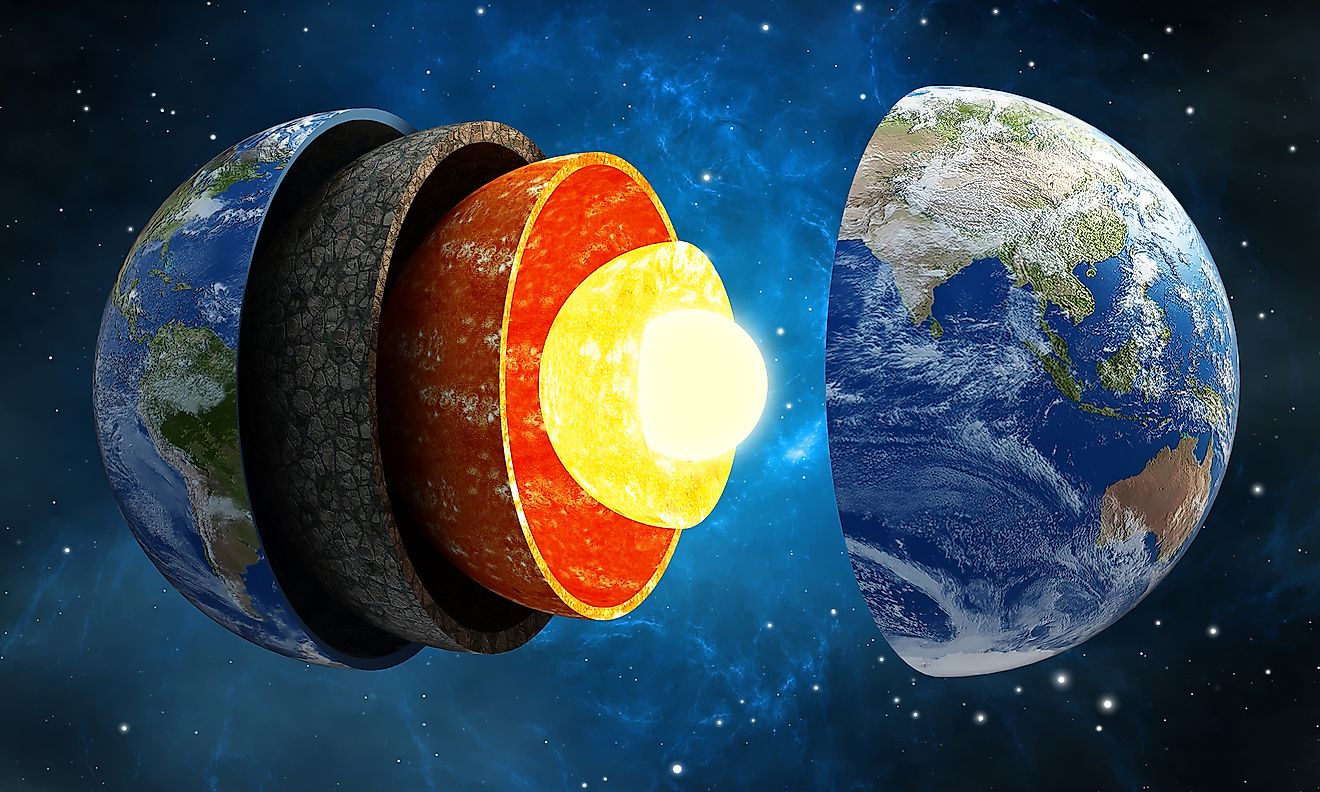
All that volume is not filled with anything you could walk on. Jupiter has no solid surface. Fly a spacecraft into it, and you would sink through layer after layer of thickening clouds and gas, with pressure and heat rising the whole way down, until the spacecraft was crushed long before reaching anything solid.
Deep inside, the pressure is so intense that hydrogen is squeezed into a strange form scientists call liquid metallic hydrogen, which can conduct electricity like metal. As Jupiter spins, that churning layer generates the most powerful magnetic field of any planet in the solar system. It funnels charged particles into Jupiter's poles, where they light up auroras far larger and brighter than Earth's northern lights. Jupiter even has rings, though they are faint and made of dust, so dim that no one knew they existed until NASA's Voyager 1 spacecraft spotted them in 1979.
A Storm Bigger Than Our Planet

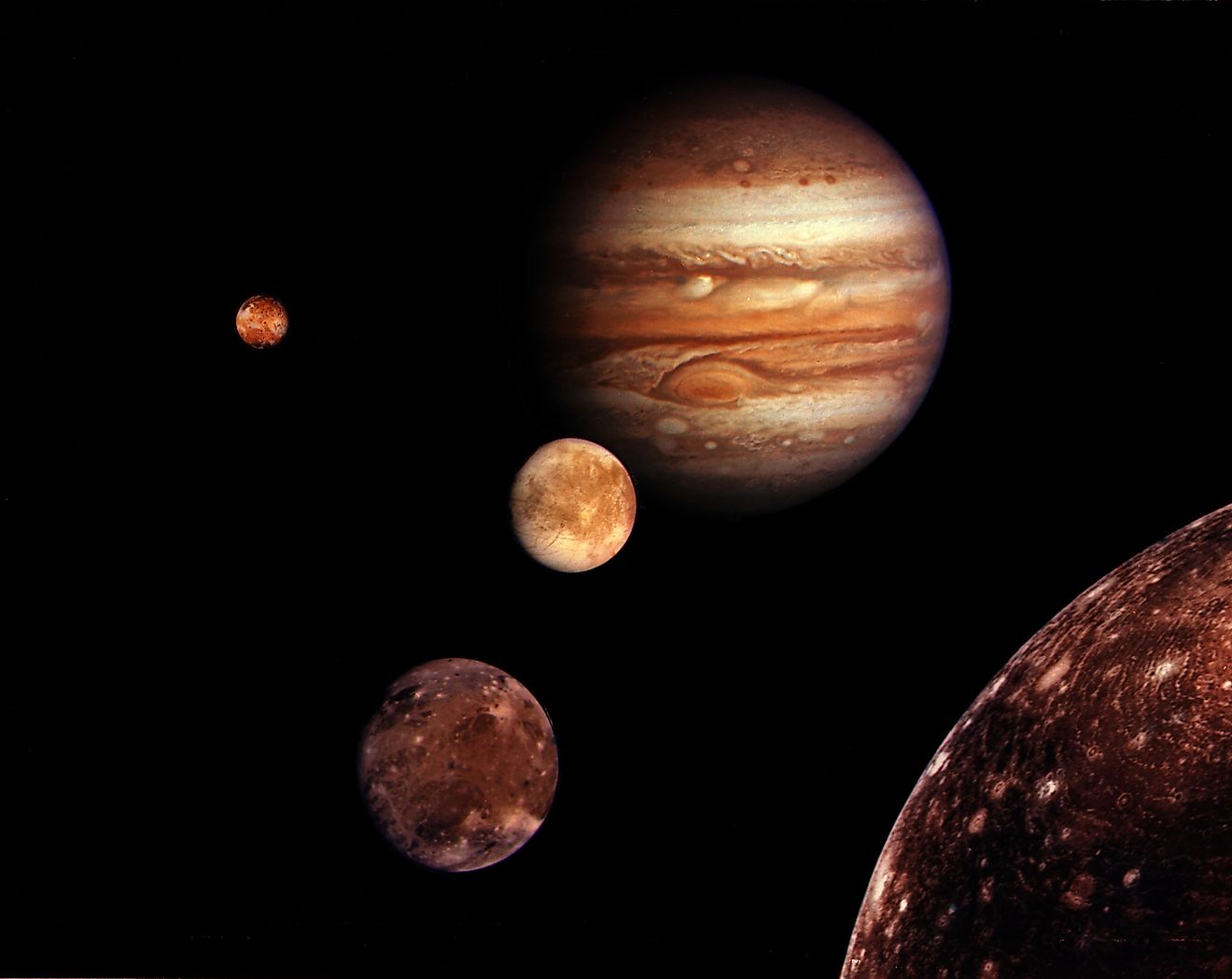
Jupiter's most famous feature, the Great Red Spot, is a giant storm wider than the entire Earth. Astronomers have watched it swirl for more than 150 years, and it may be far older. The storm has been slowly shrinking for decades, but our whole planet could still disappear inside it.
In 1994, the world got a dramatic demonstration of Jupiter's scale. Fragments of Comet Shoemaker-Levy 9 slammed into the planet one after another, leaving dark scars in its clouds, some of them larger than Earth. It was the first time scientists had watched two objects in the solar system collide.
A Planet With Its Own Solar System

Jupiter is so massive that it controls a crowd of nearly 100 known moons, almost like a miniature solar system. Its largest, Ganymede, is bigger than the planet Mercury. Io is the most volcanically active world in the solar system, with hundreds of volcanoes erupting across its surface. Europa hides a vast ocean beneath its icy shell, possibly holding more water than all of Earth's oceans combined.
That ocean is why NASA launched the Europa Clipper spacecraft in 2024. When it arrives in 2030, it will fly past Europa again and again, studying whether its hidden sea could support life.
Even Jupiter Is Small Next To The Sun
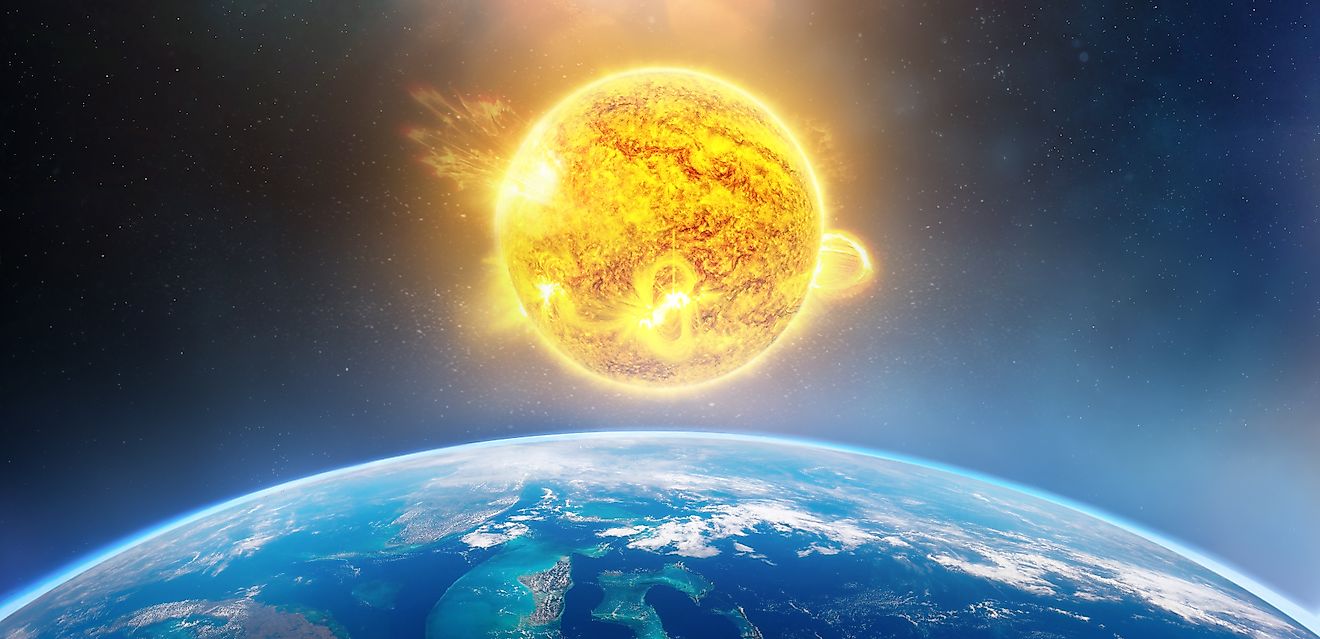
For all its size, Jupiter is still a lightweight compared with the Sun. About 1,000 Jupiters could fit inside our star, and Jupiter would need roughly 80 times its current mass to start burning like a star itself, a scenario explored in what Jupiter would look like as a star. Stand on Earth and look up at the bright point of light that is Jupiter on a clear night, and remember that tiny dot could hold more than 1,300 of the planet you are standing on.