Space
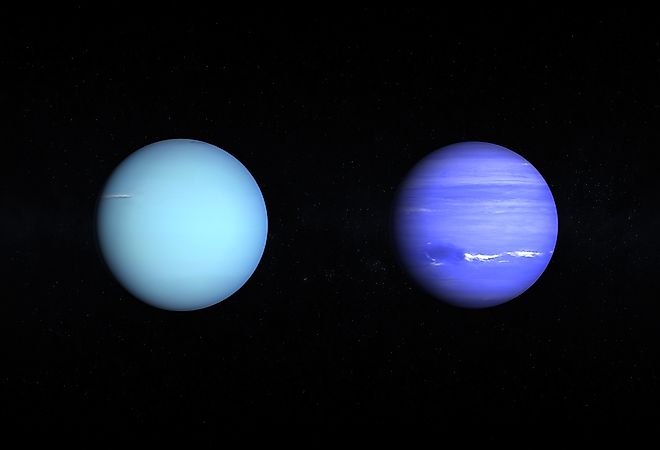
Which Planet Has The Fewest Visitors From Earth?
Uranus and Neptune have each had exactly one visitor: Voyager 2, in 1986 and 1989. No spacecraft has returned to either ice giant since.
Which Moon Could Be Shooting Geysers Into Space?
Computer models hint at geysers erupting from Europa's icy crust, the kind already confirmed on Saturn's moon Enceladus. Europa Clipper arrives in 2030.
What Happens If Kessler Syndrome Starts
One shattered satellite could start a chain reaction in orbit, multiplying debris until entire regions of space become too dangerous to use.
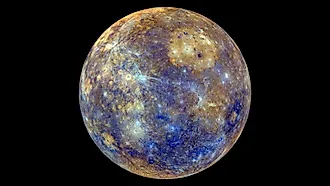
Which Planet Has The Weakest Gravity?
Mercury has the weakest gravity of any planet. Its huge iron core still makes it pull harder than its small size suggests.
Why Doesn't the Moon Fall?
Gravity pulls the Moon toward Earth every second, yet it never lands. Tangential speed and Earth's curved surface turn that fall into a stable orbit.
Which Planet Would Float On Water?
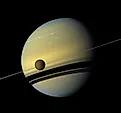
The massive planet of Saturn, a gas giant, has a density such that if you could place it in a giant tub of water, it would float.
Where America Watches For Asteroids From
Mountaintop telescopes, a Cambridge clearinghouse, and JPL orbit specialists share the job of spotting asteroids early in America.
Which Moon Is The Coldest?
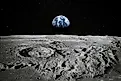
Triton is frozen almost beyond imagination, but Earth’s Moon hides an even colder secret inside craters untouched by sunlight.
The K2-18b Biosignature Debate And What It Actually Means
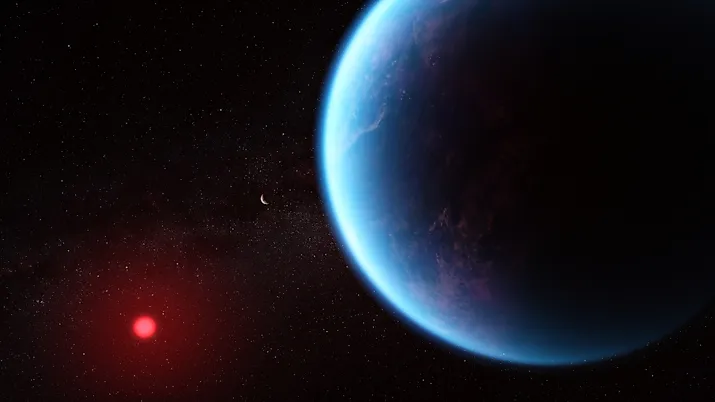
Scientists found possible signs of life on K2-18b, but the evidence soon weakened. Here is what the latest research actually tells us.
Which Planet Is The Densest?
Earth is the solar system's densest planet at 5.514 g/cm³. See how mass, volume, and rocky composition determine planetary density.

What Is The Most Volcanic World In The Solar System?
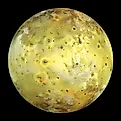
Io has at least 400 active volcanoes, throwing lava fountains dozens of miles high. The cause is not tectonics but Jupiter's gravity.
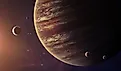
What Is The Largest Object In The Solar System After The Sun?
Jupiter isn't just the biggest planet; it's the largest object in our Solar System after the Sun, 11 times wider than Earth.
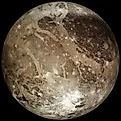
Which Moon Is The Largest?
Ganymede outsizes the planet Mercury and hides an ocean that may hold more water than all the seas on Earth's surface.
Which Planet Is The Least Dense?
Lighter than water despite its size, Saturn measures a mere 0.69 g/cm3. Here is why the solar system heavyweight is really its lowest-density world.
What if Earth Stopped Spinning?
See what would happen if Earth stopped spinning, from catastrophic winds and ocean surges to year-long days and a transformed climate.
What Happens If GPS Goes Down
Pretty much everything we do with a phone today incorporates GPS at some point. If we were to suddenly lose our skyward helper, it would cause many issues.
Why Uranus Spins Sideways
Uranus is the butt of countless childish jokes, but there are truly interesting qualities to it. Here's why Uranus spins sideways.
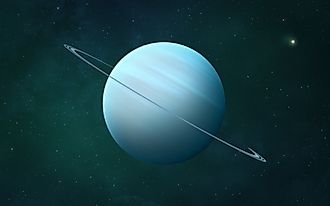
Which Planet Is The Smallest?
Although the context can change the answer to this question, Mercury is the smallest planet, circling closest to the Sun.
How Long Would It Take To Travel To Each Planet?
Moving at a speed of 50,000-miles per hour, it would take 32-days to reach Venus, the closest planet, and 2,250-days to reach Neptune, the furthest planet.
Speed Of Sound VS Speed Of Light
Light is about 880,000 times faster than sound, but the real differences are stranger: what each needs to travel through, and what slows them down.
Which Planet Has The Longest Year?
As the rhyme goes, Mercury is the one, closest to the shining sun. But which planet is furthest, and which has the longest year?

Which Planet Has The Deepest Canyon?
The deepest canyon in our galaxy is found on Mars, known as Valles Marineris, which plunges nearly seven miles deep and is 2,400 miles long.
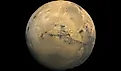
Which Moons Are Bigger Than A Planet?
Ganymede and Titan are wider than the planet Mercury. Inside the buried ocean, the moon-made magnetic field, and the rule that makes them moons.
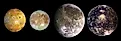
Which Moon Hides The Biggest Ocean Under Its Ice?
Ganymede, Jupiter's largest moon, hides an ocean 60 miles deep beneath 95 miles of ice, likely the biggest body of water in the solar system.
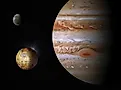
Which Planet Has the Longest Day?
Venus is considered to be the planet with the longest sidereal and solar day in the solar system, lasting around 243 Earth days.
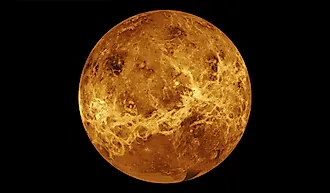
Which Planet Is the Windiest?
Discover why Neptune is the windiest planet in the solar system, how fast its winds are, the drivers of its storms, and what scientists still hope to learn.
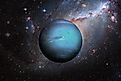
Could Earth Ever Have Two Moons?
Earth's Moon is an unerring companion in our night sky. But is it alone? Could the Earth ever have two moons, and if so, what would it look like?
Why Don't Stars Twinkle in Space?
Learn why stars twinkle on Earth but shine steadily in space and how atmospheric turbulence affects planets and astronomical observations.
Which World Has The Tallest Mountain In The Solar System?
Learn why Olympus Mons on Mars is the Solar System’s tallest known mountain and how it compares with Everest and Vesta’s giant peak.
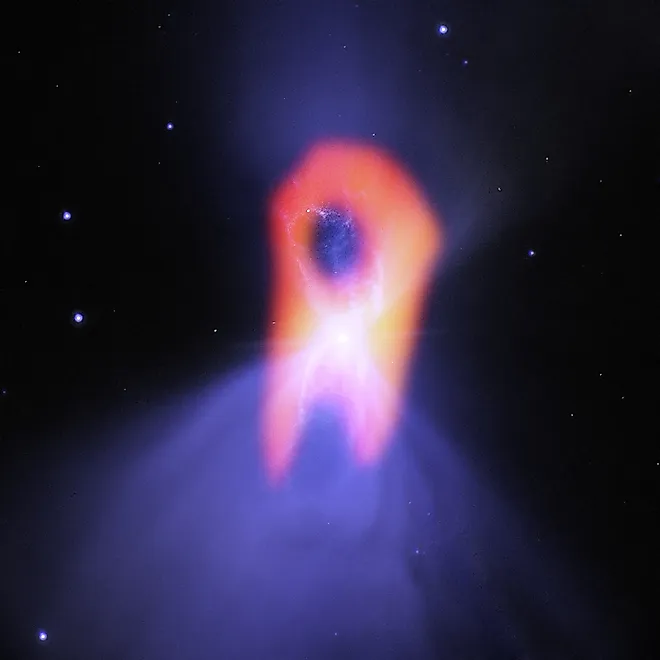
What's the Coldest Place in Space?
The coldest spot in the universe isn't empty space. It's a nebula one degree above absolute zero, colder than the void around it. Here's why.
Why Some Stars Die In Massive Explosions
Learn why some massive stars explode as supernovae while others collapse into black holes and how these blasts help to seed future planets.
Which Planet Is The Brightest In Our Sky?
Venus is the brightest planet in our sky, reflecting most of the sunlight that reaches it. Find out when it peaks and why.
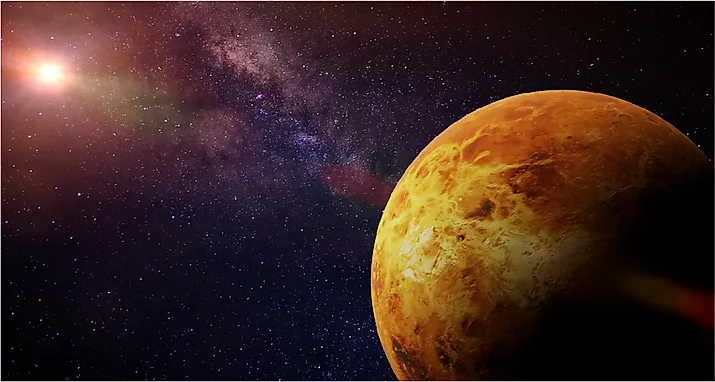
Which Planet Has Days Longer Than Its Years?
Venus takes 243 Earth days to spin once but only 225 to orbit the Sun. Here is why its day outlasts its year, and how Mercury complicates it.
What The Hubble Tension Could Break In Cosmology
The Hubble Tension is a fundamental conflict in physics regarding the rate of expansion of the universe, with wide-ranging implications.
What's the Loudest Sound in Space?
Learn why pressure waves from a black hole 250 million light-years away became known as the loudest sound in space, despite there being no confirmed record.
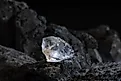
Which Planet Rains Diamonds?
Could it really rain diamonds? Discover why scientists think Neptune and Uranus may produce diamond rain deep within their interiors.
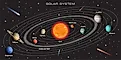
Which Planet Has The Longest Night?
Discover why Uranus and Venus experience extraordinary periods of darkness and what makes their day-night cycles so different from Earth's.
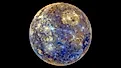
What Is The Fastest-Moving Planet?
Mercury, the closest planet orbiting the Sun, displays many astonishing qualities, including its dizzying orbital speed.
Is There More Than One Universe?
Scientists cannot yet say for sure whether there are multiple universes out there, but string theory and quantum physics suggest there may be.
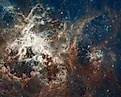
What's the Heaviest Star Ever Found?
The heaviest star humanity has ever discovered contains the mass of about 230 Suns in a space only about 35 times its diameter.