Why Space Is So Cold If The Sun Is So Hot
The core of the Sun reaches roughly 27 million degrees Fahrenheit, while the background temperature of the universe sits at about -454.8 degrees Fahrenheit. Both numbers are accurate and possible because solar energy becomes heat only when absorbed. Sunlight travels the 93 million miles of near-vacuum between the Sun and Earth, warming the planet's surface while leaving the intervening space largely unheated. Distance thins that energy further, spreading it over a wider area the farther it travels. The scarcity of matter between the stars accounts for the rest.
A Sunny Start

The Sun's energy sustains life on Earth, yet it is only one of the hundreds of billions of stars in the Milky Way. Composed primarily of hydrogen and helium, the Sun measures about 865,000 miles across, and its gravity binds the solar system together, with planets and other objects locked in orbit around it. For all its size next to Earth, it is a fairly ordinary star. The Sun generates energy through nuclear fusion in its core, where temperatures reach roughly 27 million degrees Fahrenheit. Its visible surface is cooler by comparison, at around 10,000 degrees Fahrenheit, while its outer atmosphere, the corona, can reach 3.5 million degrees. Scientists are still investigating the processes that heat the corona to temperatures far above those of the surface below it.
At about 4.6 billion years old, the Sun is roughly halfway through its main-sequence lifetime. Other stars vary widely in size and temperature. Massive blue stars can have much hotter surfaces than the Sun, while red giants are expanded stars with comparatively cool outer layers. White dwarfs, the dense remnants of stars that have exhausted their nuclear fuel, can start out intensely hot despite their small size. With so many stars producing and emitting energy throughout the universe, why does most of space remain so cold?
How to Heat

To understand this, it helps to distinguish between heat and temperature. In physics, heat refers to energy transferred between objects or systems because of a temperature difference. Temperature describes the thermal state of matter and is related to the microscopic energy of its particles. Heat can transfer through three main mechanisms: conduction, convection, and radiation. Conduction transfers energy through interactions between neighboring particles, particularly in solids. Convection transfers heat through the movement of liquids or gases, often as warmer, less dense material rises and cooler material sinks.
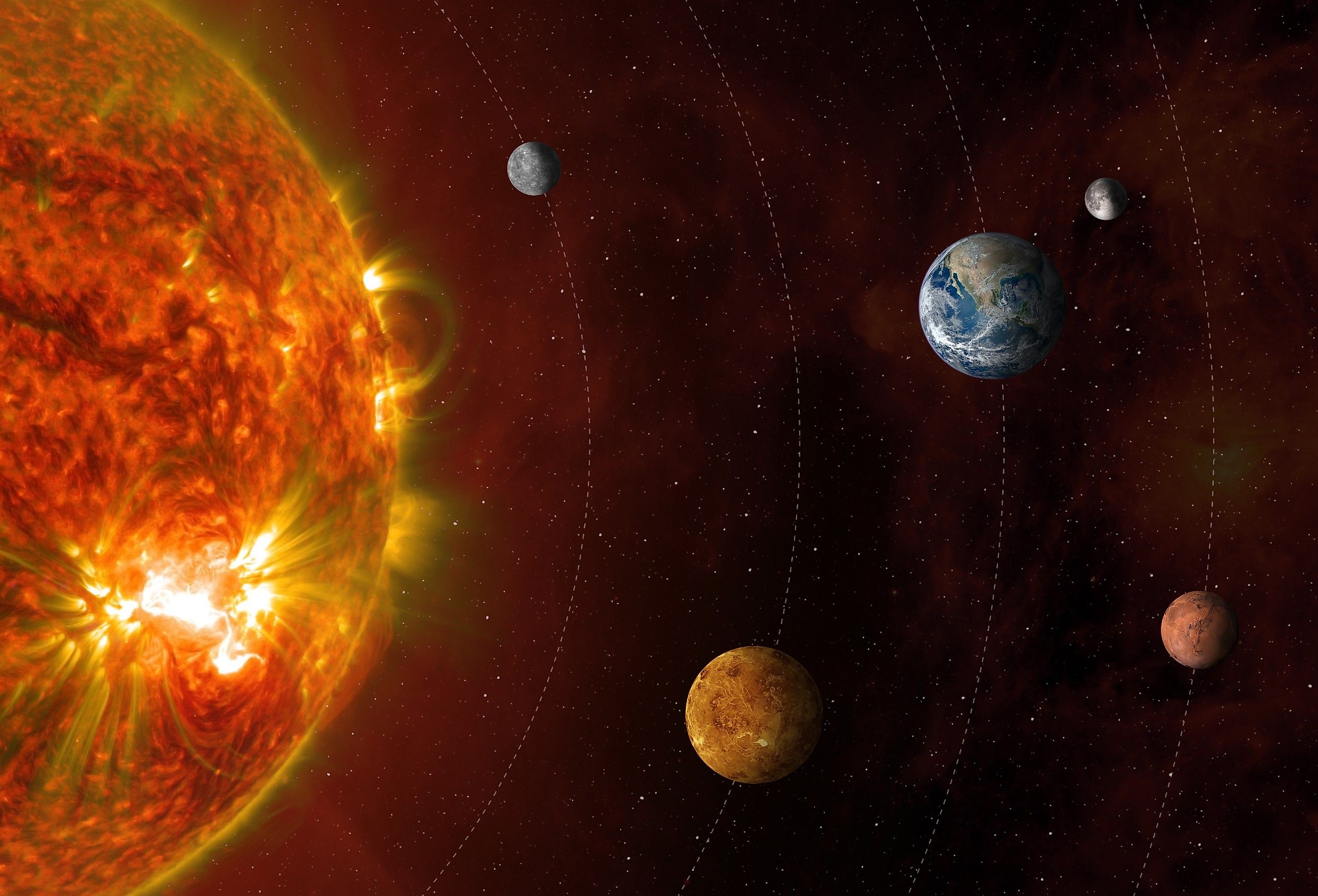
Radiation works differently because it does not require matter to carry energy. Electromagnetic radiation, including visible light and infrared radiation, can travel through a vacuum. This is how energy from the Sun crosses some 93 million miles of space to reach Earth. When sunlight strikes a planet, moon, or spacecraft, its energy can be absorbed and converted into thermal energy. The vacuum between the Sun and Earth, however, contains little matter to absorb that radiation. Consequently, sunlight can strongly heat objects without significantly heating the nearly empty space through which it travels.
Empty Space

For all the stars and galaxies in the universe, most of space contains extraordinarily little matter. The cosmic microwave background, radiation left over from the early universe, has a temperature of approximately 2.725 kelvins, equivalent to about -454.8 degrees Fahrenheit. This radiation fills the universe and provides a background temperature, although actual matter in space can be much hotter or colder depending on its surroundings. Stars emit energy without pause, but the sparse particles between them absorb only a small share of it.
When Sunlight Strikes a Surface

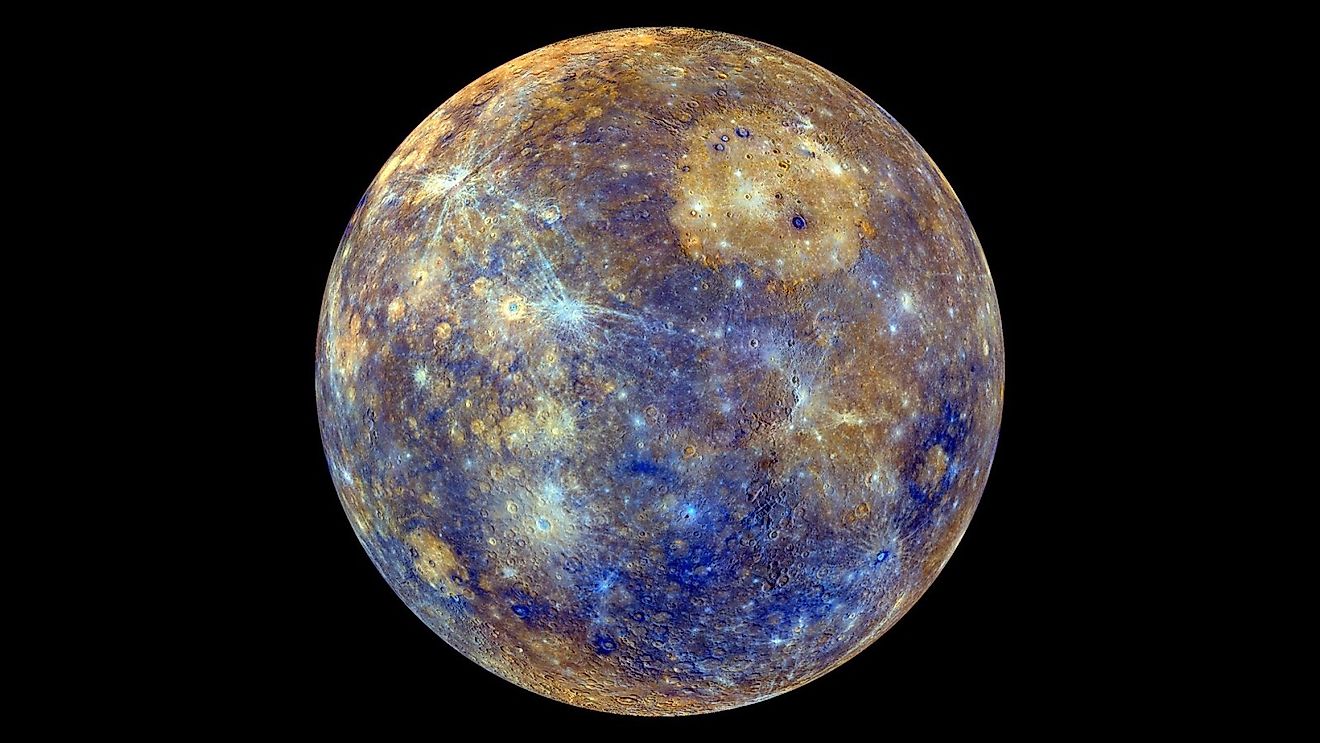
Objects exposed to direct sunlight can still reach scorching temperatures, particularly when they have little protection from incoming radiation. However, their temperatures depend on how much energy they absorb, store, transfer, and emit. Earth maintains moderate temperatures through its atmosphere, oceans, and greenhouse effect, which help redistribute and retain energy. Mercury, by contrast, has almost no atmosphere to redistribute heat. Its sunlit surface can reach up to 800 degrees Fahrenheit, while nighttime temperatures can fall to around -290 degrees Fahrenheit. These extreme differences demonstrate how surfaces can heat and cool in space without substantial atmospheric regulation.
Distance Dims the Sun

Distance also determines how much solar energy an object receives. As sunlight travels away from the Sun, its energy spreads across an increasingly large area. Following the inverse-square law, the amount of energy received per square meter decreases with the square of the distance. At Earth's average distance from the Sun, incoming solar radiation delivers about 1,361 watts per square meter to a surface facing the Sun directly above the atmosphere. Farther away, the same solar energy is distributed over a much larger area, reducing its heating effect.
Hot Stars, Cold Space
The Sun and other stars release vast amounts of energy, but that energy does not uniformly warm the vacuum of space. Radiation travels efficiently through empty space and heats objects that absorb it, while those objects also lose energy by emitting thermal radiation. With so little matter between stars to absorb and redistribute energy, much of the universe remains bitterly cold. The difference between a hot star and cold space comes down to how energy travels, how it spreads with distance, and what happens when it encounters matter.