What New Horizons Is Still Finding In The Kuiper Belt
Imagine a camera-equipped spacecraft traveling toward interstellar space at more than 30,000 mph after more than 20 years in flight. NASA's New Horizons spacecraft is now about 6 billion miles from Earth, so far away that its radio signals take almost nine hours to reach receivers on our planet, even while traveling at the speed of light. New Horizons launched aboard an Atlas V rocket from Cape Canaveral, Florida, on January 19, 2006. In June 2026, the spacecraft emerged from its longest hibernation period yet and resumed active operations in the distant reaches of the Solar System. Far from finished, New Horizons is still finding surprises in the Kuiper Belt, including more dust than models predicted as far out as 55 AU. Scientists re-examining its 2015 images of Pluto have also identified possible evidence of liquid nitrogen reaching the surface of Sputnik Planitia from beneath its ice.
Out of Hibernation

Hibernation is how New Horizons stretches its mission across the long cruise between targets, reducing operating demands while the spacecraft coasts through the outer Solar System. Its most recent rest lasted 321 days, beginning on August 7, 2025, and ending when the probe awoke on June 23, 2026. Even asleep, New Horizons was never completely silent, sending a weekly status beacon while 3 of its science instruments continued collecting and storing data.
The spacecraft is operated from the Johns Hopkins Applied Physics Laboratory (APL) in Laurel, Maryland, which designed and built it, while principal investigator Alan Stern of the Southwest Research Institute directs the mission and leads its science team. Their link to New Horizons is NASA's Deep Space Network (DSN), whose antenna complexes near Goldstone, California, Madrid, Spain, and Canberra, Australia, form what NASA describes as the world's largest and most sensitive scientific telecommunications system. The wake-up confirmation took about 8 hours and 52 minutes to reach the Madrid station, which means any command the team sends is already hours old by the time the spacecraft receives it.
Kuiper Belt
The Kuiper Belt is a vast region of icy bodies beyond Neptune, with a main belt that extends from near 30 astronomical units (AU) to about 50 AU from the Sun. One AU is the average distance between Earth and the Sun, approximately 93 million miles (150 million km). New Horizons reached this frontier after a gravity assist from Jupiter in February 2007 and a flyby of Pluto on July 14, 2015. On January 1, 2019, it encountered Arrokoth, a two-lobed Kuiper Belt object that remains the most distant object ever explored up close by a spacecraft.
The spacecraft is also helping scientists work out where the Kuiper Belt actually ends. A study published in The Astrophysical Journal Letters in January 2024 reported that its Venetia Burney Student Dust Counter detected higher-than-predicted dust levels through 55 AU, past the main belt's outer edge. Researchers suggested that radiation pressure may push dust farther outward, or that dust-producing bodies may extend farther than current observations indicate. The findings do not establish a new boundary, but they make clear that scientists still have more to learn about the belt's outer structure.
Sputnik Planitia

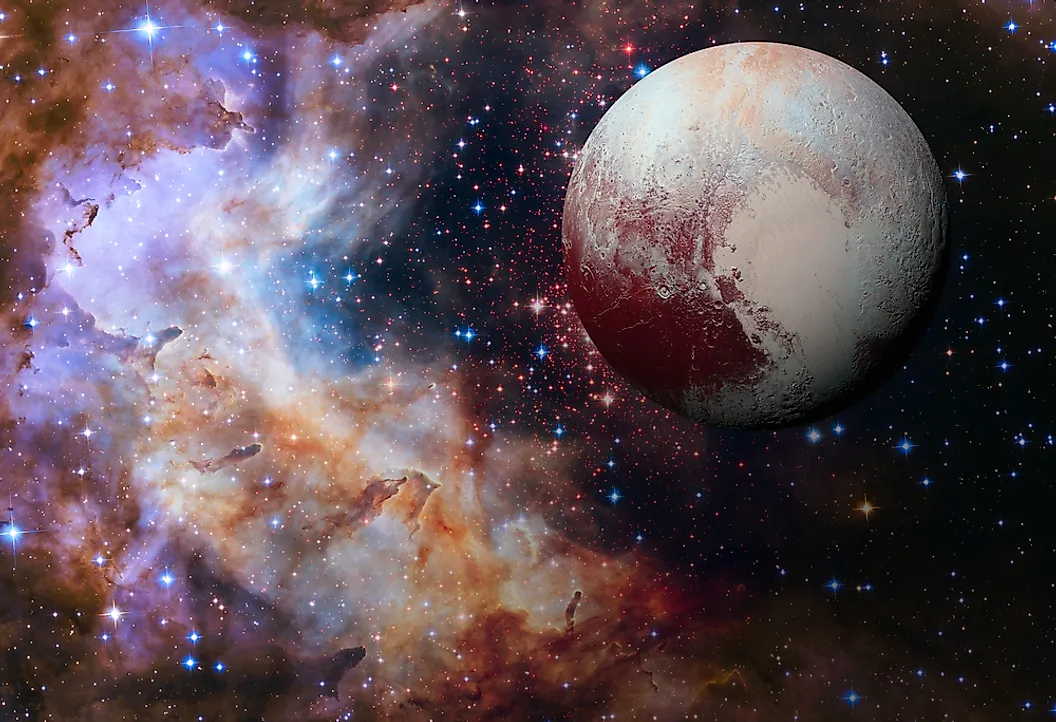
The 2015 flyby of Pluto gathered so much data that transmitting the full dataset to Earth took more than 15 months, and scientists are still finding new things in it. The latest finding from that archive concerns Sputnik Planitia, a basin filled mostly with nitrogen ice that forms the western lobe of Pluto's heart-shaped Tombaugh Regio. The glacier alone is larger than Texas and Oklahoma combined.
Research published in The Planetary Science Journal on July 31, 2026, suggests the glacier may not be frozen all the way through. After studying dark markings along its northern part, scientists argue that liquid nitrogen may form beneath the ice and periodically escape to the surface through cracks or other conduits before refreezing. The liquid was never photographed directly, but the markings resemble areas on Earth's glaciers affected by liquid flow, and thermal and physical modeling tested whether nitrogen could melt below the ice sheet and reach the surface. If the interpretation is correct, it would be the first evidence of recently flowing liquid on Pluto.
The Heliosphere

New Horizons is moving toward the edge of the heliosphere, the enormous region around the Sun dominated by the solar wind and the Sun's magnetic influence. The first boundary is the termination shock, where the solar wind abruptly slows from supersonic to subsonic speeds, and the Voyager spacecraft encountered it between roughly 84 and 94 AU from the Sun. Beyond it lies the heliosheath, and beyond that the heliopause, where the solar wind gives way to the interstellar environment. Voyager 1 crossed the heliopause at about 122 AU in 2012, and Voyager 2 followed at about 119 AU in 2018.
That path is what makes 2 of New Horizons' instruments so valuable. The Solar Wind Around Pluto (SWAP) instrument and the Pluto Energetic Particle Spectrometer Science Investigation (PEPSSI) measure charged particles in the distant Solar System, while several of the Voyagers' plasma and energetic particle instruments have already been turned off as those missions conserve their declining power. As of late September 2026, SWAP and PEPSSI are also scheduled to go dark on October 1 because funding for their operation and data analysis has not been provided. The spacecraft itself remains healthy, and the instruments could be reactivated if funding becomes available.
Ralph

The Long-Range Reconnaissance Imager (LORRI) produced New Horizons' highest-resolution views, but only in black and white. Color and chemistry came from Ralph, the spacecraft's visible and infrared imaging instrument, which uses a single telescope to feed 2 components: the Multispectral Visible Imaging Camera (MVIC) and the Linear Etalon Imaging Spectral Array (LEISA), an infrared composition mapper. Its name is not an acronym but a nod to Ralph Kramden of the 1950s sitcom The Honeymooners, since the instrument works alongside an ultraviolet spectrometer called Alice. Without Ralph, much of what scientists know about the surfaces of Pluto and its moons would be missing. Its data helped map frozen nitrogen, methane, carbon monoxide, and water ice on Pluto, and it revealed bright summit material that researchers interpret as methane frost on mountains inside Cthulhu Macula, a huge dark region along Pluto's equator.
Ralph also solved a color puzzle on Charon, Pluto's largest moon. Most of Charon's surface is grey and dominated by water ice, but its north polar region, informally called Mordor Macula, is distinctly reddish. Scientists concluded that methane escaping from Pluto can become trapped as frost on Charon's extremely cold winter pole, where ultraviolet radiation and other energetic particles transform it into heavier reddish organic materials known as tholins. In effect, Pluto helps color its own moon.
One Way Tickets

New Horizons was the first spacecraft to explore Pluto and the first to visit another Kuiper Belt object up close, but 4 earlier probes have already traveled this outbound path, and their fates hint at what lies ahead. Pioneer 10 became the first spacecraft to travel through the asteroid belt and observe Jupiter up close, but NASA received its final usable signal on January 23, 2003. Pioneer 11, the first spacecraft to fly past Saturn, ended routine communications in 1995. Both are still moving outward even though NASA can no longer communicate with them.
The Voyagers offer a more hopeful precedent. Voyager 2, launched on August 20, 1977, remains the only spacecraft to have conducted close flybys of all 4 giant planets, reaching Jupiter, Saturn, Uranus, and Neptune between 1979 and 1989. Voyager 1 followed on September 5, 1977, and by late 2026, it is the most distant human-made object, more than 170 AU from Earth. Both Voyagers have crossed into interstellar space and still return data, giving scientists a preview of the frontier New Horizons is approaching.
Science vs. Art

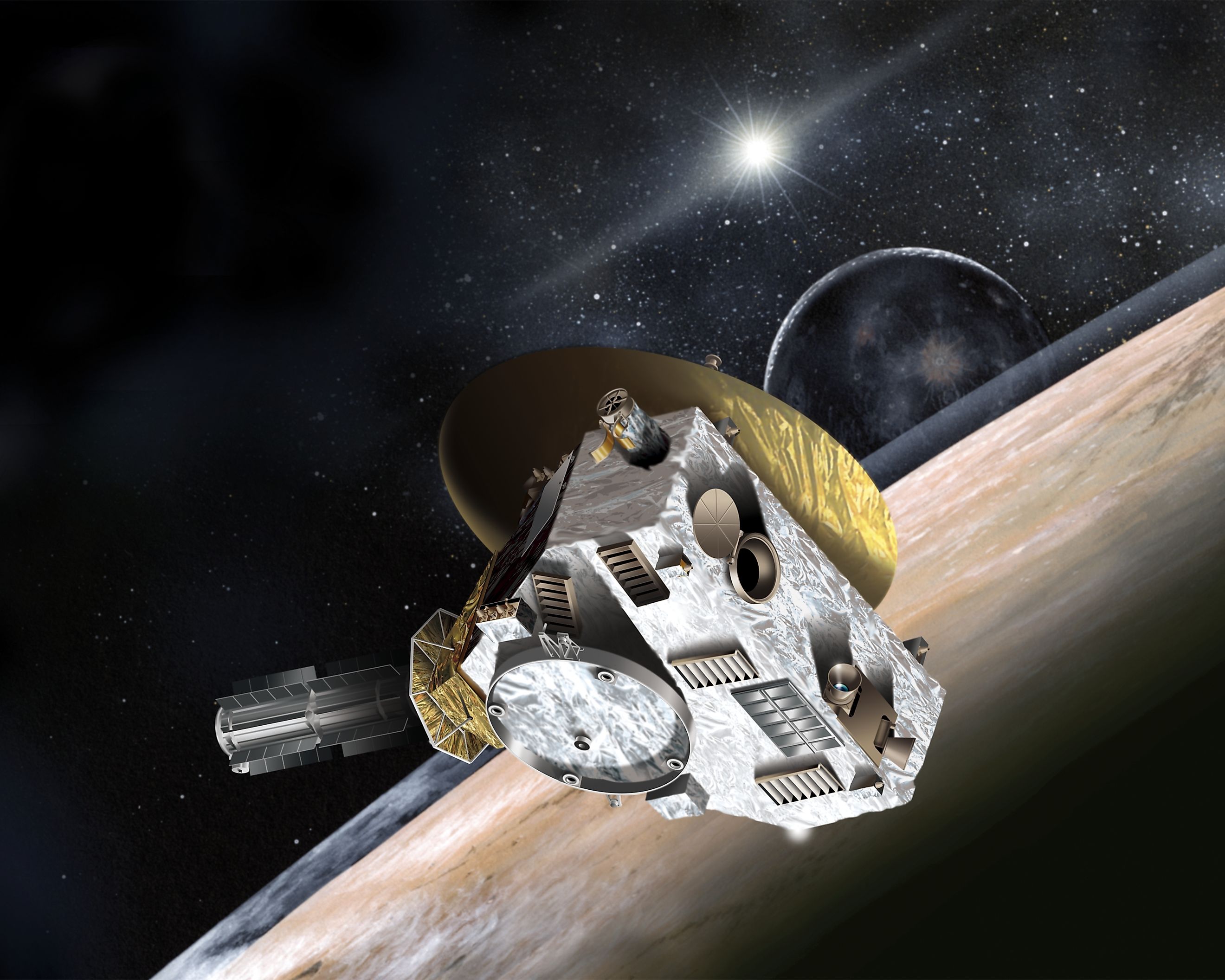
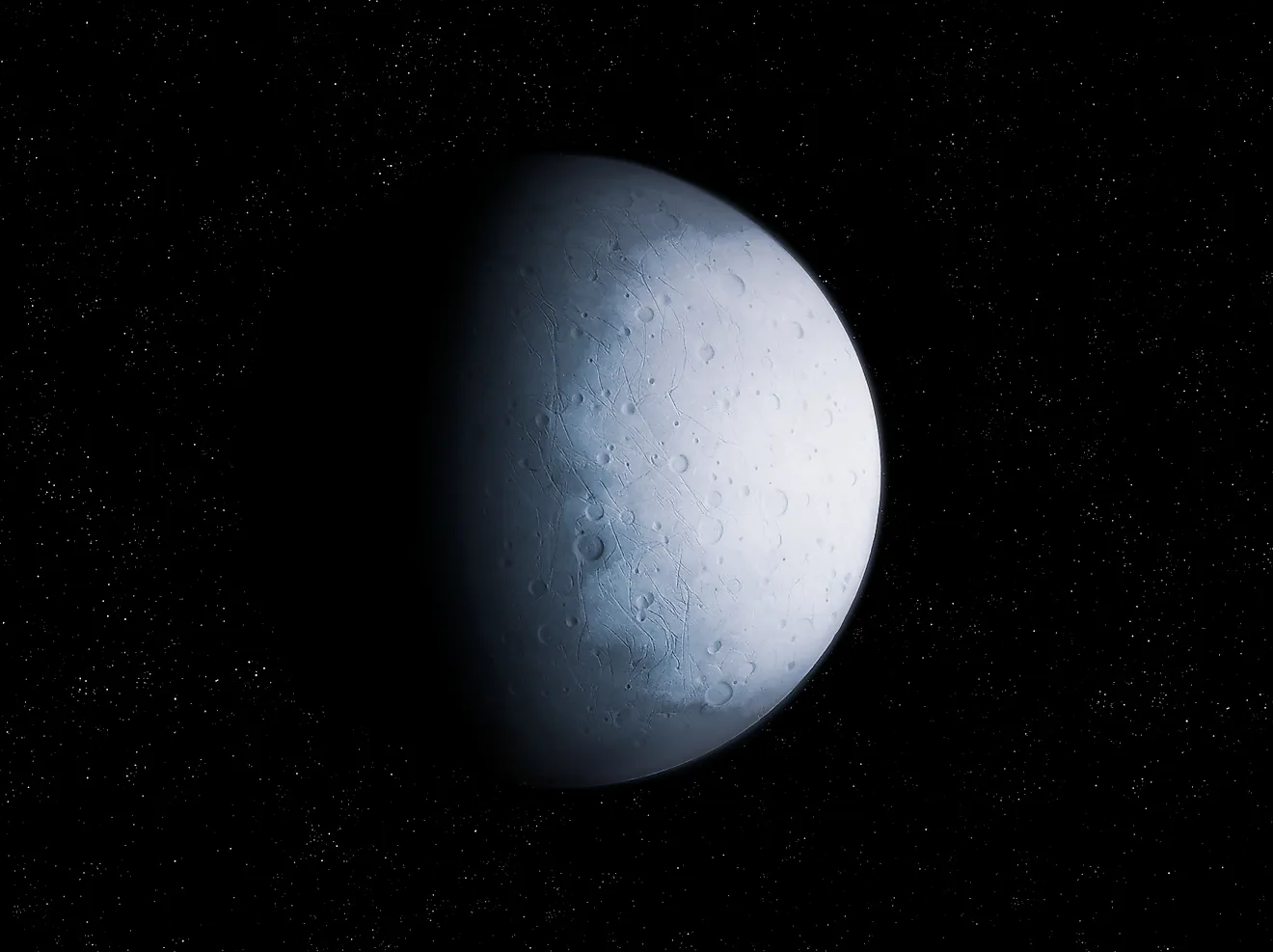
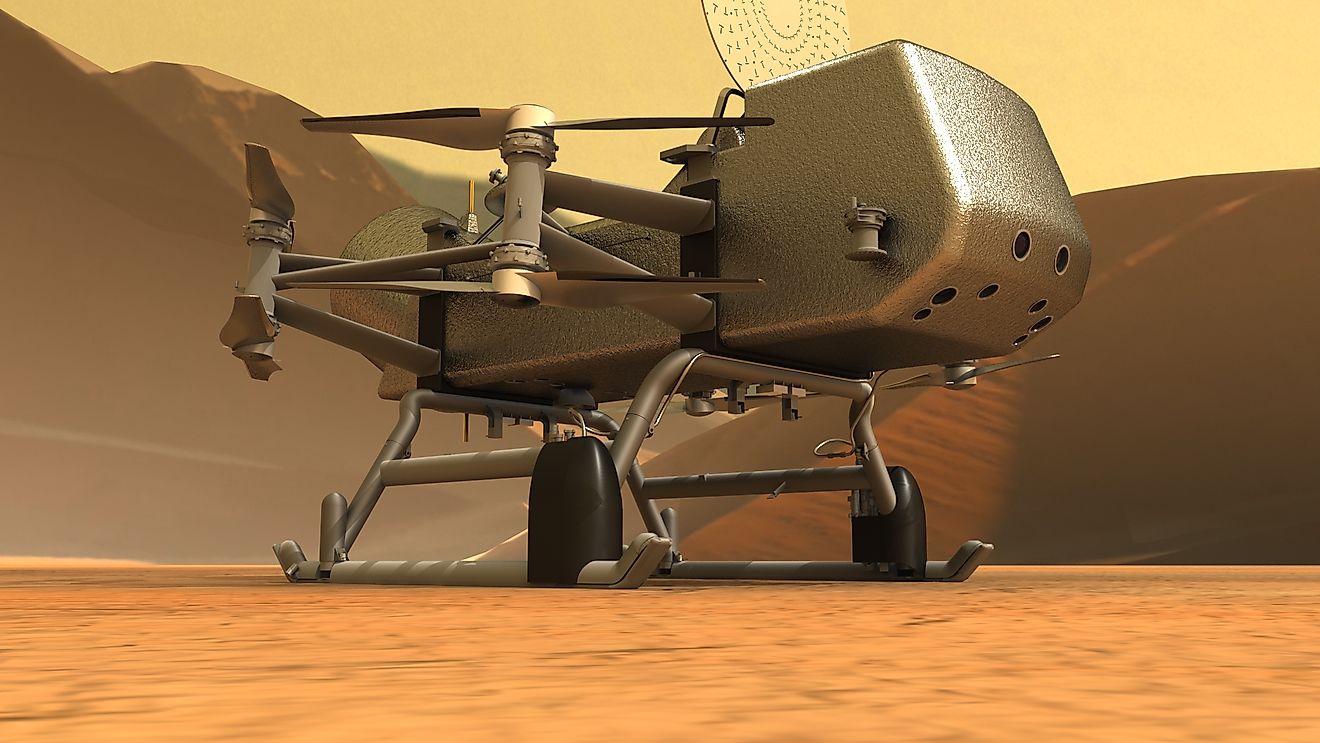
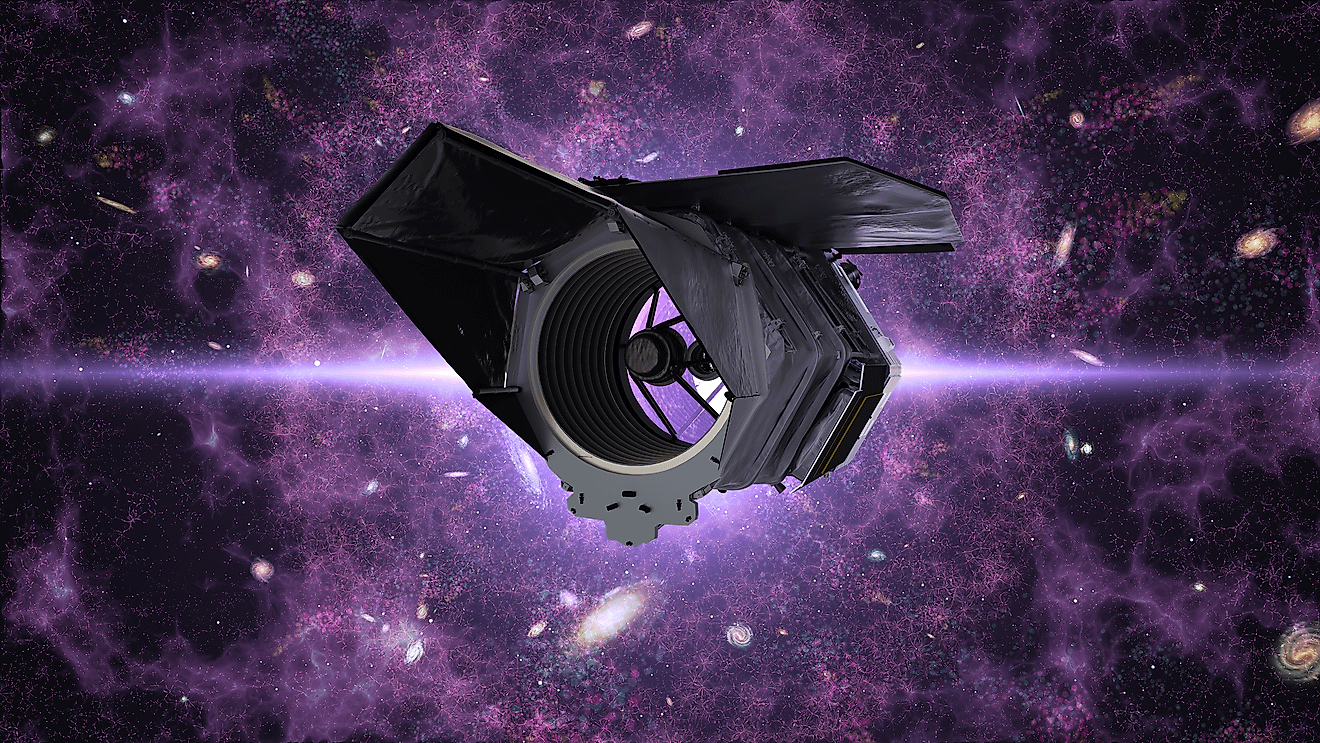
Not every image of New Horizons is a photograph. Pictures of the spacecraft itself flying past Pluto or through the Kuiper Belt are artist's concepts or computer-generated illustrations, because no second camera was there to capture them. The images taken by New Horizons of Pluto, Charon, Arrokoth, and other targets are genuine spacecraft observations, although some are processed or composited from different instruments to reveal color, composition, or fine detail that no single raw exposure can.
That distinction matters because the real observations are still producing discoveries. New Horizons launched more than a year before the first iPhone went on sale in June 2007, yet its instruments continue to return useful measurements more than 20 years after leaving Earth. Its 2015 images of Pluto are yielding possible evidence of liquid more than a decade later, and its dust counter is testing where the Kuiper Belt ends. Roughly 6 billion miles from home, New Horizons is still changing what scientists know about the outer reaches of the Sun's domain.



.png)
