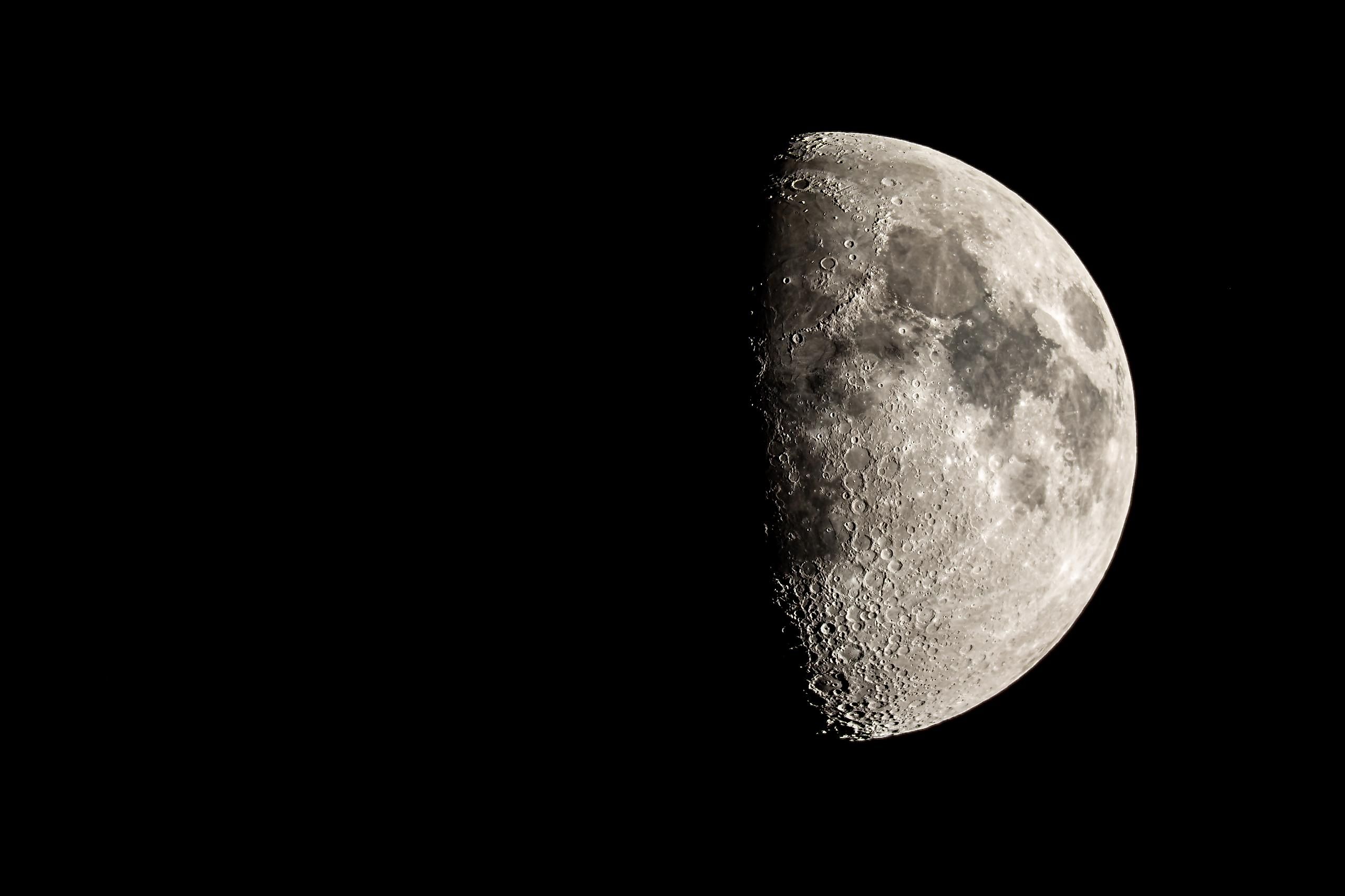
How Cold The Far Side Of The Moon Gets
The far side of the Moon can reach a blistering 260 degrees Fahrenheit in sunlight before plunging to negative 280 degrees Fahrenheit in darkness, a temperature swing of 540 degrees. In some places, temperatures fall even lower, reaching more than 400 degrees below zero. Without a substantial atmosphere to retain heat, the Moon experiences some of the most extreme temperature changes in the solar system. However, recent discoveries suggest that the far side may also be cooler beneath the surface than the side we see from Earth. How cold the far side of the Moon gets depends on where and when temperatures are measured, but the differences are helping scientists understand the Moon's mysterious history.
The Dark Side of the Moon

So what do we mean by the far side of the Moon? Our Moon has a synchronous rotation, meaning it rotates at the same rate as it revolves around the Earth. This means that roughly one side is always facing us, the near side, and one side is always facing away from us, the far side. We haven't studied the far side as extensively because it cannot be seen directly from Earth, but we do know that it is more mountainous and heavily cratered than the near side, with a thicker crust and less evidence of ancient volcanic activity.
Often the far side is called the "dark side" of the Moon, although this is not entirely correct. Both sides receive sunlight, but because the Moon rotates so slowly, a lunar day and night each last approximately two Earth weeks. During a full moon, the side facing Earth is illuminated, while the far side is largely in darkness. During a new moon, the opposite occurs. This changing exposure to sunlight causes temperatures across the Moon to vary wildly.
Hot and Cold

Because space is a vacuum, heat from the Sun reaches the Moon through radiation. Parts facing the Sun are heated, while parts facing away from it cool rapidly. The Moon is no different, warming when sunlight strikes its surface but losing that heat when darkness falls. Unlike Earth, however, the Moon doesn't have an atmosphere capable of distributing or retaining much of this heat.
Instead, it has an exosphere, an extremely thin layer of gas that does little to regulate temperatures. While the Moon contains some internal heat, this has little influence on its surface temperatures compared with sunlight.
According to NASA, the lunar surface can reach approximately 260 degrees Fahrenheit in direct sunlight before falling to negative 280 degrees Fahrenheit in darkness. This means that a single location can experience conditions hotter than boiling water during the day and temperatures colder than almost anywhere on Earth during the night. These extremes occur on both the near and far sides of the Moon.
The Coldest Places on the Moon

Some of the coldest locations on the Moon are found inside deep craters near its north and south poles. Unlike most of the lunar surface, these areas may never receive direct sunlight because their steep walls block the Sun, which remains close to the horizon at the poles. These permanently shadowed regions can remain frozen for billions of years.
NASA's Lunar Reconnaissance Orbiter has measured temperatures as low as negative 414 degrees Fahrenheit in these craters. That is nearly 286 degrees colder than the lowest air temperature ever recorded on Earth, at Antarctica's Vostok Station.
These extreme conditions also make the craters particularly interesting to scientists. Water ice can potentially survive for billions of years in such cold environments, protected from direct sunlight. Finding and studying these frozen deposits could help researchers understand how water reached the Moon and whether it could eventually support human exploration.
Colder Inside and Out

Recent discoveries have also provided evidence that the far side was cooler internally. In June 2024, China's Chang'e-6 spacecraft returned the first samples collected from the far side of the Moon. When scientists analyzed these rocks, they discovered something unexpected about the Moon's ancient volcanic history.
A study published in September 2025 found that the approximately 2.8-billion-year-old rocks had formed from lava at a temperature of about 2,012 degrees Fahrenheit. This was roughly 180 degrees cooler than comparable lava samples from the near side of the Moon, including those collected during the Apollo missions.
This suggests that the far side's mantle, the layer of rock beneath its crust, was once cooler than the near side's mantle. One possible explanation is that the near side contains greater concentrations of radioactive elements that naturally produce heat as they decay. However, scientists have not yet established whether the same temperature difference exists inside the Moon today.
The discovery is causing researchers to take another look at how the Moon formed and why its two hemispheres developed such different landscapes.
Surviving the Lunar Night

For astronauts visiting the far side of the Moon, extreme temperatures would present a significant challenge. An unprotected human could not survive the Moon's near-vacuum environment, and even spacecraft require specialized equipment to withstand the enormous changes in temperature.
A lunar night lasts approximately 14 Earth days, meaning a spacecraft relying on solar panels could spend two weeks without direct sunlight. During that period, equipment would need insulation, stored energy, and heating systems to prevent sensitive components from becoming too cold to operate. Batteries, instruments, and robotic machinery would all be vulnerable to prolonged exposure.
The far side presents another challenge as well. Because it faces away from Earth, spacecraft operating there cannot communicate directly with ground stations on our planet. China's Chang'e-6 mission relied on a relay satellite to transmit signals between the far side and Earth.
Lunar Chill
How cold the far side of the Moon gets ultimately depends on its exposure to sunlight and the surrounding terrain. Although the far side experiences the same general temperature extremes as the near side, new evidence suggests that the two hemispheres may have very different thermal histories. The most surprising discovery may not be how cold the lunar surface becomes at night, but that rocks formed billions of years ago can still reveal temperature differences deep inside the Moon.