Where America's Meteorites Are Found Most Often
A meteorite can fall almost anywhere in the US, yet about two-thirds of meteorites found in this country have come from arid regions like the Southwest. According to the Meteoritical Society's database, nearly 70% of the roughly 1,955 meteorites recorded in the United States have been found in just six states: Texas, California, New Mexico, Nevada, Arizona, and Kansas. There, open, dry landscapes make ancient visitors from space easier to spot before time and weather hide them.
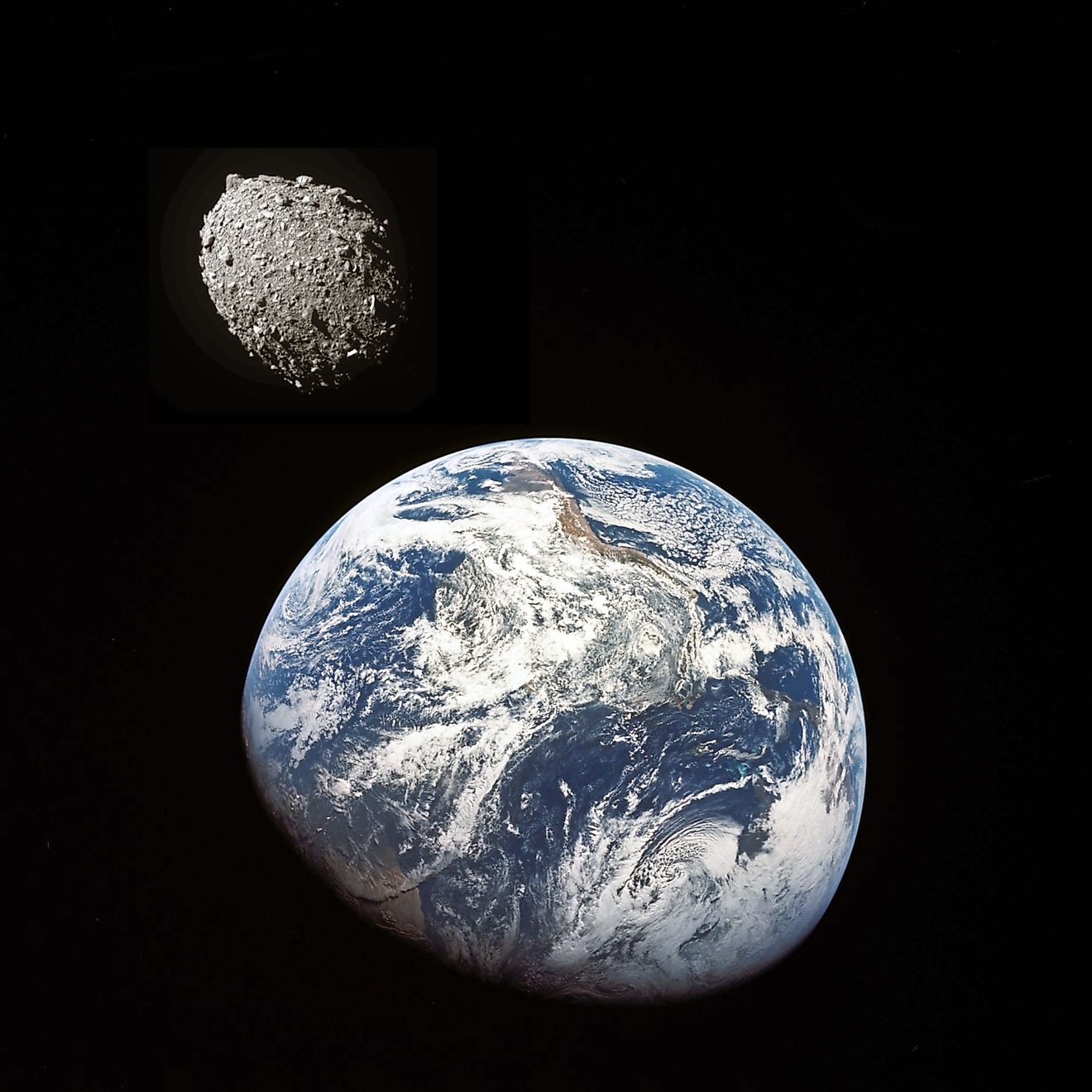
Most meteorites began as fragments of asteroids that survived a fiery passage through Earth's atmosphere. Once they reach the ground, however, finding them becomes a challenge. A dark stone can remain visible for thousands of years on a barren desert floor but disappear quickly beneath a forest canopy or into a wet, rocky landscape.
The American Southwest Has the Most Finds

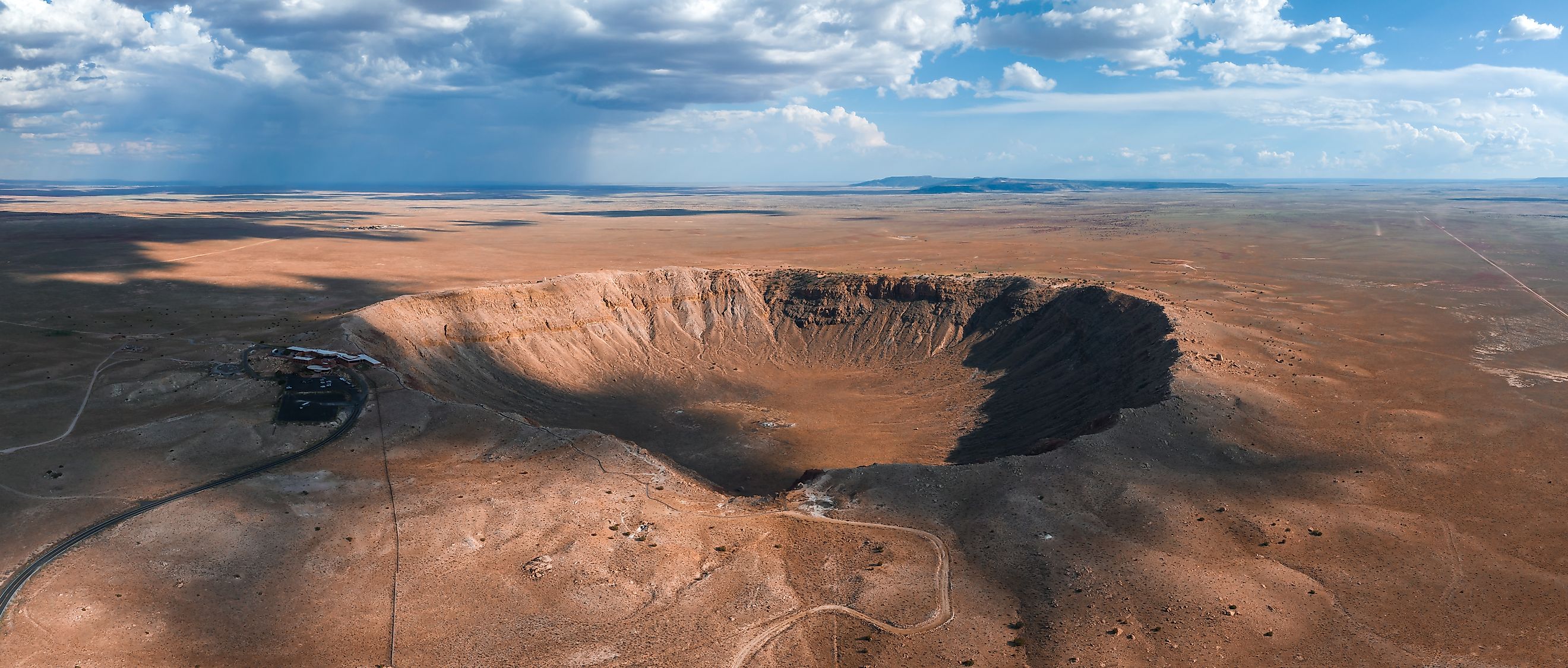
The dry Southwest contains some of America's best landscapes for finding meteorites. New Mexico and Arizona are also among the country's leading states for meteorite discoveries, with 229 and 185 officially recognized meteorites, respectively. Both contain extensive desert landscapes where dry conditions help preserve extraterrestrial rocks.
Arizona has produced some particularly notable finds. On July 19, 1912, a meteorite broke apart over the region near Holbrook, scattering thousands of fragments across the desert. Searchers eventually recovered more than 480 pounds (220 kilograms) of material, making it one of the best-documented meteorite falls in the state.
Although thousands of fragments were recovered, they are considered pieces of a single meteorite. This distinction matters when comparing state totals, because one fall can produce hundreds or thousands of individual stones.
New Mexico also ranks particularly high when discoveries are measured against land area. Washington University in St. Louis calculated approximately 1.9 recognized meteorites per 1,000 square miles in the state using records through February 2024, the highest density in the country at the time.
Texas Has More Recorded Meteorites Than Any Other State

Texas leads the country with 317 officially recognized meteorites as of September 2026. Its large stretches of open farmland, grassland, and semi-arid terrain provide favorable conditions for discovering rocks that might otherwise remain hidden.
Some discoveries have been surprisingly large. In April 2015, two ranchers riding horses near Clarendon encountered an unusual rock weighing approximately 760 pounds (345 kilograms). Additional fragments brought the meteorite's total known weight to 831 pounds (377 kilograms). It was later confirmed as an ordinary chondrite, a common type of stony meteorite.
Texas also has a long history of meteorite discoveries, with specimens recovered from fields, pastures, and other open ground. These locations are particularly useful because searching does not always require witnessing a meteor fall. A meteorite may remain undiscovered for centuries before someone notices an unfamiliar stone.
California and Nevada Offer Open Ground

California and Nevada rank second and fourth nationally, with 269 and 192 officially recognized meteorites, respectively. Both states contain extensive desert regions that provide favorable conditions for meteorite searches.
Dry lake beds, known as playas, are particularly productive. These broad, flat surfaces often contain relatively few rocks, making an unfamiliar object easier to investigate. California's Coyote Dry Lake and Lucerne Valley have produced dozens of meteorite discoveries, while Nevada's Stewart Valley is another well-documented collection area.
Some recovered specimens are remarkably small. In April 2022, searchers found a meteorite weighing just 13.7 grams, approximately half an ounce, on a dry lake bed in Stewart Valley. A stone that size could easily disappear beneath leaves or vegetation elsewhere.
Many meteorites are found by people walking across open land, although experienced hunters also use metal detectors and other equipment. Between 2014 and 2023, deliberate searches by experienced meteorite hunters accounted for 50 of the 93 meteorites recovered across North America. All 50 were found in arid regions of California, Nevada, Utah, and Arizona.
Kansas Is Another Major Meteorite Hunting Ground

Kansas may lack the extensive deserts of Arizona and Nevada, but its open farmland has produced 147 officially recognized meteorites. The state's western plains contain relatively few exposed rocks, making unusual objects easier to notice, especially in cultivated fields.
One of the most famous discoveries occurred near Brenham in Kiowa County in 1882, when Eliza Kimberly began collecting unusual rocks on her family's property. Scientists later identified the specimens as pieces of a meteorite that had broken apart before reaching the ground.
More than three tons of material have since been recovered from the site. In 2005, a specially designed metal detector helped locate a single fragment weighing approximately 1,400 pounds (635 kilograms). The specimen is a pallasite, a rare meteorite type containing both metal and mineral crystals.
Kansas also has one of the country's highest recorded meteorite densities relative to its area, illustrating how open landscapes can make meteorite discoveries more likely even without extensive desert terrain.
Modern Detection Networks Help Recover Fresh Falls

A meteorite does not need to land in the desert to be recovered. When a bright fireball appears over a populated area, cameras and weather instruments can help narrow the search. Modern detection networks have made recent falls easier to recover. The Meteoritical Bulletin reported that more than half of the meteorite falls reported from 2024 and 2025 were recovered with help from dedicated camera networks, radar data, or surveillance footage.
This technology changes the chances of recovering meteorites that fall in places where older specimens would be difficult to find. A fresh meteorite can be recovered from a field, forest, or suburban neighborhood before weather and vegetation conceal it.
NASA's meteorite-fall records, for example, document an event near Sims Corner in central Washington in August 2026. Satellite observations and other data helped scientists identify the event and estimate its energy and trajectory. Fresh meteorites are also scientifically valuable because they have spent little time exposed to rain, soil, and other sources of terrestrial contamination. They can preserve clearer evidence of their original composition.
Forests and Wet Climates Hide Meteorites

The eastern US experiences meteorite falls just like the rest of the country, but its landscapes make old specimens harder to find. Dense vegetation covers the ground, while rainfall and soil formation can bury or alter meteorites.
A rock that falls into a forest may disappear beneath leaves within a single season. Over longer periods, soil can cover it, while moisture causes many meteorites to break down. The same problems affect humid grasslands and other landscapes with active plant growth.
The distribution of recovered meteorites therefore reflects the landscapes people can search, not necessarily the places that receive the greatest number of rocks from space. Chance discoveries still occur outside the desert. During the 2014 to 2023 period, people found meteorites in places ranging from Tennessee woods to Kentucky farmland. These discoveries show how an extraterrestrial rock can go unnoticed until someone happens to encounter it.
Antarctica Concentrates More Meteorites Than Anywhere Else

The world's greatest meteorite-hunting landscape is not in the American Southwest but on the ice of Antarctica. The continent provides a dramatic example of why visibility and geology matter more than where meteorites actually fall.
Antarctica's white ice makes dark rocks easy to spot, and its dry conditions help preserve them. More importantly, glacier movement can concentrate meteorites in certain locations. Ice flowing toward mountains or other obstacles can bring older, deep ice back toward the surface, carrying meteorites with it.
Antarctica has produced more than 60% of the roughly 80,000 meteorites recovered worldwide, according to a 2024 study. Scientists have also estimated that hundreds of thousands more may remain on the continent's ice.
The comparison helps explain America's own meteorite map. Deserts do not attract meteorites from space. They simply preserve them and make them easier for humans to find.
Every Meteorite Is a Piece of Another World
America's deserts and open plains have become the country's most productive meteorite-hunting grounds because they offer the right combination of visibility, dry conditions, and limited vegetation. Texas leads in total documented discoveries, while New Mexico and Kansas have particularly high concentrations relative to their land area.
The next meteorite could land almost anywhere. It might disappear into a forest and remain hidden for centuries or strike an open field where modern cameras help lead searchers directly to it. Some recovered specimens formed during the earliest history of the solar system, while rarer meteorites originated on the Moon or Mars. A dark stone lying unnoticed on an American desert floor may have traveled through space for billions of years before someone recognized that it did not belong on Earth.