What Falls To Earth From Space Every Year
Earth can sweep up more than 100 metric tons of natural material from space in a single day, most of it arriving invisibly as particles smaller than a grain of sand. Over a year, the European Space Agency estimates that roughly 40,000 metric tons of meteoroids and interplanetary dust enter Earth's atmosphere.
Most material arrives as cosmic dust, burns into vapor, or floats through the upper atmosphere as microscopic particles. A tiny fraction survives as meteorites. On rare occasions, however, a much larger object arrives fast enough to explode with the force of hundreds of thousands of tons of TNT.
Most Of It Is Cosmic Dust

Earth is moving through a solar system filled with debris. Collisions between asteroids produce fragments ranging from boulders to microscopic grains, while comets shed dust as sunlight heats their frozen surfaces. The smallest pieces dominate what Earth receives. ESA estimates that about 40,000 metric tons of natural space material enter the atmosphere each year and says most of it is probably smaller than a millimeter. NASA gives a lower estimate of 44 metric tons per day, equivalent to about 16,000 metric tons over a year.
Cosmic dust is extraordinarily difficult to measure. Researchers must estimate how much material enters the atmosphere, vaporizes, remains suspended high above Earth, or eventually settles onto the surface. Much of this material would be invisible even if it landed directly in front of a person. Earth is not being buried under a noticeable layer of space dust each year. Spread 40,000 metric tons across the planet's roughly 510 million square kilometers of surface, and the amount in any one place is tiny.
Space Rocks Rarely Reach Earth's Surface

A meteoroid is a natural piece of rock or metal still traveling through space. When it enters Earth's atmosphere and creates a streak of light, that phenomenon is a meteor. If part of the object survives and lands on the surface, the surviving fragment is a meteorite. Those familiar shooting stars can be surprisingly small. Sand-sized particles can enter the atmosphere at many miles per second. At those speeds, collisions with molecules in the air rapidly heat and strip material from the incoming object. The glowing gas and hot material around it produce the streak visible from the ground.
For most space debris, that is the end of the journey. NASA estimates that Earth receives huge numbers of tiny meteoroids every day, while only a small fraction of the incoming mass survives intact as recognizable rocks. Meteorites found on the ground commonly range from pebble-sized pieces to objects about the size of a fist. Larger visitors are much less common. NASA estimates that an automobile-sized asteroid enters Earth's atmosphere roughly once a year and usually produces a brilliant fireball before breaking apart.
Space Rocks Can Burn Up Before Landing

A meteoroid becomes a meteor when it enters Earth's atmosphere and produces the glowing streak commonly called a shooting star. Most are tiny, and atmospheric heating destroys them before they reach the ground. NASA says Earth encounters hundreds of thousands or even millions of meteoroids every day, although only a small fraction survive the descent intact. The atmosphere acts like a gigantic filter. A grain-sized object can arrive at tremendous speed and disappear in a flash, leaving behind vapor and microscopic particles. Larger objects can produce much brighter events.
The distinction between a meteor and a meteorite depends entirely on where the object ends up. A meteoroid remains in space, a meteor describes the light produced during atmospheric entry, and a meteorite is the surviving piece that reaches Earth's surface. NASA says meteorites commonly range from pebble-sized fragments to pieces roughly the size of a fist.
Meteorites Can Come From Other Worlds

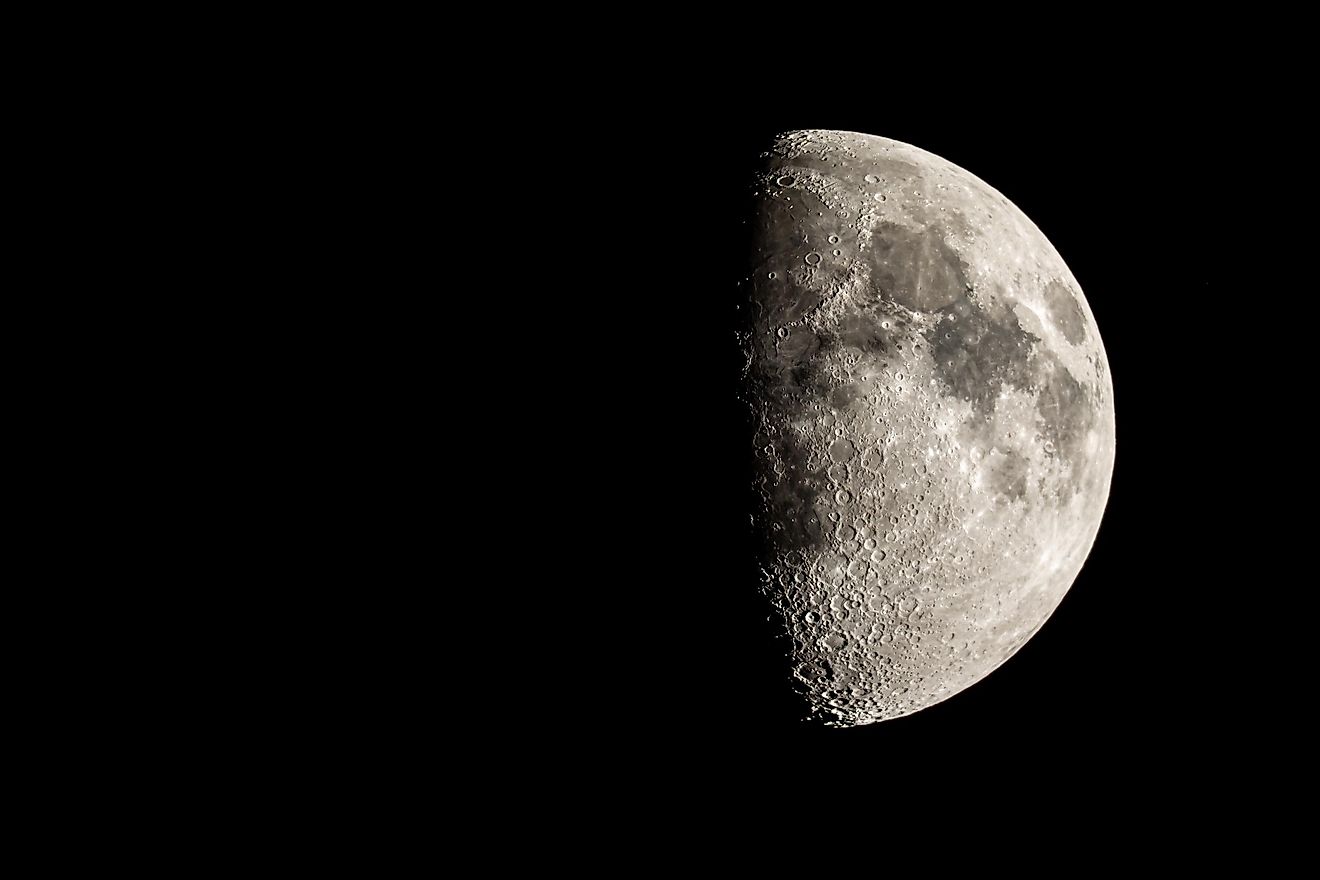
A meteorite on the ground can be much stranger than an ordinary space rock. Some are pieces of the Moon. Others came from Mars. A sufficiently violent asteroid impact can blast pieces of the Martian or lunar surface into space at enough speed to escape the body's gravity. Some of those fragments spend millions of years circling the Sun. Scientists can recognize Martian meteorites through their chemistry, mineral structure, and, in some cases, tiny pockets of gas trapped inside the rocks. The composition of that gas closely matches measurements of the Martian atmosphere, providing unusually strong evidence that the rocks were blasted off Mars.
Most meteorites, however, are pieces of asteroids rather than planets or moons. Some preserve materials dating to the earliest formation of the solar system, more than 4.5 billion years ago. Holding one can therefore mean holding matter that existed before Earth had fully formed. Weather, oceans, volcanoes, and plate tectonics continually recycle Earth's crust. Asteroids underwent far less geological transformation, allowing some meteorites to preserve clues to the raw ingredients from which the planets formed.
Larger Asteroids Can Produce Powerful Explosions

Most incoming material is harmless. The atmosphere can deal with enormous numbers of dust grains and small rocks without anyone below noticing. Then there are objects like the one that arrived over Chelyabinsk, Russia, on February 15, 2013. The asteroid was about 20 meters across, roughly the size of a house. It entered the atmosphere at more than 11 miles per second, fast enough to travel the length of Manhattan in less than one second. It broke apart about 14 miles above the ground. The explosion released energy equivalent to roughly 440,000 tons of TNT.
The asteroid never had to hit the ground to cause damage. Its atmospheric explosion generated a shock wave that blew out windows over more than 200 square miles. More than 1,600 people were injured, largely by flying glass. Chelyabinsk demonstrates why the atmosphere is both Earth's shield and part of the danger. It destroys many incoming objects, but a sufficiently large asteroid can release enormous amounts of energy while breaking apart.
Meteor Showers Bring Extra Material

During a meteor shower, Earth passes through a stream of debris left behind by a comet or, in some cases, an asteroid. The Perseids occur when Earth crosses material associated with Comet Swift-Tuttle. Individual Perseid particles are generally tiny. Many are closer to grains of sand than to the rocks people imagine falling from space. At cosmic speeds, however, even those tiny fragments can produce bright streaks across the night sky. A meteor shower can therefore fill the sky with dozens of visible meteors an hour without posing a serious threat to anyone below. As meteoroids vaporize high in the atmosphere, they create extremely small particles called meteoric smoke. Much of it remains tens of miles above the surface.
NASA has found that these particles help create one of Earth's strangest clouds. Noctilucent, or night-shining, clouds form roughly 50 miles above the surface, so high that they can remain illuminated by sunlight after observers on the ground are already in darkness. Water freezes around microscopic particles of meteoric smoke, creating thin clouds that can glow electric blue across the twilight sky. A dust grain from an asteroid can therefore enter Earth's atmosphere, vaporize and eventually help create an ice cloud at the edge of space.
Spacecraft Can Also Reenter Earth's Atmosphere

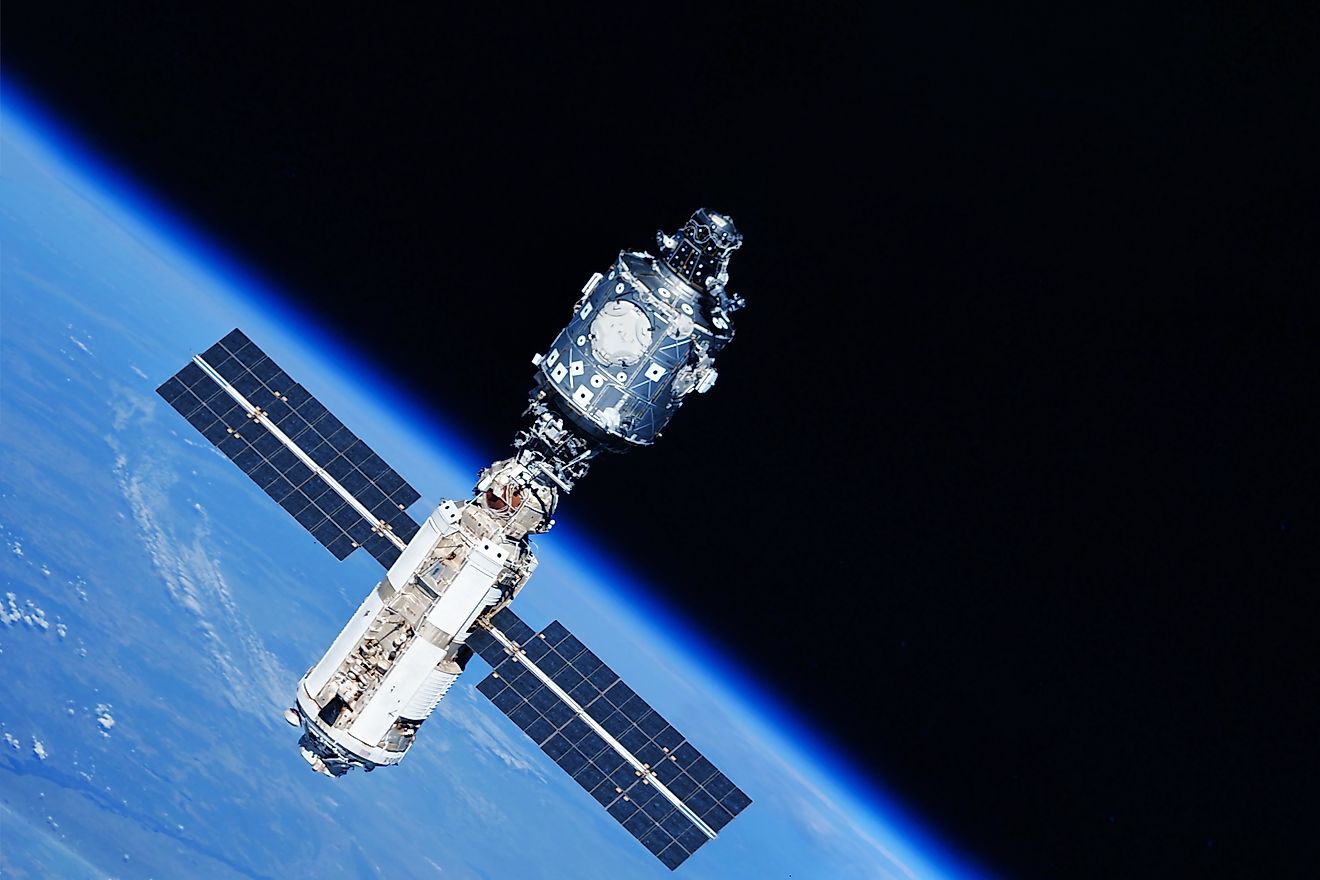
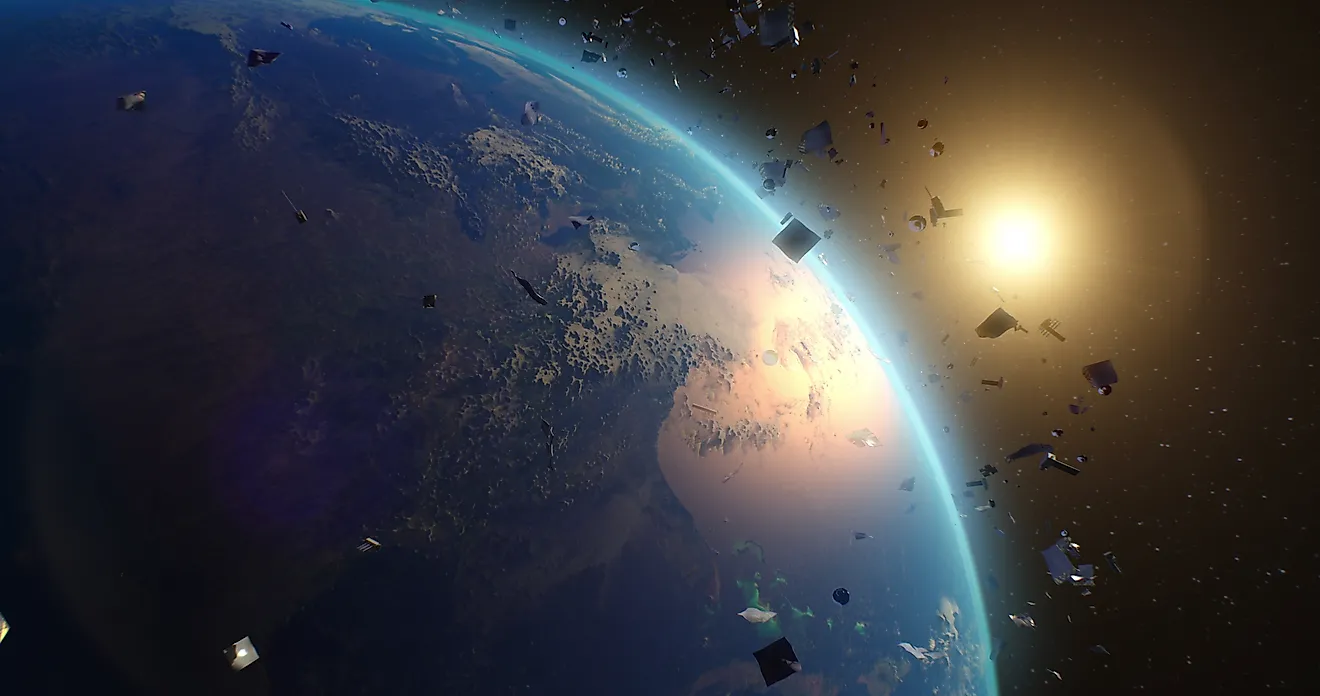
Dead satellites, spent rocket stages, spacecraft, and pieces of orbital debris eventually fall out of orbit. They can reach reentry speeds of around 17,000 mph from low Earth orbit, subjecting them to extreme heating as they plunge into thicker air. Most of the structure melts, vaporizes, or breaks apart. Components made from materials with high melting points can sometimes survive to reach the ocean or ground.
Older ESA estimates described roughly 50 to 100 metric tons of artificial material reentering per year. That figure no longer reflects current orbital activity. Analysis using ESA's newer space-environment data put the total reentering artificial mass in 2024 at about 490 metric tons, following rapid growth in satellite launches and end-of-life reentries. That is still tiny compared with tens of thousands of metric tons of natural material entering the atmosphere. However, spacecraft are made of very different substances from meteoroids. Researchers are increasingly studying what vaporized aluminum and other spacecraft materials may do to the upper atmosphere.
Earth Is Constantly Collecting Pieces Of Space
Look up on an ordinary night and nothing may appear to be falling at all. In reality, Earth is moving through a nearly continuous rain of cosmic material. Dust from comets and asteroids arrives every day. Larger grains flare briefly into meteors. Rare fragments survive as meteorites. Some rocks were blasted away from the Moon or Mars. Dead satellites and rocket stages now join the natural material plunging into the atmosphere. Most of it disappears before a human ever sees it.
That may be the strangest part. Earth can intercept tens of thousands of metric tons of natural space material in a year, yet almost the entire process is invisible from the ground. Our atmosphere quietly vaporizes much of it, catches some as microscopic smoke, and occasionally allows a rock billions of years old to finish its journey at someone's feet. Every meteorite on Earth is therefore the tiny surviving fraction of a much larger cosmic rain that has been falling on the planet every day for billions of years.