The Places On Earth Most Like Europa
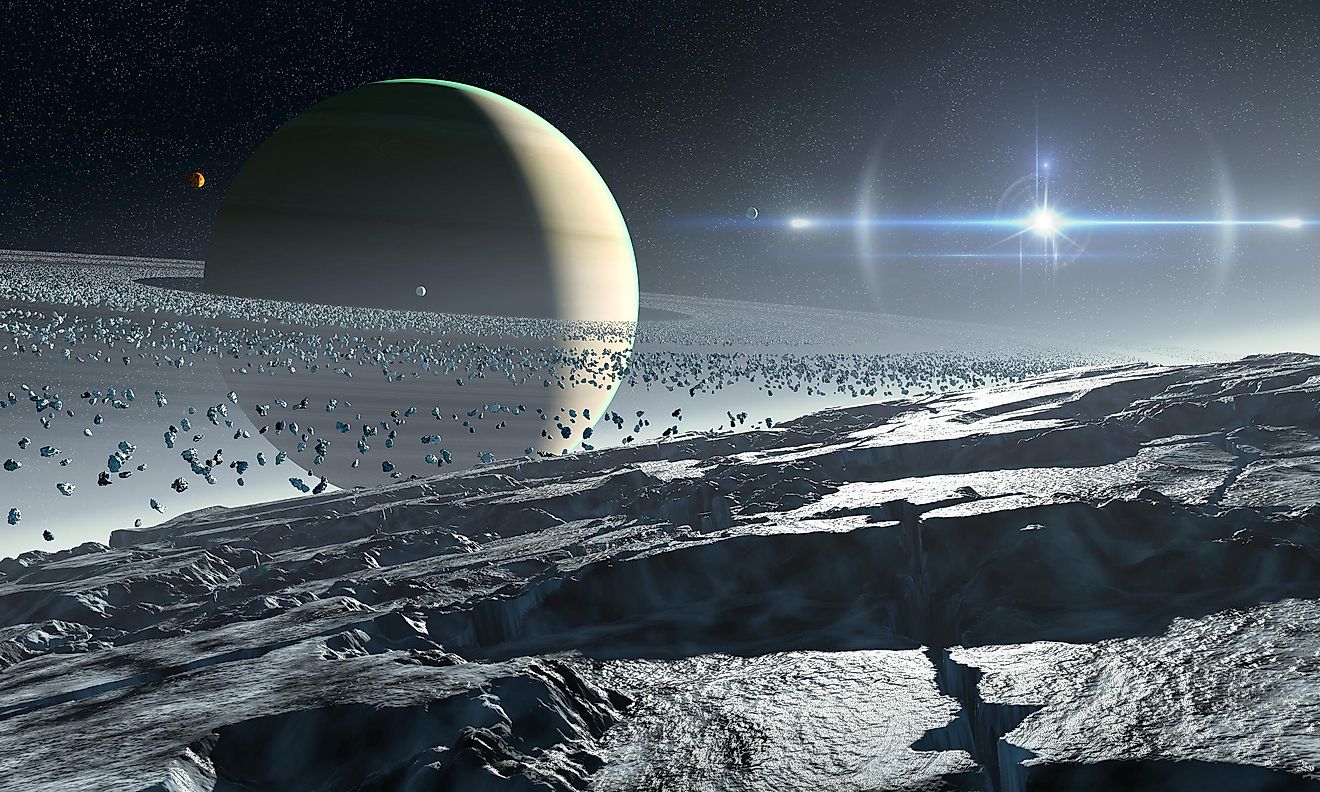
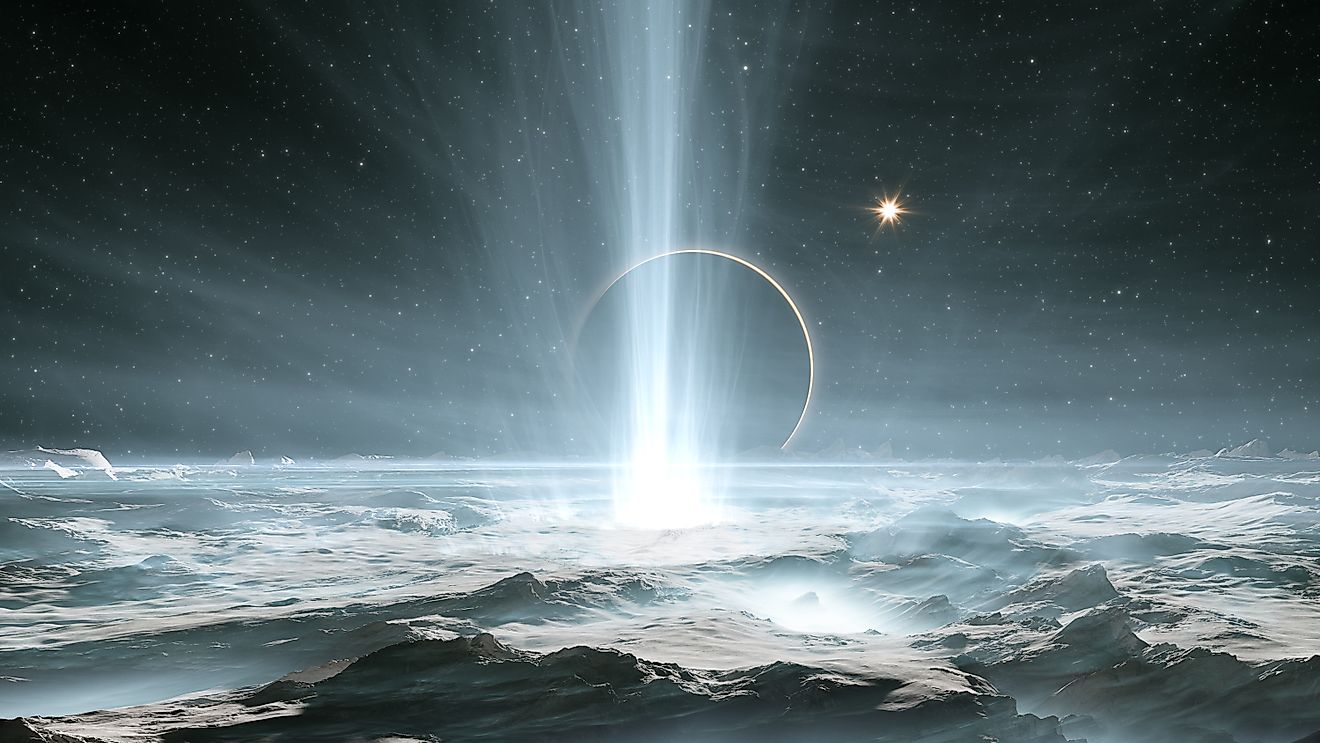
Jupiter's moon Europa may hold twice as much water as every ocean on Earth combined. All of it stays sealed beneath an ice shell at least 10 miles thick. No sunlight reaches it. No camera has ever seen it. Yet scientists can study pieces of this frozen world without leaving Earth. Sulfur-stained glaciers, lakes buried beneath Antarctic ice, deep mines, and strange towers on the Atlantic seafloor reproduce some of the conditions that may exist on Europa. Together, these environments offer some of the best previews of what NASA’s Europa Clipper might encounter when it begins examining the moon up close.
Ellesmere Island, Nunavut
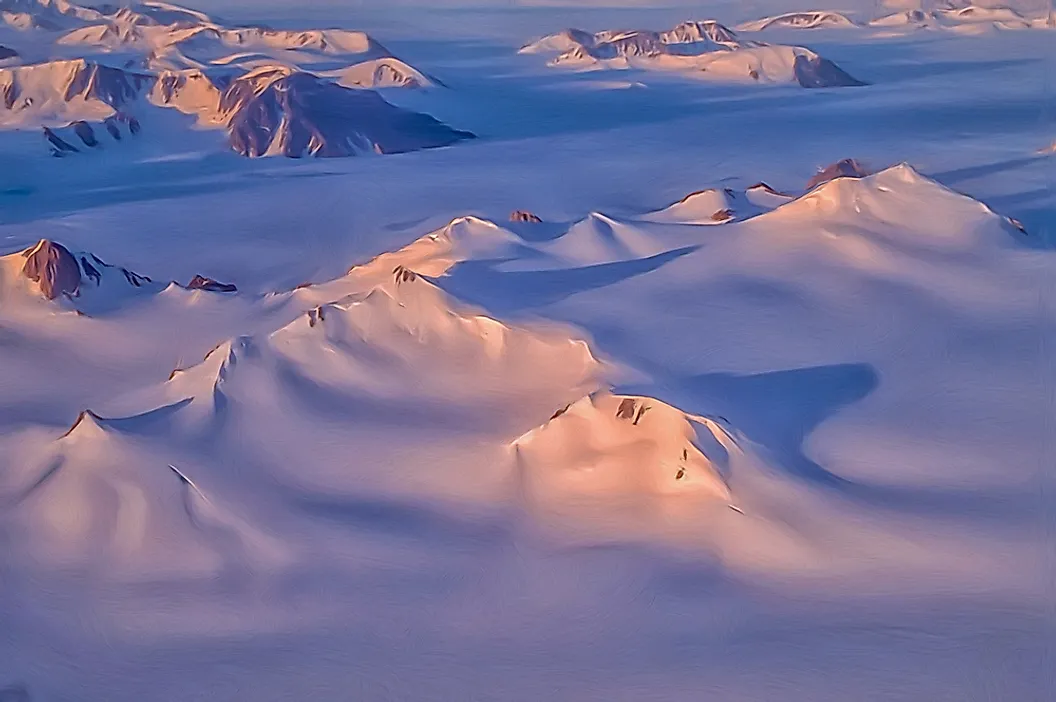
At roughly 81 degrees north, Borup Fiord Pass on Canada’s Ellesmere Island contains a glacier stained an unnatural yellow. The color comes from a sulfur-rich spring that emerges through or beside the ice. Hydrogen sulfide in the water is converted into deposits dominated by elemental sulfur, leaving bright patches that can spread across thousands of square feet of frozen ground.
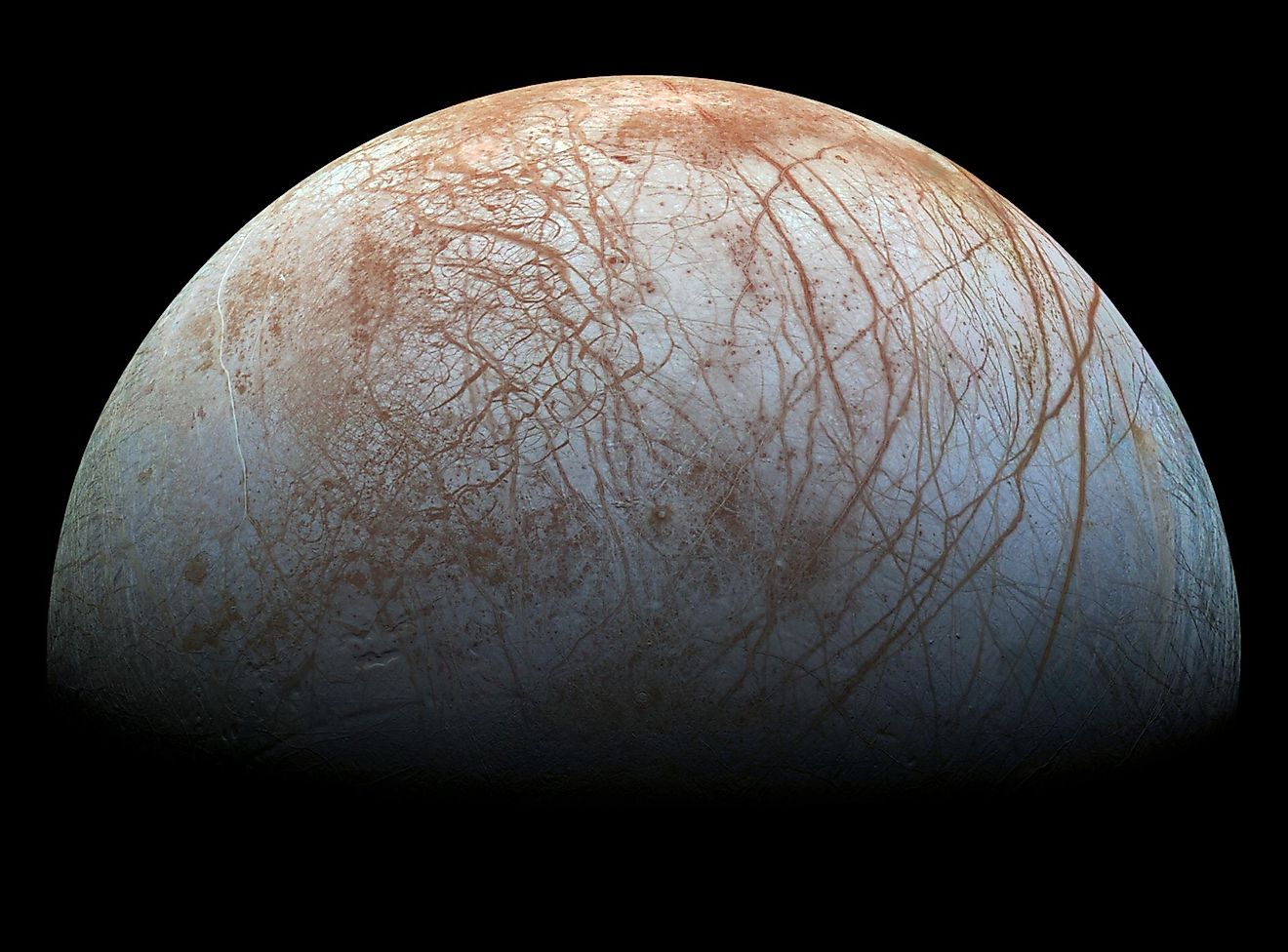
The comparison with Europa is unusually direct. Europa’s pale surface is crossed by reddish-brown fractures containing non-ice material thought to include salts and sulfur compounds. Scientists have studied Borup Fiord Pass from the ground and from orbit to learn whether sulfur chemistry, including chemistry affected by microorganisms, can leave a recognizable spectral fingerprint on ice. That matters on Europa because scientists may have to identify interesting chemistry without ever touching it. The spring is strange even by Arctic standards. Sulfur-metabolizing microorganisms can become abundant in its water and ice, and the site is considered a rare sulfur-on-ice system. Field observations also suggest that the spring system has diminished dramatically over time, making this already unusual Europa analog even more fragile.
The Greenland Ice Sheet

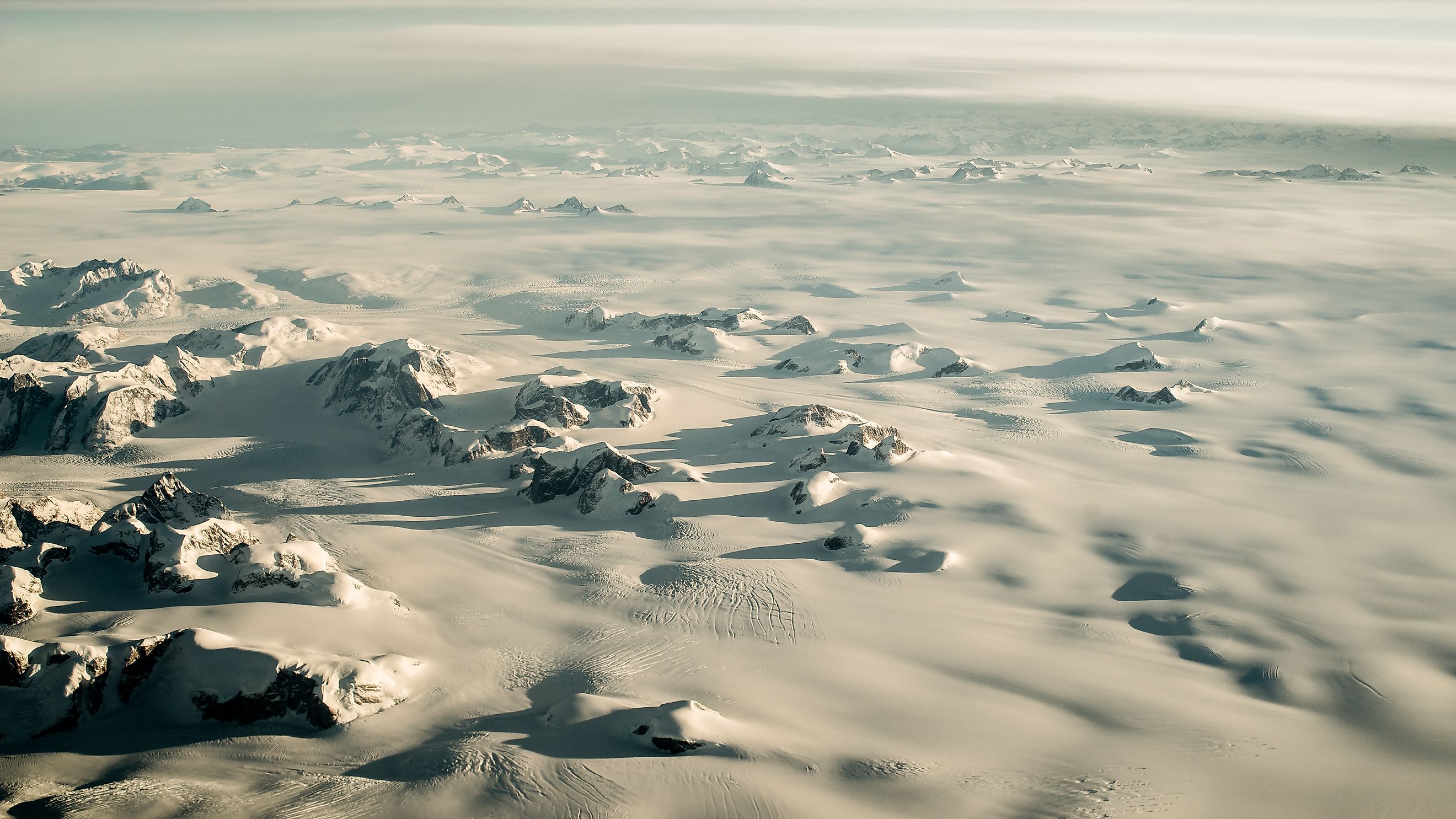
Two parallel ridges run for miles across northwestern Greenland, and they have no business being there. NASA Operation IceBridge radar data revealed liquid water roughly 30 to 50 feet beneath a Greenland double ridge. Researchers concluded that surface meltwater had become trapped inside the ice, where repeated freezing, pressurization, and cracking helped lift the two ridges above it. When the Greenland feature was adjusted for Europa’s much weaker gravity, its shape closely resembled the ridges on the moon. If Europa’s ridges form the same way, its ice shell could contain numerous shallow reservoirs of liquid water far above the global ocean. That would put potentially habitable environments much closer to the surface than scientists once assumed.
Europa Clipper carries an ice-penetrating radar called REASON that uses the same basic advantage exploited over Greenland: radio waves travel through ice but reflect strongly from boundaries involving liquid water. Instead of looking through a few dozen feet of Greenland ice, the spacecraft will attempt to probe a shell measured in miles.
Taylor Glacier, Antarctica

Taylor Glacier bleeds. A plume of rust-red brine known as Blood Falls escapes at the glacier's snout in the McMurdo Dry Valleys. The brine drops 60 to 80 feet onto the frozen surface of West Lake Bonney. The Australian geologist Griffith Taylor found it in 1911 and could not account for the color. Iron is the answer. The brine remained sealed beneath the ice for more than a million years, and the iron in it oxidizes the moment it meets air.
How the water moved at all took another century to work out. Researchers at the University of Alaska Fairbanks and Colorado College tracked it in 2017 with radar, finding a network of pressurized channels threading the ice. Salt keeps the brine liquid at temperatures that would freeze fresh water solid. Whatever does freeze gives off heat, and that heat keeps the channel open behind it. Erin Pettit, the glaciologist who led the field team, put the result plainly: "Taylor Glacier is now the coldest known glacier to have persistently flowing water." Bacteria have run on sulfur compounds and dissolved iron inside that brine for something like 1.5 million years, without oxygen and without a photon of light.
Vatnajökull, Iceland

Vatnajökull caps three lakes that should have frozen solid long ago. Iceland's largest ice cap runs 800 to 1,000 feet thick over the volcanoes below it. Geothermal heat melts the ice from underneath, hollowing out water bodies that never touch daylight. The two Skaftárkatlar lakes and Grímsvötn are the results. A hot-water drill reached the western Skaftárketill in June 2006, punching through nearly 1,000 feet of ice to a lake roughly 300 feet deep.
Heat from below is the entire point of the comparison. Europa gets nothing usable from the sun at that distance. Its ocean stays liquid because Jupiter's gravity stretches and squeezes the moon on every orbit, and the friction warms it from within. Iceland runs a different engine and arrives at the same arrangement, which is rock warm enough to hold water against an ice ceiling. NASA's Astrobiology Institute funded the drilling on exactly that reasoning, describing the lakes as potential analogs for ice-covered worlds including the outer planet satellites. The western lake came back anoxic and sulfidic, with hydrothermal input and a thin population of bacteria adapted to cold, dark, nutrient-poor water.
Subglacial Lake Whillans

Subglacial Lake Whillans sits beneath roughly 2,600 feet of West Antarctic ice, yet the lake itself can be only a few feet deep. Its size is modest compared with famous Lake Vostok, but Whillans produced one of the most important discoveries ever made beneath Antarctica. In January 2013, researchers used a carefully cleaned hot-water drilling system to reach the lake without contaminating it. The samples contained an active ecosystem with more than 3,900 types of bacteria and archaea in the water. Cell concentrations averaged around 130,000 per milliliter.
Sunlight contributes nothing directly to that buried ecosystem. Instead, microbes exploit chemical compounds supplied by water, rock, and sediment beneath the ice. Some organisms obtain energy through processes involving nitrogen, sulfur, iron, methane, and other materials rather than photosynthesis. A person standing on the Antarctic surface would see nothing but an ice sheet stretching toward the horizon. More than half a mile underneath their boots, however, an entire microbial ecosystem would be functioning in liquid water. That is exactly the sort of hidden biology that makes Europa so compelling.
The Ross Ice Shelf
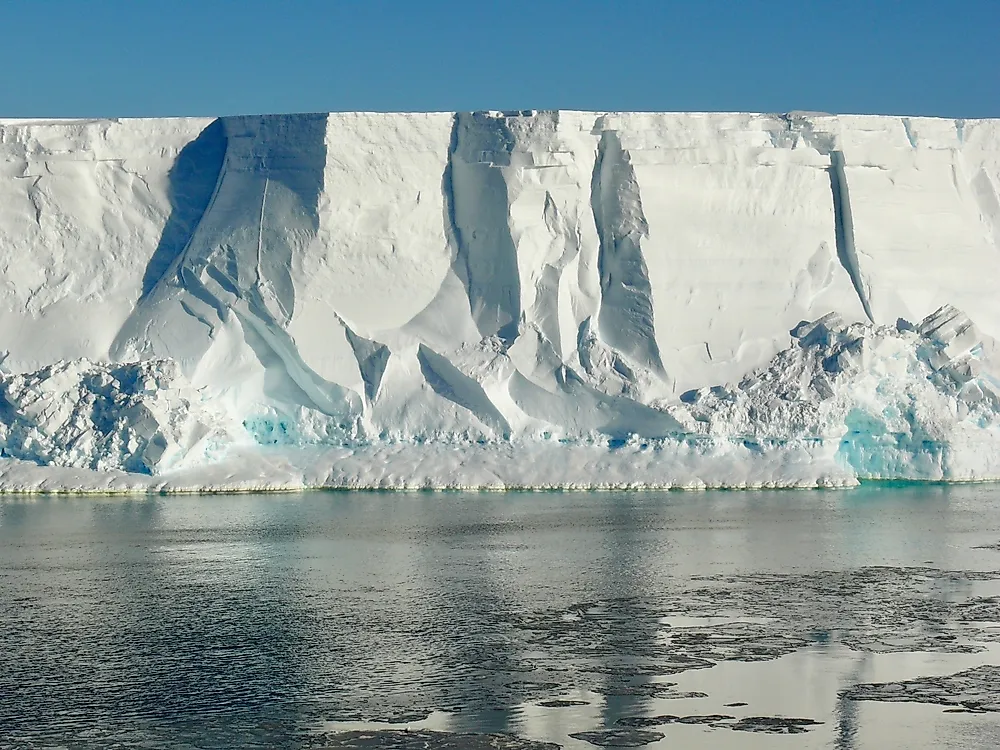
The Ross Ice Shelf floats. Its ice rests on seawater rather than on ground. The underside of it is the closest thing Antarctica holds to the boundary between Europa's ice shell and the sea beneath it. Two years after the lake work, the same team drilled again at the grounding zone where the Whillans Ice Stream lifts off the bed. The site lies 530 miles from open water.
Drilling reached the cavity beneath 2,500 feet of shelf ice on January 8, 2015. Eight days later a small submersible called Deep SCINI went down the borehole and surveyed about 4,300 square feet of seafloor. Fish roughly 8 inches long, translucent and unhurried, swam up to inspect the camera. Amphipods and jellyfish came with them. The water sat near 28 degrees Fahrenheit, hundreds of miles from the nearest daylight, and nobody on the project had expected animals in it. Slawek Tulaczyk, one of the chief scientists, said of the site: "This is the closest we can get to something like Europa."
The Lost City Hydrothermal Field

Nearly half a mile beneath the Atlantic Ocean stands a white tower almost 200 feet tall. It is called Poseidon, the largest structure in the Lost City Hydrothermal Field. Unlike the black-smoker vents associated with volcanic activity, Lost City is driven largely by chemical reactions between seawater and mantle rock. Water enters fractured rock and triggers a process called serpentinization, producing heat and hydrogen while helping generate methane. The resulting fluids build enormous carbonate chimneys.
Poseidon rises about 60 meters from the seafloor, roughly the height of an 18-story building. The wider hydrothermal system has apparently remained active for more than 120,000 years. Microbes living within the chimneys exploit hydrogen, methane, and other chemical resources in darkness.
Europa may possess a comparable source of energy. Its ocean probably overlies a rocky interior, allowing water and rock to interact at the seafloor. Scientists do not yet know whether Europan hydrothermal vents exist, but similar chemistry could provide energy for life without requiring a ray of sunlight. If Europa has anything resembling Lost City beneath its ice, its dark ocean could be chemically active even billions of miles from the kind of sunlit ecosystem humans know best.
Mponeng Gold Mine, South Africa

Mponeng Gold Mine reaches nearly 2 miles into the crust west of Johannesburg. In fracture water at that depth, researchers found something nobody had seen before: an ecosystem containing exactly one species. Candidatus Desulforudis audaxviator lives alone, in total darkness, without oxygen, at 140 degrees Fahrenheit. The bacterium has no neighbors to trade with, so it does everything itself, fixing its own carbon from dissolved gas and its own nitrogen from ammonia in the rock.
Its energy comes from uranium. Radioactive decay in the surrounding rock breaks water apart, and the hydrogen and sulfate that come loose are what the bacterium eats. Sunlight plays no part at any stage, direct or indirect. Europa modeling picked up the find almost immediately. A 2018 paper in Scientific Reports used the mine as a working analog for Europa's under-ice ocean, with this organism as the model for what might survive there. Its genome carries 2,157 protein-coding genes where a streamlined bacterium gets by on about 1,500, which suggests that living alone is expensive.
The Rehearsal Before The Flyby
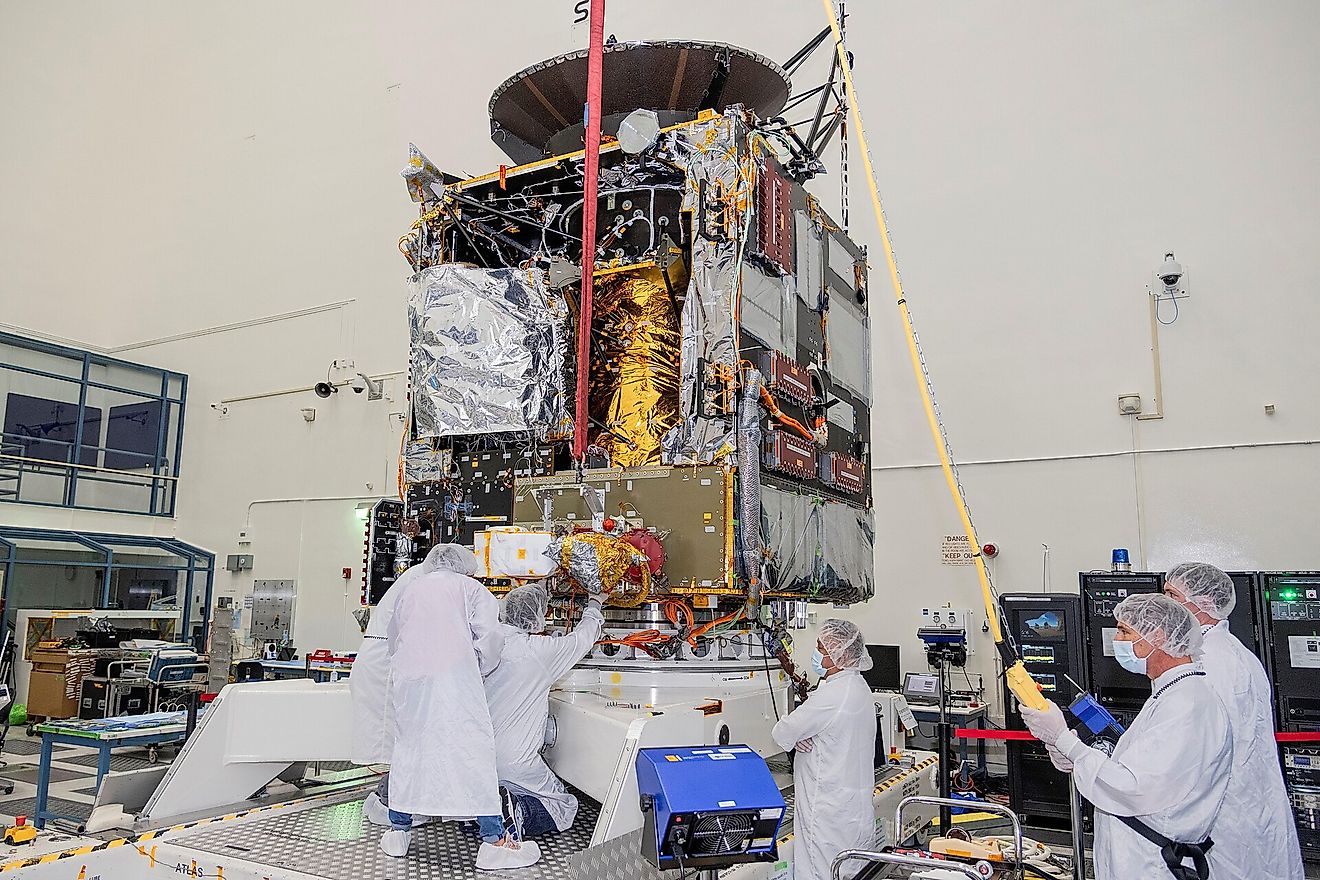
Europa Clipper passes Earth on December 3, 2026, borrowing a shove from this planet's gravity. The spacecraft reaches Jupiter on April 11, 2030 for 49 close flybys of the moon. Its radar will read an ice shell nobody has ever touched. Every answer it sends back gets checked against a glacier in Nunavut, a lake under Antarctica, and a tower of white rock in the Atlantic.