Which Planet Has The Strangest Sunrise?
Here on Earth, sunrise is one of the most reliable events in nature, with a guarantee that the sun climbs the eastern horizon once every 24 hours and slides down the western horizon that same evening. Travel across the solar system, however, and it's a different story. Some planets spin so slowly, or so strangely, that a single sunrise can stretch across weeks, decades, or even entire human lifetimes. Others rotate backward, sending the sun up in a direction it should never appear. Among the eight planets orbiting our own sun, the strangest sunrise of all belongs to Uranus. The planet lies almost fully on its side, so at either pole the sun rises once and then stays up for 42 years before it sets. Mercury and Venus are the two other serious contenders. Both break the rules of dawn in ways that are easier to picture, one with a sun that rises, reverses, and rises again, the other with a sun that comes up in the west.
Uranus: Waiting 42 Years For Sunrise

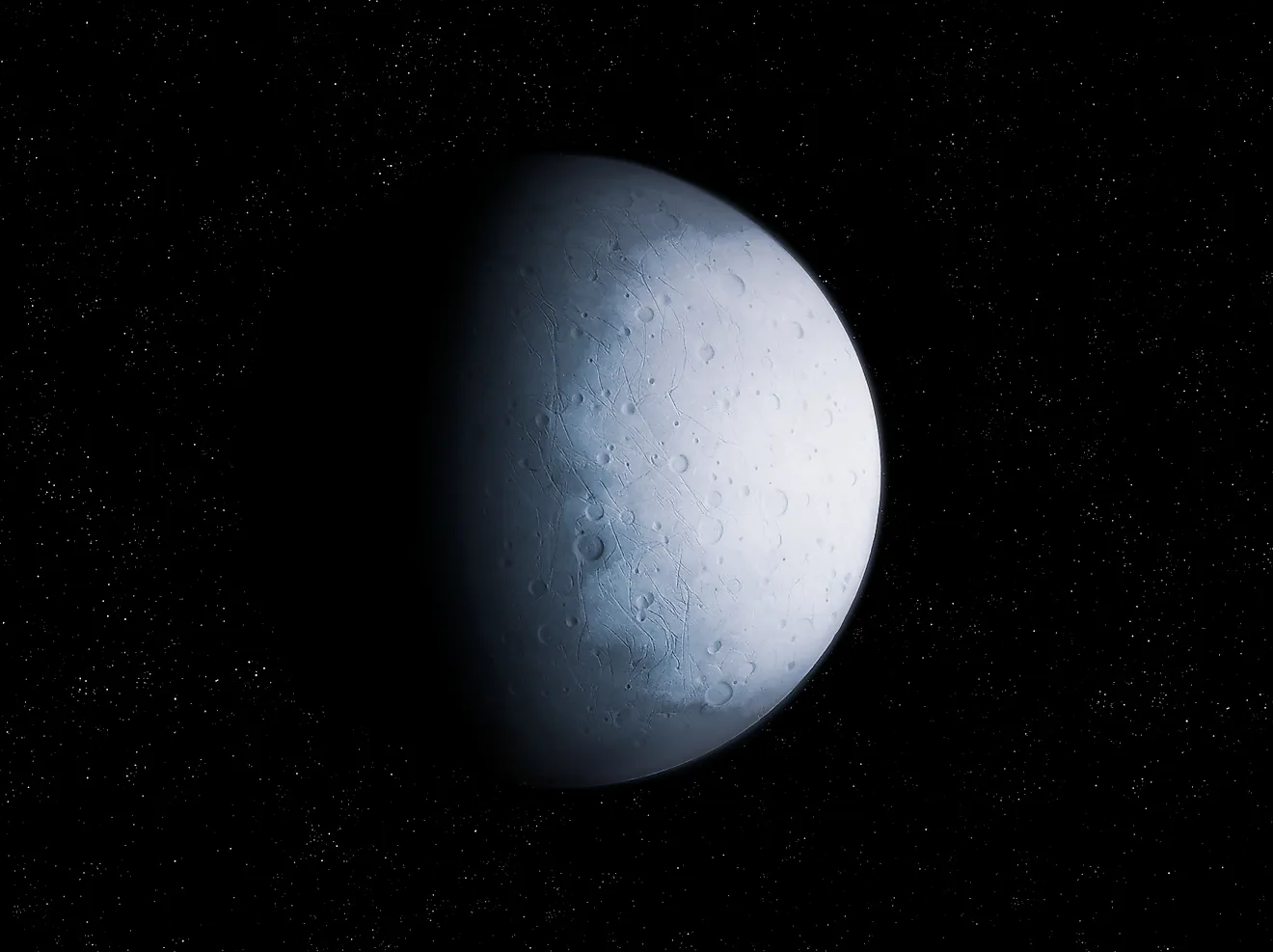
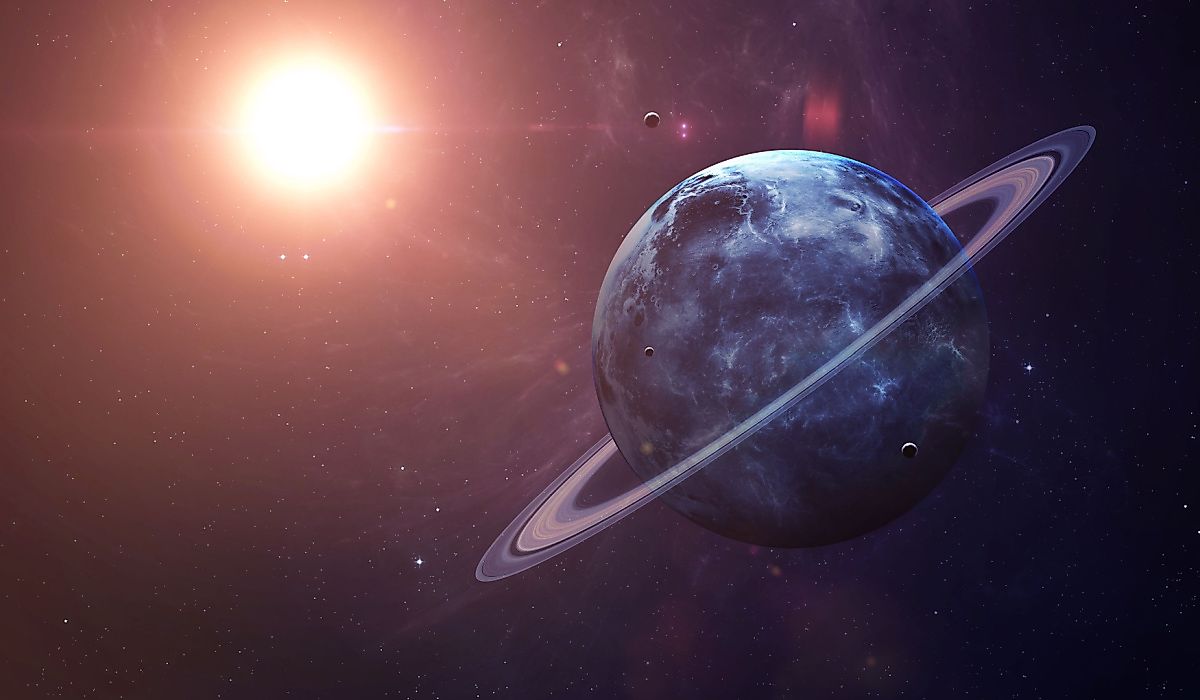
There are few planets, if any, that test the definition of "sunrise" quite like Uranus. While most planets spin more or less upright relative to their own orbit (the Earth, for example, does so at a 23.5° tilt), Uranus lies on its side at close to 98° and essentially rolls around the sun rather than spinning like a top. Astronomers are still debating the cause to this day, though leading theories point to an alleged catastrophic collision, possibly with a celestial body close to the size of Earth, earlier in our solar system's history.
The consequence for anyone standing at one of Uranus' poles is almost incomprehensible on a human timescale. Because the planet's axis points nearly straight at the sun for part of its 84-year orbit, one pole faces 42 consecutive years of daylight, followed by 42 consecutive years of darkness, before the cycle reverses. To put that into perspective, a single sunrise at the pole would not be followed by a sunset until a person is well into middle age, meaning an entire human working life passes during just one morning-and-evening cycle.

Equatorial regions fare differently. Uranus turns on its axis every 17 hours, so the equator does get a rapid sunrise and sunset, but the sun's height and path shift and warp over decades as the extreme seasons grind forward. Spinning sideways with four-decade polar days, Uranus turns the concept of a routine morning into an epic multi-generational marathon. That is what sets Uranus apart from every other candidate. It does not just bend the direction or the shape of a dawn, it eliminates the very concept of a regular morning altogether. A 42-year sunrise creates a rhythm so far outside human comprehension that the word sunrise barely applies anymore. The two worlds that come closest are stranger only in appearance.
Mercury: The Sun That Rises Twice

The strongest challenger is also the most visually bizarre. Mercury sits closer to the sun than any other planet, yet its true challenge has nothing to do with heat and everything to do with time. This world spins on its axis three times for every two trips around the sun, a stable lock astronomers refer to as a 3:2 spin-orbit resonance. Originally confirmed by radar observations in 1965, this staggering rhythm means a single Mercurian day drags on for about 176 Earth days, while the planet's entire year runs just 88. So in a bizarre cosmic twist, this means a single day on Mercury actually lasts twice as long as its entire year, rendering the planet's calendar completely upside down.

An even more remarkable visual phenomenon occurs when Mercury makes its closest approach to the sun, a point called perihelion. At this exact moment, Mercury's speed rushing around the sun temporarily outpaces how fast it spins on its axis. For anyone standing in the right place on the surface, the result is deeply disorienting. The sun peeks over the horizon, climbs a short distance, reverses direction to dip back down, and then rises all over again before finally continuing its crawl across the sky.
A similar backward trick happens at sunset, where the sun sets, pops back up into the sky briefly, and then sets a final time. This peculiar sunrise process takes place over about eight Earth days, setting the stage for extreme temperatures that rocket up to 800°F, while the dark side of the planet plunges into a freezing -290°F. With a double sunrise and a day that runs nearly six Earth months and twice its own year, Mercury's is certainly one of the strangest dawns in the solar system.
Venus: A Sunrise In The Wrong Direction

If Mercury's sunrise is strange because it happens twice, Venus makes its mark by happening entirely in reverse. Venus rotates in the opposite direction of almost every other world in our solar system, essentially spinning upside down with its axis tipped to an extreme 177 degrees. According to the National Aeronautics and Space Administration (NASA), the practical result for anyone standing on the surface would be surprising. The sun climbs out of the west and sinks into the east, completely reversing every rule of dawn we know here on Earth.
The timing introduces an even stranger puzzle, considering a single spin on its axis takes 243 Earth days, which is actually longer than the planet's entire 225-day year. However, because Venus is also traveling along its orbit while spinning backward, the actual stretch from one sunrise to the next works out to about 117 Earth days. Morning alone lasts for nearly two Earth months, and the sun creeps backward across the sky for nearly 60 days before finally reaching its highest point.

None of this would be visible to the naked eye because of the crushing, sulfuric acid atmosphere that locks the surface in a thick, permanent gloom regardless of where the sun happens to be. Trapped beneath a suffocating haze where dawn breaks in the wrong direction, Venus redefines what it means for a day to begin and end. It is the cleanest violation of human intuition of the three, and something only one other planet in our solar system comes close to matching. Like Mercury's double dawn, though, it still unfolds on a timescale a human being could sit through, plan around, or photograph during a single visit, if we were ever able to make the necessary technological advancements to land there.
All In A Day
Uranus, Mercury, and Venus each reveal how much of what people tend to assume about a sunrise is really just a product of Earth's particular size, speed, and tilt. What feels like a universal law of nature turns out to be nothing more than an earthly convenience, easily upended by the wildly different spins and extreme axial tilts of our planetary neighbors. For some of these worlds, scientists still have not settled on the exact cause of the cosmic mysteries these unique sunrises present us with, but whether a planet dances with gravity to pause its morning or lies completely on its side to experience four decades of continuous light, these alien dawns force us to rethink the very nature of time and space. Ultimately, the strangest sunrise in the solar system is not just a bizarre spectacle in the sky, but a lingering reminder of how little we truly understand about the chaotic forces that shaped our celestial neighborhood.