Why Betelgeuse Keeps Dimming
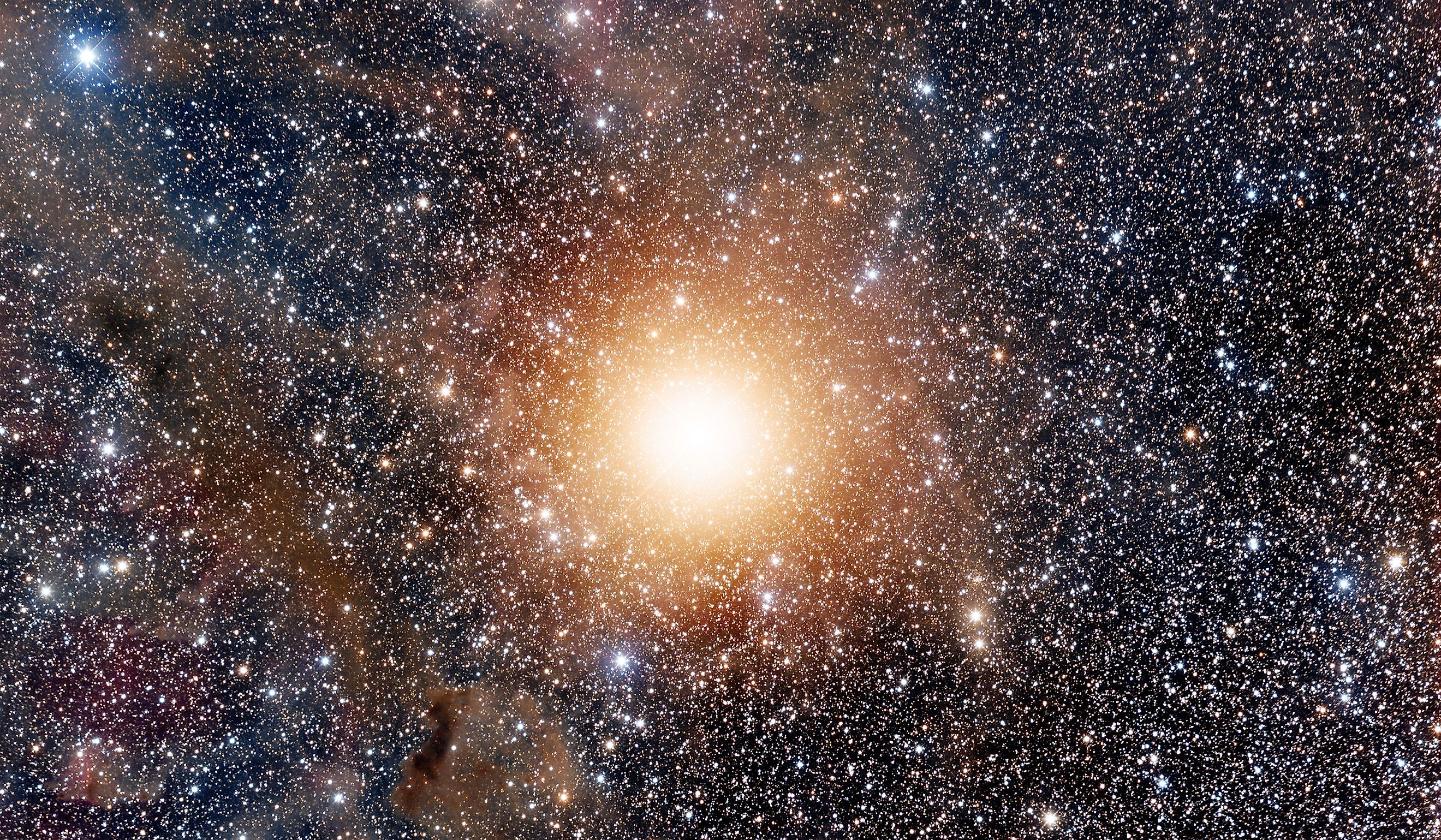
Betelgeuse is a variable red supergiant star that is around 700 light-years away from Planet Earth. Betelgeuse makes up the left "shoulder" of the constellation Orion. If you look up at the night sky, it isn't hard to find with the naked eye because of its distinctive orange-red color, and it is often among the 10 brightest stars in the sky.
But what is unique about Betelgeuse is that it isn't always one of the brightest stars in the sky. In this article, we will discuss why Betelgeuse keeps dimming and then brightening again. One quite simple reason for Betelgeuse's variable brightness is that it is a red supergiant, and red supergiants do change over time. However, Betelgeuse takes this to an extreme. Stick around to the end to learn about a 2026 surprise discovery that gives us exciting new information about this star's behavior.
History

Betelgeuse has probably been observed by humans since the dawn of our species. In their traditional oral stories, there is evidence that early Australian Aboriginal people knew about Betelgeuse and its variable brightness. Ancient Egyptians documented Betelgeuse, including it in their own constellation, Osiris, named after the mythical god of the underworld. The early Greek astronomer, Ptolemy, described the star's color ranging between pale yellow and light red. Some scientists think that could mean that the star had not yet developed to the stage of its life that is concurrent with the deep red color it now has.
It is the German astronomer, Johann Bayer, who gave the star its Latin name, Alpha Orionis in 1603. This translates to mean that it is the brightest star in its constellation, even though we now know that the star Rigel actually holds that honor.
Why is it called Betelgeuse? Funnily, it is because of a mistranslation of an Arabic phrase during medieval times, which was yad al-jawzā' that meant "the hand of al-Jawzā."
About Betelgeuse

This infrared image from the ESO's VLT shows complex shells of gas and dust around Betelgeuse - the tiny red circle in the middle is the size of the photosphere. By ESO,CC BY 4.0, Wikimedia Commons.
One of the best ways to understand Betelgeuse is to compare it to a star we know well, our Sun. In truth, they are much more different than they are alike. Although they both use hydrogen and other materials from their core to undergo nuclear fusion, the similarity ends there.
Paradoxically, our Sun is much older than Betelgeuse, at almost five billion years old. Betelgeuse is only around 10 million years old. But because it is so much bigger than the Sun, it is burning through its core materials a lot faster. Its sheer size will shorten its life considerably.
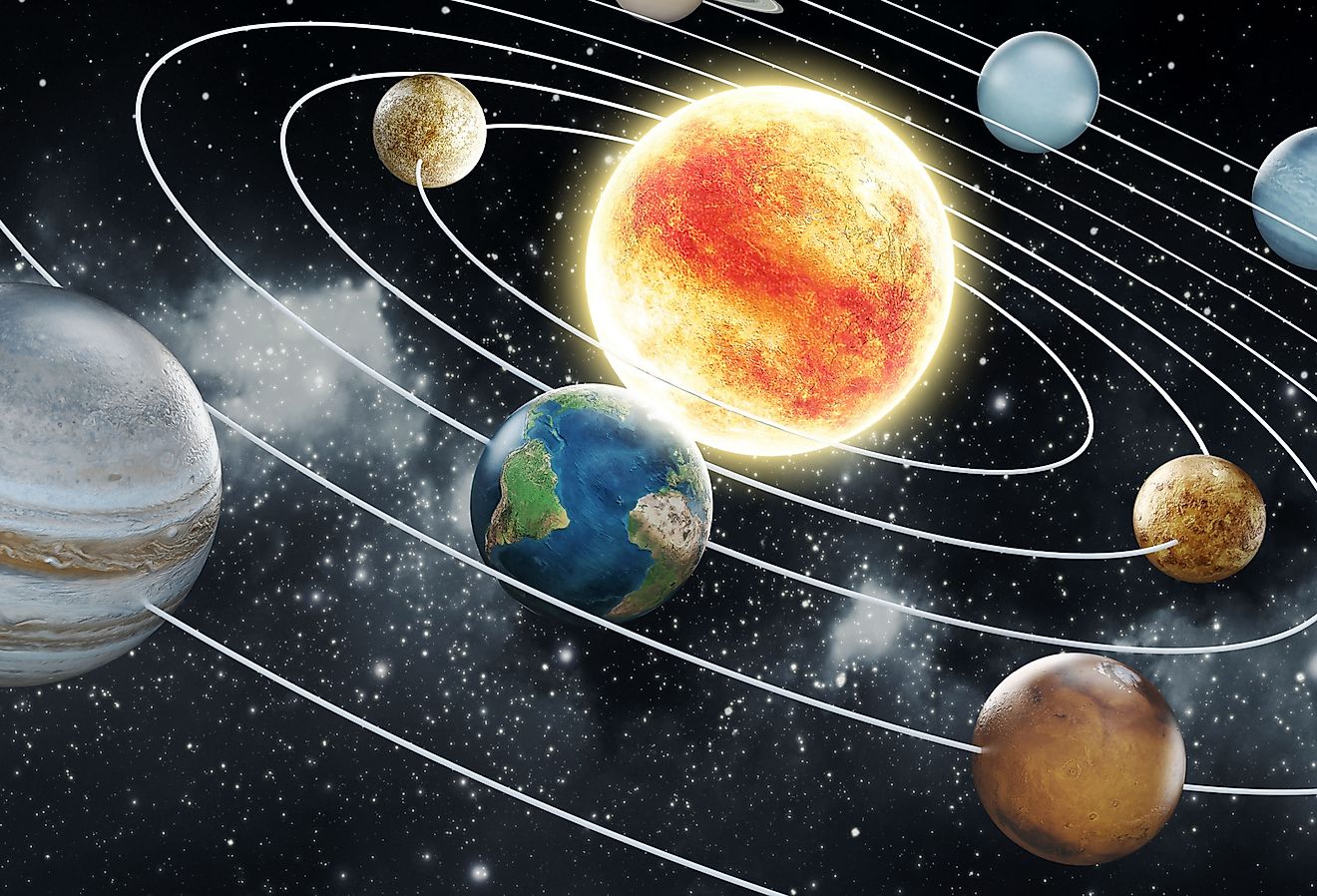
The Sun and Betelgeuse are not only at very different stages of life, but they were also never the same type of star to begin with. Our Sun is a yellow dwarf star, and Betelgeuse is a red supergiant. Its radius is roughly 720 times larger than the Sun and about 700 times the same size altogether. According to NASA, it is about 7,500 to 14,000 times brighter but oddly cooler at its surface than the Sun's because of its sheer size. To get an idea of how big Betelgeuse is, if it were put in the Sun's place, it would expand at least past the orbits of our first four planets, Mercury, Venus, Earth, and Mars.
The two stars will also end up quite differently. The Sun will eventually become a white dwarf, having lost the bulk of its burning capacity, and Betelgeuse will expand and then collapse into either a black hole or a neutron star.
And of course, while our Sun emits a relatively steady light, Betelgeuse, as we will see, is constantly pulsating and changing.
And speaking of planets, none have been detected in Betelgeuse's orbit. But we must keep in mind that we don't know if there were some in the past that were simply engulfed by the star as it began to age and expand.
Reasons for Betelgeuse's Unpredictable Dimming and Brightening

What are some of the reasons that a star's appearance could change? One is that when a star expands and contracts, its brightness rises and falls. It literally pulses. Another reason is that all stars lose material into space in the process of burning their core materials. Some of that turns into dust and passes in front of the star, and Betelgeuse does this in a particularly spectacular way because of its sheer size. And a third reason is the size of its convection cells, or in other words, the huge areas of turbulence where hotter and cooler areas meet.
The Great Dimming

As mentioned, a characteristic of Betelgeuse that has occupied a lot of scientific study is its changeable appearance. That has always been the case, but in 2019 Betelgeuse began to quickly dim. Within months, it had dimmed by about 60%. Scientists thought that the star was about to supernova.
But by April of 2020, it returned to its normal brightness. Since that time, it has continued to pulse and change (although not as intensively) as it had prior to "The Great Dimming," as it came to be known.
It took months for scientists to understand what had happened to create this massive dimming event. Data from many different observatories, including the Hubble Space Telescope, determined that it had a massive ejection event in 2019. It literally spewed a huge piece of its surface material into space, which temporarily blocked the light that we could normally see. It is estimated that this mass likely weighed several times more than our Moon.
Betelgeuse's 2019 surface mass ejection expelled approximately 400 billion times as much material as a typical coronal mass ejection from the Sun. It is likely to have been caused by an internal bubble of gas that exploded outwards.
Going forward, when we see extreme dimming events of Betelgeuse, we know that it is probably not an indication of an imminent supernova. But it turns out that there's more to this story.
And Then There Were Two

For decades, scientists had wondered if the presence of another star could partially explain the prodigious events of Betelgeuse's dimming. And then in 2025, Dr. Steve Howell and a team of astrophysicists at the NASA Ames Research Center discovered the dim image of something that scientists had been speculating about. Betelgeuse has a friend, a companion star that is approximately 372 million miles from its surface. Its mass is roughly two and a half to three times larger than our Sun.
Clear direct light imaging was then done by a European team at the Very Large Telescope (VLT) in Chile using their SPHERE instrument. Stronger confirmations of this will take place in 2027, the next time the positioning of Betelgeuse will allow the companion star to be observed. However, scientists are confident that the smaller star will be seen.
For now, the newly observed star is being called "Betelgeuse B," but other names include Siwarha ("her bracelet" in Arabic), and it is also widely nicknamed "Betelbuddy." Much more research needs to be done to find out how the two stars coexist. This companioning of a small star with a supergiant has never been seen before, so no one knows if this is a typical occurrence in space. Sadly, it is predicted that within 10,000 years or so, Betelgeuse B will be sucked into the larger star.
Even though Betelgeuse's dimming behavior is not an indication of it being about to supernova, inevitably one will occur. Predictions of when this will happen vary hugely. One 2025 NASA discussion gathering of scientists thought it might be in 100,000 years or less from now. When it is about to happen, scientists will observe massive amounts of energy being expelled from the star, after which it will collapse into itself. This collapse itself will take seconds. We will be able to see its expansion for about 100 days, and it will look about as bright and big as half of our moon, even visible during the day. Then it will dim and no longer be visible to us. Earth will not be impacted by its supernova at all.
And for all we know, it may have already happened. After all, when we observe Betelgeuse, we are seeing what happened to it 700 years ago because that's how long it takes for its light to reach our planet.