What Is The Coldest Place In The Solar System?
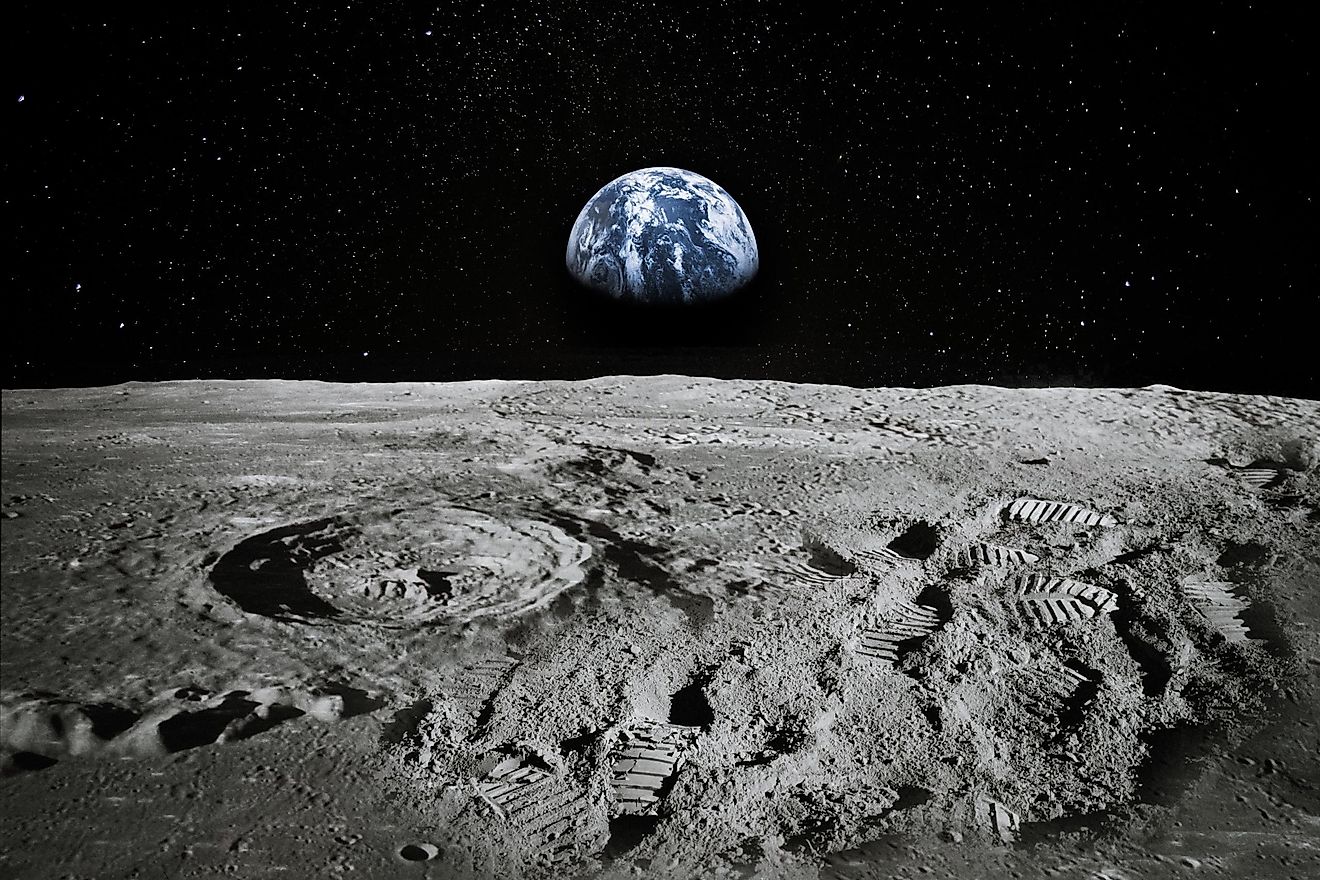
The coldest spot ever measured in the solar system is not on Pluto or some fog-bound moon at the edge of everything. It sits in a crater on our Moon, about 240,000 miles away.
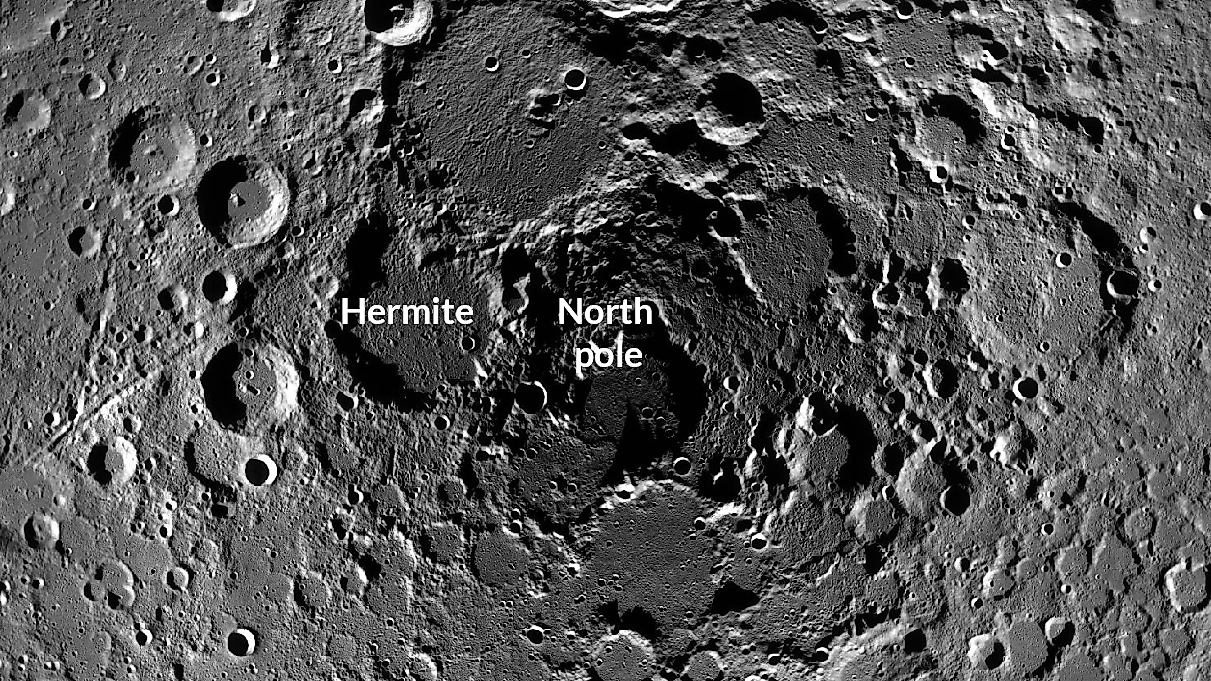
In 2009, the Diviner instrument aboard NASA's Lunar Reconnaissance Orbiter clocked the floor of Hermite Crater near the lunar north pole at roughly 25 kelvin, about -415°F (-248°C). Nothing warmer than a passing comet ever reaches that shadowed ground. To find surfaces that cold anywhere else, you would have to travel well past the Kuiper Belt.
The Moon's Permanently Shadowed Regions Are The Coldest Known Places

Diviner found those record lows inside permanently shadowed regions, the crater floors near the lunar poles that sunlight never reaches. The Moon barely tilts on its axis, about 1.5 degrees, so the Sun stays low along the polar horizon and never climbs high enough to spill light into the deepest craters. Some of that ground has stayed dark for billions of years.
A surface that never sees the Sun has almost no way to warm up. It radiates its heat into space and keeps radiating, dropping toward the temperature of empty space itself. The coldest readings cluster in Hermite, Peary, and Bosch craters in the north, with matching pockets at the southern pole, all measured during the depth of winter night.
That cold turns familiar engineering into a problem. Lubricants seize, metals grow brittle, and batteries drain far faster than they would in sunlight. Any lander meant to work inside a shadowed crater has to carry its own heat, which is one reason these craters remain some of the least explored real estate in the inner solar system.
Why The Coldest Craters Beat Pluto

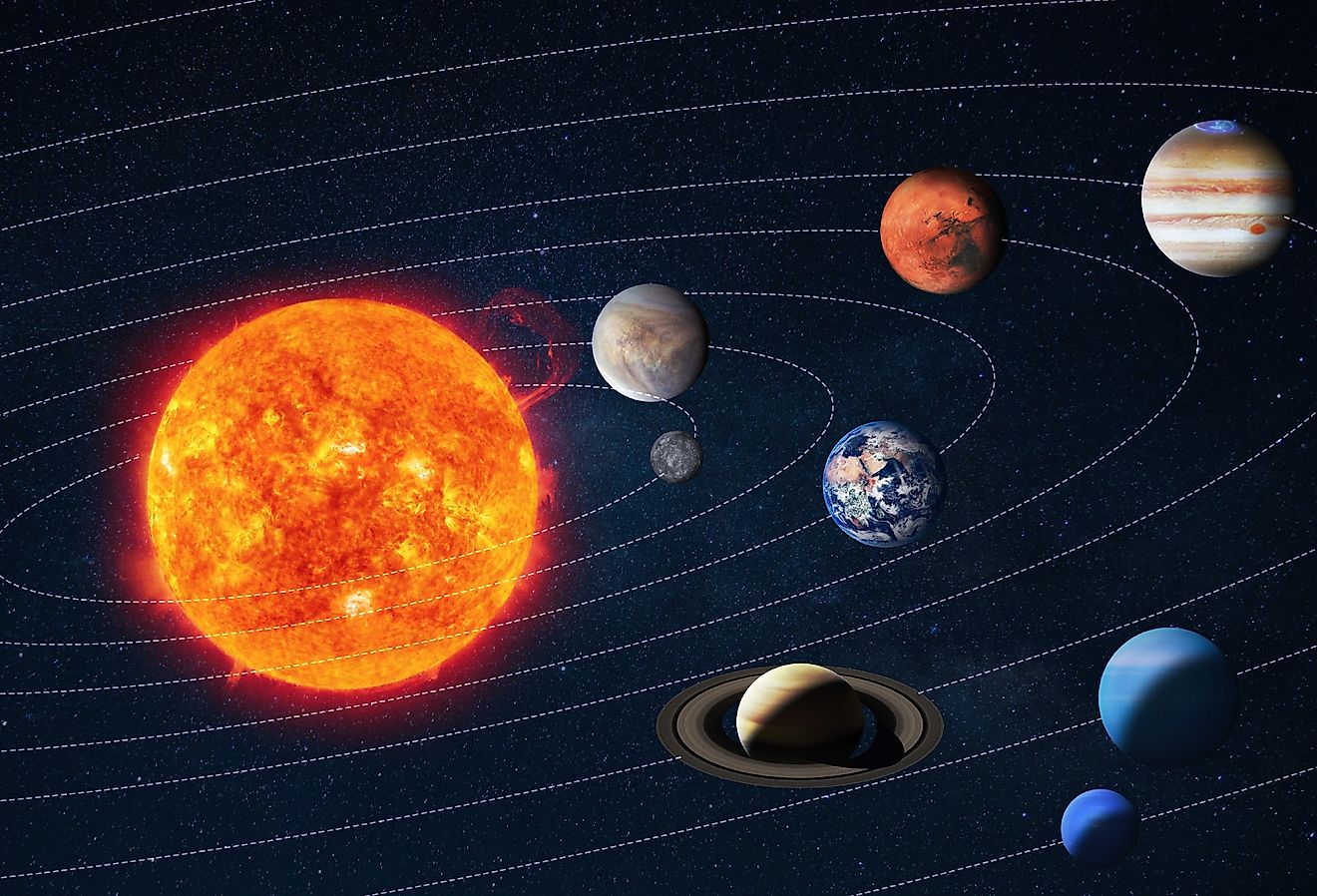
Pluto sits nearly 40 times farther from the Sun than Earth does, and its surface averages around -382°F (-230°C). By that measure, the Moon should never come close. The Moon collects far more sunlight per square foot than Pluto ever will.
The difference is geometry, not distance. A permanently shadowed crater floor is a heat trap running in reverse. Its steep walls fence out every direct ray and most of the scattered light bouncing off nearby terrain, so the floor loses energy without ever getting any back. Pluto's surface, for all its remoteness, still turns through weak sunlight as the dwarf planet rotates.
The payoff of that permanent dark is preservation. Molecules that would burn off in sunlight settle into these traps and stay, and the readings led directly to the hunt for lunar water ice. When the LCROSS probe was steered into Cabeus crater in 2009, it kicked up debris carrying the chemical signature of that ice, buried in a crater floor averaging about 37 kelvin.
Pluto Holds Some Of The Coldest Landscapes In The Solar System

Out in the Kuiper Belt, the icy zone beyond Neptune left over from the solar system's formation, Pluto ranks among the coldest worlds anyone has studied up close. Its surface temperature swings between roughly -360°F and -400°F (-218°C and -240°C) depending on terrain and season.
At that cold, the periodic table behaves strangely. Nitrogen, methane, and carbon monoxide, all gases in Earth's air, lie frozen solid across Pluto's crust. Nitrogen alone freezes near -346°F, and it coats more than 98 percent of the dwarf planet's bright plains.
NASA's New Horizons spacecraft made the point vivid during its July 2015 flyby. It sent back mountains built of water ice, glaciers of frozen nitrogen creeping across the surface, and the heart-shaped nitrogen plain now named Tombaugh Regio. Pluto is smaller than Earth's Moon, yet nothing about it reads as a dead rock.
Neptune's Moon Triton Freezes At The Edge Of The Planets

Triton, Neptune's largest moon, orbits close to 3 billion miles out, where sunlight arrives hundreds of times fainter than it does at Earth. Its surface holds steady near -391°F (-235°C), among the coldest measured on any solid body.
Frozen nitrogen, methane, and carbon monoxide cover the ground. Triton also circles Neptune backward, the wrong way relative to the planet's spin, which tells astronomers it did not form there. It was almost certainly a Kuiper Belt object, a cousin of Pluto, that strayed too close and got caught.
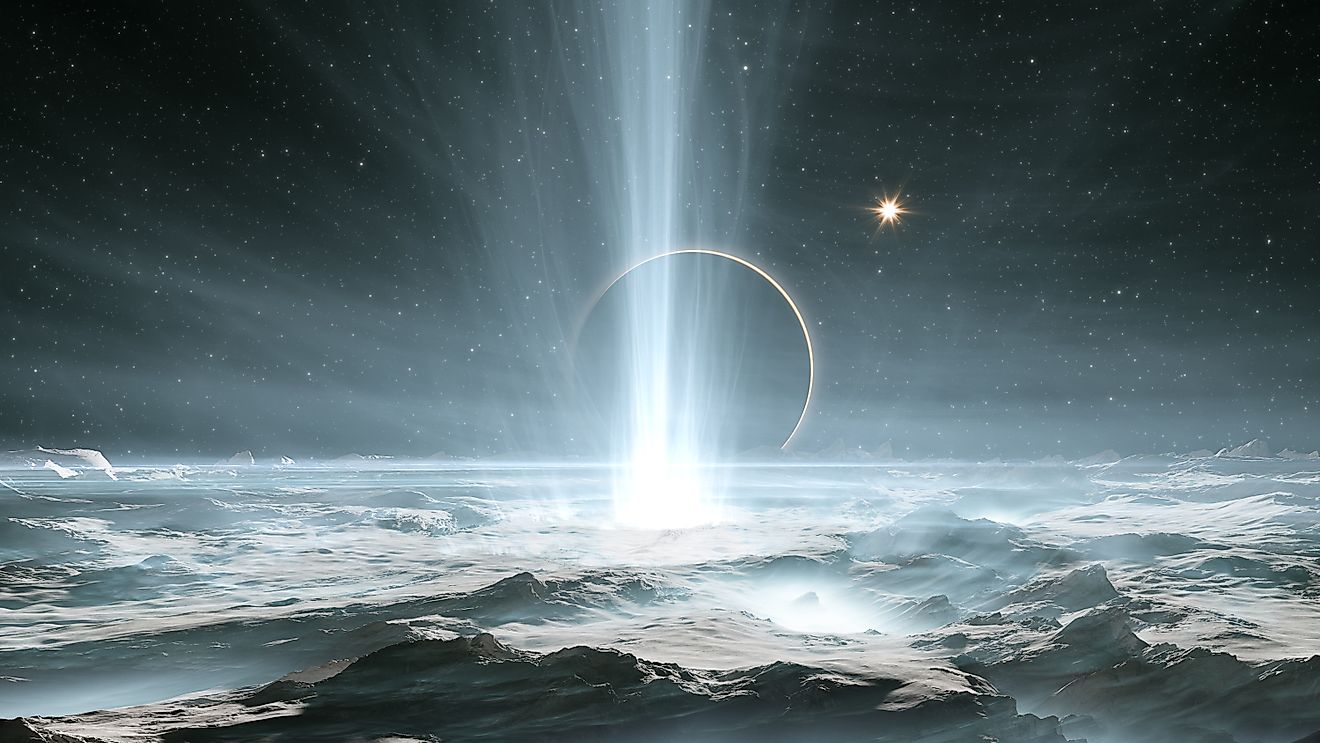
Then Voyager 2 flew past in 1989 and found the surprise. Dark plumes were venting several miles into the thin sky, geysers driven by nitrogen escaping from below and dragging dust with it. A world that cold had no business being active, and it was.
Uranus Holds The Coldest Planetary Atmosphere

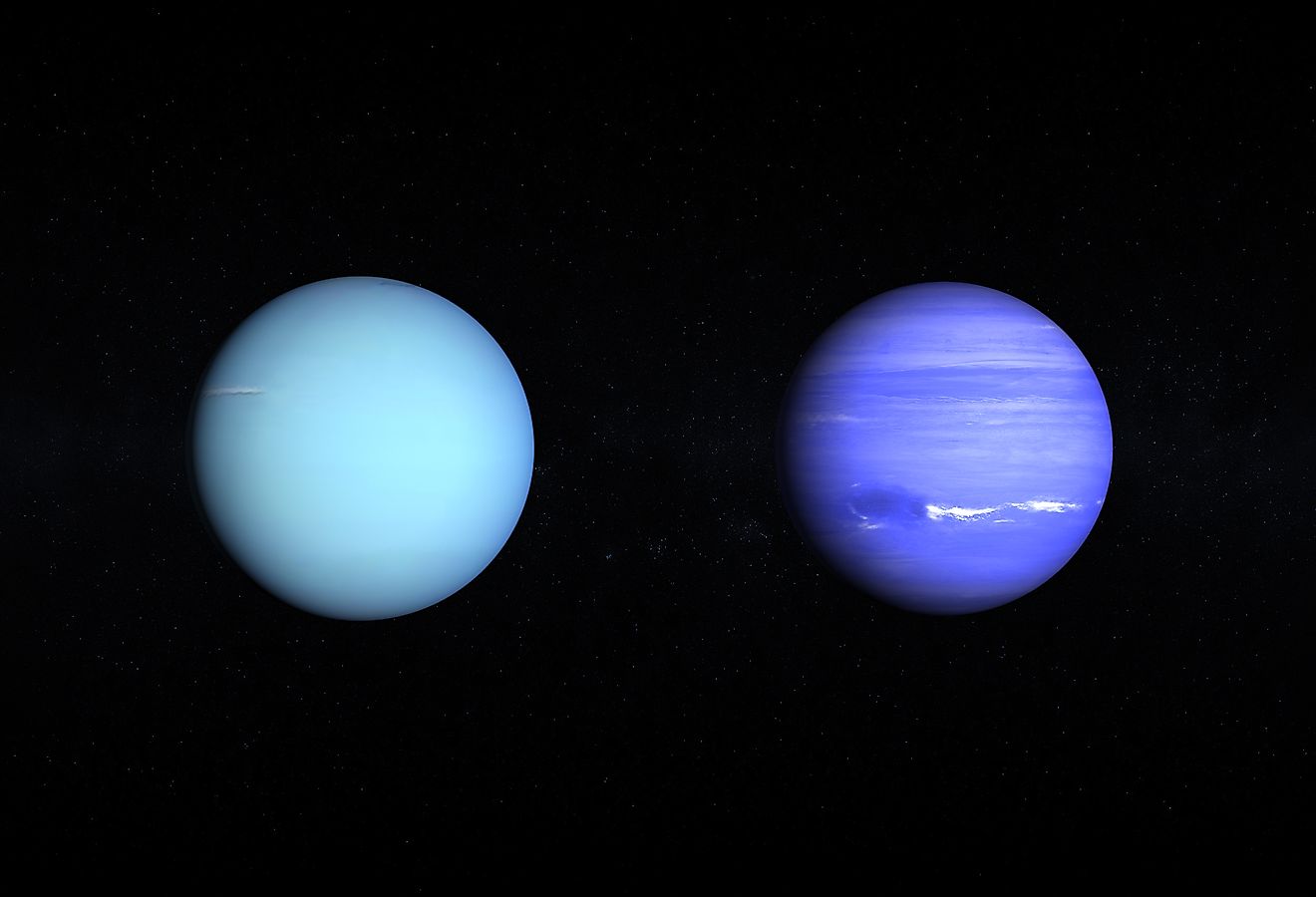
The record for the coldest atmosphere of any planet belongs to Uranus, not Neptune, even though Neptune sits a billion miles farther out. Voyager 2's readings caught the Uranian atmosphere bottoming out near -371°F (-224°C).
Uranus orbits about 1.8 billion miles from the Sun and appears to leak almost no internal heat, unlike the other giant planets, which is the leading suspect in why it runs so cold. It also rolls around the Sun tipped fully on its side, so each pole spends roughly 42 years in continuous sunlight and the next 42 in dark.
Hydrogen and helium make up most of the atmosphere, with a trace of methane that absorbs red light and gives the planet its blue-green cast. Why Uranus lost its interior warmth is still an open question, and it is one of the reasons scientists keep pushing for a return mission.
Could Anyone Survive In The Coldest Places?

No one could last unprotected in any of these places for more than a moment. A body inside a shadowed lunar crater would shed heat almost instantly, and the hardware sent to keep a person alive fails in the same cold unless it is wrapped in insulation and fed constant power.
The draw is what the cold protects. The confirmed water ice in lunar shadowed craters could one day supply drinking water, breathable oxygen, and hydrogen for rocket fuel, turning the hardest ground to reach into a resource depot for missions heading deeper out.
Those same traps double as archives. Ice that has sat undisturbed for billions of years carries a record of where the solar system's water came from and how these worlds changed over time, which is why the coldest places tend to top the list of where researchers most want to land.
What The Coldest Places Tell Us

Run the readings together and a pattern emerges. The coldest known ground in the solar system is not the farthest from the Sun. It is the most thoroughly hidden from it, a lunar crater floor beating out worlds billions of miles more distant on shadow alone.
The other lesson is that cold and dead are not the same thing. Triton vents geysers at -391°F, Pluto pushes nitrogen glaciers across its plains, and the Moon's dark craters guard ice that may fuel the next era of exploration. The most extreme corners of the solar system keep turning out to be the ones with the most left to learn.