Why Uranus Spins Sideways
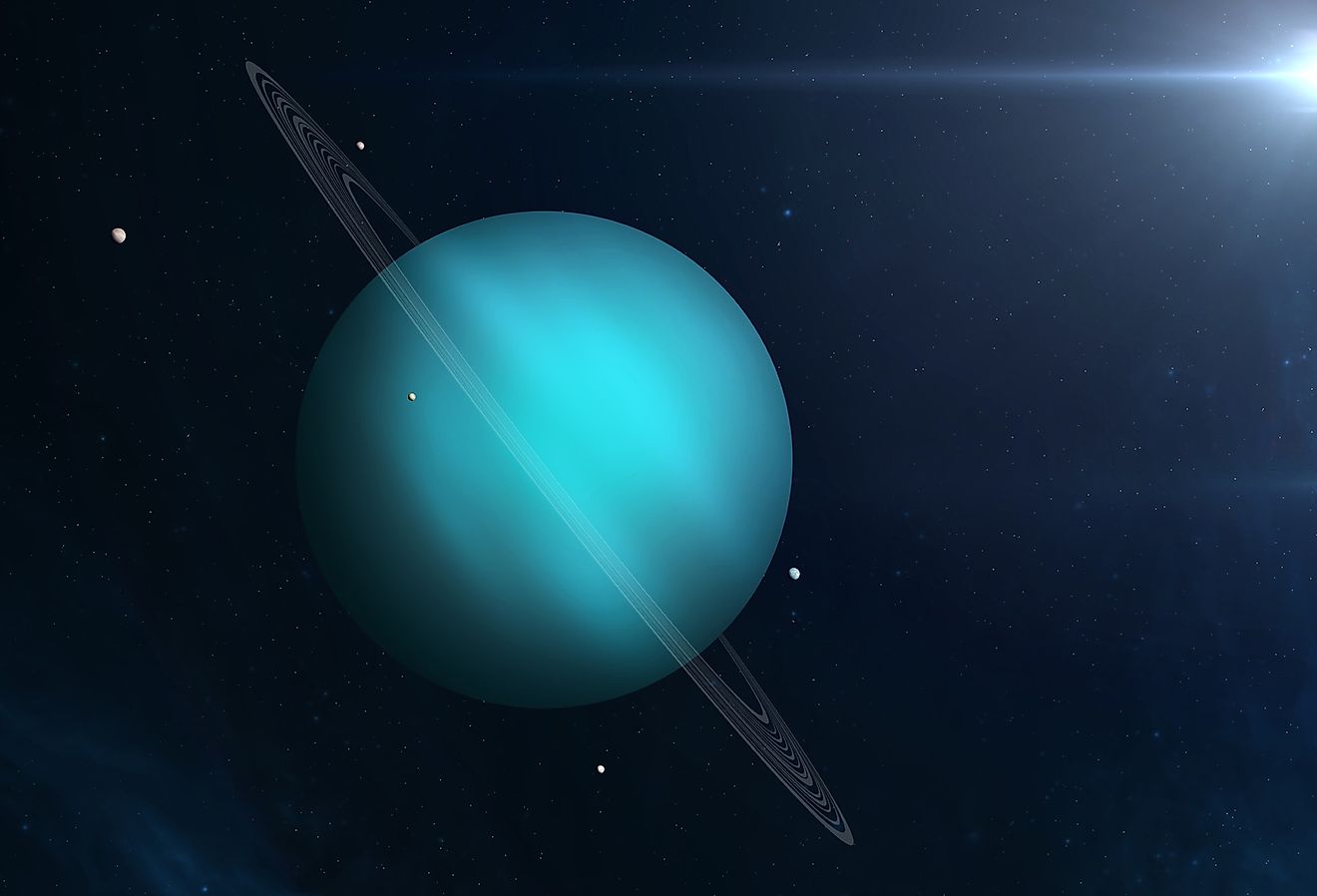
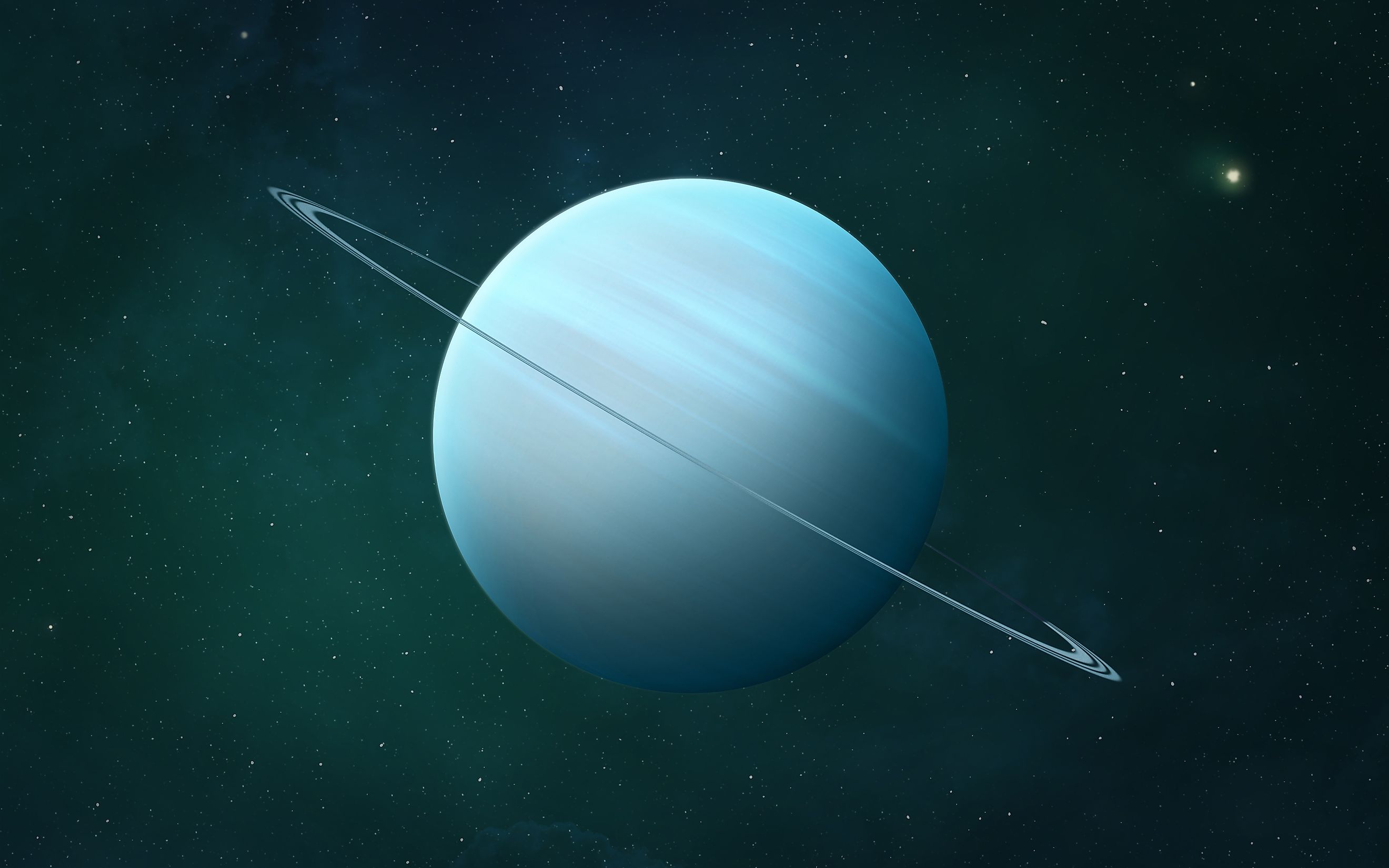
For reasons scientists are still struggling to fully explain, Uranus is tilted 97.77 degrees. Instead of spinning upright like Earth, it circles the Sun looking more like a ball rolling around a track, the only planet in the solar system to exhibit such mechanics. That bizarre orientation gives the planet seasons lasting about 21 Earth years and causes dramatic changes in the sunlight reaching its poles. A giant collision remains one of the leading explanations, but other models suggest the planet may have been slowly tilted by gravitational forces early in the solar system's history.
A Day on Uranus

Uranus spins much faster than Earth. Despite being about four times wider than our planet, it completes a rotation in just 17 hours, 14 minutes, and 52 seconds. That makes a day on Uranus nearly seven hours shorter than one on Earth. Uranus has an atmosphere made primarily of hydrogen and helium, with a smaller amount of methane. Beneath it is a hot, dense interior rich in materials such as water, methane, and ammonia surrounding a relatively small rocky core. These materials are why Uranus is classified as an ice giant. Much of it exists as extremely hot, compressed fluid.
The atmosphere also moves at a different pace than the planet beneath it. Winds can reach about 560 mph (900 km/h), causing clouds to race around Uranus. Near the equator, the winds blow against the planet's rotation, while at higher latitudes they generally move with it. With no solid surface beneath those clouds, there would be nowhere for a visitor to stand.
The Tilt's Impact

Since Uranus is tilted almost completely onto its side, the amount of sunlight different parts of the planet receive changes dramatically during its orbit. Uranus takes about 84 Earth years to complete one trip around the Sun, meaning a single season lasts roughly 21 years. Near a Uranian solstice, one pole points almost directly toward the Sun while the opposite half of the planet experiences an extraordinarily long winter. As Uranus continues around its orbit, the situation gradually reverses. Someone somehow watching the sky near one of the poles would experience changes in daylight that unfold over decades rather than months.
Uranus is also home to the coldest planetary atmosphere in the solar system. Temperatures in its troposphere can fall to about -371.6 degrees Fahrenheit (-224.2 degrees Celsius). That is far colder than any natural temperature on Earth. Even at these temperatures, however, the entire atmosphere does not simply freeze into ice.
Competing Theories Behind The Tilt

One theory behind Uranus's tilt is the giant-impact theory. In this scenario, an object roughly the size of Earth slammed into the young Uranus while the solar system was still forming. A sufficiently large impact at the right angle could have knocked the planet's rotation axis sideways. Computer simulations show that such a collision could do more than tilt Uranus. Material thrown into orbit around the planet could have formed a disk of debris, potentially helping to explain why Uranus's major moons orbit close to the same highly tilted plane as the planet's equator. The details remain difficult to reproduce, however, so the collision hypothesis is not considered settled.
Other research suggests that more than one collision may have been involved. Models have shown that a series of smaller impacts could alter Uranus's rotation while avoiding some of the problems created by a single enormous collision. A very different explanation involves a slow gravitational process known as spin-orbit resonance. In simple terms, gravitational interactions could gradually change the direction of a planet's rotation axis. One recent model proposes that Uranus once had a large moon that slowly moved outward. Its gravitational influence could have pulled Uranus past an 80-degree tilt before the moon became unstable and eventually collided with the planet. However, no evidence of such a lost moon has been found.
The 18th Century Discovery of Uranus

In 1781, German-born British musician and astronomer William Herschel noticed an unusual object with a homemade reflecting telescope using a 6.2-inch (15.7-centimeter) mirror. At first, he believed he was seeing a comet. Astronomer Royal Nevil Maskelyne soon raised the possibility that the object was actually a planet, an interpretation eventually confirmed by other astronomers.
Uranus became the first planet discovered with the aid of a telescope. Herschel proposed naming it Georgium Sidus, or George's Star, after King George III. German astronomer Johann Elert Bode instead suggested Uranus, after the Greek god of the sky. That name eventually won international acceptance and maintained the tradition of using names from classical mythology for the planets.
Herschel was not actually the first astronomer to see Uranus. English astronomer John Flamsteed observed it in 1690 while compiling a star catalog. Because Uranus moves slowly across the sky and can resemble a faint star, Flamsteed cataloged it as 34 Tauri without realizing he had recorded a planet more than 90 years before Herschel's discovery.
Modern Discoveries

The five major moons of Uranus were discovered between 1787 and 1948. William Herschel discovered Titania and Oberon in 1787. Ariel and Umbriel were found by William Lassell in 1851, while Gerard Kuiper discovered Miranda in 1948. Uranus's rings were discovered in 1977 when astronomers watched the planet pass in front of the distant star SAO 158687. Researchers expected the planet itself to block the star's light, but they noticed additional dips before and after the main event. Those brief disappearances revealed that Uranus was surrounded by rings.
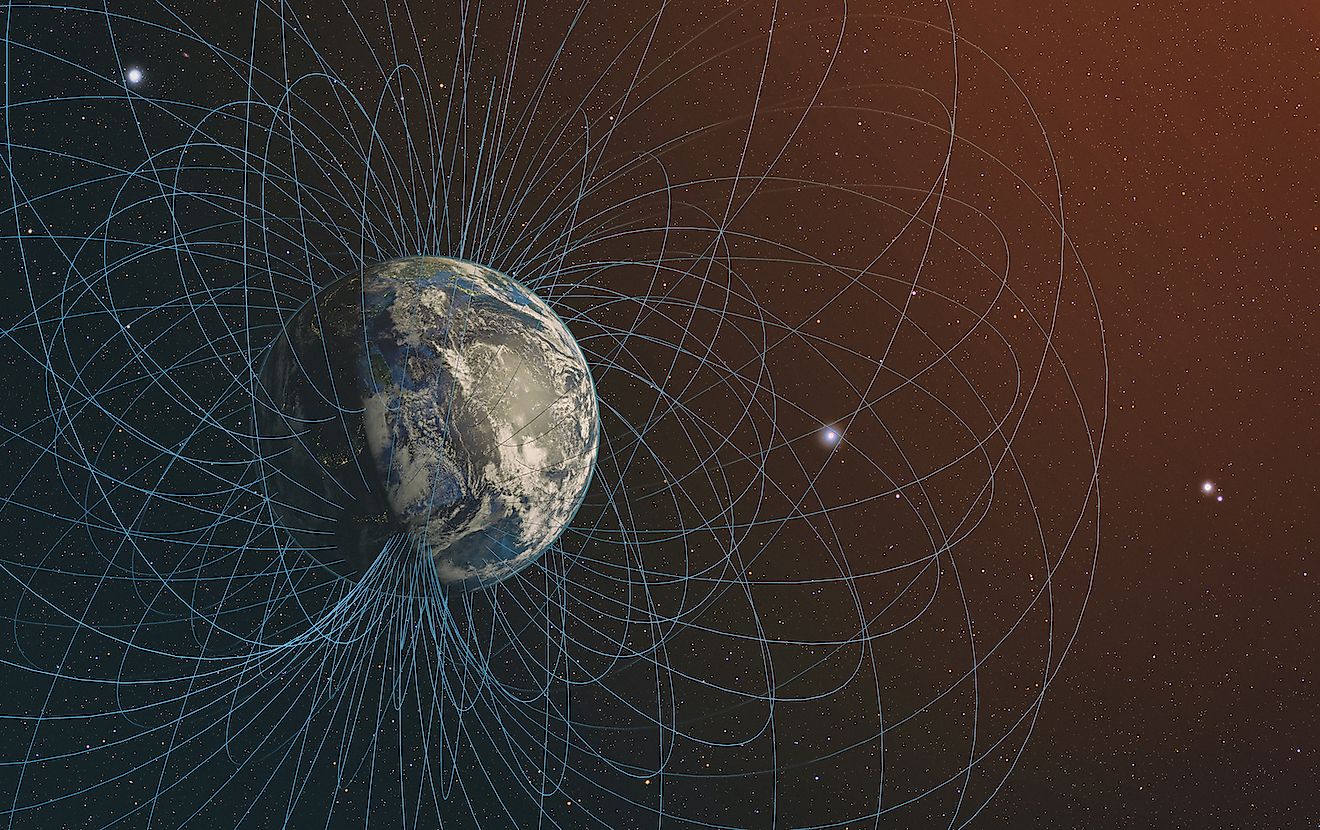
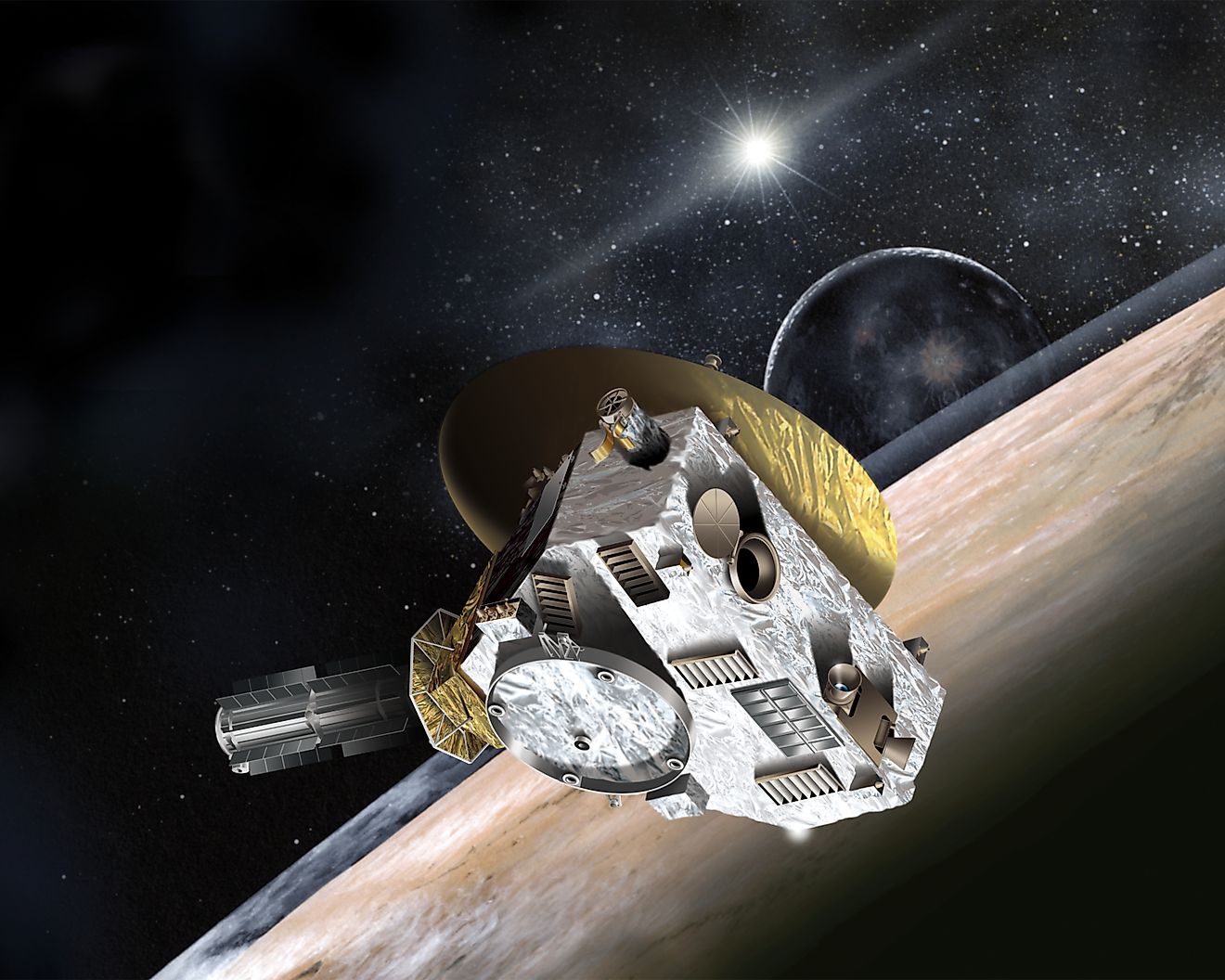
The only spacecraft ever to visit Uranus is NASA's Voyager 2, which passed the planet on January 24, 1986. During about 5.5 hours of close study, the spacecraft collected data on the planet's atmosphere, magnetic field, rings, and moons. Voyager 2 discovered 10 additional moons and two previously unknown rings.
Space telescopes have continued the exploration remotely. Hubble has watched seasonal changes develop in Uranus's atmosphere over decades, while the James Webb Space Telescope has produced detailed infrared views of its rings and weather. Webb observations made in 2025 also revealed another tiny moon. As of August 2026, Uranus has 29 known moons. A spacecraft may eventually return. The 2022 planetary science decadal survey identified a Uranus Orbiter and Probe as the highest-priority new flagship-class planetary mission for the decade.
A Distant Planet
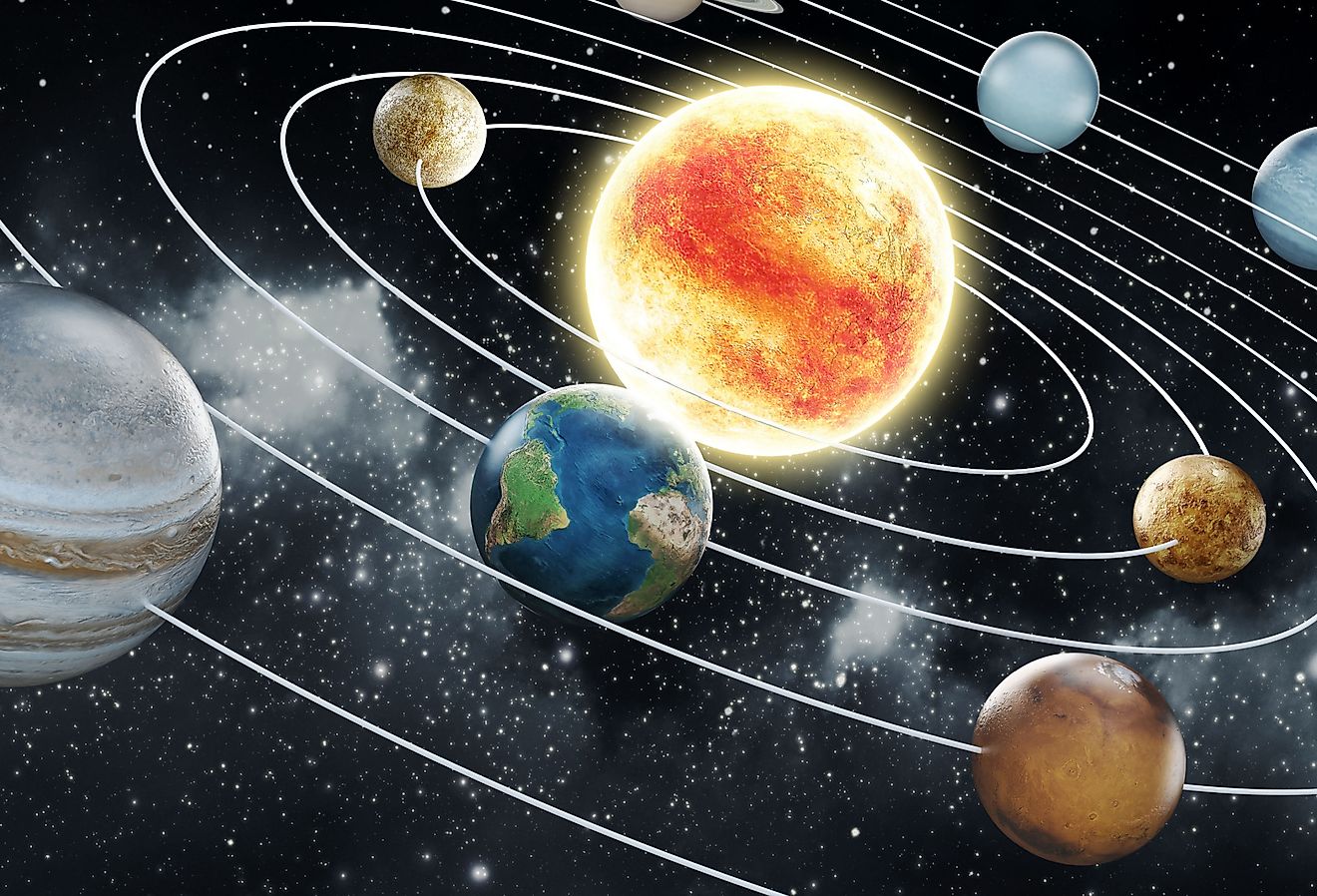
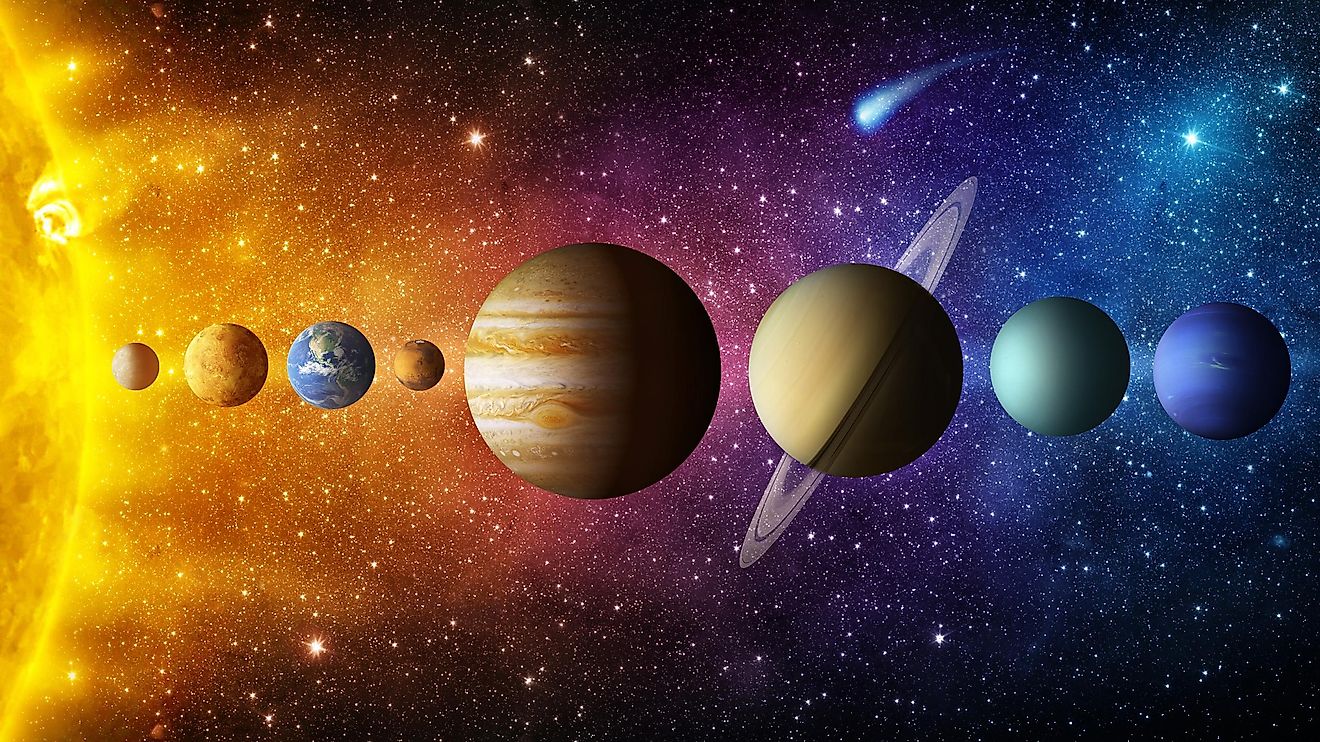
As the seventh planet from the Sun, Uranus is extraordinarily remote. Its average distance from the Sun is about 1.8 billion miles (2.9 billion kilometers), nearly 19 times Earth's distance. Sunlight takes about two hours and 40 minutes just to reach it. Voyager 2 spent roughly nine years traveling more than 1.8 billion miles (3 billion kilometers) before reaching Uranus. Humans could not survive anywhere in the visible atmosphere. There is no solid surface, winds can approach 560 mph (900 km/h), and a descending spacecraft would eventually encounter pressures and temperatures capable of destroying it.
Scientists have never placed an orbiter around Uranus or lowered a probe into its atmosphere. Until that happens, they must reconstruct its violent early history using distant observations, computer models, and a few hours of Voyager 2 data collected four decades ago. A future mission could finally reveal whether Uranus was knocked over by a world-sized collision, slowly pulled sideways by a vanished moon, or tilted by a process scientists have not yet considered. Somewhere in the history of this pale blue planet lies an event powerful enough to roll an entire world onto its side.