Which Planet Rains Diamonds?
Picture diamonds the size of washing machines dropping through the sky. Scientists think something close to that unfolds deep inside Uranus and Neptune. Inside these two ice giants, crushing pressure could squeeze carbon into solid diamond. The crystals would sink for thousands of miles toward each planet's core. Those depths lie far beyond the reach of any spacecraft. This may be the solar system's most valuable rainfall.
Neptune and Uranus May Both Have Diamond Rain

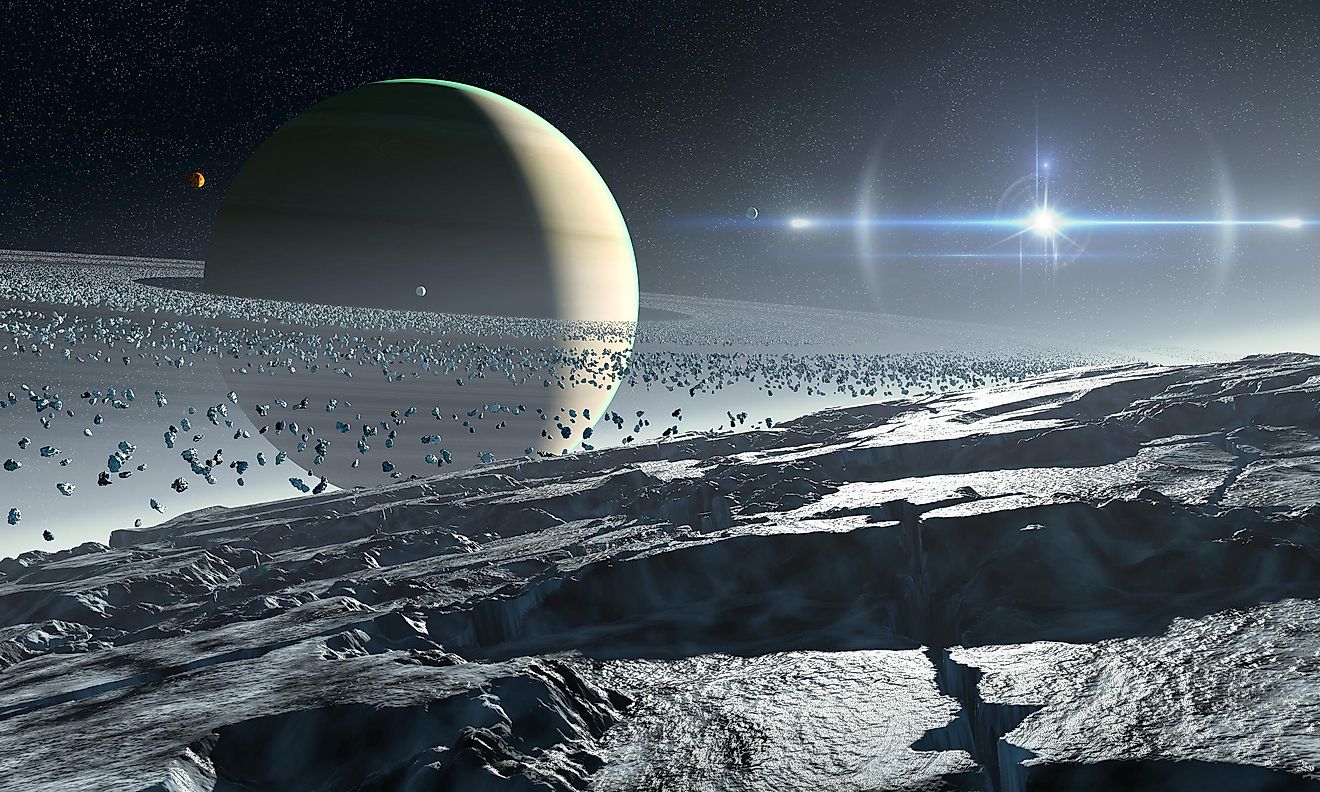
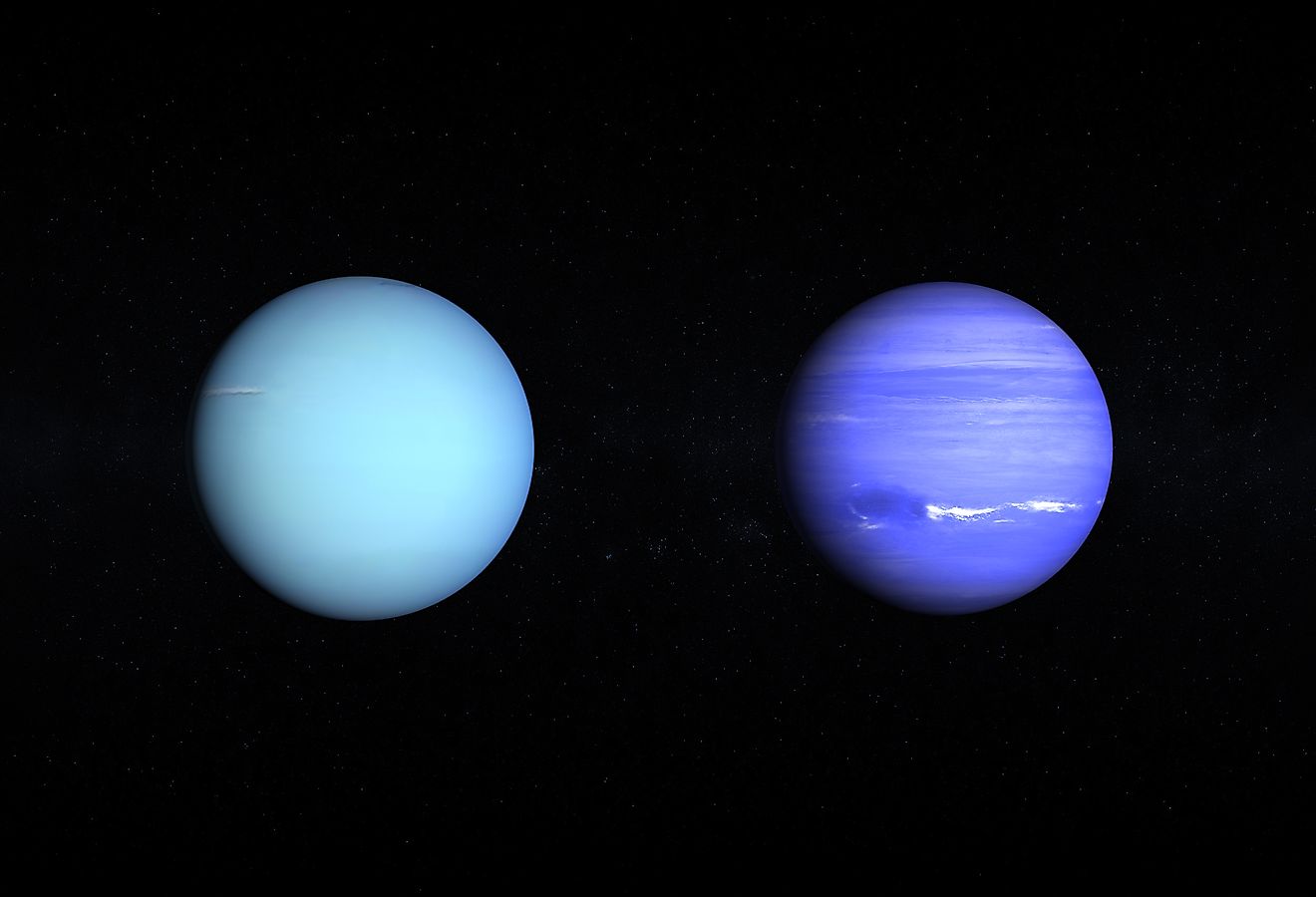
Neptune gets most of the attention when people talk about diamond rain, but scientists believe it may happen inside Uranus, too. Both are ice giants with similar sizes and chemical ingredients, which means both may have what it takes to create diamonds.
Scientists have not directly sampled either planet's interior. Instead, telescopes separate the light reflected by their atmospheres into different wavelengths. Certain gases leave recognizable patterns in that light, allowing researchers to identify methane high above the planets' hidden inner layers.
The rest of the picture comes from Voyager 2. During its flybys of Uranus in 1986 and Neptune in 1989, the spacecraft measured the gravity, magnetic fields, temperatures, and atmospheres of both planets. Scientists combine those findings with each planet's mass and density to model what may lie below the clouds.
Those models point to deep layers rich in water, ammonia, and methane. Since methane contains carbon, researchers wondered what happens to that carbon under the extreme pressures and temperatures deep inside these planets, leading them to investigate whether it could be squeezed into diamonds.
A Diamond Begins as Methane

The process may begin thousands of miles below the planets' visible clouds. At that depth, methane no longer behaves like the gas that can be found on Earth. The rising heat and crushing pressure tear its molecules apart, separating carbon from hydrogen.
Once freed, the carbon atoms are forced close together. They begin joining in the tight crystal pattern that gives diamonds their famous hardness. Other materials inside the planets may help the process along. Several experiments, including a 2022 laboratory study published in Science Advances, found that oxygen enables diamonds to form over a wider range of temperatures and pressures than scientists once expected.
At first, these crystals would be extremely small. As they travel deeper, more carbon could attach to them, allowing them to grow much larger over time. Some models suggest the crystals could continue growing as they sink, potentially reaching enormous sizes of millions of carats. A single one could weigh hundreds of pounds.
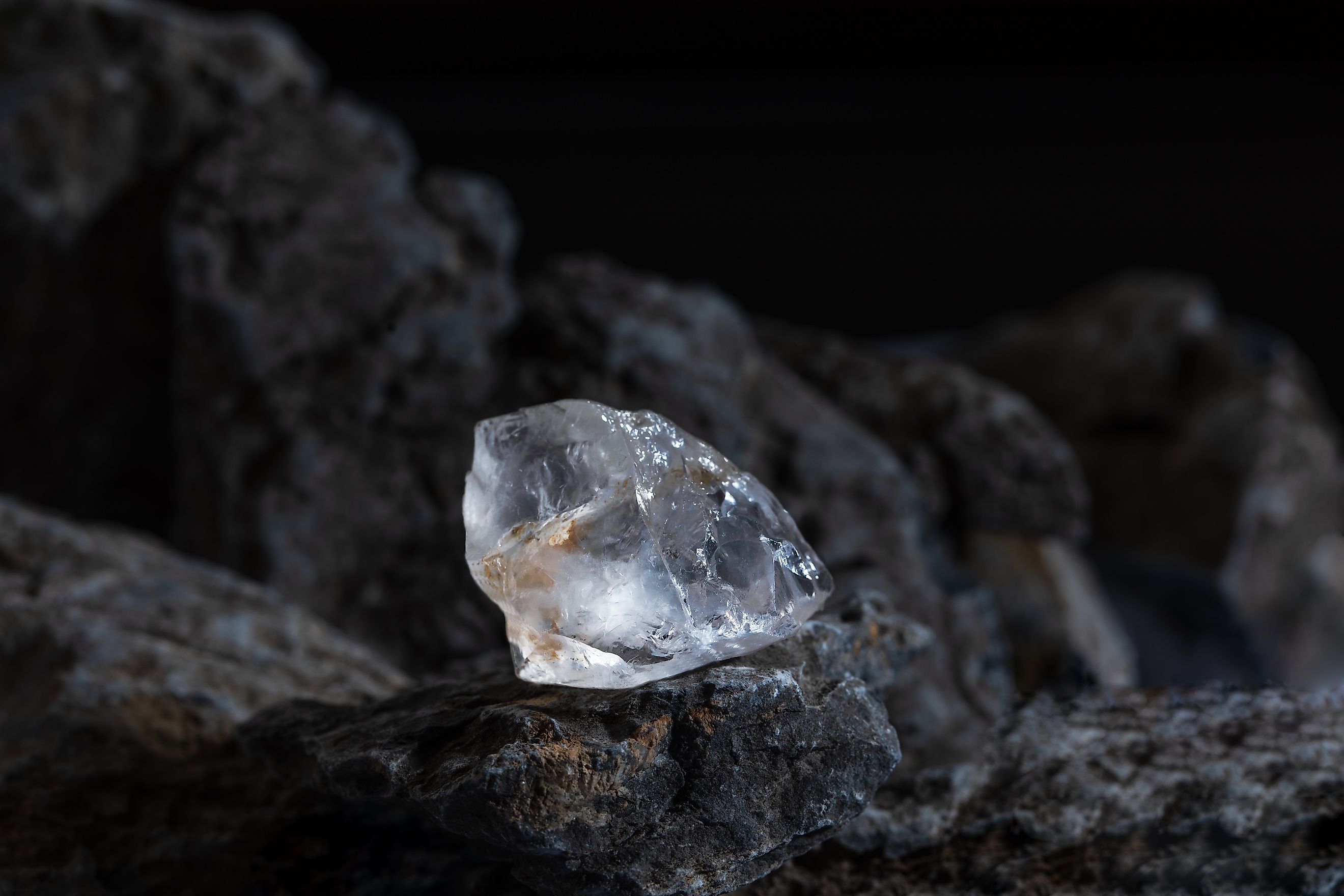
These diamonds would look nothing like cut gemstones in a jewelry case. They would be rough, unpolished crystals falling through a dark mixture under pressures no human could survive.
Falling Through a Planet Without a Solid Surface

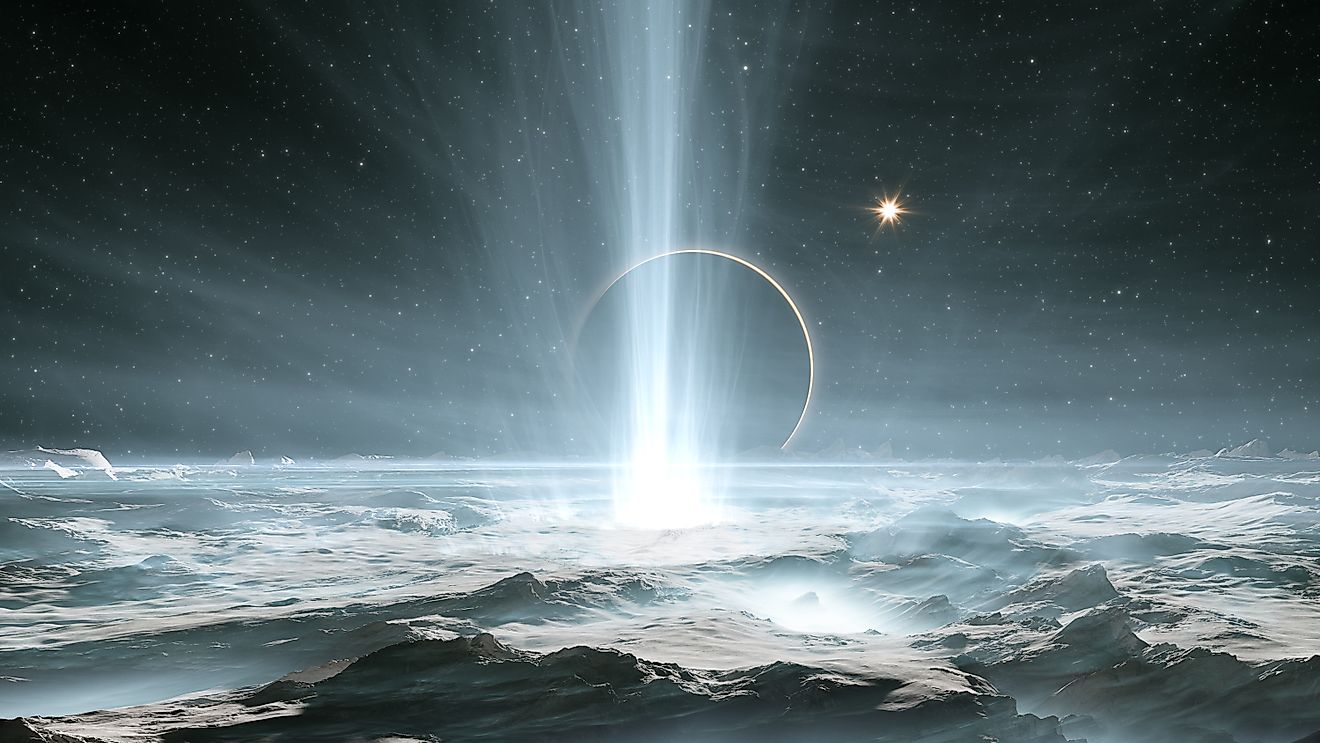
Diamond rain on Neptune or Uranus would not resemble a shower on Earth. There would be no open sky beneath the diamonds and no ground waiting below. The crystals would sink through a deep layer of hot, compressed material, more like stones sinking through a vast, superheated ocean than raindrops falling through air.
Both planets become denser toward their centers. A newly formed diamond would be heavier than the material around it, so gravity would pull it downward. The crystal might continue growing as it enters regions of higher pressure and greater carbon availability.
The descent could take an extremely long time, although exactly how long remains uncertain. Eventually, the diamonds may settle into a thick layer surrounding the planets' rocky cores. Some models suggest temperatures in the deepest regions could become high enough to melt them, possibly creating pools or layers of liquid carbon.
Pressure Powerful Enough to Crush a Spacecraft
The diamonds may form in regions where pressure reaches millions of times Earth's atmospheric pressure at sea level. That could be hundreds of times greater than the pressure at the deepest point in the Mariana Trench. A human would be crushed long before reaching the diamond rain.
A spacecraft wouldn't fare much better. As it descended, the surrounding planetary material would gradually become a thick, hot fluid pressing against it from every direction. Most spacecraft are designed to travel through the near-vacuum of space, not to support the weight of thousands of miles of dense material.
Temperatures in the possible diamond-forming regions could reach several thousand degrees Fahrenheit and may approach 10,000°F. At the upper end, the surroundings would be about as hot as the Sun's visible surface. The combined heat and pressure would destroy conventional spacecraft materials. Watching the diamonds fall is impossible with current technology. Even a simple probe would need to resist crushing pressure, extreme heat, and material that becomes denser with every mile it travels.
Scientists Recreated Diamond Rain on Earth

Scientists cannot send a camera thousands of miles into Neptune, so they brought a tiny piece of its possible interior to Earth. They began with polyethylene terephthalate, better known as PET plastic. The material contains carbon, hydrogen, and oxygen, making it a useful stand-in for some of the ingredients believed to be present in ice giants.
Researchers strike the plastic with a powerful laser, creating shock waves that briefly produce enormous heat and pressure. The entire event lasts only a fraction of a second. During that instant, flashes from an X-ray laser reveal how the atoms rearranged.
The carbon separates from the other elements and forms nanodiamonds only a few billionths of a meter wide. These are far too small to resemble gemstones, but their crystal structure shows that real diamonds formed.
The result doesn't prove that diamonds are raining inside Neptune or Uranus. A piece of plastic in a laboratory cannot perfectly copy an entire planet. However, it shows that the planets contain the right ingredients and may reach the conditions needed to turn carbon into diamond, making the idea far more than science fiction.
Why Diamond Rain Matters to Scientists
Diamond rain could help explain why Neptune releases more heat than it receives from the Sun. Forming diamonds releases energy, and the crystals may create additional heat as gravity pulls them deeper into the planet.
The falling diamonds could also stir layers of electrically conductive material inside Neptune and Uranus. That movement may help generate their magnetic fields, which are strangely tilted and uneven compared with Earth's field. Understanding the rain could therefore reveal what is happening in regions beyond the reach of spacecraft.
The answers would extend far beyond our solar system. Planets similar in size to Neptune are common around other stars, and some may contain the same mixtures of carbon, hydrogen, and oxygen. If diamond rain occurs under a wider range of conditions than previously believed, it could shape the temperatures, structures, and magnetic fields of many distant worlds. What sounds like exotic weather may actually be an important part of how an entire class of planets develops.
When Weather Creates Diamonds
Diamond rain has not been observed directly, so an important part of the mystery remains. Scientists have shown that the necessary ingredients can produce diamonds under extreme conditions, though the real process stays buried deep inside Neptune and Uranus. If the predictions are correct, these storms have likely continued for billions of years, and the total amount of diamond formed could be enormous. On Earth, diamonds stand for rarity and wealth. Inside two distant planets, they may have been forming and sinking toward the core for most of the solar system's history.