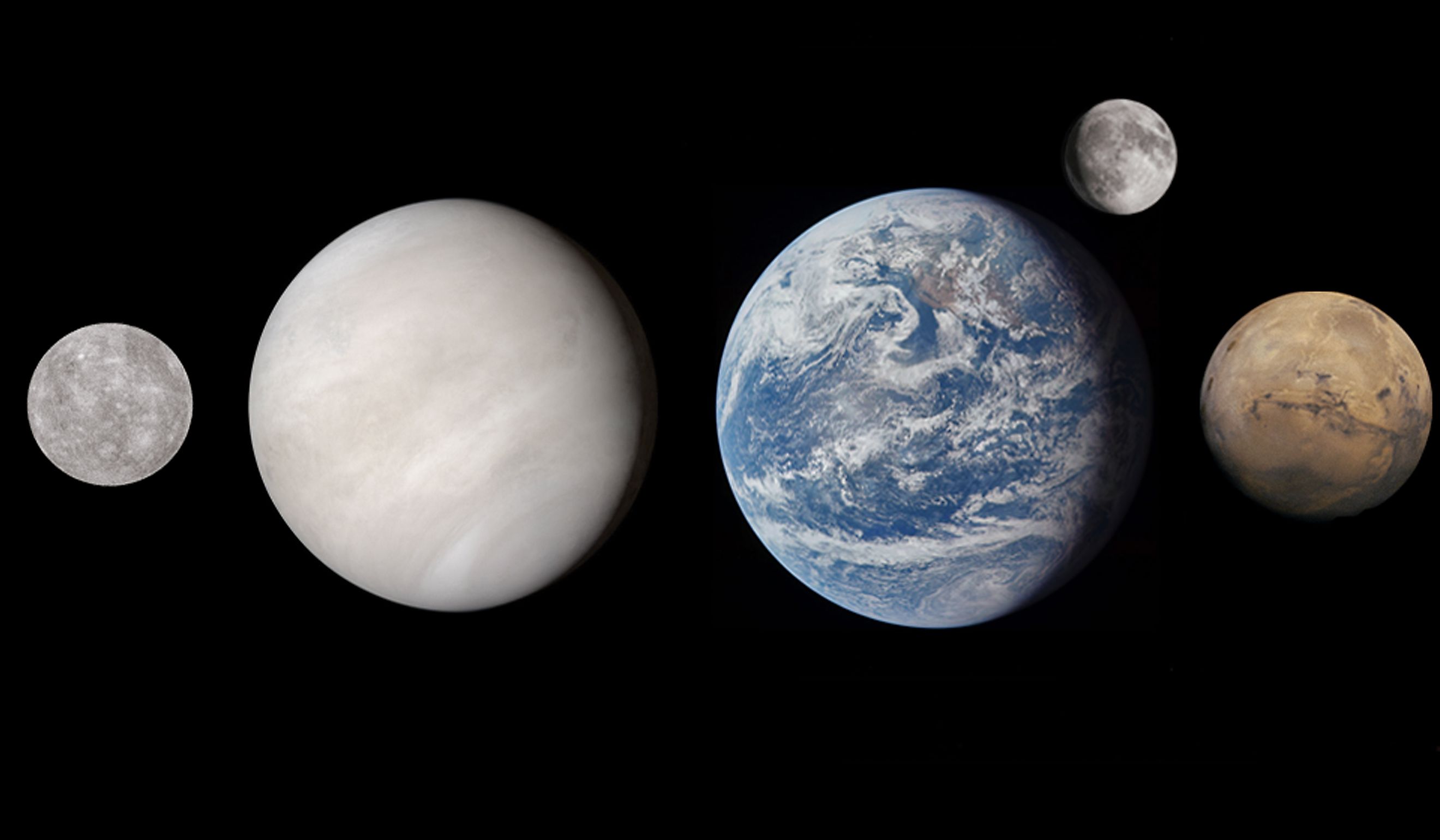
Which Planet Is The Smallest?
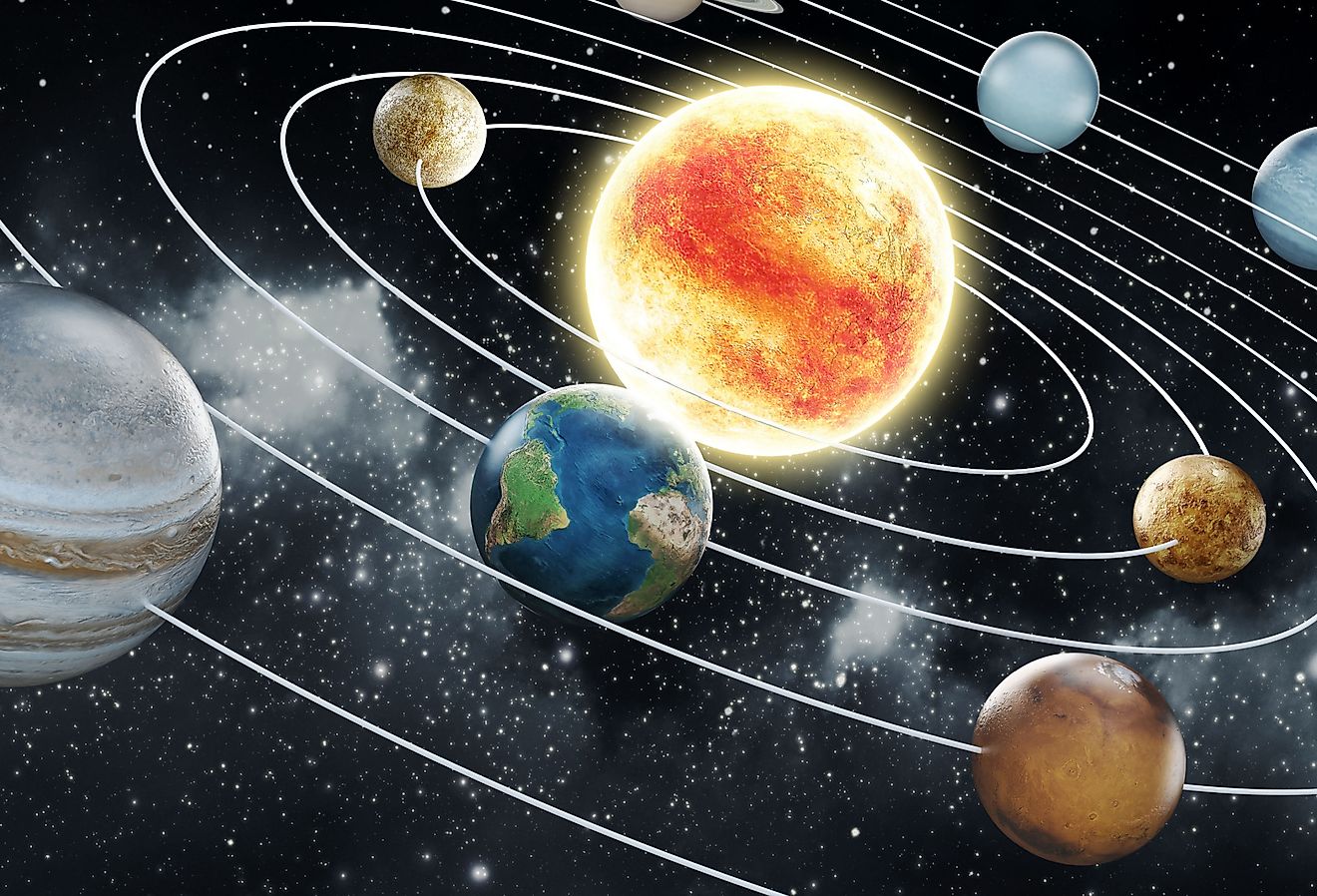
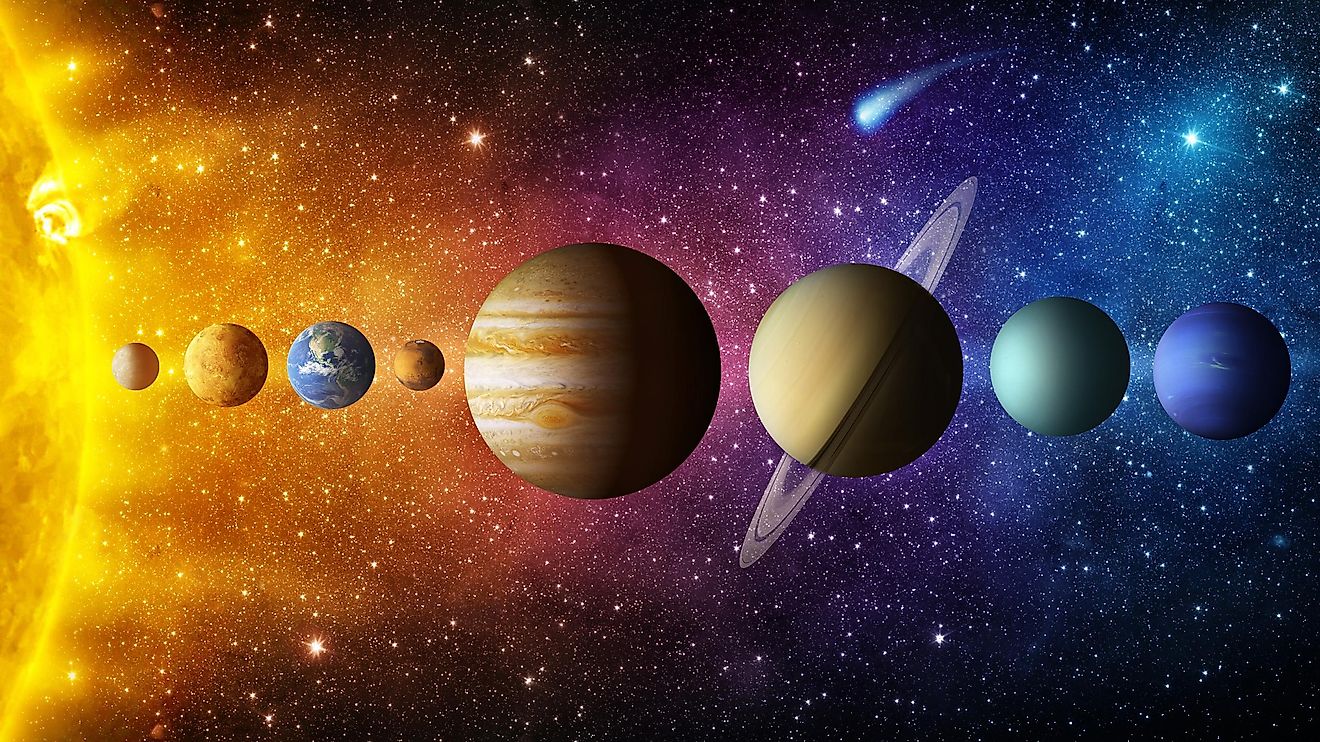
Did you know that the smallest planet in our solar system may once have been much larger than it is today? Ever since Pluto was reclassified as a dwarf planet in 2006, Mercury has held the title of the solar system's smallest planet, and its many oddities keep it a steady focus of scientific research. Mercury sits closest to the Sun, but some scientists believe a young Mercury may have been considerably bigger, close to the size of Mars, before a massive collision stripped away much of its outer layers. Its mysteries continue to invite scientists to examine it, even as discoveries further out in the cosmos complicate the question further. So what is the smallest planet?
Mercury

Although it's the smallest planet in the solar system, Mercury has a large character. Named for the ancient Roman god of commerce and travelers, Mercury is the planet closest to the Sun. Due to its size and position, Mercury is a planet of extremes, from its temperature to its core. With a diameter of 3,032 miles, Mercury is tiny, just over a third larger than Earth's Moon, and Earth itself is a little more than two and a half times as wide. There is evidence that early Mercury may have been considerably larger, closer in size to Mars, before a massive collision stripped away much of its rocky mantle, leaving behind the oversized iron core it has today. Mercury now orbits the Sun at just 0.4 astronomical units, closer than any other planet. This position gives it an extremely high temperature of around 800 degrees Fahrenheit during the day, although the lack of atmosphere means this heat doesn't hang around. During its nights, Mercury's temperature drops to almost -300 degrees Fahrenheit. Mercury's structure broadly resembles Earth's, with a rocky crust, a mantle, and a metal core, but that core is enormous by comparison: it makes up roughly 85% of the planet's radius and around 75% of its total mass.
Pluto, the former smallest planet

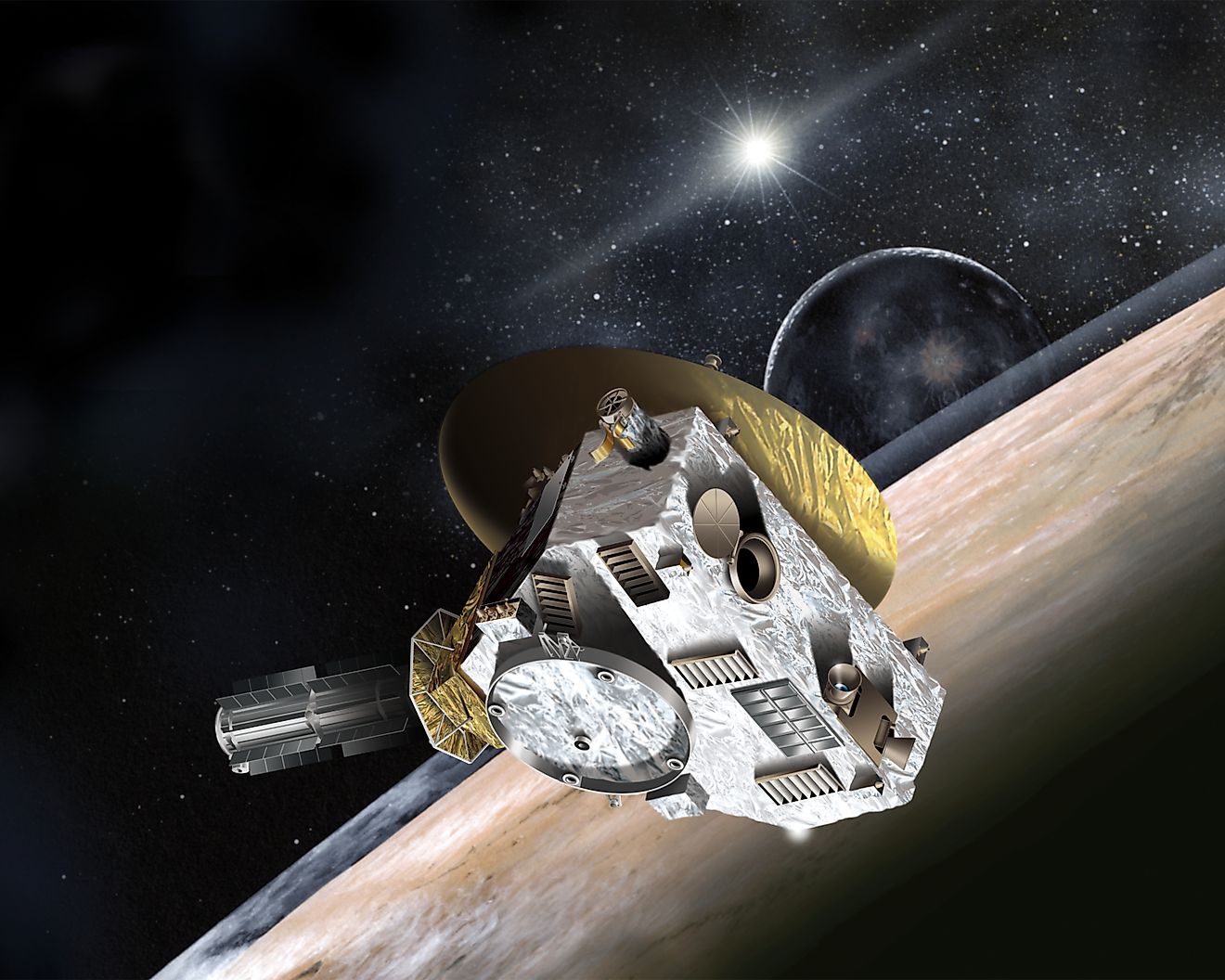
Mercury's predecessor as the solar system's smallest, Pluto, held the title until its reclassification as a dwarf planet in 2006. Named for the Roman god of the underworld after its discovery in 1930, Pluto is an icy world at the edge of our solar system. It has an elliptical orbit, which makes its distance from the Sun vary between about thirty and almost fifty astronomical units. This means Pluto takes over two hundred years to complete an orbit around the Sun, and its day lasts for over 150 hours. This distance keeps it from receiving much heat, so even though it has an atmosphere, Pluto's average temperature is around -387 degrees Fahrenheit, making it even colder than Mercury. Although it is smaller than Mercury, with a width of 1,477 miles, which is even smaller than Earth's Moon, Pluto's location in space is what makes it a dwarf planet: an object large enough to pull itself into a roughly round shape, but whose orbit is not free of other objects. Pluto sits in the trans-Neptunian part of our solar system, where a number of other icy bodies can cross its path, and that crowded orbit is why it was reclassified.
Kepler 37-b

While Mercury is the smallest planet in our solar system, it's not the smallest planet we've ever found. Researchers looking beyond the solar system found a planet even smaller than Mercury in 2013. About two hundred light-years from Earth in the Kepler-37 system, the innermost planet, Kepler-37b, is tiny by planetary standards. It has a radius less than a third of Earth's (0.31, to be exact), and its mass has never been precisely measured. Based on its size, astronomers put an upper limit on its mass of about 0.79 times Earth's, though the real figure is likely far smaller. Its two sister planets, Kepler-37c and Kepler-37d, are both considerably larger, with 37d measuring almost twice the width of Earth, and even the Kepler system's star is roughly eight-tenths as wide as our own Sun. Like Mercury, Kepler-37b sits very close to its star. It's so close, in fact, that it only takes just under 2 weeks for the planet to make a complete orbit. Scientists believe that, like Mercury, Kepler-37b has no atmosphere, though this hasn't been directly confirmed, and there's still much we don't know about the planet, given its distance. We only know Kepler-37b exists at all because we can see the light from Kepler-37 dim slightly when the planet passes between the star and Earth.
The answer to the question "What's the smallest planet?" has multiple answers depending on the context. Looking purely at the solar system and with modern definitions, Mercury is the smallest planet, circling closest to the Sun, where its unusual structure and position make it a planet of extremes. By previous standards, Pluto was the smallest, and its position farthest from the Sun, and constant cold made it almost the opposite of Mercury. But our understanding of the universe keeps expanding, and that has already turned up even smaller planets, such as Kepler-37b. There's no telling whether an even smaller one is still out there to find.