Which Planet Is The Most Tilted?
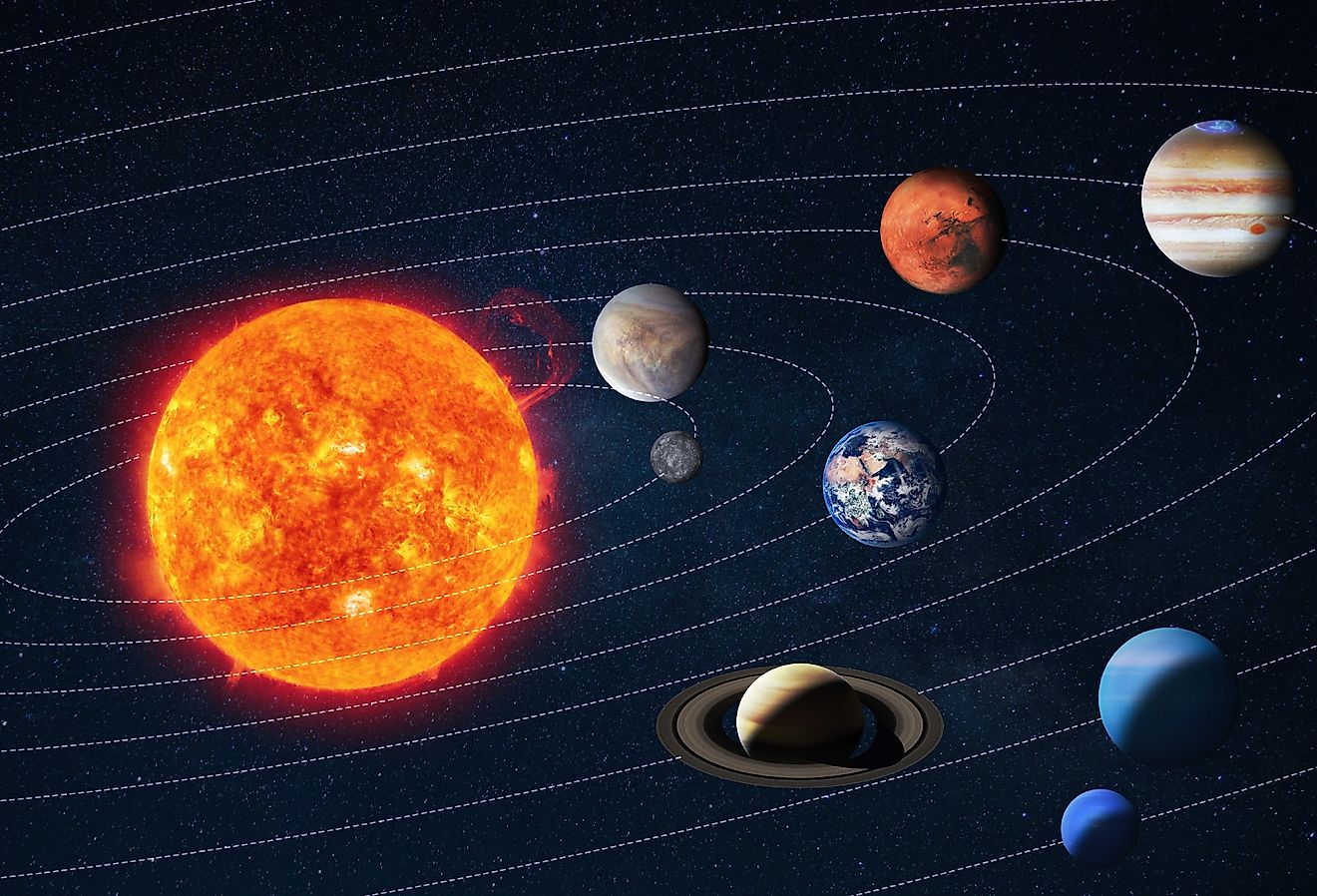
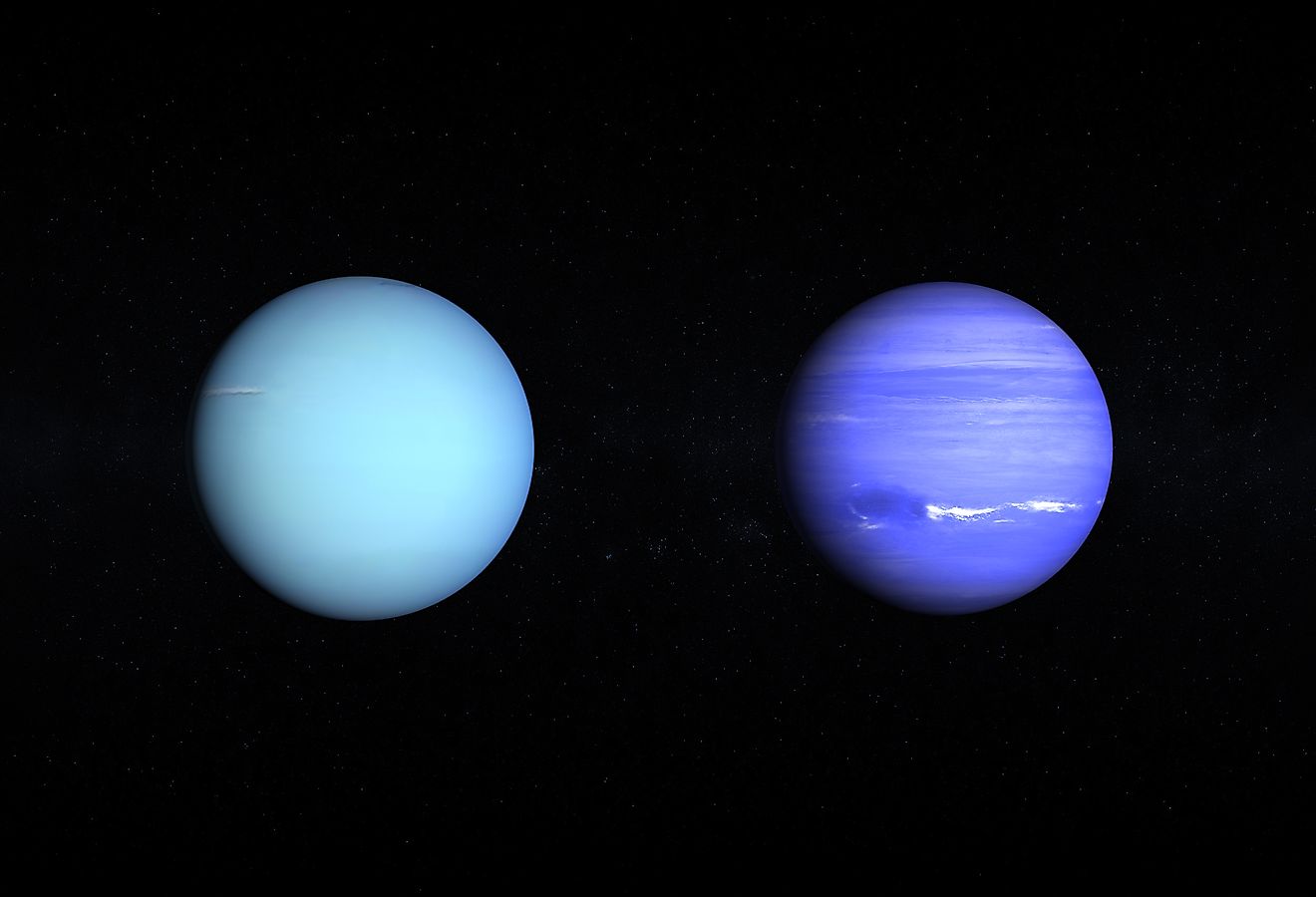
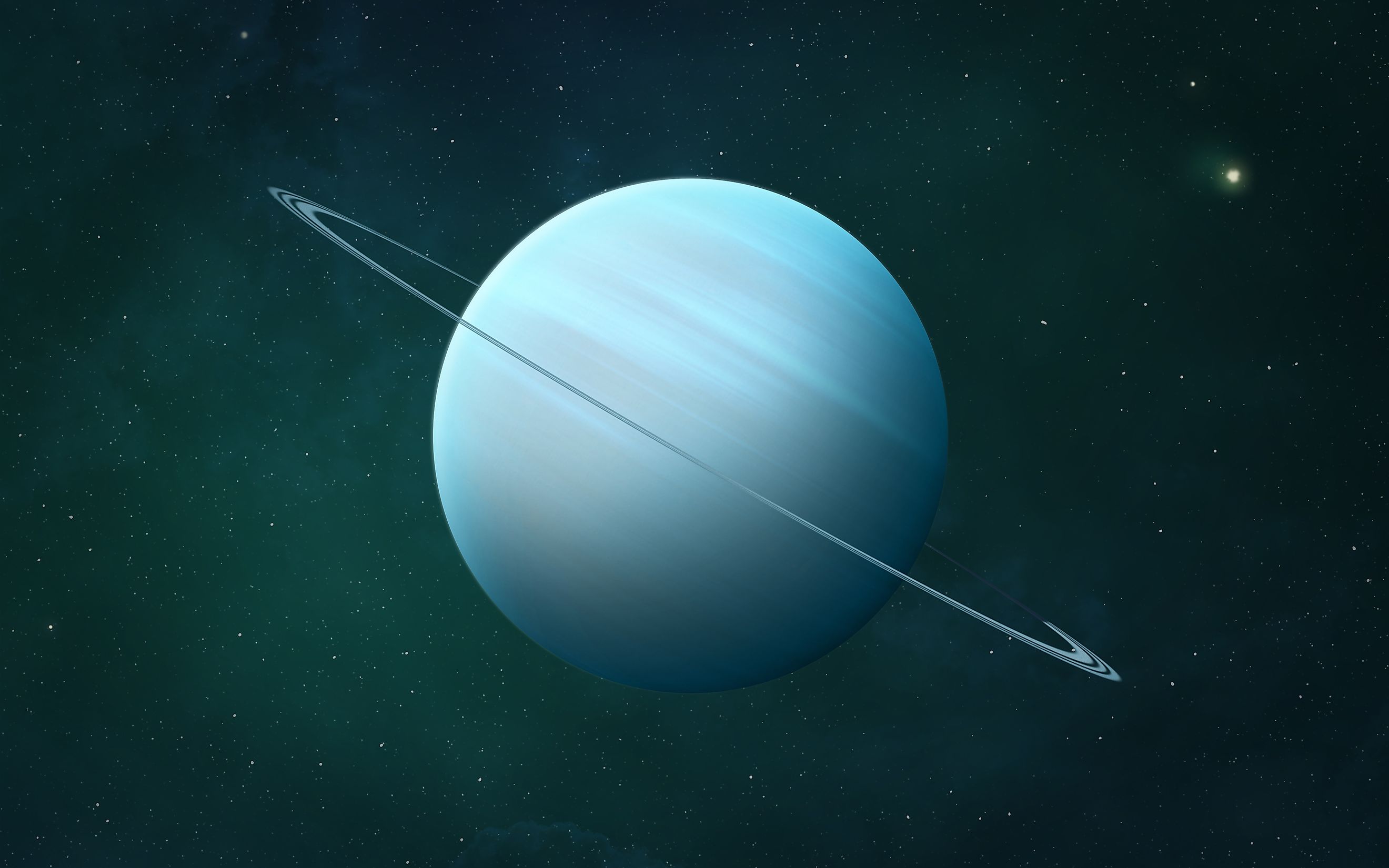
Every planet in the solar system leans on its axis, but only one has toppled almost completely over. Uranus, the seventh planet from the sun, spins at a tilt of 97.77 degrees, according to NASA, which means its equator sits at a nearly right angle to the path it travels around the sun. No other planet comes close: Earth leans a moderate 23.5 degrees, Mars 25.19, and Saturn 26.73. That extreme angle is why Uranus appears to roll around its orbit on its side, and why the "Tilted Giant" has conditions unlike anywhere else in our planetary neighborhood. So why is Uranus tipped so far over?
Why is Uranus Tilted?

Uranus officially entered scientists' radar as a planet when the telescope came to prominence. It was seen and later confirmed to be a planet by astronomer William Herschel in 1781, after years of speculation that it might have been a comet or a star. Centuries later, Uranus was encountered by a space vessel, Voyager 2, for the first and only time in 1986. The unprecedented closeness of the probe allowed scientists to determine the extreme axial tilt of the planet.
Despite collecting more data on the planet, scientists still do not have a concrete answer to what caused Uranus' unusual tilt. The most popular theory in the scientific community is that a massive object collided with Uranus and knocked it on its side while it was still forming, resulting in the extreme tilt that makes it appear like it is "rolling" around its orbital path. NASA suggests the colliding body was roughly the size of Earth, though some researchers put it even larger, perhaps twice Earth's size. For scale, Earth is about one-fourth the width of Uranus.
In comparison, planets where scientists have observed or speculated about the possibility of life forms existing have much less extreme tilts. Mars, one of the few planets in the solar system where scientists believe life may have existed, has a tilt of 25.19 degrees. Earth has a tilt of 23.5 degrees, contributing to the optimal conditions that allow organisms and human life to thrive. Uranus' extreme tilt makes it much more difficult to create the predictable conditions for any chance of life to inhabit the ice giant.
How Does Uranus' Tilt Impact Seasons?

Uranus' tilt has resulted in the planet experiencing some of the most dramatic temperatures and strange seasonal periods. It takes 84 Earth years for Uranus to complete its orbit around the sun, and combined with its extreme 97.77-degree tilt, the seasons are strikingly longer than the ones humans experience on Earth. As one pole of the planet directly faces the light of the sun, the other pole is plunged into a period of dark winter that stretches for 21 years. That is drastically longer than the seasons humans experience on Earth, which have astronomical seasons that typically last around 89 to 93 days.
There are other conditions that have led scientists to determine that Uranus is inhospitable to life. Temperatures on Uranus vary wildly across the planet. Toward its rocky core, an organism would be exposed to temperatures as hot as 9,000 degrees Fahrenheit (4,982 degrees Celsius) as it approaches the center. That is far beyond one of the hottest temperatures ever recorded on Earth, when Death Valley reached 134 degrees Fahrenheit in 1913. Other than this solid area, most of the planet's mass is actually a hot, dense, swirling fluid comprised of water, methane, and ammonia.
What is Uranus' Atmosphere Like?

Like its temperature, Uranus has a harsh atmosphere. Scientists know that hydrogen and helium make up most of the planet's atmosphere, where some parts can dip to temperatures as low as -371.56 degrees Fahrenheit (-224.2 degrees Celsius). At the same time, winds across the planet can reach speeds of up to 560 miles per hour. That is significantly faster than the highest recorded wind speed on Earth by a staffed weather station, which occurred in New Hampshire in 1934, at 231 miles per hour.
Can Humans Survive on Uranus?

Uranus' early formation and axial tilt remain a mystery. Even though scientists have yet to form a definite answer as to why Uranus' extreme tilt is so different from other identified planets, researchers have figured out that it is a challenging part of the solar system to further explore. Looking at the data, atmospheric conditions make Uranus' environment too harsh for humans, or other forms of life as scientists know it, to survive or thrive in. The extended seasons and the whipping winds show just how far a single sideways tilt can push a planet away from anything resembling Earth.