Which Planet Is The Least Dense?
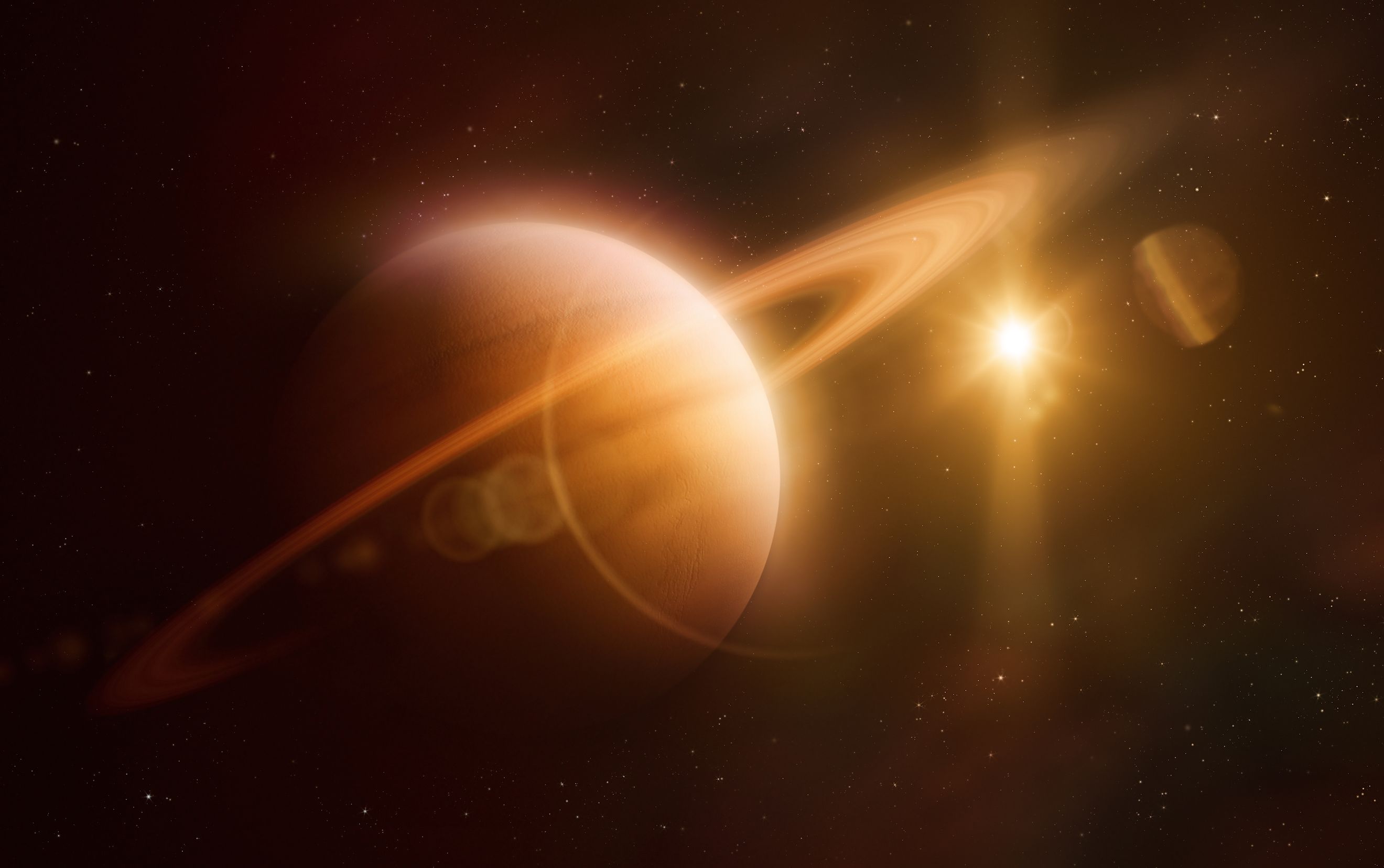
Saturn is the second-largest planet in the solar system, wide enough to line up more than nine Earths across its face, and yet it is the lightest planet for its size by a wide margin. Sheer bulk usually tracks with heft, so a world this big ought to weigh a great deal for every scoop of it. Saturn does the opposite. The reason comes down to density, mass divided by volume, measured against water at one gram per cubic centimeter, the point below which a thing floats and above which it sinks. By that measure Saturn stands alone. It is the only planet in the solar system that would bob in a bathtub instead of sinking.
Saturn's Density Is The Lowest Of Any Planet

Saturn averages about 0.69 grams per cubic centimeter, a hair under seven-tenths the density of water. Set that beside Earth, the densest planet in the solar system at 5.51 grams per cubic centimeter, and the gap is close to eightfold. No other planet comes near Saturn at the low end. The number is not a rounding quirk or a measurement dispute; it falls straight out of dividing Saturn's mass by its volume, and every major planetary reference lands within a few thousandths of it.
What makes the figure striking is where it sits among the planets. This is the second-biggest world in the solar system, 95 times the mass of Earth, and it still comes in lighter per unit of volume than any rival. The bulk is real. The weight behind it is not.
Hydrogen And Helium Make Up Nearly All Of It

The low density traces directly to composition. Saturn is built almost entirely from hydrogen and helium, the two lightest elements in the universe, the same pair that fuels the Sun. These gases carry very little mass for the space they occupy, and Saturn is mostly made of them from the cloud tops down through tens of thousands of miles of atmosphere. Pile up enough of something that light, across a volume more than 750 times that of Earth, and the average stays low no matter how much total material is present.
There is also no solid ground to stand on. Saturn has no firm outer surface, only gas that thickens gradually into liquid as pressure climbs with depth. A person dropped toward the planet would find nothing to land on, just denser and denser fog giving way to fluid.
A Modest Core Sits Under An Enormous Envelope

Saturn is not gas all the way down. Deep at the center sits a core of rock and ice, squeezed under crushing pressure and heat. On its own, that core is dense, and it holds a large share of the planet's total mass. The catch is proportion. The core is small against the vast gaseous envelope wrapped around it, so its heft is diluted across the whole enormous volume when the average is taken.
That balance is the heart of the matter. A heavy core buried inside a lightweight world does not raise the overall figure much, because density is an average across everything, and everything here is mostly gas. The rock and ice are there; they are simply outvoted.
How Saturn Stacks Up Against The Other Giants
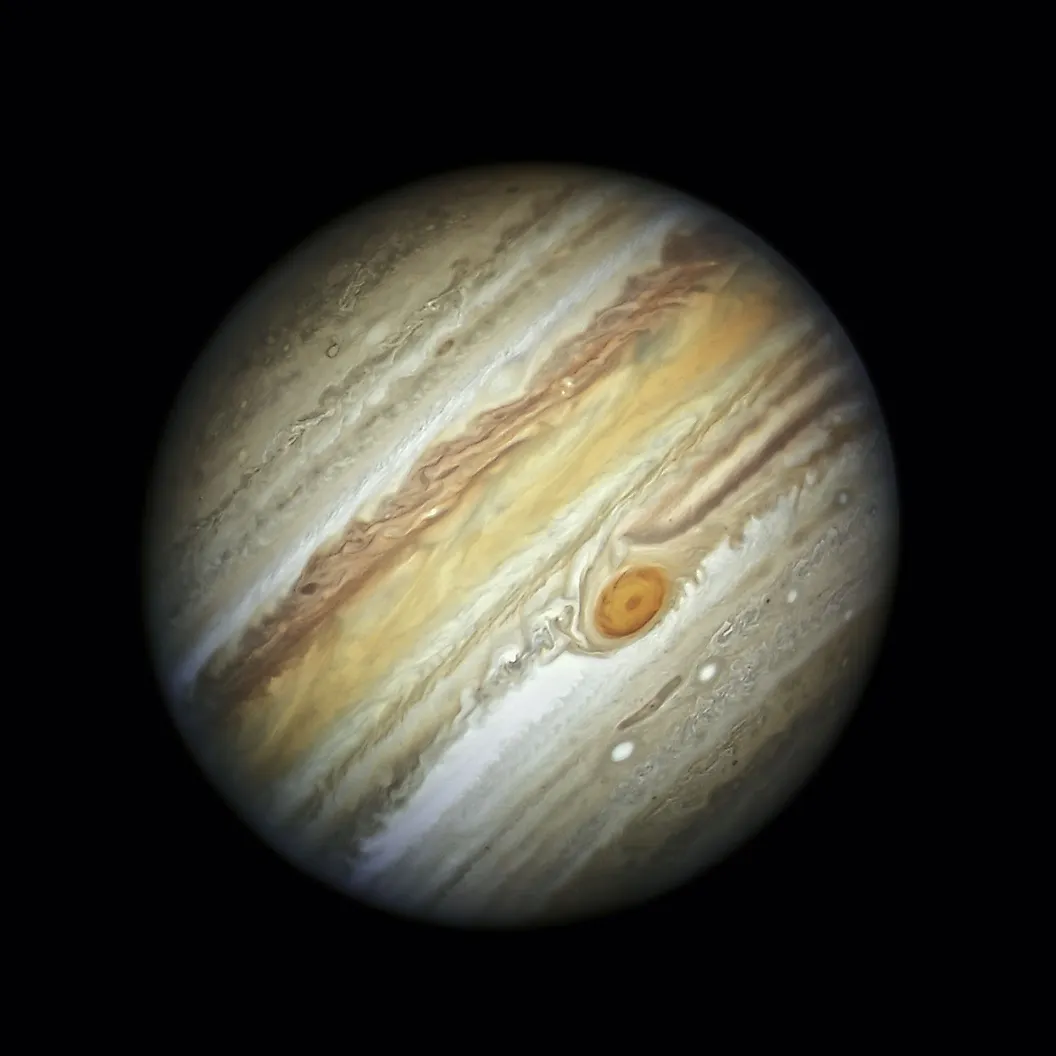
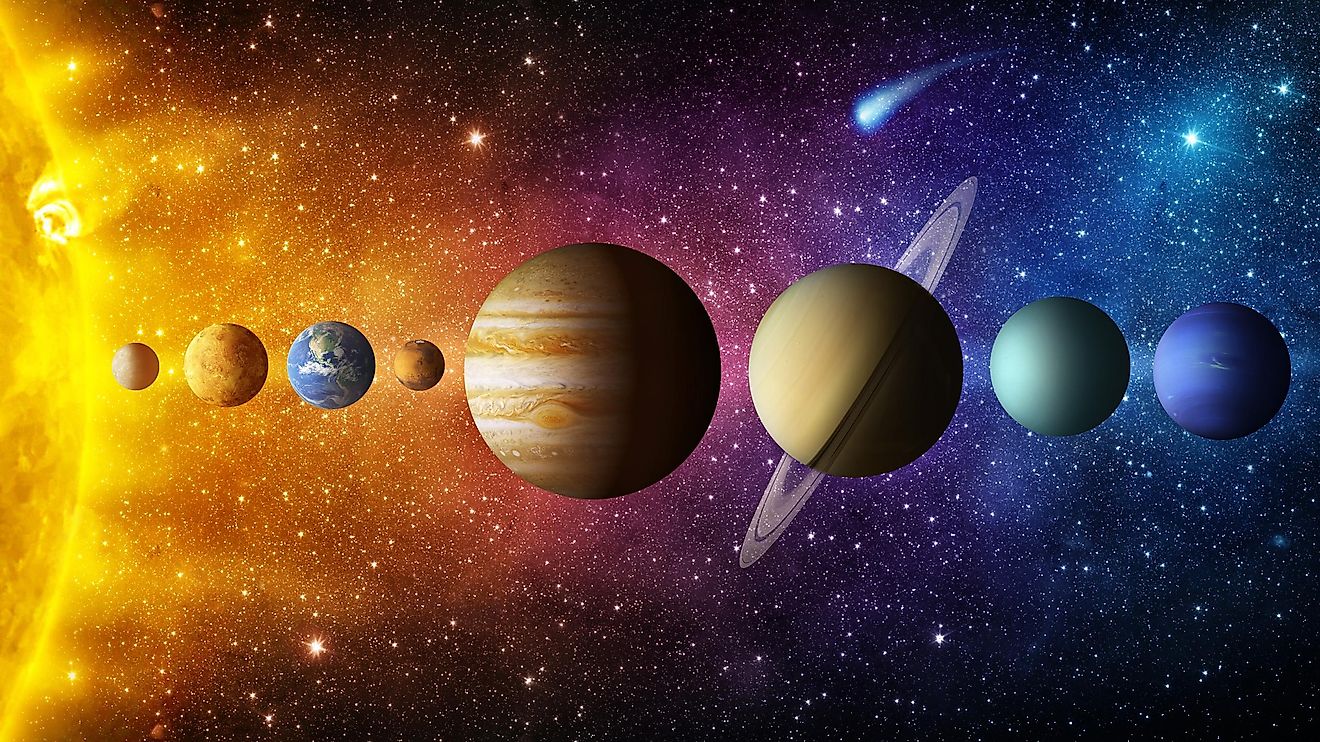
Even among the gas and ice giants, Saturn is the featherweight. Jupiter, the largest planet of all, averages about 1.33 grams per cubic centimeter. It shares Saturn's hydrogen-and-helium makeup, but under its far stronger gravity that material is compressed much tighter, and the density climbs above water's. Uranus, Saturn's outer neighbor, comes in around 1.27 grams per cubic centimeter, a figure raised by a large share of volatile ices such as water, ammonia, and methane. Neptune is denser still, near 1.64, the heaviest of the four outer worlds for the same icy reason.
The pattern is consistent. In every other giant the material is compressed more tightly than in Saturn, whether through stronger gravity or a heavier mix of ingredients. A light recipe spread across a vast volume is what puts Saturn at the bottom of the table.
The Idea That Saturn Could Float

Because Saturn's average density is lower than water's, the classic classroom line says the planet would float if you could find a big enough tub. The math behind the image is sound, and it is the clearest way to feel just how light this world is. About 30 percent of it would even ride above the waterline, the way an ice cube does.
The picture falls apart the moment you take it literally, though. There is no ocean anywhere near large enough, and Saturn is not a solid object that could be lowered into one. It is a ball of swirling gas held together only by its own gravity, roughly 74,897 miles (120,536 kilometers) across at the equator. Touch it to water and it would not float as a planet; it would simply come apart, its dense core sinking while the gas dispersed. The comparison is a thought experiment, not a plan, but it captures the real fact underneath perfectly well.
The Takeaway
Saturn's low density is not a trivia-night curiosity so much as a readout of how the planet is built. A world made almost entirely of the two lightest elements, spread across a volume that could swallow more than 750 Earths, cannot help but come in light for its size. The small core of rock and ice does little to change the average. That is why Saturn, for all its size, sits at 0.69 grams per cubic centimeter, the one planet in the solar system that measures out lighter than water.