Which Planet Is The Densest?
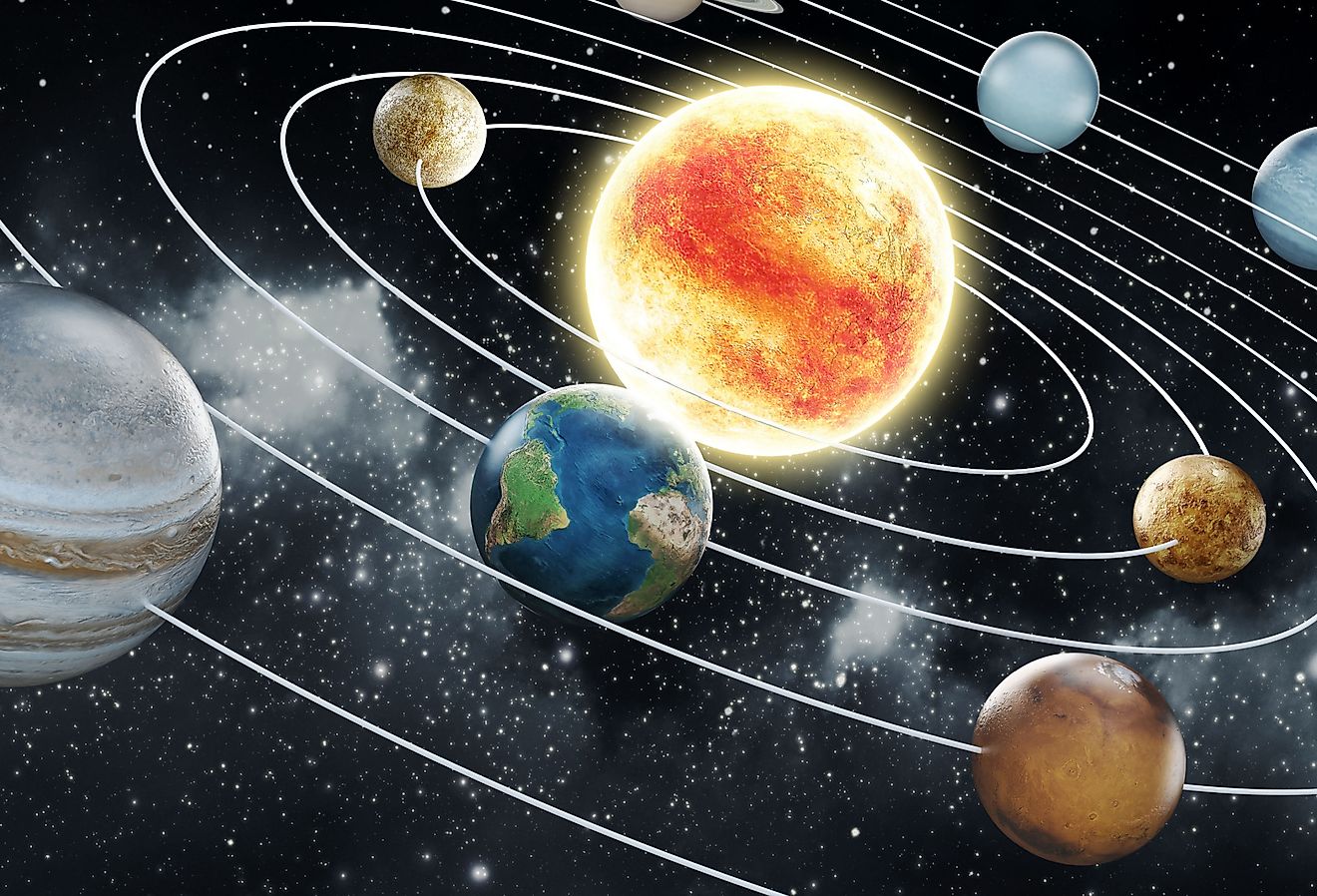
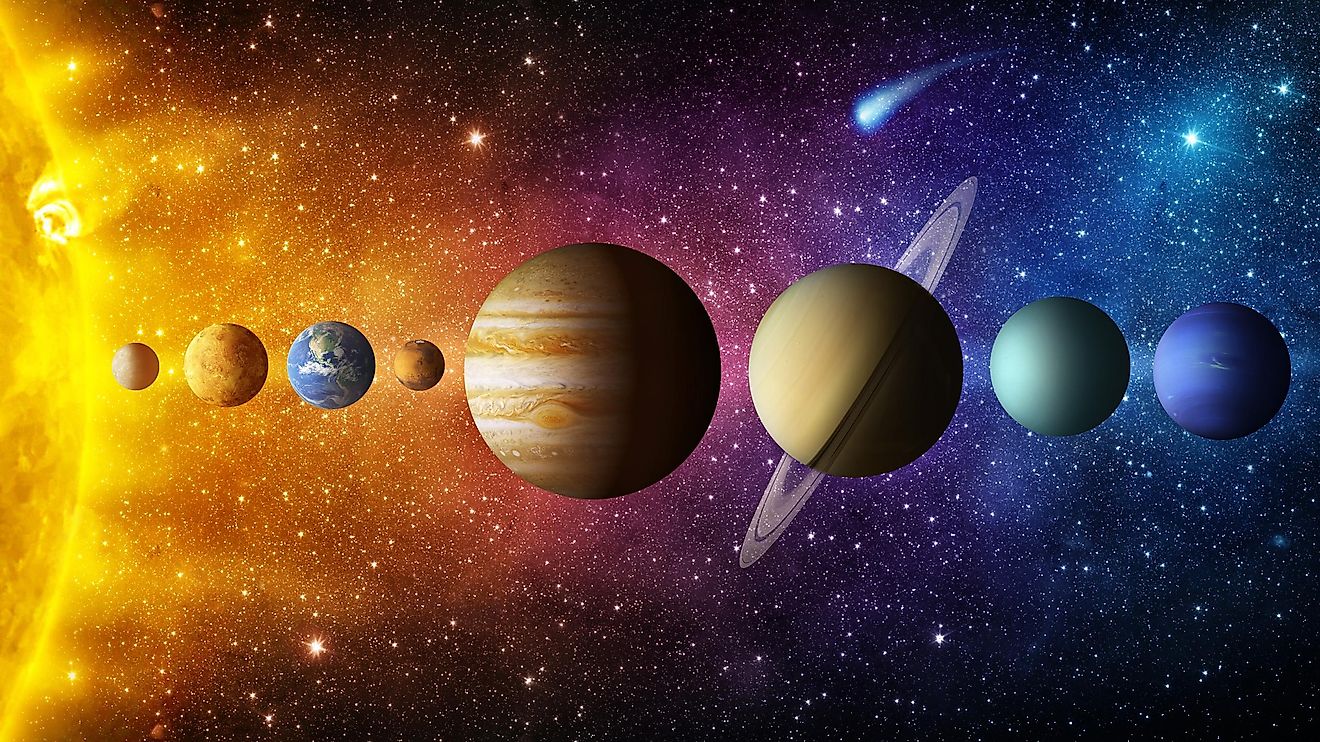
As astronomers researched the eight planets that revolve around the sun, they discovered that Earth is the densest planet. Density tells scientists how much material is compacted into an amount of space, or volume, and is measured in grams per cubic centimeter (or g/cm³). Earth's density is 5.514 g/cm³, the highest of any other planet in our solar system.
Earth's density also increases approaching the planet's core, measuring up to roughly 12,800 to 13,100 kg/m³ at the center. To understand a planet's density, scientists study characteristic factors like its composition, mass, and a planet's size.
Calculating Density Requires A Planet's Mass

Size is not the sole factor that determines its density; it also depends on a planet's mass and volume. A massive planet, such as Jupiter, is less dense than Earth because it contains a smaller amount of material in its volume (the space that it takes up). This relationship is expressed as d=M/V, or density is equal to an object's mass divided by its volume. Scientists have determined that Earth's mass is about 5.97 x 10²⁴ kg (roughly 6.6 x 10²¹ tons). This means that a large amount of material is packed into Earth's volume.
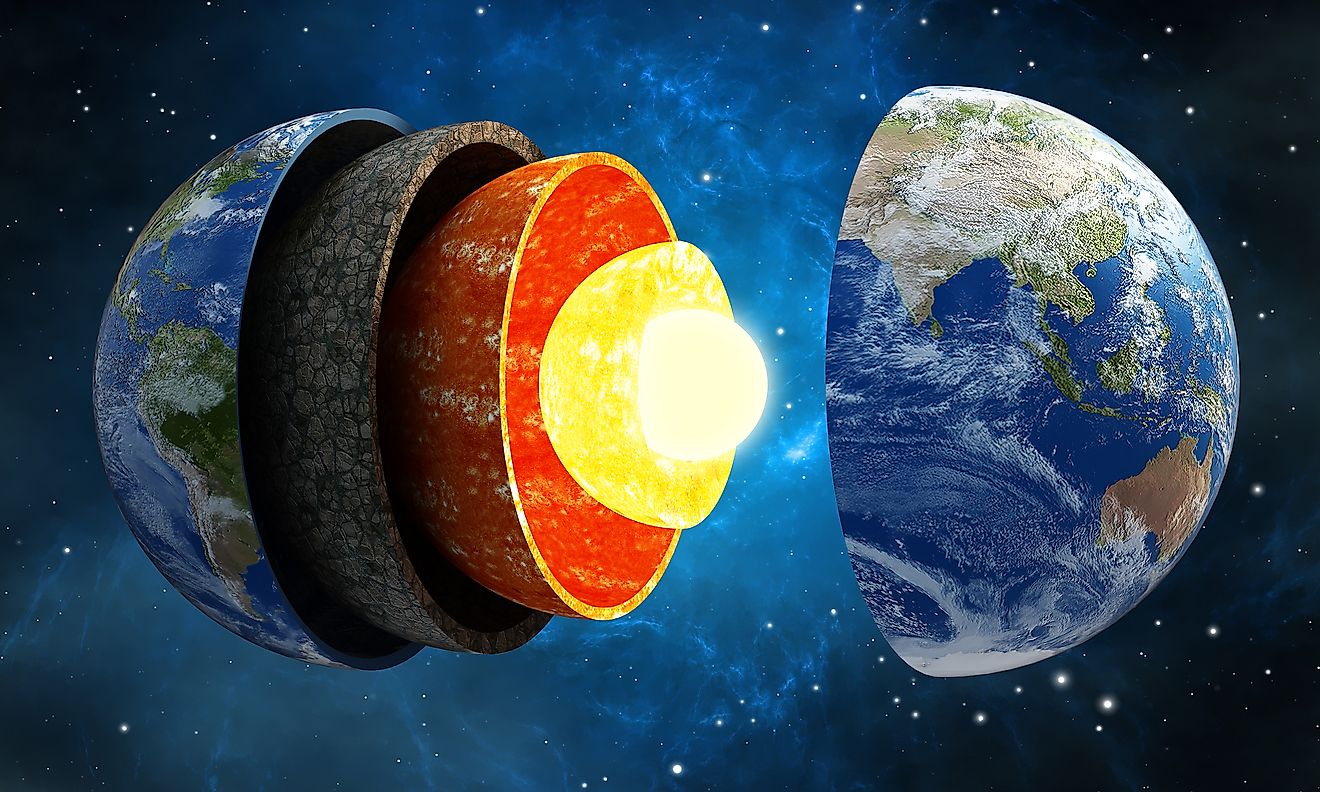
Additionally, the planet's density increases approaching the center. For scientists, this indicates that the deeper one ventures past the Earth's surface, the more closely material is compressed together.
Earth's Rocky Composition

Earth's density is also related to the planet's composition of solid, rocky materials. Earth can be divided into three parts: a central core made of nickel and iron metals, rocky silicates in its mantle, and an outer layer of solid crust. Since Earth has a solid surface, it is considered a terrestrial planet. These metals and silicate rocks are what make Earth the densest planet in our solar system.
Earth is not the only planet that is made of these materials. The inner planets of the solar system, including Mercury, Venus, Earth, and Mars, are made of solid material and are all considered terrestrial planets. Their heavier materials are why they are denser than the larger outer planets. Jupiter and Saturn are gas giants made almost entirely of hydrogen and helium, while Uranus and Neptune are ice giants, with interiors rich in water, ammonia, and methane surrounding a small rocky core.
Earth's Density Helps Scientists Understand the Universe
Understanding the factors that determine Earth's density is valuable knowledge for scientists as they uncover exoplanets too distant to study. Since they understand that Earth's large mass and rocky composition are what make the planet the densest in the solar system, they can use those numbers as a measuring stick for determining the composition of distant planets. The closer an exoplanet's density is to Earth's density, the more likely it is that the exoplanet is a terrestrial planet. The smaller the density, the more likely it is that the exoplanet is composed of gases like hydrogen. As scientists create more powerful tools to discover further parts of space, the more valuable this knowledge will become.