Which Planet Is The Brightest In Our Sky?
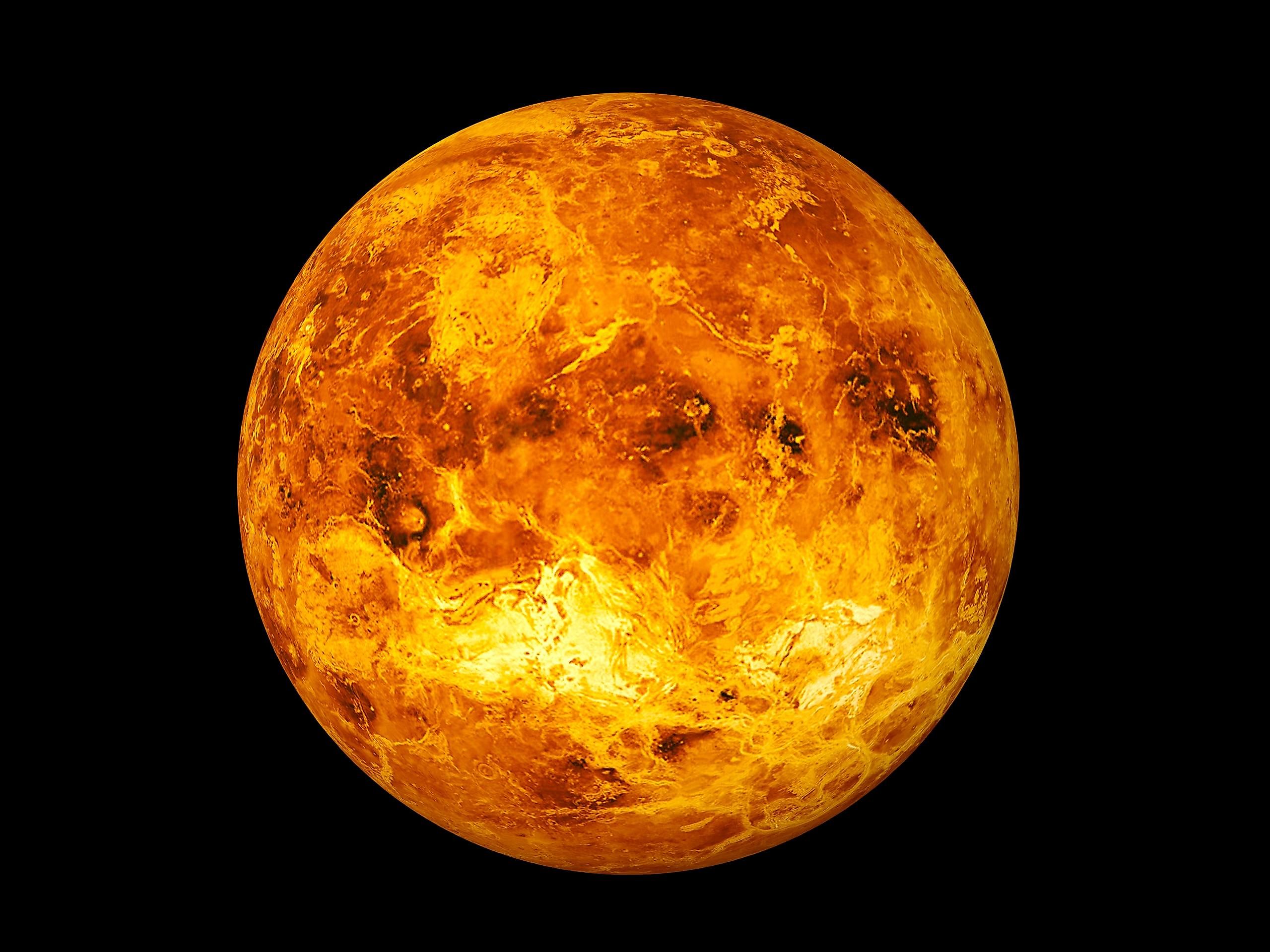
On a clear evening this September, one point of light in the western sky will be bright enough to cast a faint shadow on a pale wall under a dark sky. That is Venus, the only planet in our solar system named after a goddess, and the brightest planet anyone on Earth has ever seen. At its peak, it outshines Sirius, the brightest star in the night sky, by more than fifteen times. It is also the hottest world in the solar system, and everything humanity has ever landed there has died within hours.
The Third-Brightest Object In The Sky

Only the Sun and the Moon outshine Venus. The second planet from the Sun takes third place, and it gets there while running backward. Venus spins in the opposite direction to most planets, and so slowly that its day lasts about 243 Earth days while its year takes only 225. This means that on Venus, a day is longer than a year.
The nickname Earth's evil twin comes from a real resemblance. Venus is about 95% of Earth's diameter and roughly 80% of its mass, built from the same rock and metal. The resemblance stops at the atmosphere, however. On Venus, surface temperatures hold near 867 degrees Fahrenheit (464 degrees Celsius), hot enough to melt lead and also hot enough that Venus beats Mercury for the title of hottest planet, despite orbiting much further from the Sun. Carbon dioxide makes up about 96% of the air and traps heat so completely that the planet never cools. Surface pressure is roughly 92 times what you feel at sea level, or what a diver meets at about 3,000 feet down. The Soviet Venera landers were built to survive that, and the best of them only lasted 127 minutes.
What Makes It The Brightest Planet In The Sky?

Two things put Venus on top, and neither of them is size. While it might appear larger than other planets to the naked, untrained eye on Earth, Jupiter is actually more than eleven times wider. The trick is that Venus orbits closer to Earth than any other planet, coming within roughly 24 million miles (38 million kilometers) when it swings between the Sun and us. Jupiter never gets closer than about 365 million miles, and brightness falls away sharply with distance. Add clouds that reflect most of the sunlight, and the result is clear. Jupiter peaks at magnitude -2.9 on the scale astronomers use, where lower numbers mean brighter. Mars at its most favorable reaches about the same, and Mercury never leaves the Sun's glare long enough for most people to find it. Venus at its best runs some four times brighter than Jupiter at its best.
It is also easy to identify. Venus never appears more than about 47 degrees from the Sun, so it turns up only in the west after sunset or the east before sunrise, which is where it gets the names evening star and morning star.
Reflectivity Is What Makes Venus So Bright

Astronomers measure reflectivity with a figure called albedo, the ratio between the light striking an object and the light it throws back. Fresh snow scores high, while asphalt scores low. Venus has the highest albedo of any planet, near 0.7 on a scale where 1.0 would be a perfect mirror. The irony is that those clouds are droplets of sulfuric acid, the same ones that seal in the heat and make the surface unsurvivable.
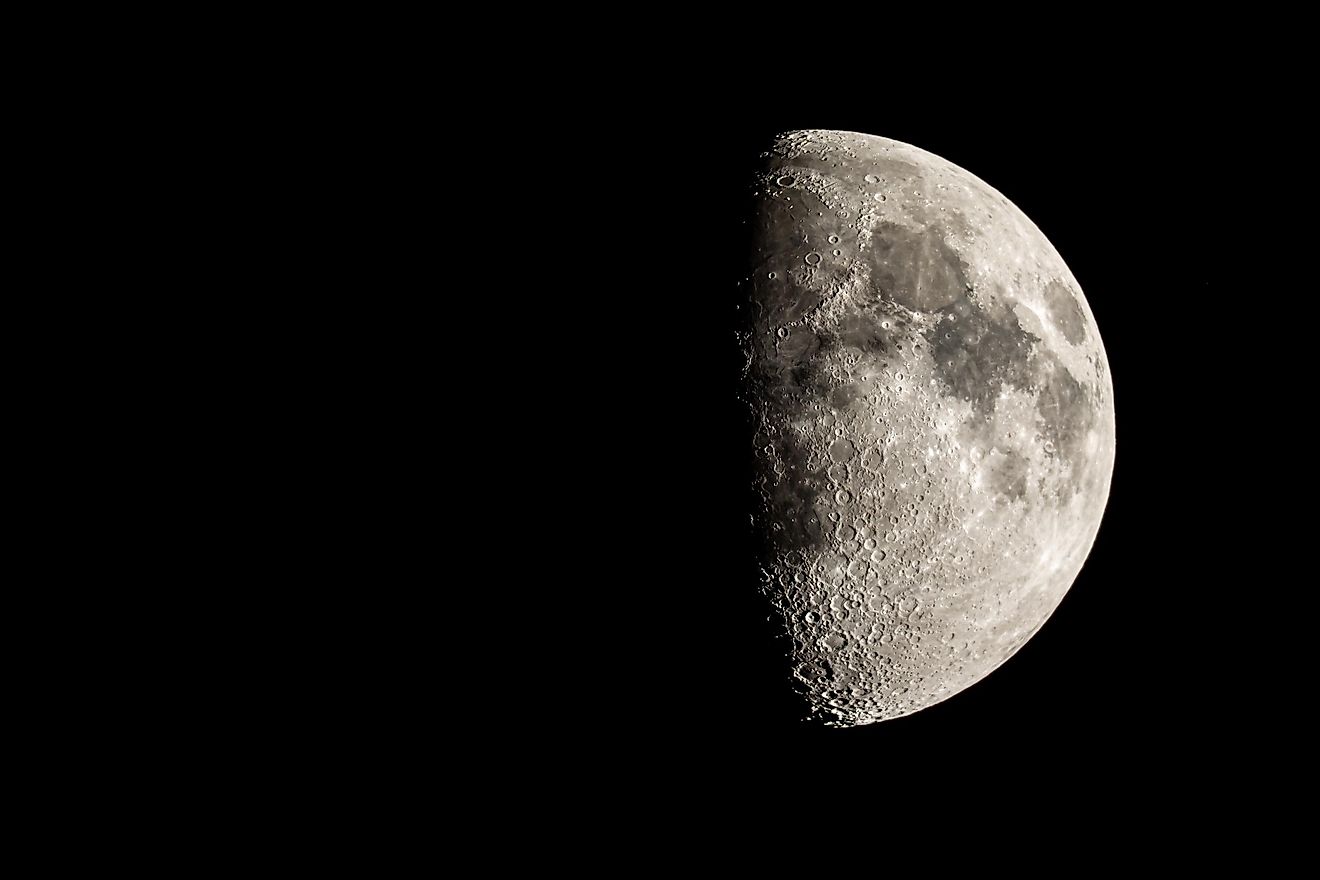
The Moon makes a useful comparison. It looks far brighter than Venus while reflecting only about 12% of the light hitting it, roughly the reflectivity of worn asphalt. Its advantage is distance. Moonlight reaches us in about 1.3 seconds, while light from Venus takes a little over two minutes at the planet's nearest. The Moon is a dark object in our front yard, and Venus is a mirror a hundred times farther away.
When Is Venus At Its Brightest?

Here, the answer is a bit more complex. Venus goes through phases the way the Moon does, and its brightness depends on two quantities pulling against each other. On the far side of the Sun, Venus shows a fully lit disk, but the planet is nearly 160 million miles away, and that disk looks tiny. As it swings around to pass between Earth and the Sun, the disk swells to its largest, but we are then looking mostly at the unlit night side. The peak arrives at the compromise, when a fat crescent and a large disk together present the greatest illuminated area.
That peak falls on September 18, 2026, at around magnitude -4.4. Venus reaches its greatest apparent distance from the Sun, about 46 degrees, on August 15. The date Venus passes between the Sun and us is October 24, and that is the opposite of a viewing opportunity. The planet then sits about six degrees from the Sun and vanishes into the glare for several weeks. It climbs back out in the eastern predawn sky in mid-November and peaks again as a morning star on November 29.
The Brightest Planet Is The One We Understand Least

Everything that makes Venus the brightest object you will ever mistake for a star also makes it the hardest planet in the inner solar system to study. The clouds that reflect sunlight hide the ground, and the atmosphere that traps heat destroys whatever lands in it. NASA's Magellan spacecraft radar-mapped about 98% of the surface in the early 1990s, and that survey is still the clearest look anyone has managed to capture. We hold sharper maps of Mars.
Venus may not always have been like this. One line of evidence suggests it held liquid water early on before a runaway greenhouse effect boiled the oceans away, though other researchers argue it was never wet at all. New missions are being built to settle the debate. In the meantime, the brightest planet in our sky remains the one we find most easily and explain least.