Which Planet Has The Weakest Gravity?
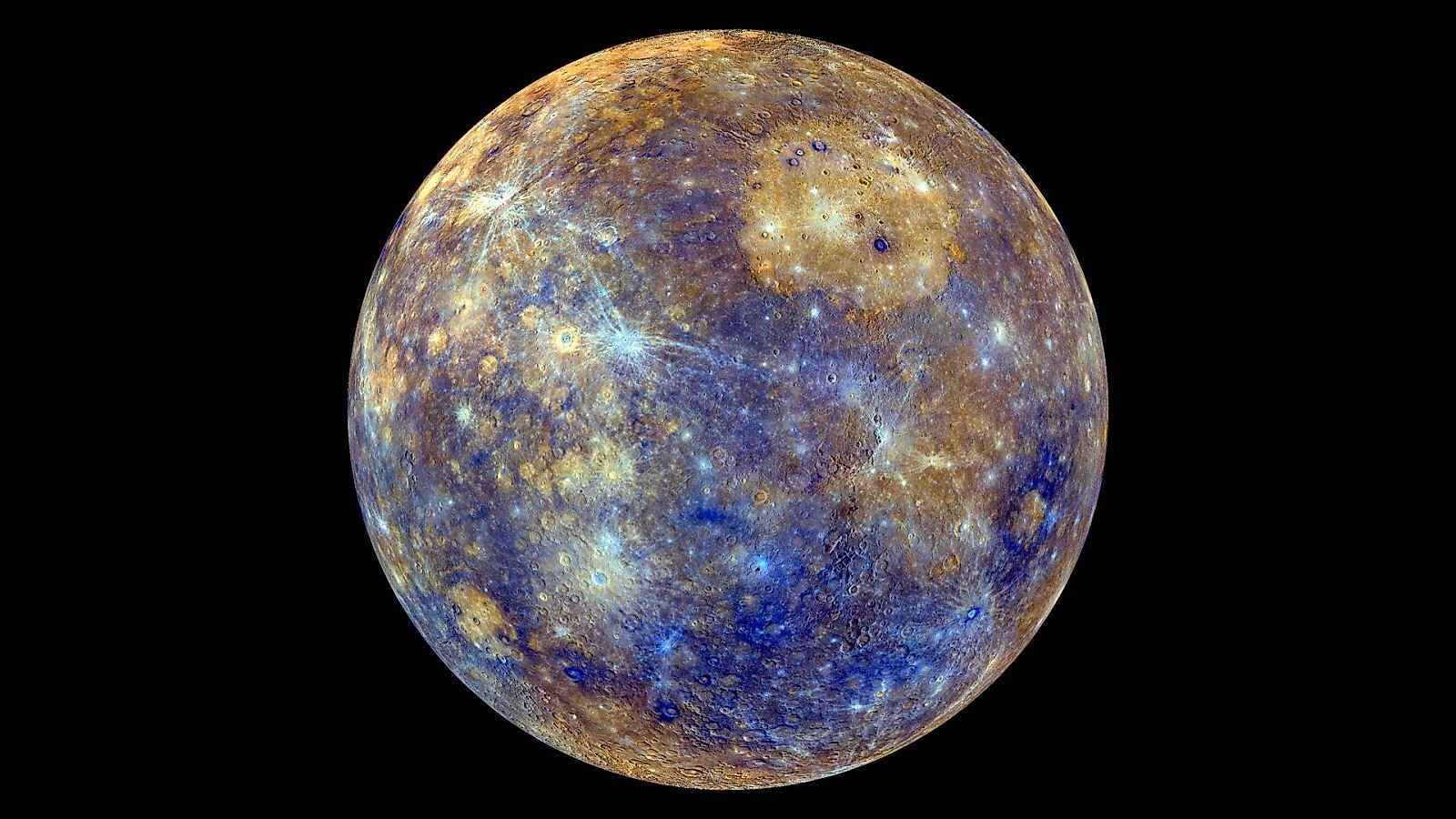
A 180-pound astronaut standing on Mercury would weigh about 68 pounds. No other planet in our solar system has such a gentle pull. Mercury's surface gravity is only 12.1 feet per second squared, just over a third of Earth's 32.2, due to its smaller size. In fact, Mercury is the smallest of the eight planets, and less mass means less gravitational pull. What is strange, however, is that Mercury still pulls harder than a world its size should, because most of its composition is iron. Read on to discover more about this fascinating little planet that punches, or pulls, well above its weight.
Physical features of Mercury

Mercury has a radius of 1,516 miles, which is slightly over a third of the width of Earth. That makes it only a little larger than our own Moon. It is the closest planet to the Sun, at a distance of 36 million miles. The next closest planet is Venus, which orbits the Sun from an average distance of 67 million miles. Despite being the smallest planet, Mercury is very dense, with a mean density of 5.43 grams per cubic centimeter or 3.139 ounces per cubic inch. It is the second-densest planet in the solar system, just behind Earth.
This density comes from a metallic core with a 1,289-mile radius, which accounts for nearly 85% of the planet's total radius, while its outer shell is only 250 miles thick. The core is likely partially molten due to the planet's close distance to the Sun. Scientists beamed a series of radio waves towards Mercury and received back signals with a degree of wobbling, which would indicate the planet has a molten core. The surface of Mercury is filled with impact craters, and above the surface, there is a very thin exosphere made of oxygen, sodium, hydrogen, and other gases, which largely come from solar winds.
When was Mercury discovered?
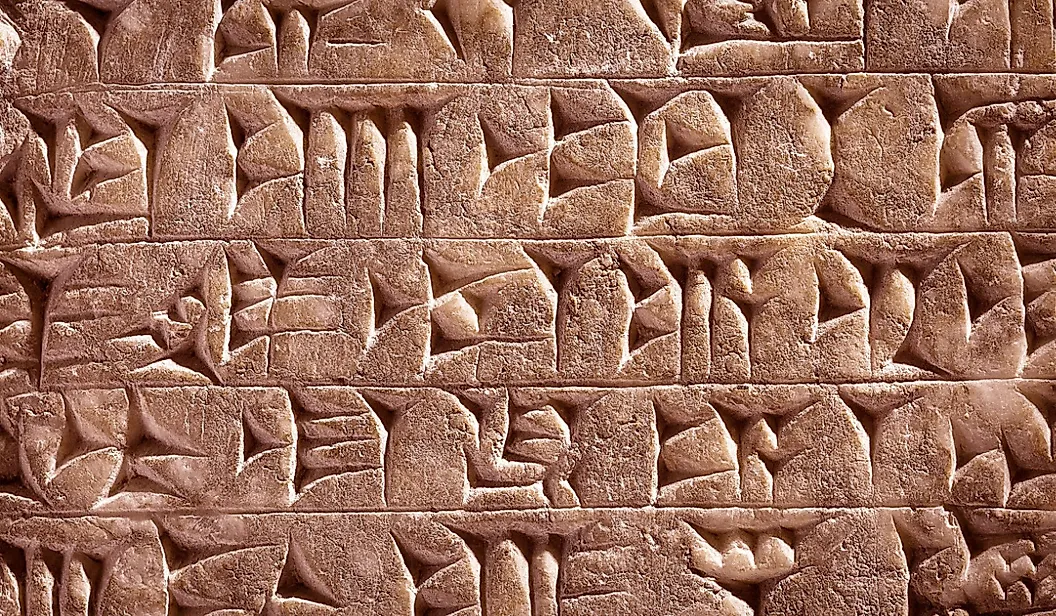
Mercury is one of the five planets known in ancient times, as it can be viewed without the aid of a telescope. No one knows who first spotted the planet Mercury, but its earliest reference dates back to the 3rd millennium BCE in Sumer in modern-day Iraq. Sumerian scribes recorded it under a name transcribed as Gud, and linked it to Ninurta, a god associated with farming and rain.
The Babylonians referred to the planet as Nabu, the son of the king of gods Marduk. Nabu was later associated with the Greek god Hermes and the Roman god Mercury. This god was known for cleverness and as a messenger; hence, he was a patron deity for athletes, business people, and even thieves. Galileo Galilei observed Mercury in the 17th century, although he was unable to see its phases. Astronomer Pierre Gassendi observed Mercury's transit in 1631, providing evidence for the theory that Mercury orbited the Sun rather than the Earth.
How the Sun's distance impacts Mercury

Because Mercury is so close to the Sun, it can reach very high temperatures. During the daytime, temperatures can reach 800 degrees Fahrenheit, hot enough to melt zinc. However, at night, all the energy dissipates, causing the surface temperature to drop to -290 degrees Fahrenheit. That swing of more than 1,000 degrees is the widest of any planet in the solar system. A year on Mercury is much shorter than on Earth, as it circles the Sun every 88 days at a pace of 29 miles per second. It also spins very slowly, taking 59 Earth days to complete a single rotation on its axis, so a year on Mercury lasts less than two of its own days.
Mercury's axis is also only tilted at 2 degrees, meaning there are no seasons on Mercury as it orbits quickly around the Sun. If one were to observe the Sun from Mercury, it would appear to move to the east for a brief moment before continuing west across the sky. Its proximity to the Sun makes it difficult for scientists to observe and explore, as the Hubble Space Telescope cannot point directly at the Sun because of its high brightness. During rare transits when Mercury's orbit passes directly between Earth and the Sun, one can view it as a black dot moving across the surface. Probes have their own problem. A spacecraft falling toward the Sun picks up enormous speed. Reaching Mercury means shedding that speed rather than gaining it, which takes years of looping flybys past Earth and Venus.
Gravity of Mars

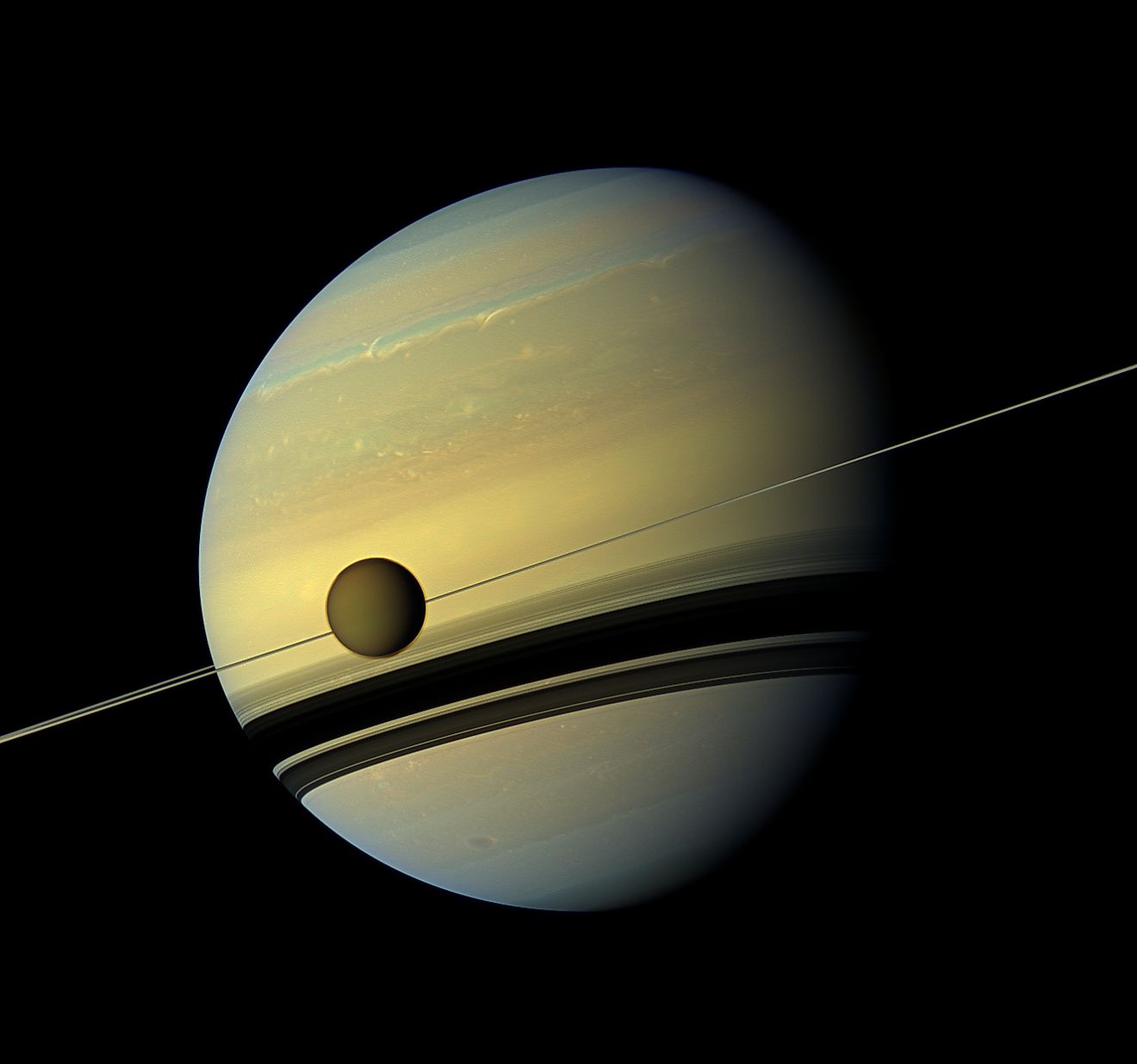
Mercury's gravity is only slightly weaker than on Mars, the 4th planet from the Sun. The surface gravity on Mars is 12.2 feet per second squared, compared to 12.1 feet per second squared on Mercury. Mars's low gravity is due to several other factors. Its mass is less than 11% that of Earth, and its radius is only 2,106.1 miles, compared to 1,516 on Mercury and 3,958.8 on Earth. Another big factor is its density. It has a density of 3.934 grams per cubic centimeter (2.274 ounces per cubic inch), the lowest among the four rocky planets. The gas and ice giants are far less dense still, with Saturn coming in at a lower density than water.
Why isn't it the hottest planet in the solar system?

Despite being the closest planet to the Sun, Mercury is not the hottest world in the solar system. The hottest world in our solar system is Venus. The reason for this is due to the atmosphere, or lack thereof, on Mercury. This planet has only a very thin exosphere, so excess heat does not remain on the planet, especially at night.
Venus, meanwhile, traps heat with its thick atmosphere made up of carbon dioxide. This is a greenhouse gas that traps heat and produces pressures that are 93 times greater than those on Earth, the same crushing force a diver would feel 3,000 feet underwater. Temperatures on Venus can reach 872 degrees Fahrenheit, which is 72 degrees hotter than on Mercury. Its clouds are droplets of sulfuric acid, and the sulfur compounds mixed through the air below them would give the planet the same rotten-egg smell found around the hot springs of Yellowstone National Park.
Is there water on Mercury?

While Mercury has extreme temperatures, there are two places where water exists. At both of its poles, there are craters where the sunlight does not reach. These craters contain deposits of water ice. On most of the surface of Mercury, water could not exist, as the immense heat and light from the sun would evaporate it. Ground-based radar telescopes picked up the first hints of that polar ice in the early 1990s, when they bounced signals off Mercury and received the bright echoes that ice produces.
Proof took another two decades. NASA's MESSENGER spacecraft, which first flew past the planet in 2008 and entered orbit in 2011, confirmed the deposits in 2012 using three separate lines of evidence. Spread over an area the size of Washington, D.C., that ice would stand more than two miles deep. Messenger also measured trace amounts of water vapor in Mercury's exosphere during its 2008 flyby. The reason for this vapor may be the solar wind, which reaches the polar ice and blows it into the exosphere.
Is Mercury tectonically active?

The Messenger spacecraft uncovered additional evidence on Mercury that it may be tectonically active. It took photos of fault scarps, which are landforms on the surface that could only have been formed recently, especially since they would have been destroyed by the onslaught of extraterrestrial comets and asteroids. These scarps are also smaller than those Mariner 10 discovered on the surface in the 1970s. Those older features formed as the core cooled, contracting the planet and breaking its crust into tall cliffs. The largest of them rises more than a mile above the surrounding ground. A chapter on Mercury's tectonics, led by planetary scientist Paul K. Byrne, describes a planet shaped by "a long and complicated history of deformation" and still bearing the landforms that record it.
This tiny world still has secrets
Mercury is the smallest planet and the fastest, and it pulls more weakly than any other while sitting closer to the Sun than all of them. It also refuses to behave like a dead rock. Ice survives in crater floors that have never seen daylight. Cliffs over a mile high wrinkle the crust, and smaller ones suggest the planet is shrinking still. Scientists cannot yet explain why a world this small carries so much iron, though one leading idea is that a collision with another young planet stripped away most of Mercury's rocky outer layers. An answer may be close. BepiColombo has been chasing Mercury since 2018. The joint European and Japanese mission is scheduled to slip into orbit on November 21, 2026, with full science operations beginning the following April.




.png)