Which Planet Has the Most Moons?
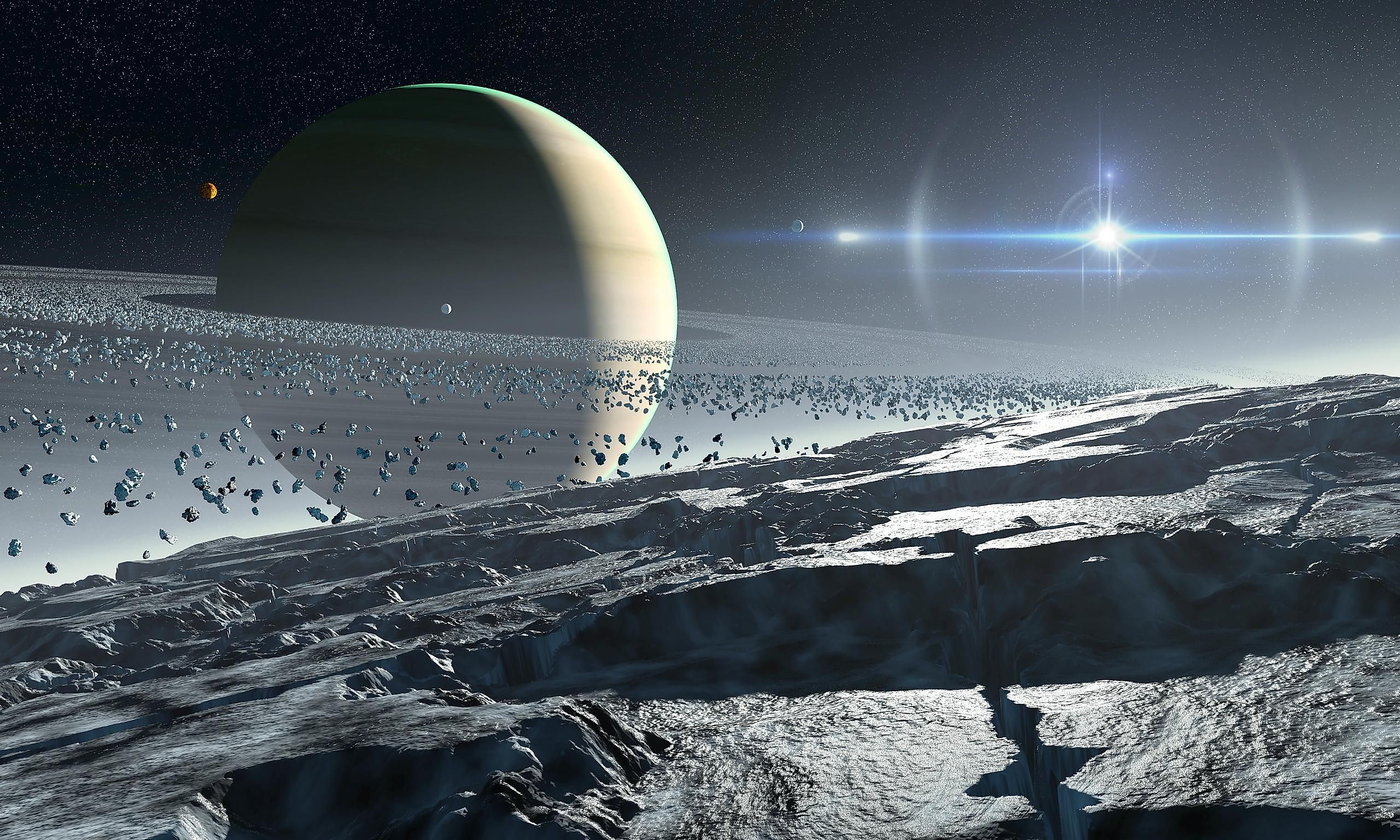
With 293 confirmed moons and counting, Saturn has more natural satellites than any other planet in the solar system. These moons vary greatly in size and composition, with some believed to hold life and others being the size of a football field. Together, they shepherd Saturn's rings, erupt in ice geysers, and raise questions astronomers are only beginning to answer. Here's why Saturn's moon count keeps climbing, and what makes Titan and Enceladus the strangest of the bunch.
Saturn's features

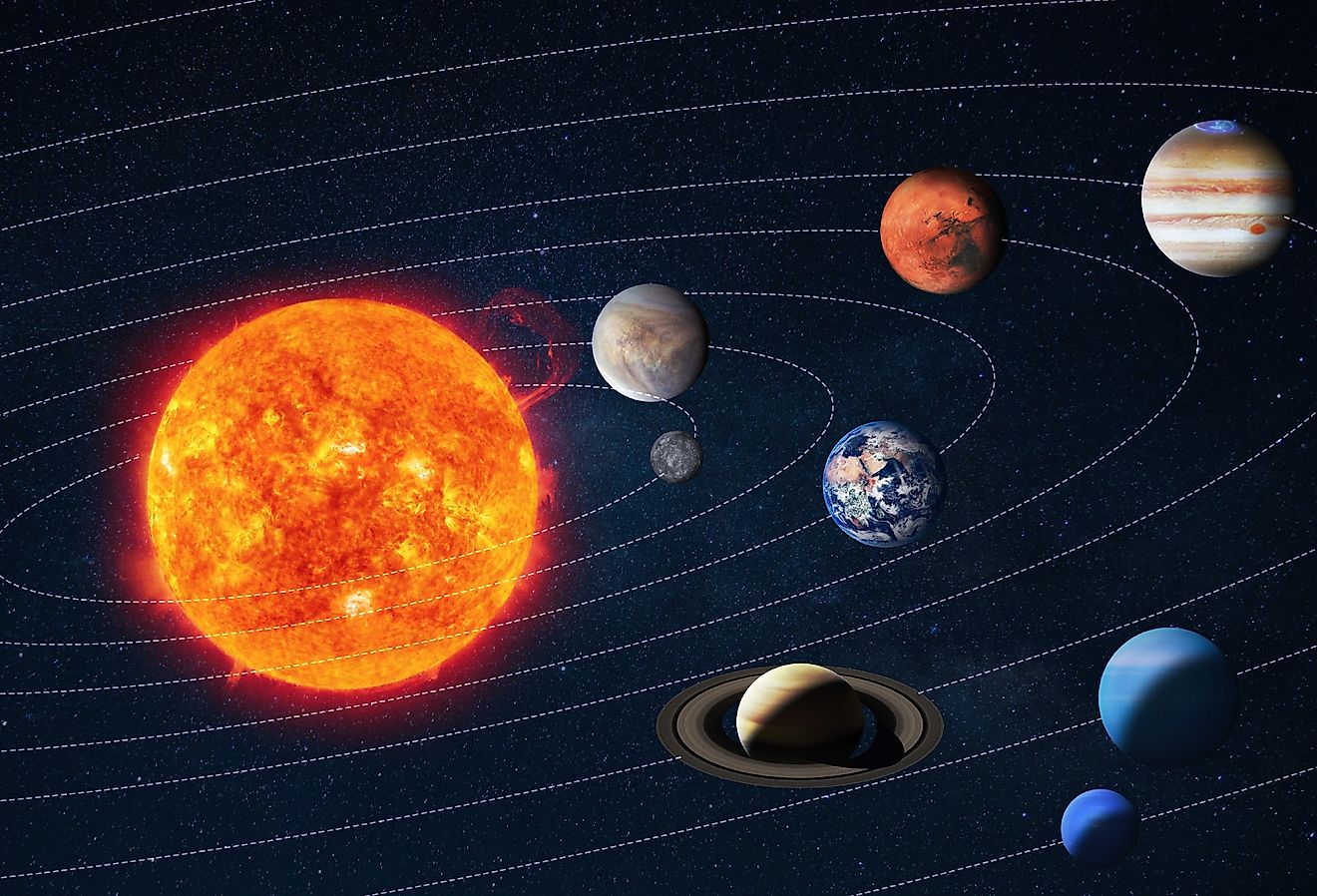
As the sixth planet from the Sun, Saturn is a gas giant much like Jupiter, made up of hydrogen and helium. Its atmosphere is very strong, with winds reaching up to 1,600 feet per second, which is nearly 4.5 times stronger than the strongest hurricane winds on Earth.
At each of its poles, there are unusual jet streams. At the north pole, there is a six-sided jet stream that is 20,000 miles across, with 200-mile-per-hour winds in a hexagonal pattern. Recently, the Hubble Space Telescope discovered a decagonal wave on Saturn's south pole.
Moving down from its atmosphere, Saturn does not have a true surface, but instead, the atmospheric pressure compresses the gas into a mixture of liquid hydrogen, which gradually goes down into a metallic core made of iron and nickel. It would be impossible to take a spacecraft into Saturn, as the winds and pressures would tear it to shreds.
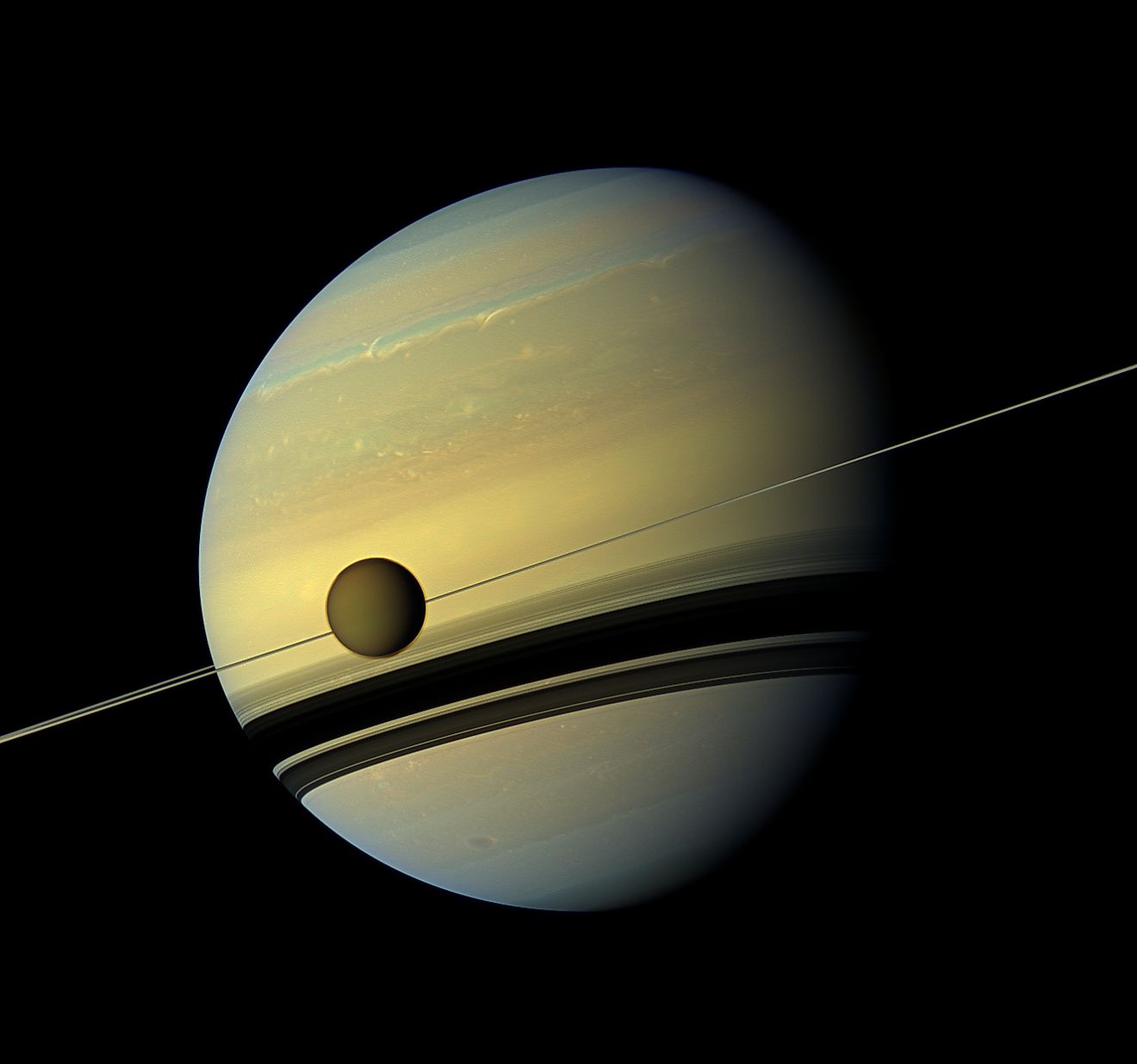
Saturn is the second-largest planet in the solar system with a diameter of 74,897 miles. Despite this size, the planet has very low density, at 0.687 grams per cubic centimeter (or 0.3971 ounces per cubic inch). This means the entire planet could float in a pool of water (assuming the body of water was large enough).
Saturn's most iconic feature is its rings, which extend out to 175,000 miles from the planet. There are 7 rings in total around Saturn, with a gap between D, C, B, and the A, F, G, and E rings known as the Cassini Division. These rings are made of small ice and rock material, which are the remains of comets, asteroids, and moons that were destroyed by Saturn's gravity as they approached the planet.
Discovery of Saturn's moons

Saturn's first moon to be discovered was Titan, which Dutch astronomer Christiaan Huygens discovered in 1655. He initially called it Saturn's moon in Latin. Its name was changed to Titan by John Herschel, the son of famed astronomer William Herschel, who also discovered several moons in the late 1700s.
From 1671 to 1684, the Italian-French astronomer Giovanni Domenico Cassini discovered Iapetus, Rhea, Tethys, and Dione, while William Herschel discovered Mimas and Enceladus in 1789.
By 1900, scientists had uncovered 9 moons in total on Saturn. With the age of space exploration, scientists were able to find many more moons, including Atlas, Prometheus, Pan, and Pandora, which were picked up by Voyager I and Voyager II as they passed by Saturn.
In March 2025, there were 128 small moons confirmed by the International Astronomical Union, bringing its total to 274. Scientists argue that these moons were likely formed by a fairly recent collision in the system. Of the 128 confirmed moons, most sit near the Mimas moon supergroup, which has retrograde orbits around Saturn.
The Cassini Division itself between Saturn's rings is created by shepherd moons, which create the gap through their gravity and, in turn, shepherd the particles in the rings. This, in turn, gives the rings a defined structure.
Didn't Jupiter used to have the most moons?

Discerning readers will remember that until recently, Jupiter had the largest number of moons. That changed in 2019 with the discovery of 20 moons on Saturn by a team led by Scott S. Sheppard with Carnegie Science. This brought Saturn's total number of moons to 82, surpassing Jupiter's total at the time of 79.
Since then, Jupiter has had several more moons confirmed, for a total of 115. However, this is less than half of Saturn's total of 293. At this point, astronomers believe it is unlikely that discoveries will cause Jupiter to "catch up" with Saturn in terms of the number of moons.
Titan

Titan is unlike any other moon in the solar system due to its atmosphere and liquid on its surface. Its atmosphere is made up of nitrogen and methane, which in turn produce clouds where rain falls on the surface.
This rain fills rivers, lakes, and seas on the planet. It may even have an ocean beneath the surface, which would also contain salts and ammonia. The surface of Titan is very cold, with an average temperature of -290 degrees Fahrenheit. Due to this, its crust is made up of ice rock.
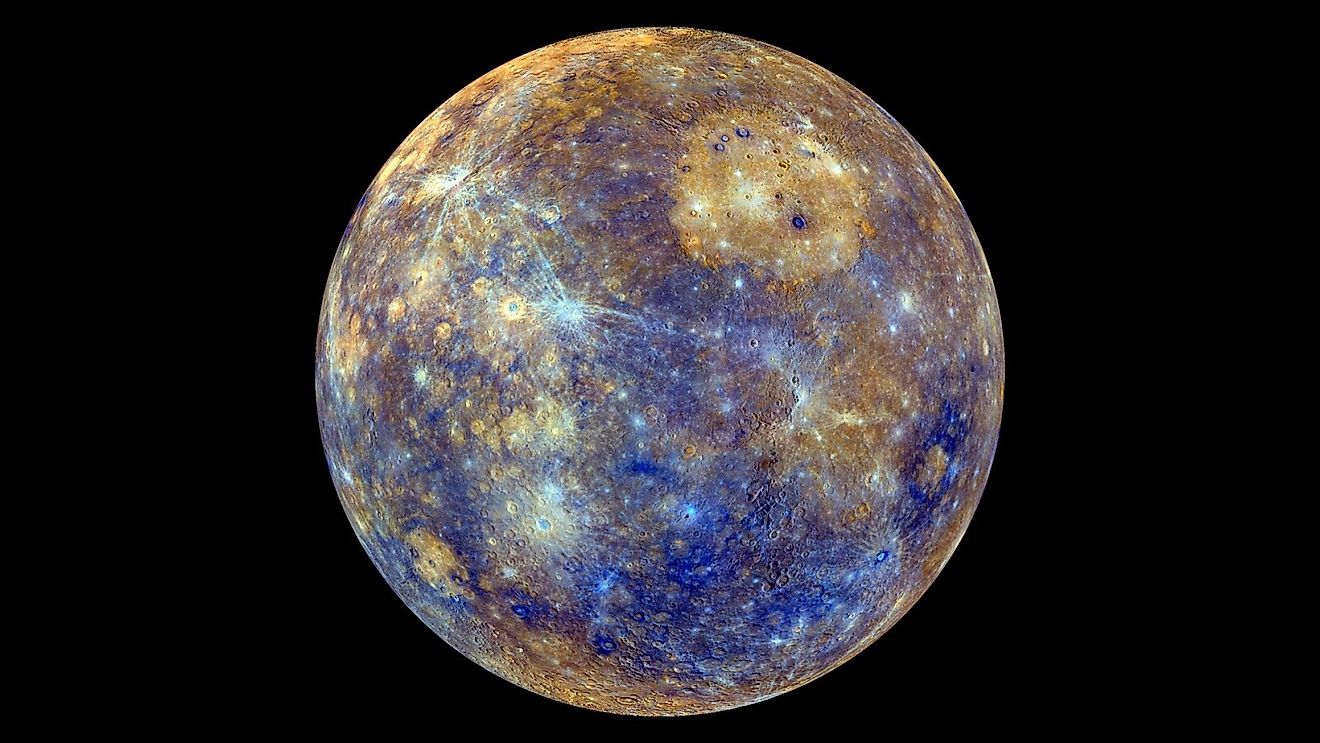
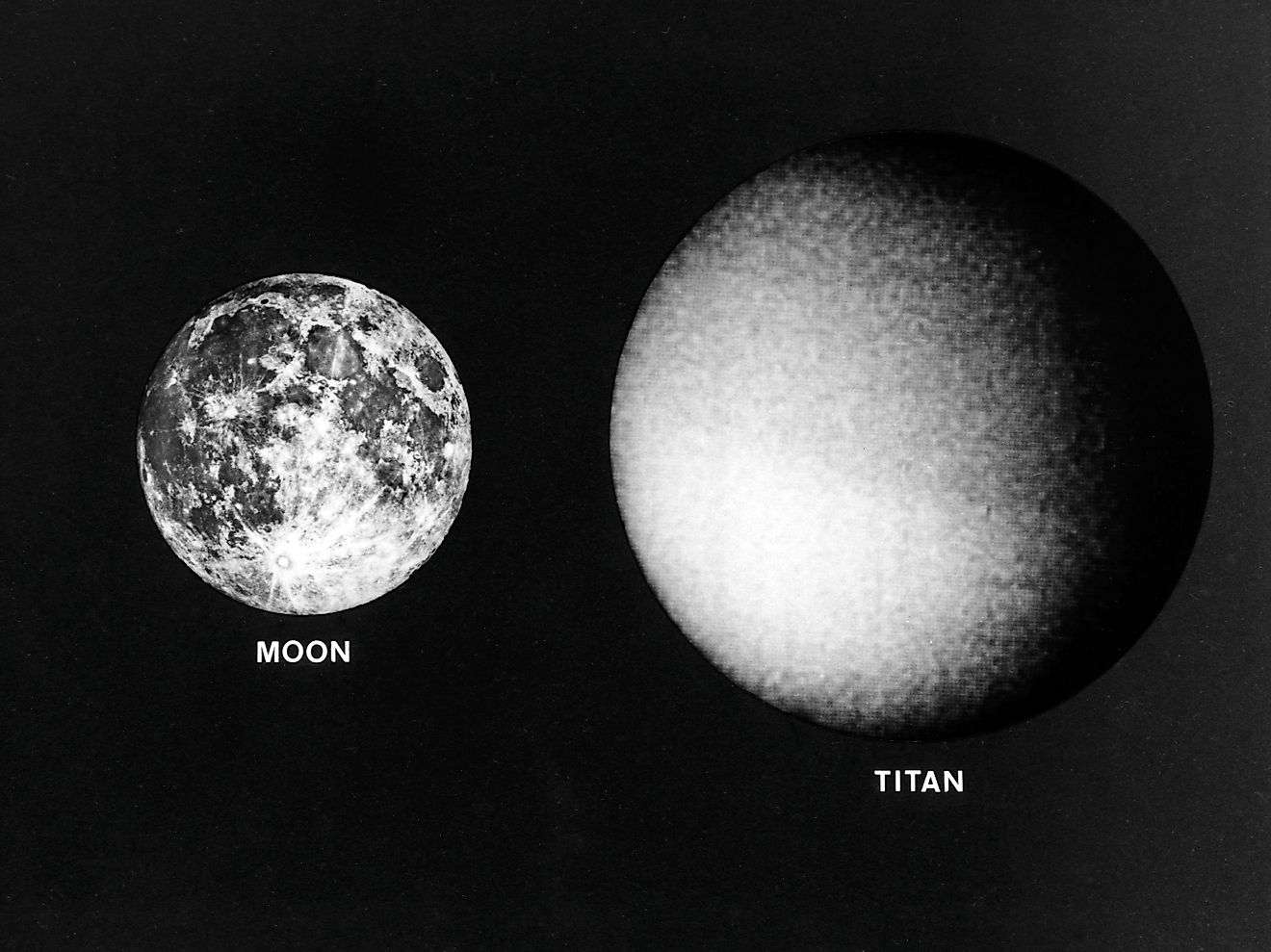
Titan is also unique for its size; at 1,600 miles in radius, it's larger than the planet Mercury, which has a radius of 1,516 miles.
One of the biggest mysteries of Titan is whether or not it supports life. An underground ocean of salt could support life forms, along with its rivers and seas. The liquid on the surface is made up of methane and ethane, meaning life forms there would be different than anything on Earth.
Enceladus
![Enceladus imaged by the Cassini orbiter, October 2015[a].](https://www.worldatlas.com/r/w960-q80/upload/47/65/c1/pia17202-approaching-enceladus-s3cdn.jpg)
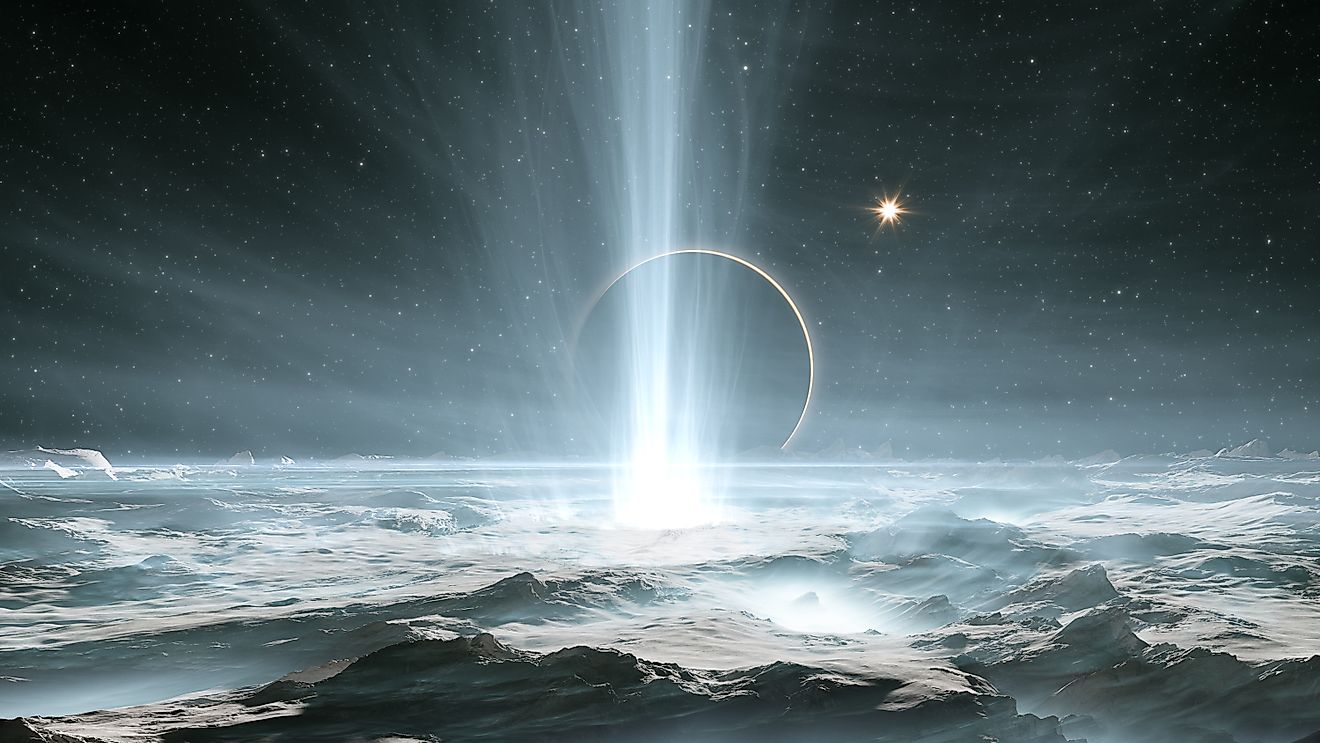
Enceladus is a much smaller moon than Titan, at only 310 miles across. However, it plays a crucial role in Saturn, as it creates Saturn's E ring through its violent geysers.
These geysers shoot out into space at 800 miles per hour. They spray upward at 6,000 miles. The geysers emerge out of warm fractures in the crust and are made up of a mixture of water vapor, carbon dioxide, methane, ammonia, and salt.
This water comes from an ocean under the icy surface of the moon, which is only about 0.5 to 3 miles thick at the south pole. Most of the material from these geysers falls back onto the moon, giving it a bright white appearance.
Scientists believe that this moon must have internal heat to create these geysers from the ocean. If so, there is a strong possibility that there is life in Enceladus's ocean.
What we don't know about these moons
One of the most crucial questions about Saturn's moons is whether life in any form exists on them. While it is possible that life could be in the ocean of Enceladus or on the surface of Titan, there has been no confirmation either way as of the writing of this article in September 2026.
Another question is how and when these moons formed. For example, scientists argue that part of the reason Saturn has so many moons is that its gravity picked up celestial bodies such as Phoebe, which circles in the opposite direction from the rest of the moons and is made of materials farther out in the solar system.
There's also the question of the size of Saturn's moons. One of them is considered a large moon: Titan, while Jupiter has four large moons. It is unknown why Saturn's moons are so small, although scientists theorize it could be due to collisions or Saturn's strong gravity.
Lastly, there is the question of how and why these liquid oceans formed on some moons and not others. Future spacecraft visits and observations are needed to help fill in the gaps in these and many other questions about Saturn's moons.


.jpg)
