Which Planet Has The Most Eccentric Orbit?
HD 20782 b travels as far as about 247 million miles (398 million km) from its star before swinging to within roughly 5.6 million miles (9 million km) of it. This gas giant has a bizarre journey with an orbital eccentricity of about 0.96. By comparison, Earth follows an almost circular path with an eccentricity of just 0.017. Eccentricity measures how much an orbit differs from a perfect circle. An eccentricity of zero describes a circle, while values approaching one produce increasingly stretched-out orbits.
Among the planets in our solar system, Mercury has the most eccentric orbit. Mercury holds the record among the eight planets orbiting the Sun, while HD 20782 b is among the most eccentric confirmed exoplanets known.
HD 20782 b Has an Extreme Orbit

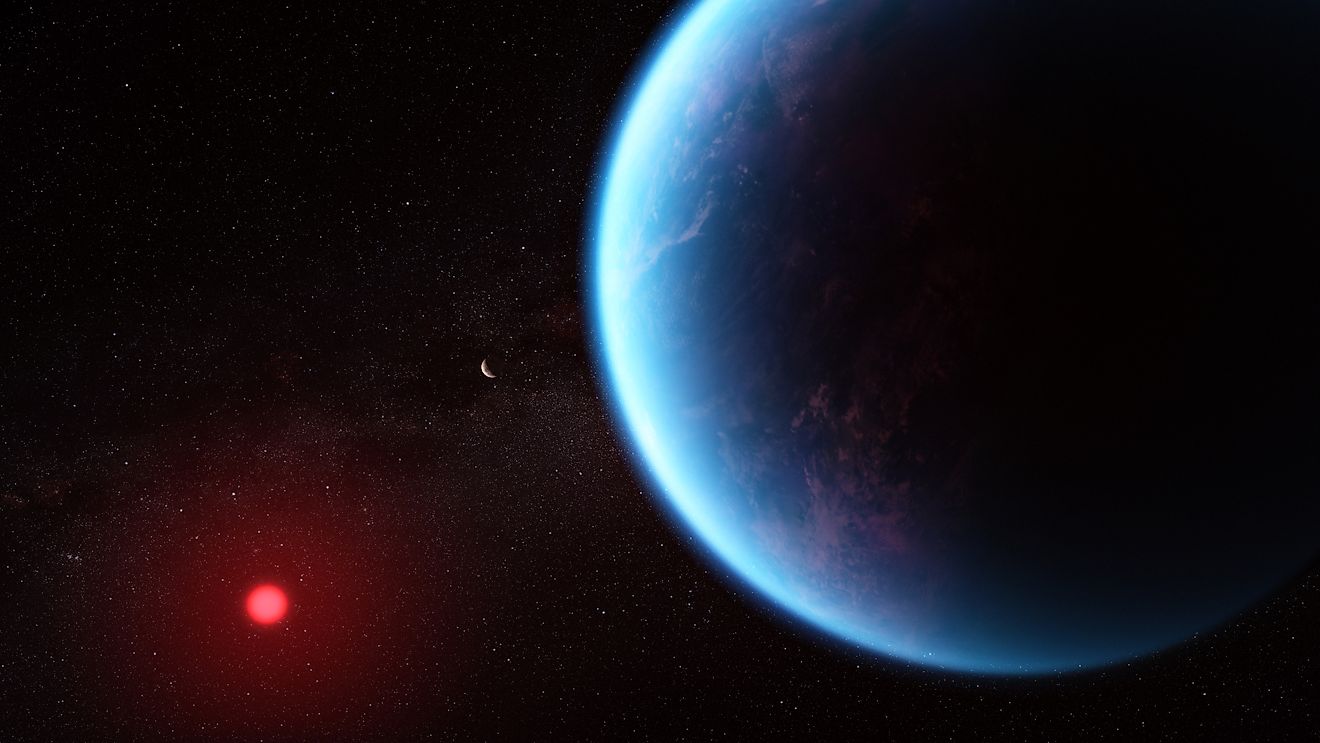
HD 20782 b orbits a sun-like star about 117 light-years away. It is a gas giant with a minimum mass of about 1.5 times that of Jupiter and takes roughly 597 days to complete one trip around its star. NASA lists its orbital semimajor axis at about 1.36 astronomical units, or 127 million miles (204 million km). The semimajor axis is not the planet's time-averaged distance; it is half the orbit's long axis and must be combined with eccentricity to calculate the closest and farthest points.
Using its current orbital measurements, HD 20782 b approaches its star to roughly 0.06 astronomical units, or about 5.6 million miles (9 million km). At the opposite extreme, it can travel to roughly 2.66 astronomical units, or about 247 million miles (398 million km), from its star. The planet, therefore, spends its 597-day orbit moving between conditions that are sharply different.
For comparison, Earth stays relatively close to 93 million miles (150 million km) from the Sun throughout its orbit. Earth's small eccentricity means its distance changes only modestly over a year.
What Makes an Orbit Eccentric?

Imagine stretching a rubber band into an oval. The more elongated the oval becomes, the more eccentric the orbit is.
Planets do not normally travel in perfect circles. Under gravity, a bound planet follows an elliptical orbit, while interactions with other planets or stars can increase or decrease that orbit's eccentricity. Most planets have relatively small eccentricities, so their orbits look almost circular.
HD 20782 b is unusual because its orbit is so elongated that the planet spends part of its journey comparatively far from its star before plunging inward toward a much closer approach.
The difference is not merely geometric. A planet receives dramatically more energy from a star when it moves closer to it. That means HD 20782 b experiences a huge change in the environment around it over the course of a single orbit.
Mercury Is the Most Eccentric Planet Near the Sun

When it comes to the eight planets in our solar system, the answer changes completely.
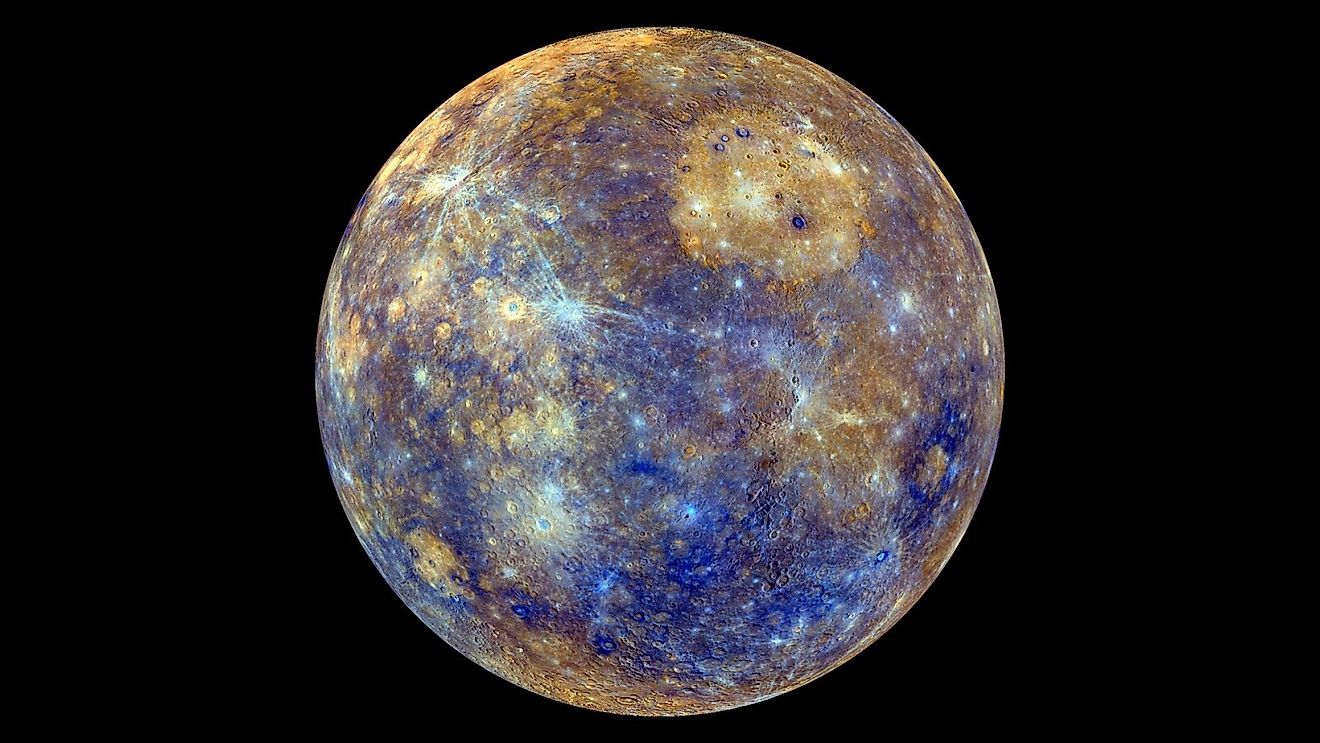
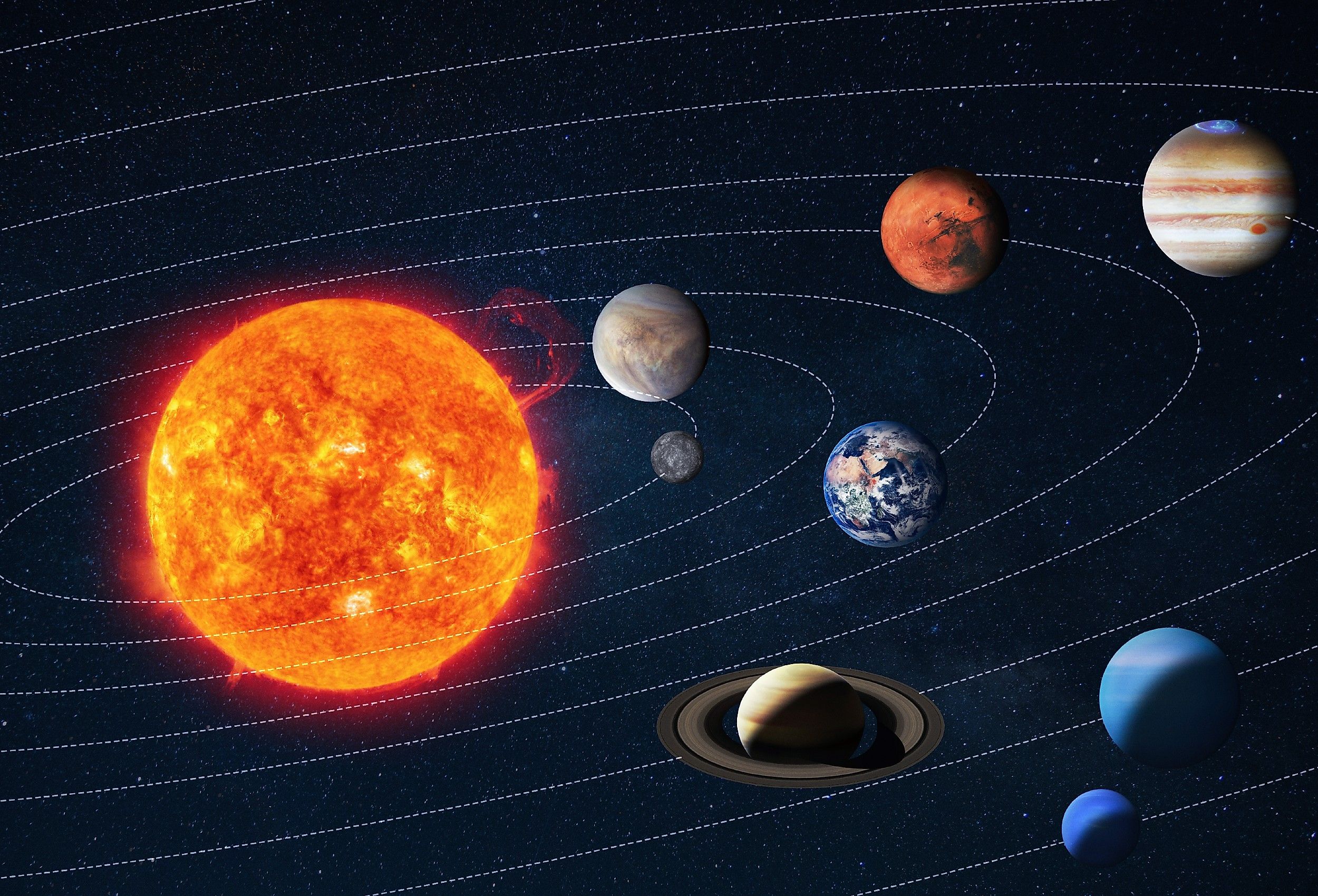
Mercury has the most eccentric planetary orbit around the Sun, with an eccentricity of about 0.206. Its distance from the Sun varies between about 29 million miles (46 million km) at its closest and 43 million miles (70 million km) at its farthest.
That is noticeably more elongated than Earth's orbit, but it is tame compared with HD 20782 b.
Mercury completes an orbit every 88 Earth days and travels around the Sun at nearly 29 miles per second (47 km per second), faster than any other planet. Its close proximity to the Sun also produces brutal surface conditions. Daytime temperatures can reach about 800°F (430°C), while nighttime temperatures can fall to about -290°F (-180°C). Mercury's temperature extremes mainly reflect its proximity to the Sun, long solar day, and lack of a substantial atmosphere rather than its orbital eccentricity alone.
A Planet That Gets Flash-Heated

HD 20782 b's closest approach brings it extraordinarily close to its star. The planet is a gas giant rather than a rocky world like Earth, but the dramatic change in the amount of energy it receives still matters.
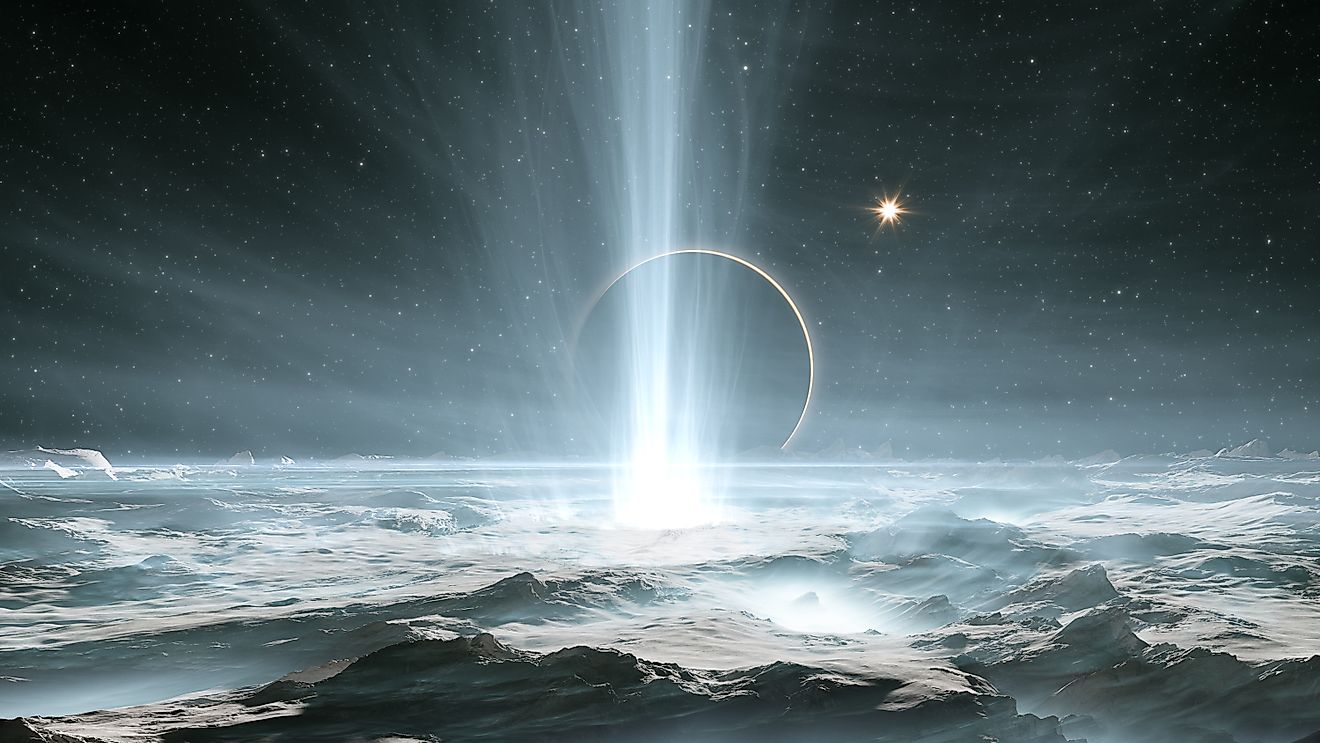
As the planet races toward its star, the amount of incoming energy increases enormously. Researchers have described the system as a particularly useful example of a planet undergoing extreme changes as it passes through periastron, the point in its orbit where it is closest to the star. At that point, the planet receives vastly more stellar energy than it does during the distant portion of its orbit, creating a sharp contrast in conditions. MOST observations detected a possible brightness variation near periastron that might include reflected light, but the signal has not been securely confirmed.
The planet does not linger near its star. It moves fastest during its brief passage through periastron, then slows as it travels back toward the weakly irradiated outer portion of its orbit.
Why the Planet Has Such a Strange Orbit

One of the biggest questions surrounding HD 20782 b is how it ended up there.
Planets form from disks of gas and dust surrounding young stars. Their early environments can be chaotic, and gravitational interactions between planets can alter their orbits. A close encounter with another massive planet can push one world into a much more elongated path. Interactions with another star can also disturb a planetary system.
No additional planet has been confirmed around HD 20782, but the star belongs to a wide binary with HD 20781, whose long-term gravitational influence could have contributed to the planet's extreme orbit. Scientists have therefore considered scenarios in which gravitational encounters reshaped the system's architecture.
The planet's eccentric orbit may be evidence of a violent past, but researchers cannot simply watch the system's history unfold. The observations available today provide clues rather than a complete explanation. That uncertainty is part of what makes the planet scientifically valuable.
The Orbit Is a Test of Planetary History

An unusual orbit can act like a record of events that happened long before astronomers discovered the planet.
A nearly circular orbit can reflect a quiet history, but tidal evolution may also have erased evidence of earlier migration or gravitational disruption. A highly eccentric orbit can point toward powerful gravitational interactions that disturbed the system.
HD 20782 b, therefore, gives astronomers an opportunity to study planetary systems that developed very differently from our own.
The contrast with the solar system is particularly striking. The eight planets orbit the Sun with relatively modest eccentricities, although Mercury is noticeably more eccentric than the others. HD 20782 b occupies a completely different orbital regime.
Its orbit also demonstrates why looking only at the planets in our own solar system can give a misleading impression of what planetary systems are capable of producing.
A Planet on an Almost Impossible Path
Mercury is the most eccentric planet in our solar system, but even its orbit is relatively restrained. HD 20782 b stretches the idea much further, following a path with an eccentricity near 0.96 and carrying a Jupiter-sized world between vastly different stellar environments.
Its orbit may ultimately tell scientists something about the gravitational events that shaped its system. For now, HD 20782 b offers a striking reminder that planetary systems can produce worlds that follow paths far stranger than anything in our own solar system. A planet can spend much of its journey in distant darkness before plunging toward its star, making its orbit a record of just how chaotic a planetary system can become.