Which Planet Has The Longest Year?
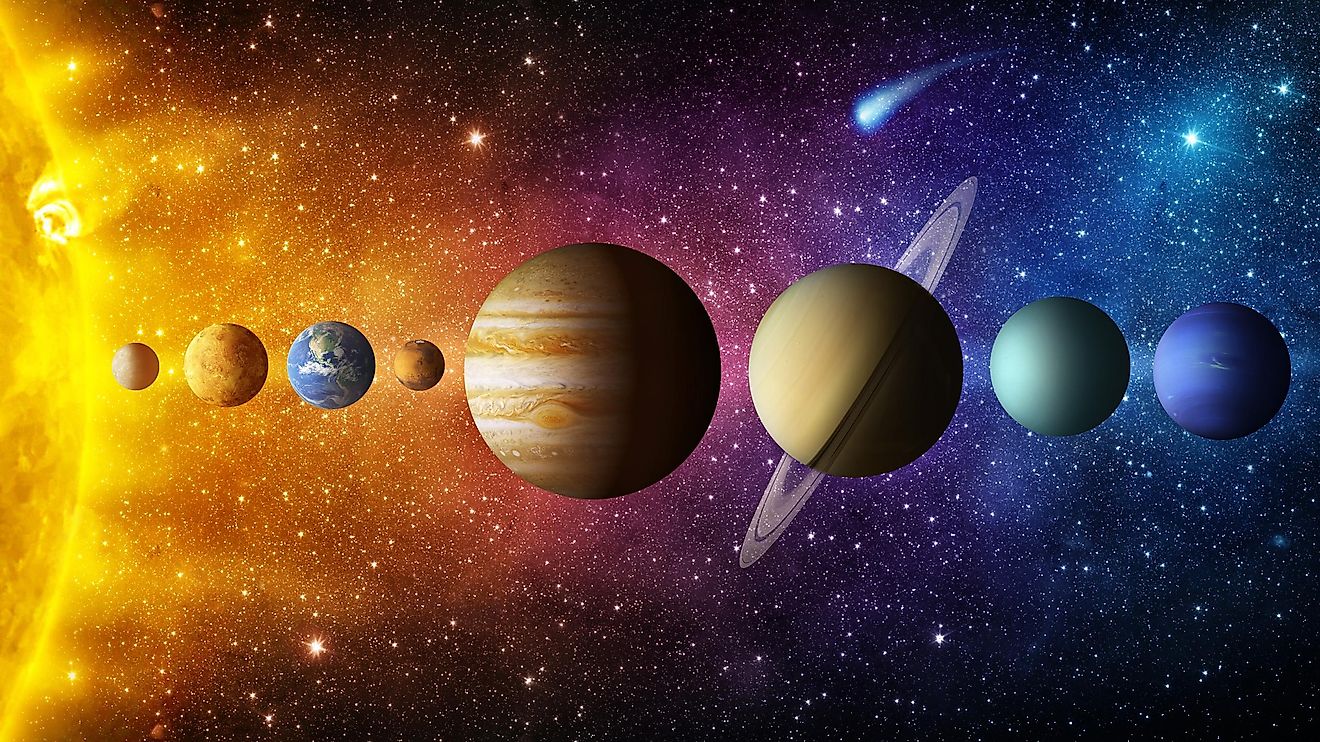
If a human could somehow survive on Neptune, they would not live long enough to celebrate their first birthday. While our home planet orbits the Sun in just over 365 days, Neptune claims the Solar System’s title for the longest year, taking nearly 165 Earth years to complete a single orbit. Because orbital distance and orbital speed dictate the length of a planetary year, the duration of an orbital cycle varies dramatically across our cosmic neighborhood. Mercury races around the Sun in just 88 days, while Neptune makes a journey so long that no human has ever lived through a complete Neptunian year.
What Impacts Year Length?

A planet's distance from the Sun is the main reason its year can be much longer or shorter than Earth's. The farther a planet lies from the Sun, the larger the path it must travel to complete an orbit. Distant planets also move more slowly because the Sun's gravitational influence is weaker at greater distances. The contrast between Mercury and Neptune makes the difference easy to picture. Mercury races along its orbit at roughly 106,000 miles per hour (171,000 km/h), while distant Neptune moves at only about 12,000 miles per hour (19,500 km/h). Neptune also has a vastly larger path to cover. The combination gives Mercury a year lasting less than three Earth months and Neptune one that stretches across nearly 165 Earth years.
Planets Ranked by Year Length
| Rank | Planet | Orbital Period |
|---|---|---|
|
1 |
Neptune |
164.8 Earth years |
|
2 |
Uranus |
84 Earth years |
|
3 |
Saturn |
29.4 Earth years |
|
4 |
Jupiter |
11.9 Earth years |
|
5 |
Mars |
687 Earth days |
|
6 |
Earth |
365.25 Earth days |
|
7 |
Venus |
224.7 Earth days |
|
8 |
Mercury |
88 Earth days |
Neptune
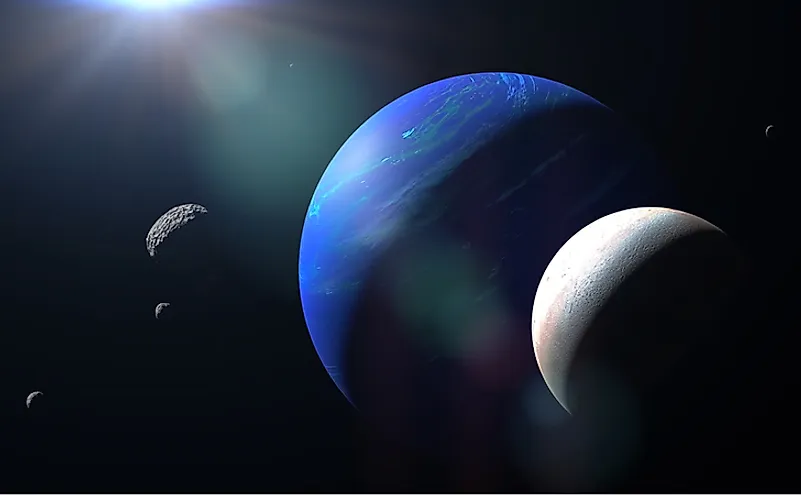
Neptune easily claims the Solar System title for the longest year, taking nearly twice as long as Uranus to complete an orbit. Situated an average of roughly 2.8 billion miles (4.5 billion km) from the Sun, this ice giant experiences seasons that each last more than 40 Earth years. The planet moves at an average orbital speed of only about 12,000 miles per hour (19,500 km/h).
At Neptune's distance, sunlight is roughly 900 times weaker than it is at Earth. Yet the planet is anything but quiet. Neptune possesses an active atmosphere with enormous storms and some of the fastest winds measured in the Solar System. Its year is difficult to comprehend on a human scale. Someone born at the beginning of a Neptunian year would have to live to nearly 165 years old to see the planet return to the same place in its orbit. In fact, Neptune was discovered in 1846 and did not complete its first full orbit since that discovery until 2011.
Uranus

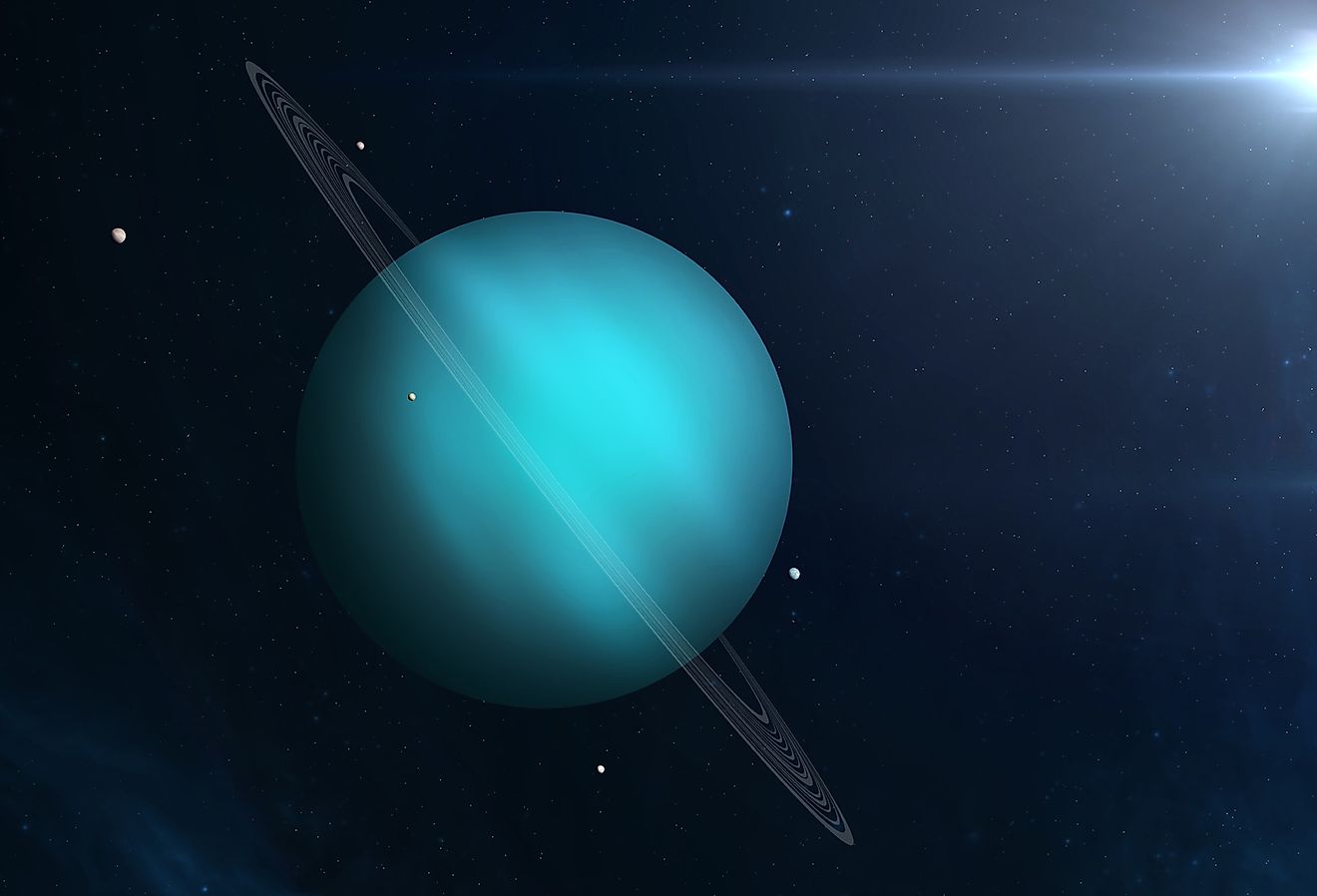
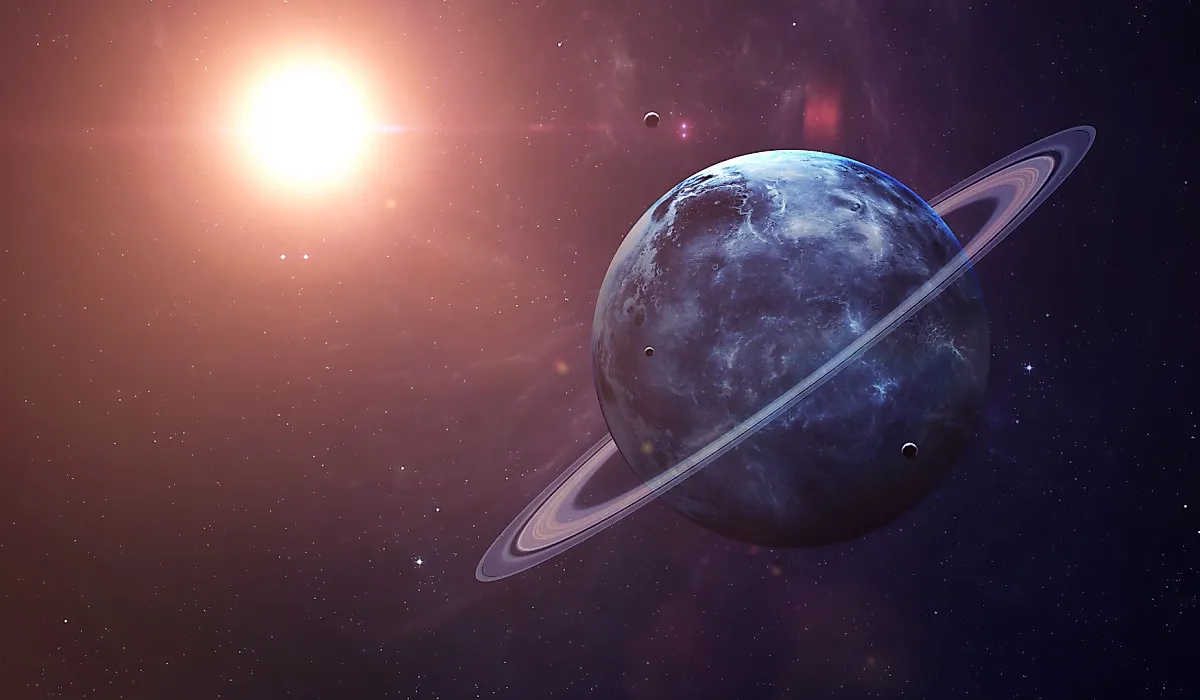
Uranus holds second place behind Neptune, taking about 84 Earth years to complete one circuit around the Sun. Its average distance from the Sun is nearly 1.8 billion miles (2.9 billion km), but its year is made even stranger by an extreme axial tilt of about 98 degrees. Uranus essentially rotates on its side.
That tilt produces some of the most unusual seasons in the Solar System. Each season lasts about 21 Earth years. Near the planet's solstices, one pole points almost directly toward the Sun while the opposite side experiences an extraordinarily long period of darkness. Some parts of a hemisphere can remain without sunlight for stretches approaching 42 years as Uranus makes its slow journey around the Sun. Anyone living through an entire Uranian year would be elderly by Earth standards before seeing the same season arrive twice. Even a single Uranian winter would last about as long as the first two decades of a human life.
Saturn

Saturn ranks third in orbital period, requiring about 29.4 Earth years to travel once around the Sun. Positioned an average of almost 900 million miles (1.4 billion km) away, Saturn moves at roughly 21,700 miles per hour (35,000 km/h) along its orbital path. Its long year produces seasons lasting more than seven Earth years each. These seasons also change the way Saturn's famous rings appear from Earth. As Saturn travels around the Sun, our viewing angle shifts until the rings periodically appear almost edge-on. Ring-plane crossings occur roughly every 13 to 15 years.
Imagine beginning elementary school during one Saturnian season and entering your teenage years before the next one had finished. The weather also changes with the seasons, although Saturn's atmosphere remains dominated by powerful winds and storms rather than anything resembling conditions on Earth.
Jupiter

Jupiter is the largest planet in the Solar System, and it requires almost 12 Earth years to complete its orbit. Situated roughly 484 million miles (779 million km) from the Sun, Jupiter travels at about 29,000 miles per hour (47,000 km/h). Unlike the more dramatically tilted planets, Jupiter's axis is tilted by only about three degrees. As a result, it experiences much less seasonal variation than Earth despite its much longer year. Its atmosphere remains ferociously active, driven in large part by heat escaping from inside the planet.
A child born at the beginning of a Jovian year would be approaching middle school by the time Jupiter finally returned to the same point in its orbit. Meanwhile, individual storms can survive for remarkable periods. The Great Red Spot, a storm larger than Earth, has been observed for centuries and has endured many Jovian years.
Mars

Mars marks the transition toward the inner Solar System, taking 687 Earth days to complete one year. It travels around the Sun at an average speed of about 54,000 miles per hour (87,000 km/h), which is roughly 13,000 miles per hour slower than Earth. Mars is also about 49 million miles (79 million km) farther from the Sun on average, giving it a much larger orbit to complete.
Mars has several similarities to Earth, including an axial tilt of about 25 degrees compared with Earth's 23.4 degrees. Consequently, Mars experiences familiar seasonal changes. The difference is their duration. A Martian year is nearly twice as long as an Earth year, so its seasons last for months longer than ours. They are not equal in length because Mars follows a more elliptical orbit than Earth. Robotic spacecraft on its surface must therefore endure long seasonal changes, including cold winters when temperatures can fall far below those found anywhere naturally on Earth's surface.
Earth

Earth serves as our standard reference point, completing one orbit in about 365.25 days. Traveling at an average speed of nearly 67,000 miles per hour (107,000 km/h) at a distance of about 93 million miles (150 million km) from the Sun, the planet circles its star almost twice during a single Martian year. The extra fraction of a day in Earth's year is one reason our calendar normally adds a leap day every four years, although century years have additional rules to keep the calendar aligned with the seasons.
Earth's axis is tilted by about 23.4 degrees, producing the cycle of seasons familiar to most people. This annual rhythm has influenced migration, plant growth, agriculture, and human calendars for thousands of years. What feels like the natural length of a year to us is simply the time required for one particular planet to circle one particular star.
Venus

Venus is the second planet from the Sun, taking just 224.7 Earth days to finish its orbital path. Moving at roughly 78,000 miles per hour (126,000 km/h), Venus completes a year in a little more than seven Earth months. The strange part is how slowly Venus rotates. It takes about 243 Earth days to complete one rotation relative to the distant stars, meaning its rotation period is actually longer than its year. Because Venus rotates backward compared with most other planets while simultaneously moving around the Sun, the time between one sunrise and the next is about 117 Earth days.
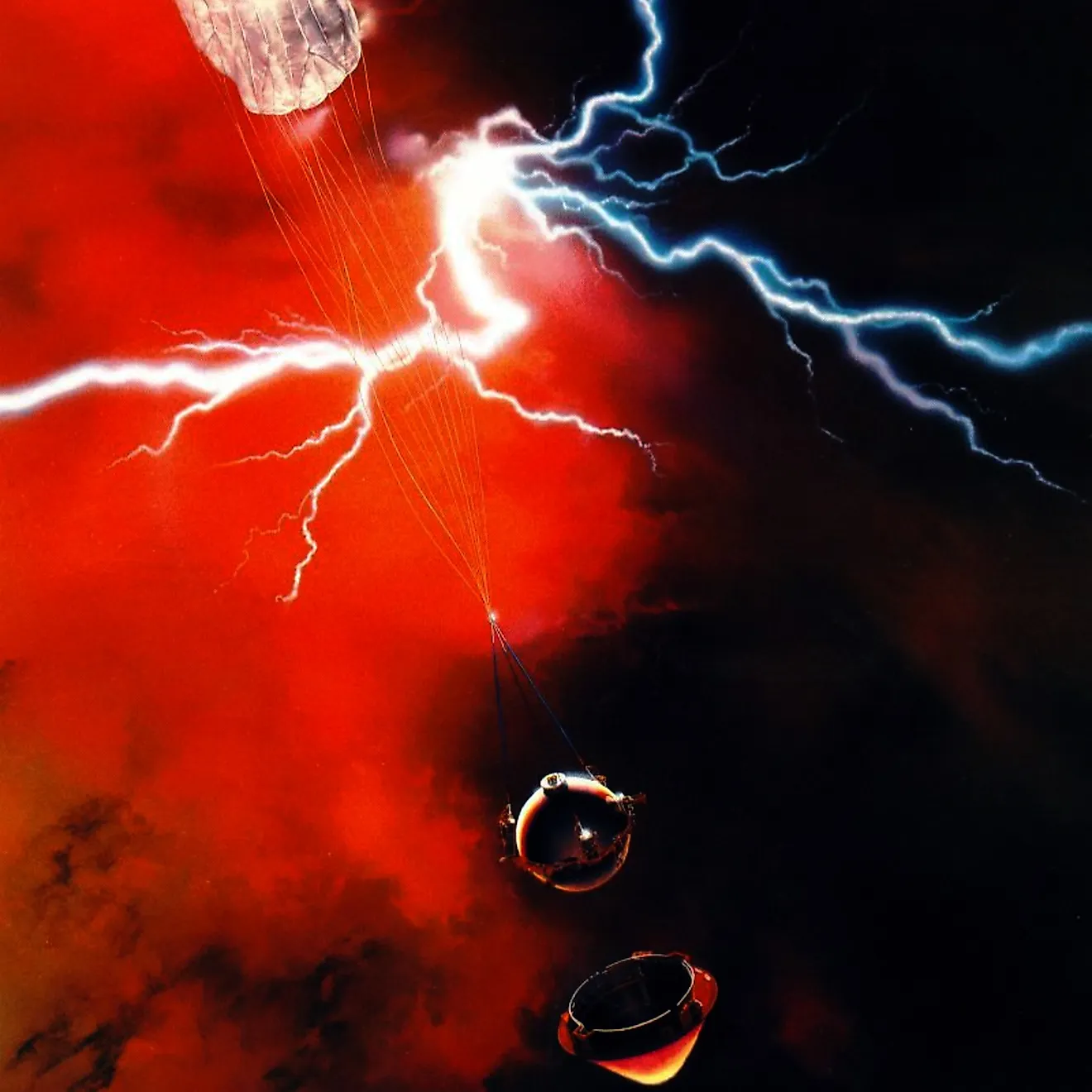
Anyone standing on the surface would have more immediate problems than keeping track of the calendar. Venus has a dense carbon dioxide atmosphere, surface pressure roughly 90 times that of Earth, and temperatures around 870 degrees Fahrenheit (465 degrees Celsius). A spacecraft sitting there must survive conditions hot enough to melt lead.
Mercury

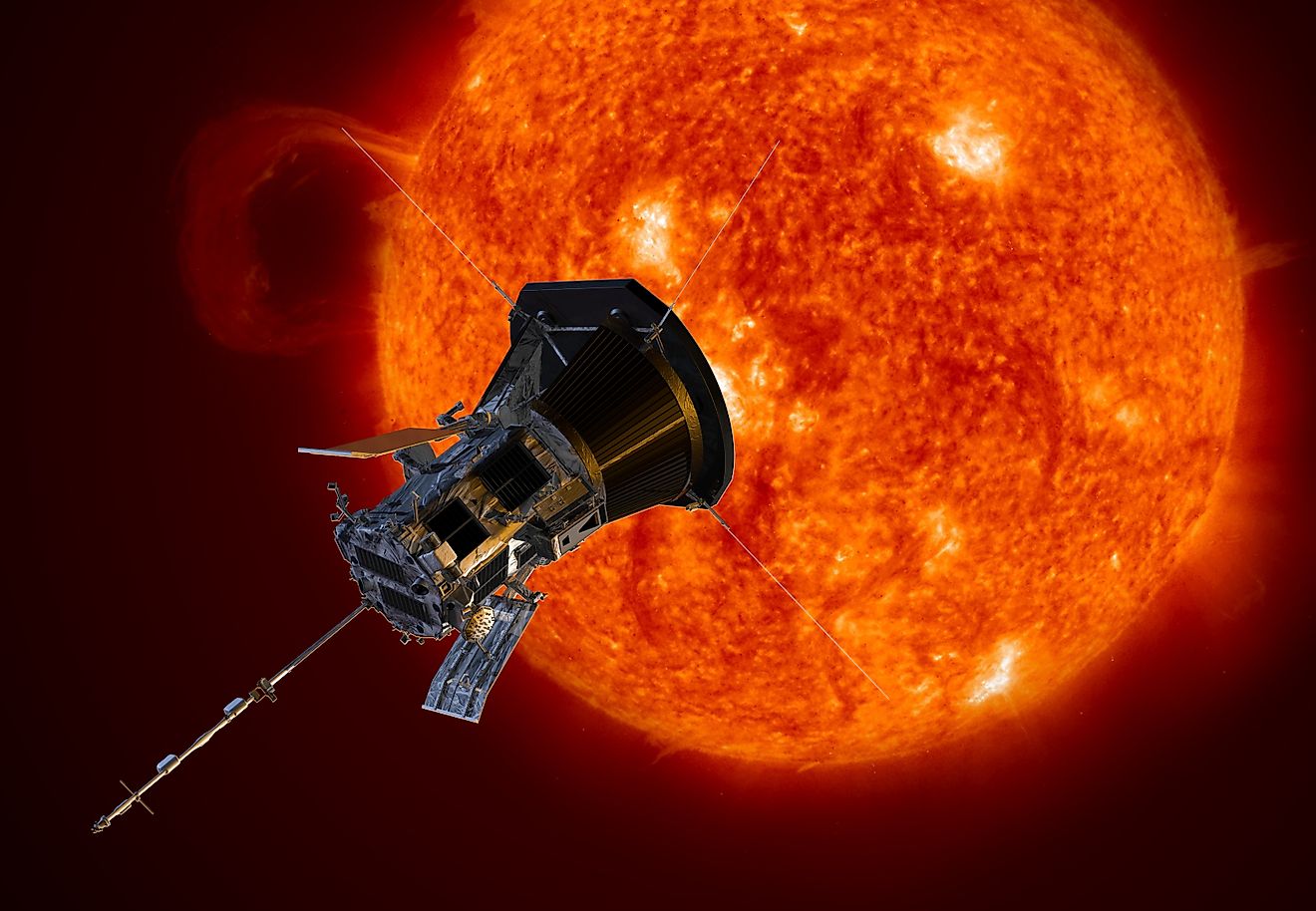
Mercury has the shortest year of any planet, completing an entire orbit of the Sun in only 88 Earth days. As the closest planet to the Sun, it experiences a powerful gravitational pull and races along its orbit at an average speed of roughly 106,000 miles per hour (171,000 km/h), nearly nine times Neptune's speed. Mercury also follows a noticeably elliptical orbit, moving from about 29 million miles (47 million km) from the Sun at its closest point to roughly 43 million miles (70 million km) at its farthest.
Its rotation is even stranger. Mercury takes about 59 Earth days to rotate once relative to the distant stars. It is locked in what astronomers call a 3:2 spin-orbit resonance, meaning Mercury rotates three times for every two trips it makes around the Sun. For someone attempting to keep a calendar there, the result would be deeply unfamiliar. Mercury experiences two years during the time between one solar noon and the next, making its 88-day year seem almost frantic compared with the century-spanning orbit of Neptune.
The Cosmic Clock
The difference between Mercury's 88-day sprint and Neptune's nearly 165-year journey shows just how misleading the familiar word "year" can be. Mercury could complete about 684 of its years during the time Neptune takes to finish one. Since astronomers discovered the distant planet in 1846, humanity has watched it complete only one full orbit of the Sun. Its second post-discovery Neptunian year will not end until well into the 22nd century. For humans, 165 years stretches beyond an ordinary lifetime. For Neptune, it is simply one trip around the Sun.