Which Moons Are Bigger Than A Planet?
Two moons in the Solar System are larger than a planet. Ganymede orbits Jupiter, and Titan orbits Saturn. Both moons are wider than Mercury, the smallest of the eight planets. Ganymede goes further still: the ocean buried beneath its ice crust may hold more water than sits on the entire surface of Earth. Neither moon qualifies as a planet, and neither one ever will, because the rule that settles the question has nothing to do with size.
Ganymede: The Moon Bigger Than Mercury

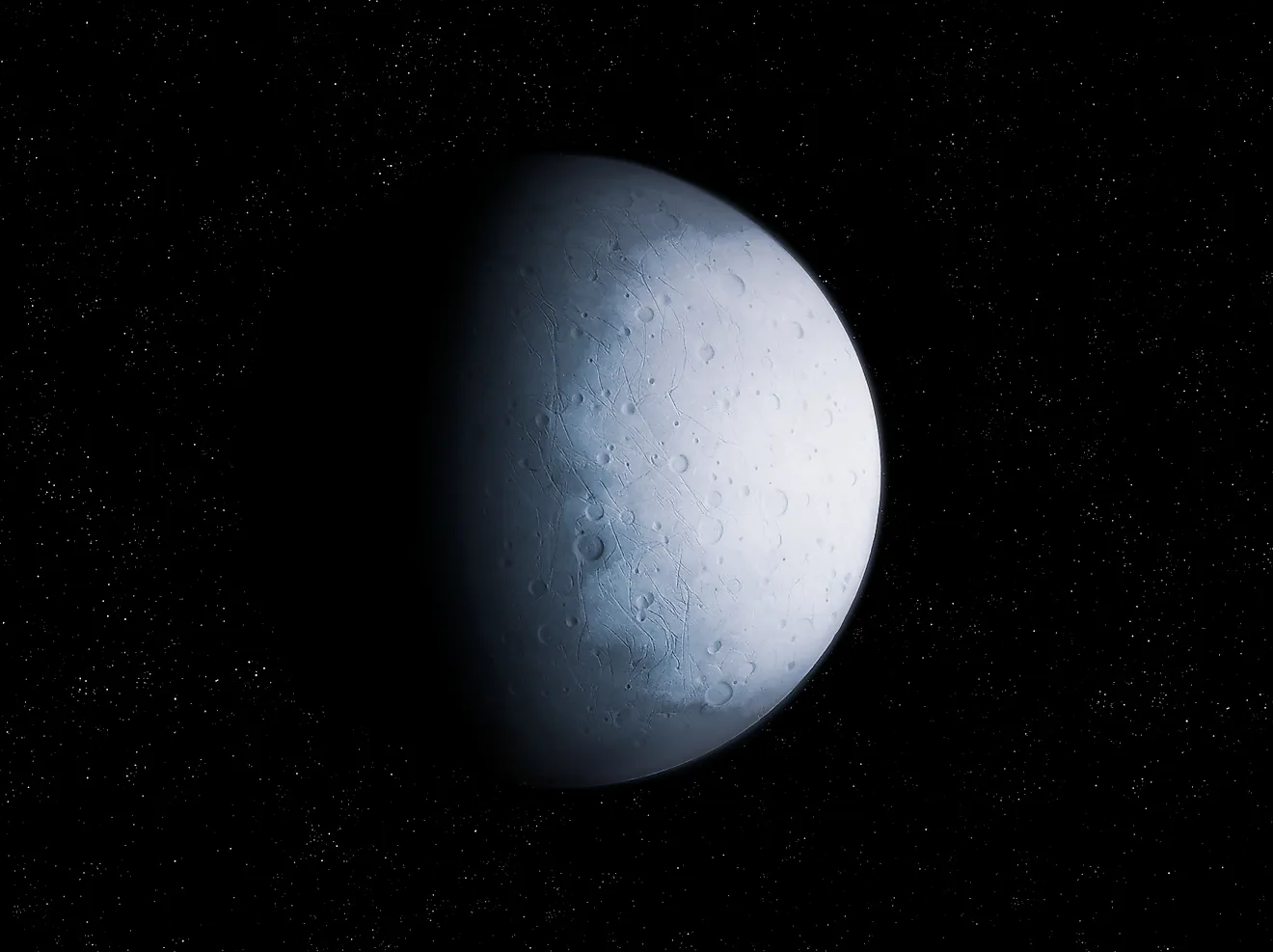
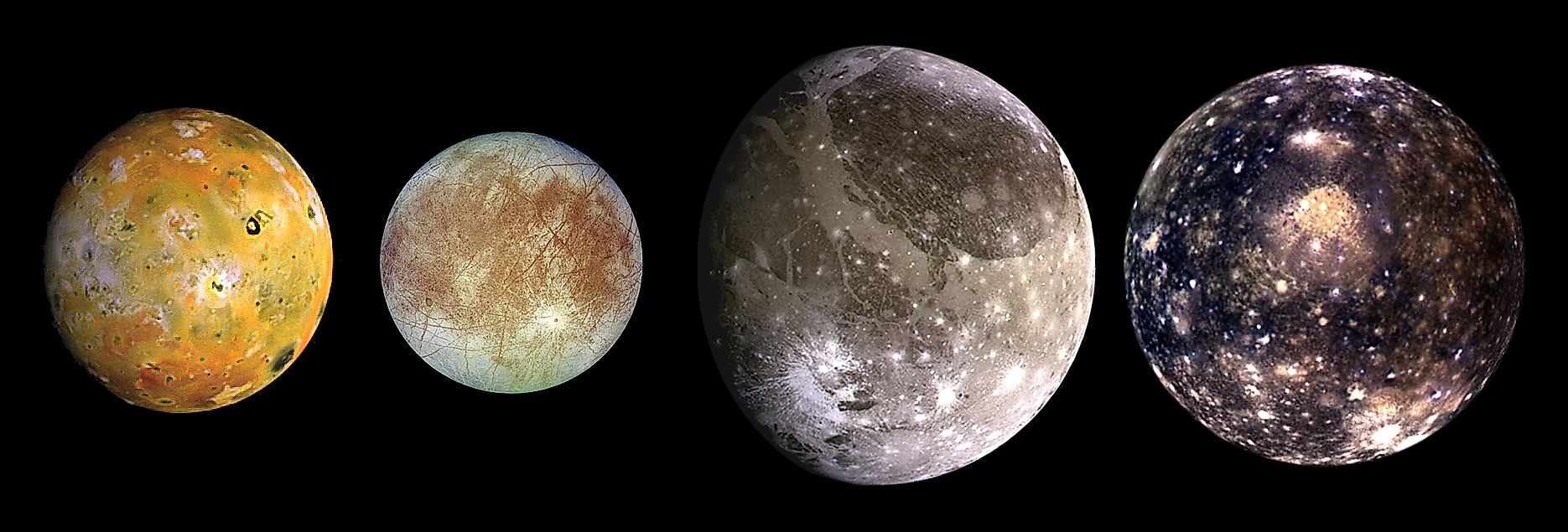
Ganymede, one of Jupiter's Galilean moons, was discovered by Galileo Galilei in 1610 along with its three siblings, Io, Europa, and Callisto. It is the largest moon in the Solar System. It is about 50% wider than our Moon and is larger than Mercury and the dwarf planet Pluto. Ganymede has an approximate radius (a straight line from the middle of a circle to any place on the circle's outer edge) of 2,631 kilometers (1,635 miles), while Mercury has a radius of 2,440 kilometers (1,516 miles). Ganymede's diameter (measured as a straight line across a circle, edge to edge) is around 5,260 kilometers (3,270 miles), while Mercury's diameter is 4,879 kilometers (3,032 miles).
For comparison, Pluto, which was formerly the ninth planet in our solar system and was reclassified as a dwarf planet in 2006, has a radius of 1,151 kilometers (715 miles) and a diameter of 2,377 kilometers (1,477 miles). Ganymede orbits Jupiter every 7.15 days and is 1,070,000 kilometers (665,000 miles) away from its parent planet. Like Earth, Ganymede has an iron-rich core, which generates its own magnetic field. Ganymede is roughly 50% rock and 50% ice and receives less than 1/30 of the sunlight Earth gets, making it much colder than our planet. Daytime surface temperatures on the moon range from -297 to -171 degrees Fahrenheit (-171 to -160 Kelvin).
An Ocean May Be Buried Under The Ice

This moon is a potential candidate for extraterrestrial life. Scientists think Ganymede has a huge underground ocean of salty water buried beneath a thick ice crust, which may contain more water than all the water on Earth's surface combined. NASA estimates that this ocean could be around 60 miles (100 kilometers) deep - roughly 10 times deeper than Earth's oceans. The ocean is thought to be buried beneath an ice crust roughly 95 miles (150 kilometers) thick.
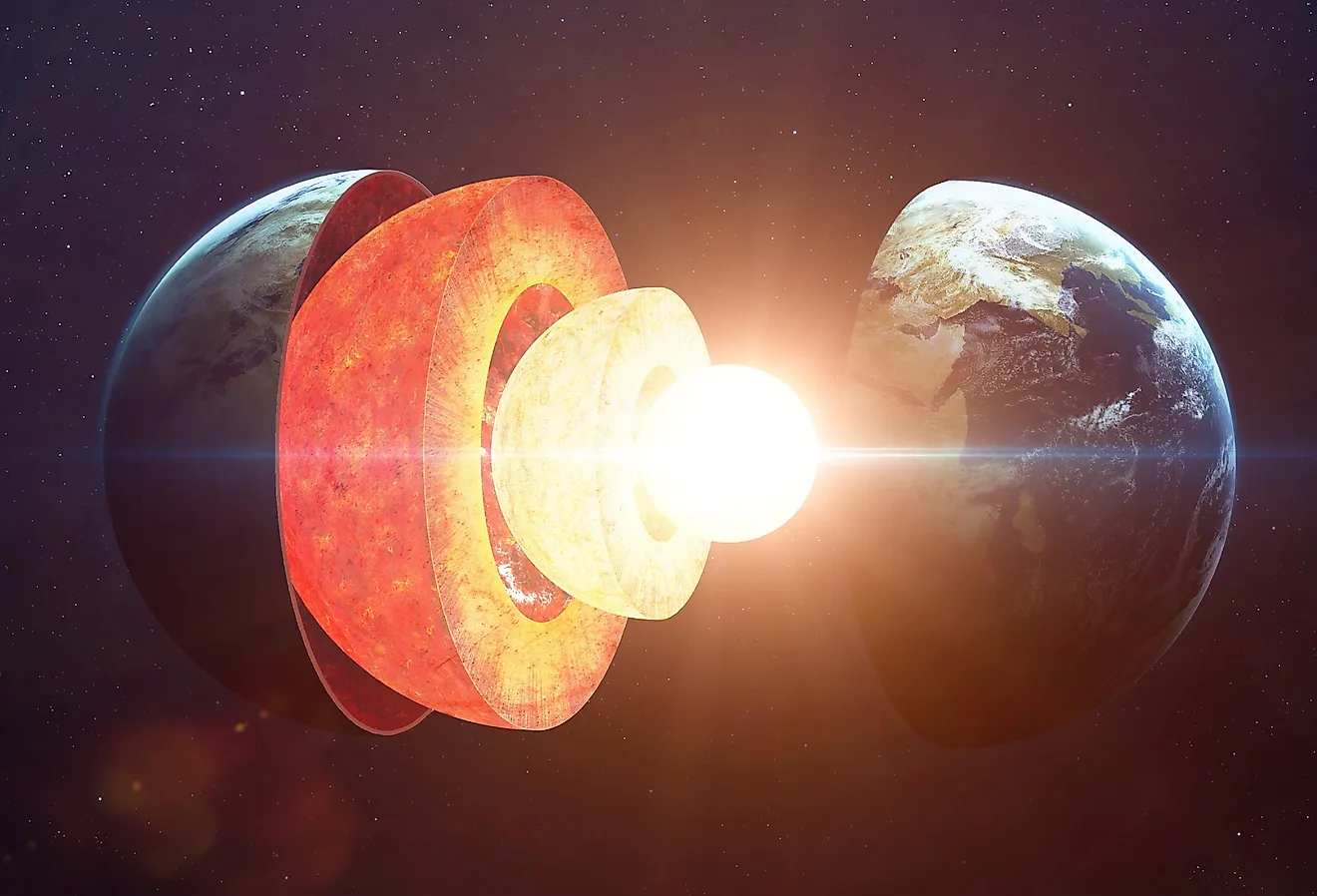
Some models suggest that Ganymede may not have one simple layer of ocean beneath its ice. Instead, several layers of ice and liquid water could be stacked on top of one another deep inside the moon, resembling a huge club sandwich. There could even be a layer of salty water at the bottom of the subsurface ocean. It is possible that simple life might have developed here, although there is currently no concrete evidence.
The Moon With Its Own Magnetic Field

Ganymede has another feature that sets it apart from any other known moon in our Solar System: it generates its own magnetic field. Earth has a magnetic field that helps surround our planet with a protective magnetic environment. Ganymede does something similar on a much smaller scale. Its magnetic field creates a magnetosphere around the moon and produces auroras, ribbons of glowing, hot gas around its polar regions. The discovery was a major surprise. Magnetic fields are common around planets, but Ganymede is the only moon known to generate one of its own. NASA's Galileo spacecraft discovered the moon's magnetosphere during its observations of Jupiter in the 1990s.
Could Humans Survive On Ganymede?

Ganymede's atmosphere is mostly made up of oxygen, along with hydrogen and possibly ozone (O3) - but that doesn't mean you could breathe on the icy moon. Its atmosphere is far too thin to provide enough oxygen or atmospheric pressure for humans to survive. Radiation from Jupiter would also make surviving on Ganymede basically impossible without some sort of protective apparatus.
Ganymede is tidally locked to Jupiter, meaning the same side always faces the planet. This means that, while standing on the side that faces Jupiter, the gas giant would loom enormous in the sky, appearing larger than the distant Sun. On this side of Ganymede, Jupiter would never rise or set. It would remain roughly in the same place in the sky as the Sun appeared to move across the sky. If you stood on the other side of Ganymede, you would not see Jupiter at all.
Titan Is Also Bigger Than Mercury

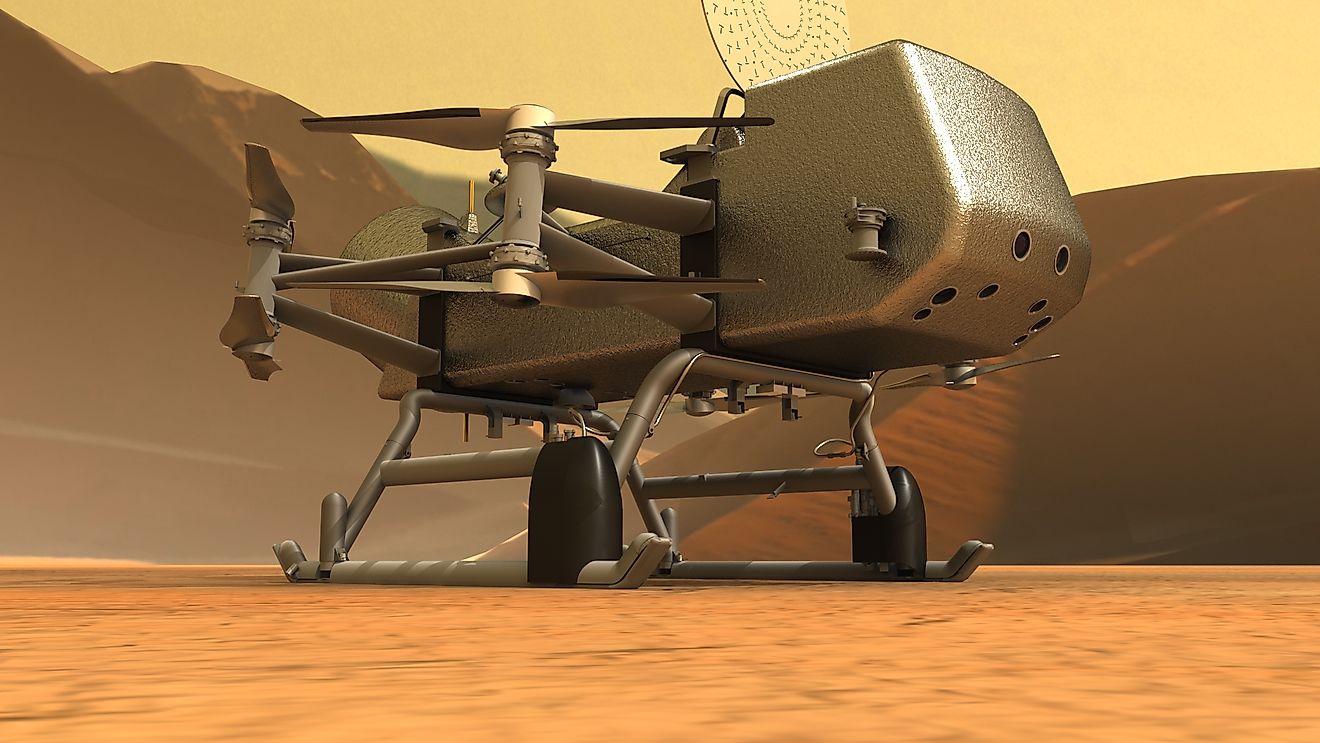
Saturn's largest moon, Titan, is the second-largest moon in the Solar System, and it is also larger than Mercury. Titan has a radius of 2,575 kilometers (1,600 miles) and a diameter of 5,149 kilometers (3,200 miles). Titan is the only known world beyond Earth with stable bodies of liquid on its surface. There are seas, lakes, rivers, clouds, and rain on Titan - but they are not made of water. Titan's seas and lakes are primarily made of liquid methane and ethane, along with smaller amounts of other compounds. This means that Titan's sea would look dark and oily, reflecting Titan's orange, sepia-hued sky. Beneath Titan's thick atmosphere is an icy landscape of mountains, valleys, and impact craters. Scientists also think there is a subsurface ocean of liquid water hidden beneath its frozen exterior.
So What Makes A Planet A Planet?

The International Astronomical Union's definition of a planet in our Solar System requires an object to orbit the Sun, have enough mass for its own gravity to make it into a spherical shape, and be gravitationally dominant enough to have cleared most other objects from its neighborhood.
This is why Ganymede isn't a planet. Although it is large enough to be round and is an enormous world in its own right, it orbits Jupiter rather than the Sun directly. This is also why Pluto was reclassified as a dwarf planet in 2006. While it does orbit the Sun and its mass is large enough to have made it largely spherical in shape, it has not cleared its path of most other objects. Mercury is smaller than Ganymede but meets the definition of a planet because it orbits the Sun and has cleared its orbital neighborhood.
How Can Moons Be Bigger Than Planets?

The giant gas planets Jupiter and Saturn formed in the colder outer regions of the Solar System, where there was plenty of gas, ice, rock, and other material. Over time, this material came together under gravity to create remarkably large satellites. Beyond a boundary astronomers call the frost line, water and other volatile compounds could freeze into solid grains, so the disk out there held far more solid building material than the warm inner Solar System ever did. Mercury formed close to the Sun, with much less to work with.
The Biggest Moon In The Solar System

Size was never the deciding factor. Ganymede is wider than Mercury, carries a magnetic field no other moon can match, and hides an ocean that may hold more water than every sea on Earth, and none of that makes it a planet. What settles the question is position and influence, namely, whether an object circles the Sun directly, and whether its gravity has cleared its orbital path of other objects. Ganymede fails both tests. Mercury, the smaller world, passes.
That gap between size and status is about to get a much closer look. The European Space Agency's Juice spacecraft, launched in 2023, will reach Jupiter in July 2031 and is scheduled to enter orbit around Ganymede in December 2034, the first spacecraft ever to orbit a moon other than our own. It will map the ice, probe the ocean beneath, and try to figure out how a moon generates a magnetic field at all. The mission ends in late 2035, when Juice exhausts its propellant and falls onto the ice it came to study.