Which Moon Is The Largest?
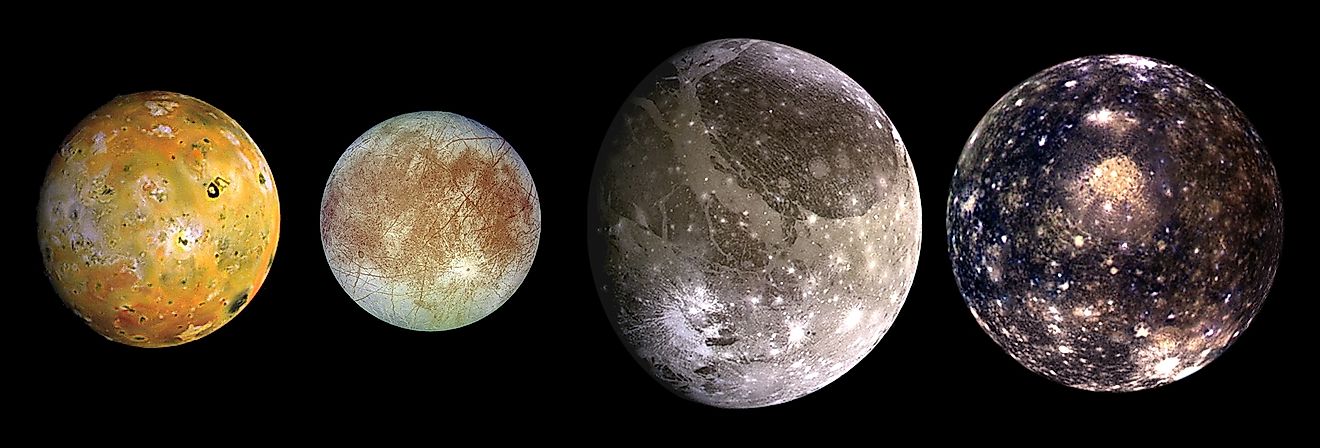
Beneath the ice of Jupiter's largest moon sits an ocean that may hold more water than every sea on Earth combined. That moon is Ganymede, the largest in the solar system, wider than the planet Mercury and the dwarf planet Pluto. Its radius reaches 1,635 miles, against 1,516 miles for Mercury. Roughly half of Ganymede is water ice, so it carries only about half the mass of the planet it outsizes. It is also the only moon known to generate a magnetic field of its own, complete with auroras near its poles. No other moon in the solar system comes close.
Discovery

Ganymede was among the first moons ever found orbiting another planet. It was spotted on January 7, 1610, by none other than Galileo Galilei, the astronomer from Pisa in modern-day Italy. He used a homemade telescope to observe Jupiter when he noticed three lights around it. By January 13, he could see four. At first, he believed he was seeing stars until he noticed they were moving in a different direction from other stars. Within a few days, he confirmed that these were moons and gave them the Roman numerals I, II, III, and IV. These lent credence to the theory that the celestial bodies did not orbit Earth but the Sun instead.
The name came later, and not from Galileo. In Greek mythology, Ganymede was cupbearer to the gods of Olympus. Zeus carried him there, and the Romans called that god Jupiter. The German astronomer Simon Marius published the name in 1614 at the suggestion of Johannes Kepler, though astronomers had long referred to the moon as Jupiter III before it came into general use.
Geology

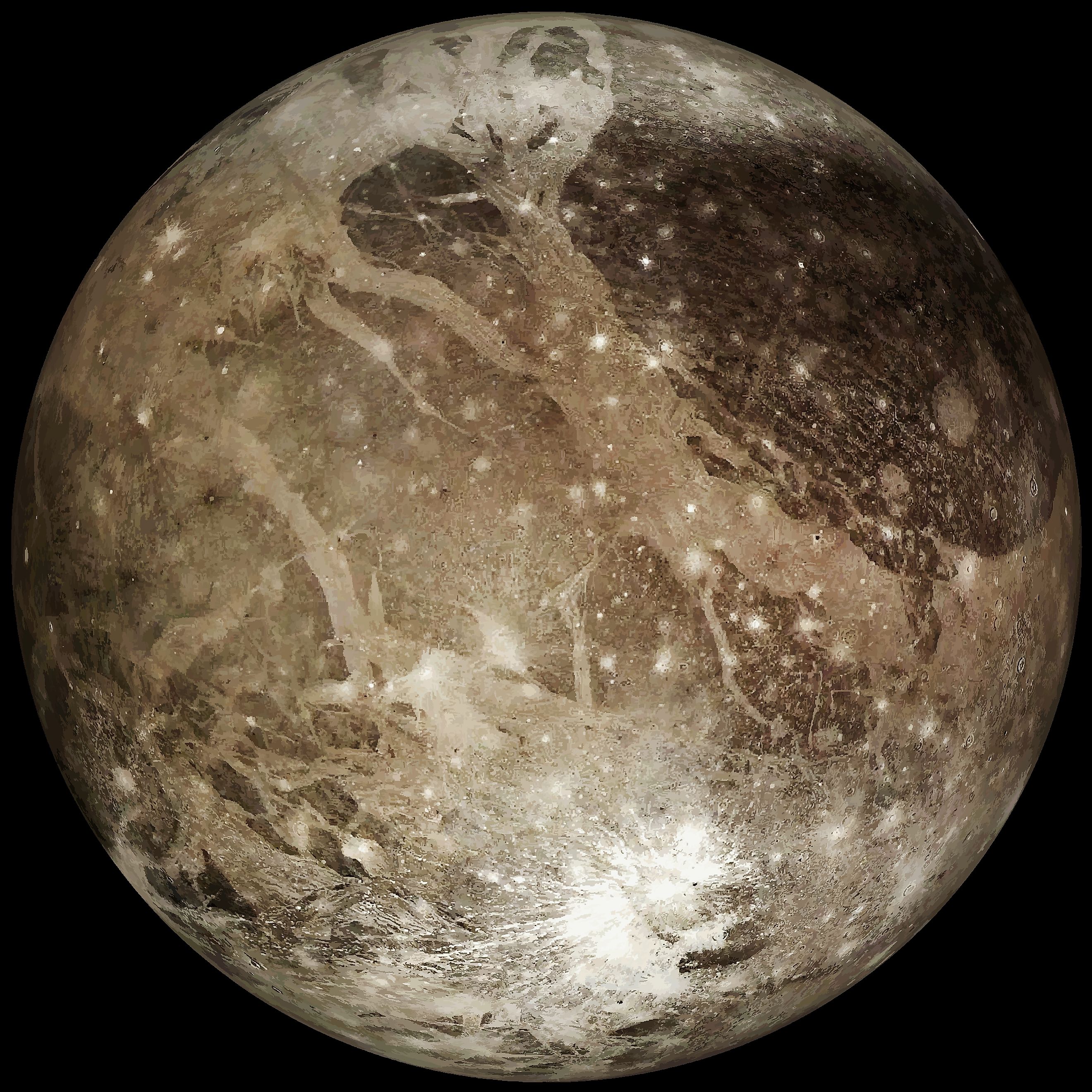
Ganymede formed around 4.5 billion years ago, out of the gas and dust left over around the young Jupiter. Its core is metallic, wrapped in a rocky mantle and a very cold crust. The surface is not geologically active today, but it records a violent past. Two kinds of terrain cover it. Dark, heavily cratered ground covers about 40 percent of the moon, and brighter terrain, cut with grooves and ridges, covers the rest.
The dark regions host the majority of impact craters, while the grooved ground was pulled apart by tectonic stresses long ago. Some of those ridges stand 2,000 feet high. Unlike the craters on the Moon or Mercury, the craters on Ganymede are shallow, possibly due to its soft crust. That crust is ice, and the craters flatten as they settle into it. In 2004, scientists found lumps beneath the surface of Ganymede that could be rock formations held up by the icy shell rather than sinking to the bottom. Surface temperatures range from minus 297 to minus 171 degrees Fahrenheit. Even at its warmest, Ganymede is more than 40 degrees colder than the lowest temperature ever recorded on Earth.
Ocean

Underneath the icy crust of Ganymede, there may be a saltwater ocean. NASA's Hubble Space Telescope analyzed auroral belts at the North and South Poles. Their movement led scientists to believe there must be a large amount of water underneath the crust. This ocean would be buried beneath a 95-mile crust and could be 60 miles thick, roughly ten times deeper than Earth's oceans. It is thought to hold more water than all the water on Earth's surface. That raises the obvious question about what could be living just under the ice.
Is there life on Ganymede?

A NASA-funded team modeled Ganymede's interior in 2014 and found that its saltwater ocean may sit directly on rock. Places where water and rock meet matter for the question of origins, and one leading idea holds that life on Earth began at hot vents on the seafloor. Before that work, Ganymede's rocky core was thought to be sealed beneath a layer of high-pressure ice, which posed a problem for habitability. The ocean is enormous, and the pressures at its base are extreme, so dense ice was expected to form down there.
Adding salt to the model changed the answer. Salty water is heavier than fresh water, and at those pressures the saltiest liquid becomes dense enough to sink past the ice and settle against the rock. The team described the interior as layers of ice and ocean stacked like a club sandwich, with the lightest ice on top and the heaviest liquid at the very bottom. Anything alive in that ocean would most likely be single-celled.
Magnetic field

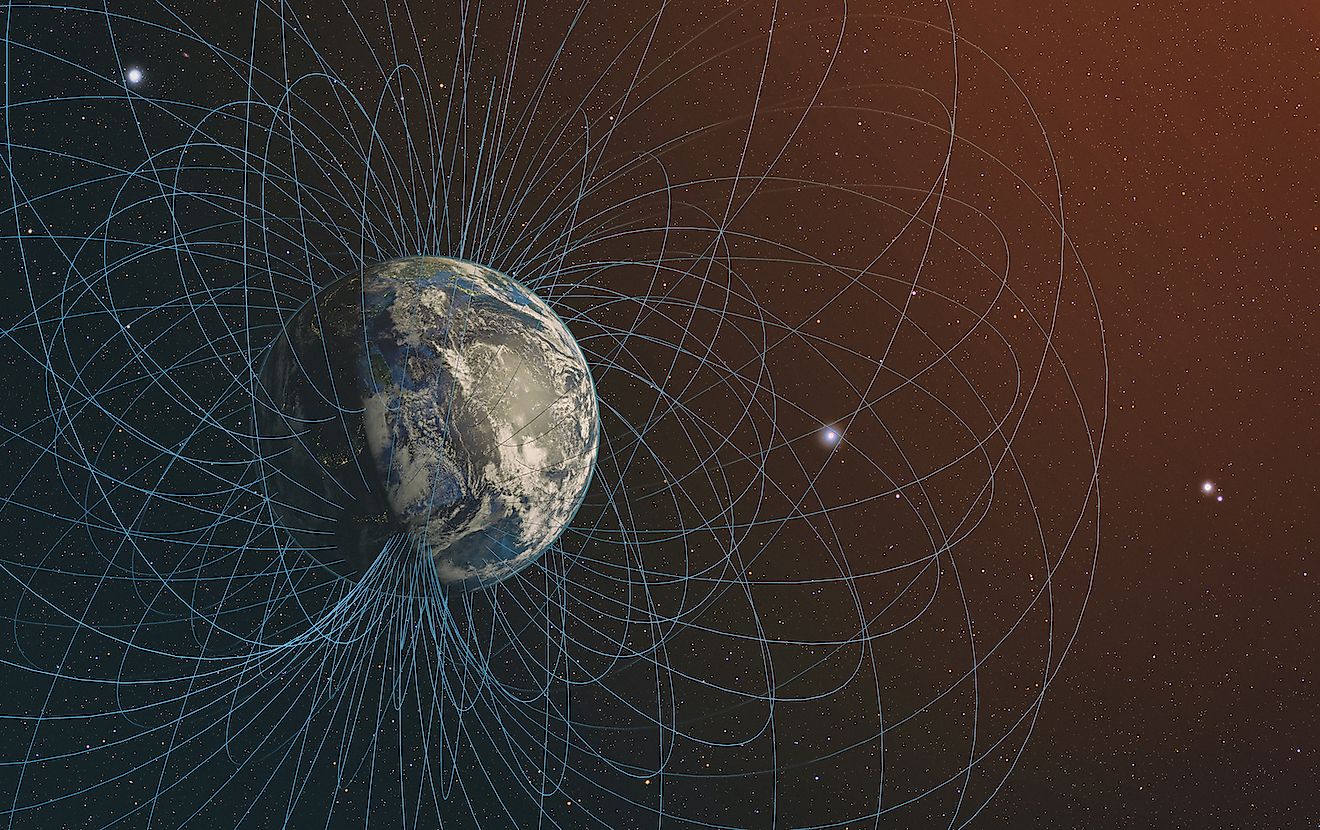
The other unique feature of Ganymede is that it is the only moon in the solar system with its own magnetosphere. This field was discovered in 1996 by NASA's Galileo spacecraft, named after the man who first discovered Ganymede. The field creates the auroras of hot gas around its north and south poles. Ganymede's magnetic field lies within Jupiter's much larger one, since the moon is only 665,000 miles from the gas giant. Any shift in Jupiter's field also affects Ganymede's, causing the auroras to rock back and forth across the surface. A 2018 modeling study of ion dynamics in Ganymede's magnetosphere concluded that the field shapes how the surface weathers, feeds the thin envelope of gas around the moon, and drives the ultraviolet auroras near its poles. The mechanisms behind all three are still poorly understood.
Atmosphere

The Hubble Space Telescope also found that Ganymede has a thin atmosphere of oxygen, which rises from the ice-covered crust of the moon. In 1995, Hubble detected ozone locked in that surface ice. Ozone consists of three oxygen atoms, and on Earth, it protects the planet from harmful radiation from the Sun. The amount on Ganymede is tiny by comparison, a small fraction of what is destroyed over Antarctica each winter. Jupiter's magnetic field sends out charged particles, which eventually strike the surface of Ganymede. Some of these hit the icy surface and disrupt water molecules, which in turn produce ozone as a byproduct.
Resonance

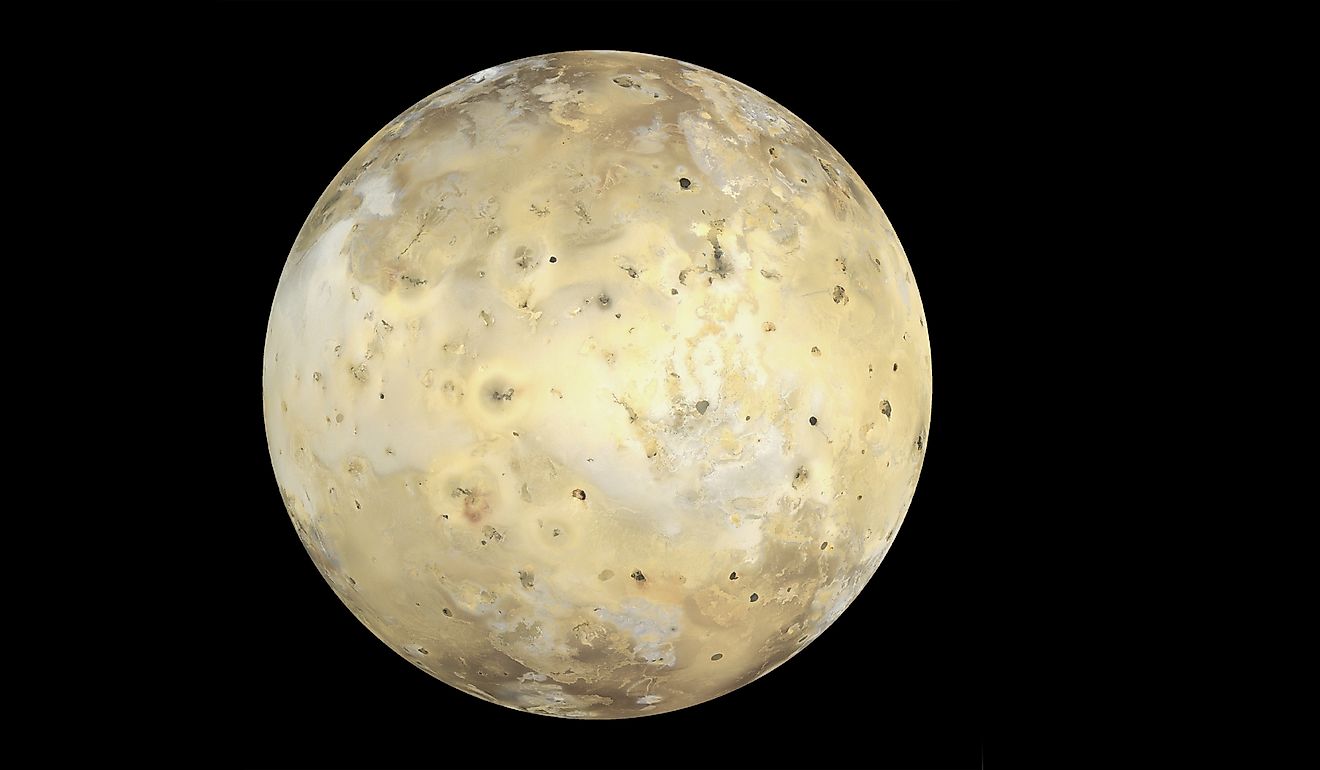
Ganymede orbits Jupiter in about seven Earth days, while Jupiter completes an orbit around the Sun every 12 Earth years. Our own Moon needs roughly 27 days to circle Earth, so Ganymede laps a far bigger planet in about a quarter of that time. Along with the moons Io and Europa, these three moons orbit Jupiter in a resonance. This means that for every time Ganymede orbits Jupiter, Europa completes two orbits, and Io completes four orbits. Over time, most large moons settle into near-circular orbits. Io, Europa, and Ganymede have not. The three line up with one another at the same points again and again, and the small gravitational tugs that result hold their orbits in an elliptical shape rather than a circular one.
The Continuing Fascination With Ganymede

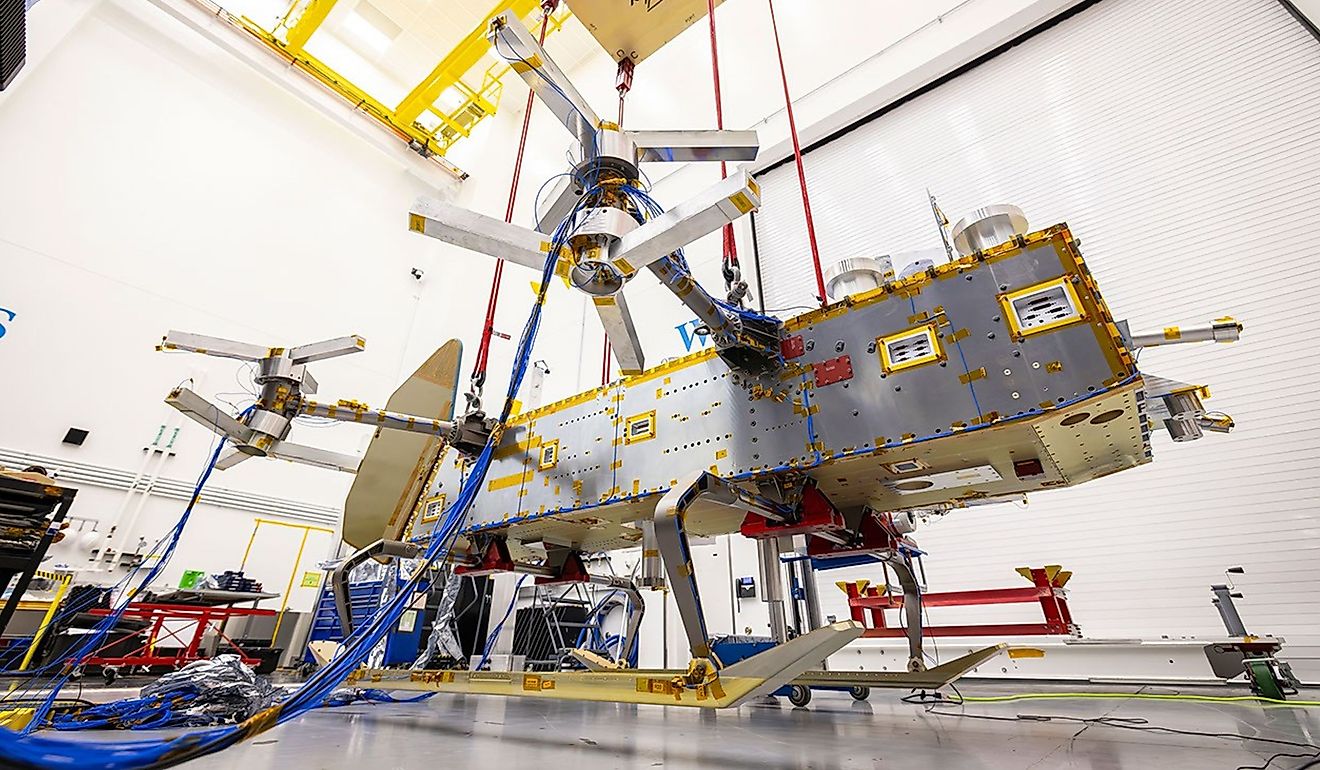
Ever since Galileo first spotted it in 1610, Ganymede has broadened the scope of what a moon can be. A magnetic field, an oxygen atmosphere, and a buried sea are planetary traits, and this one moon has all three. The European Space Agency's Juice spacecraft is on its way for a closer look, with arrival at Jupiter scheduled for 2031 and orbital insertion around Ganymede in 2034, which would make it the first spacecraft ever to circle a moon other than our own.