Which Moon Hides The Biggest Ocean Under Its Ice?
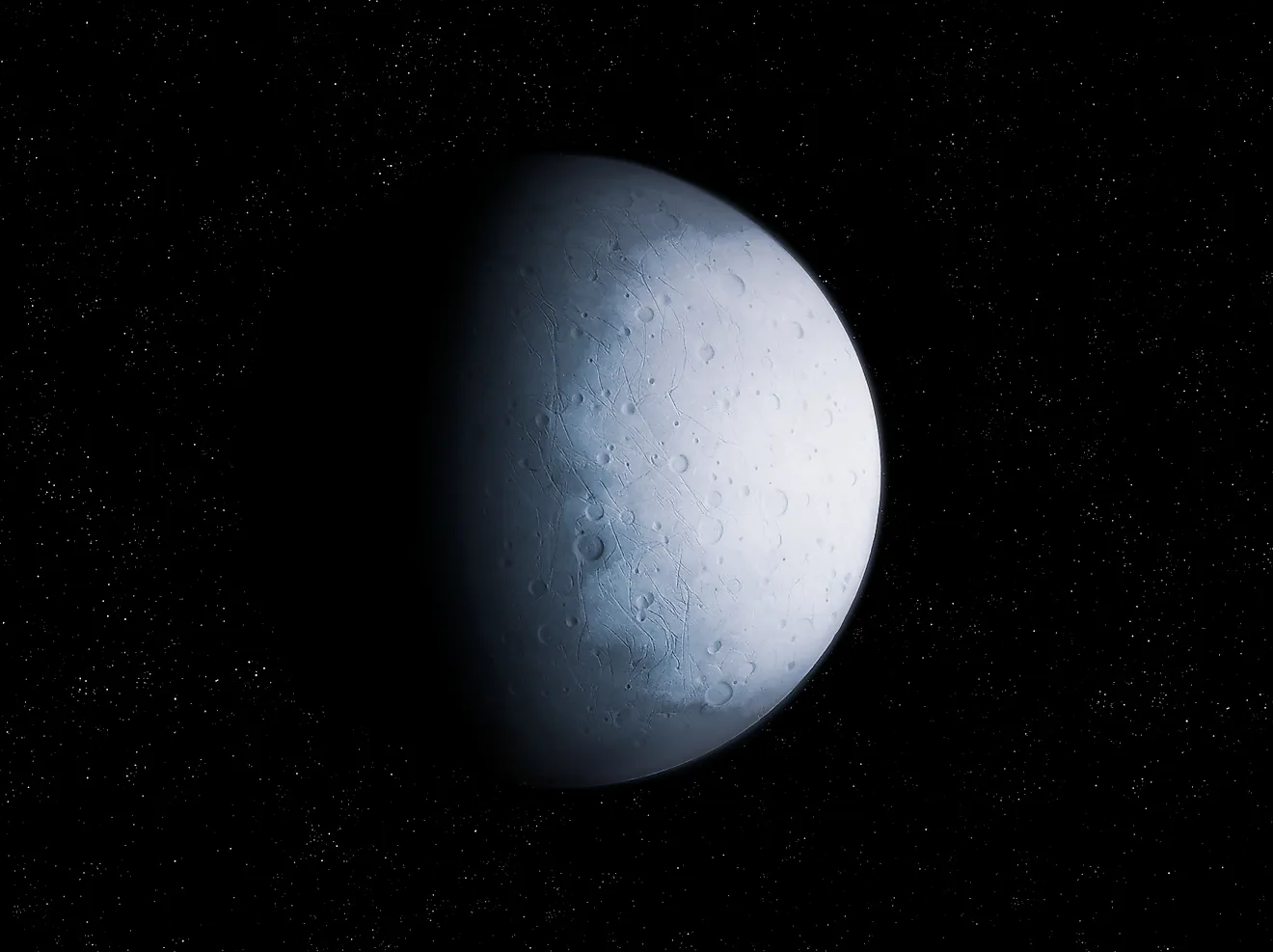
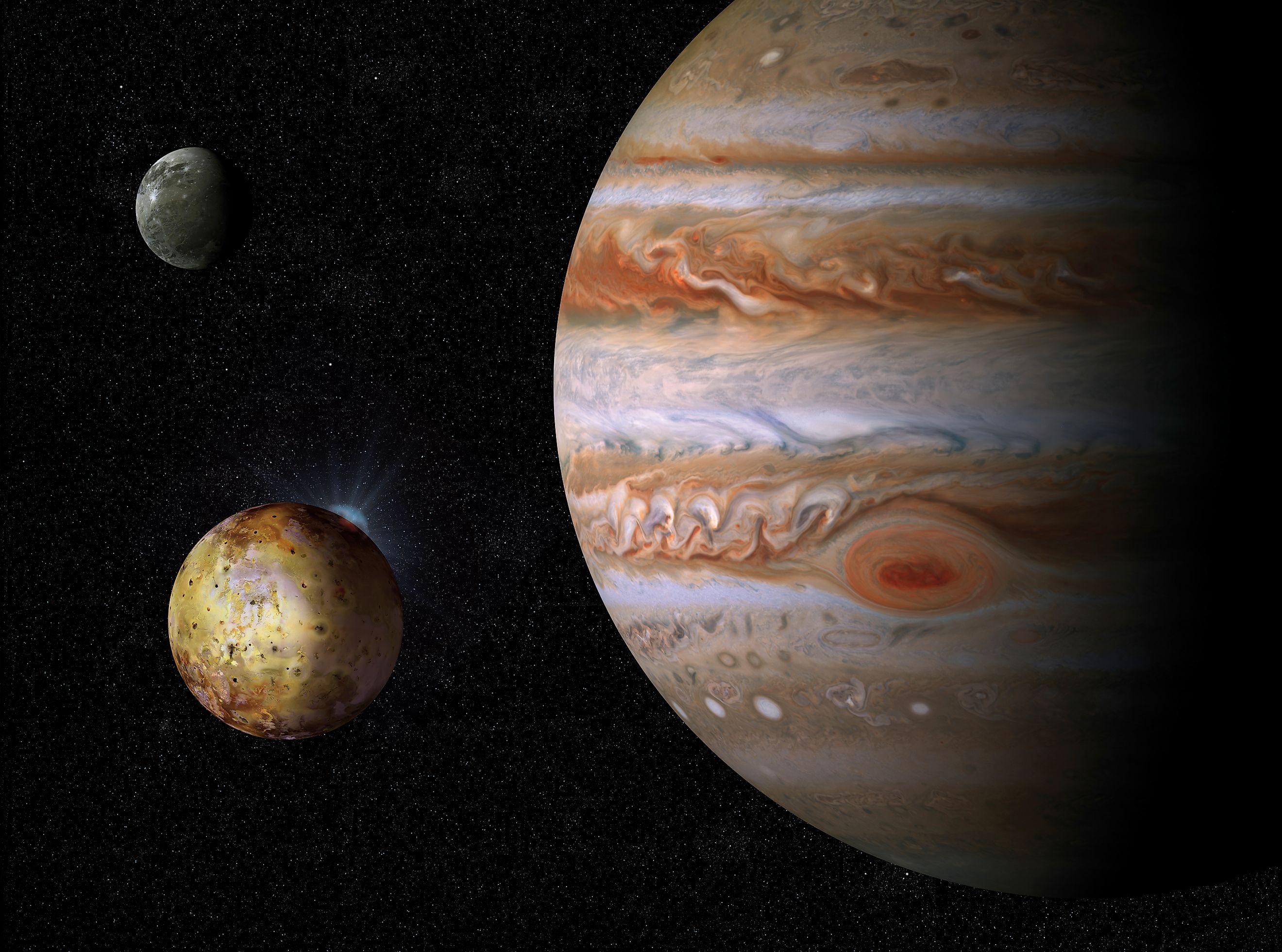
Jupiter's moon Ganymede may hold more water than sits on the entire surface of Earth, sealed in a salty sea beneath 95 miles (150 kilometers) of ice. Ganymede is already the largest moon in the solar system, wider than the planet Mercury and more than twice the width of the dwarf planet Pluto. What draws astrobiologists to it is what NASA believes lies beneath the frozen shell: a global ocean roughly 60 miles (100 kilometers) deep, kept liquid on a world where the sunlit surface can reach -297 degrees Fahrenheit (-183 Celsius). No spacecraft has ever touched that water, and no camera has seen it. The evidence that it exists came from watching the moon glow.
Bigger Than Mercury, and Still a Moon

Ganymede measures 3,273 miles (5,268 kilometers) across. That makes it wider than Mercury, which spans 3,032 miles (4,879 kilometers), and about three-quarters the width of Mars. Size alone does not promote it out of the moon category. Ganymede carries less than half of Mercury's mass, because roughly half of its bulk is water ice rather than rock and metal. It is still the largest moon in the solar system by a comfortable margin.
It is also the only moon known to generate a magnetic field of its own. NASA's Galileo spacecraft detected the magnetosphere during a 1996 flyby, the first ever found around a moon, and returned further magnetic measurements in 2002 that hinted at salt water underneath. Ganymede is tidally locked, so the same hemisphere faces Jupiter permanently while the opposite side never sees the planet at all.
The Four Worlds Galileo Found in 1610

Galileo Galilei pointed a telescope at Jupiter in January 1610 and noticed four points of light that shifted position from one night to the next. Those four are Io, Europa, Ganymede, and Callisto, now known as the Galilean moons. Every one of them is larger than Pluto. Their discovery was the first observational proof that something in the sky orbited a body other than Earth, which is why it caused the trouble it did.
The count around Jupiter has climbed steeply since. The International Astronomical Union recognized 101 Jovian moons in March 2026, with additional discoveries announced since and awaiting formal numbering. Nearly all of the recent additions are irregular objects a couple of miles across, captured asteroids and fragments rather than worlds. The Galilean four remain in a category of their own.
Why Everything Depends on Liquid Water

Water does several useful things at once, which is why the search for life beyond Earth keeps circling back to it. It is a polar molecule, making it an unusually effective solvent for the chemical reactions biology runs on. It stays liquid across a wide temperature band. And it is assembled from hydrogen and oxygen. Hydrogen is the most abundant element in the universe, and oxygen is the most abundant element in Earth's crust, so the raw materials are everywhere.
Water is not the only item on the checklist. Researchers also look for the elements that build organic molecules. Carbon and nitrogen head that list, with phosphorus close behind. Beyond chemistry, life needs an energy source to drive the reactions, which on Earth has usually meant sunlight. Usually, but not always.
Ice Floats, and That Is the Whole Trick

Water has one more property that matters enormously here. It is less dense as a solid than as a liquid, which almost nothing else in nature does. When a body of water loses heat, ice forms on the surface and remains there, insulating everything below it rather than sinking and freezing the entire column solid. Every lake that survives a winter with fish in it works on this principle.
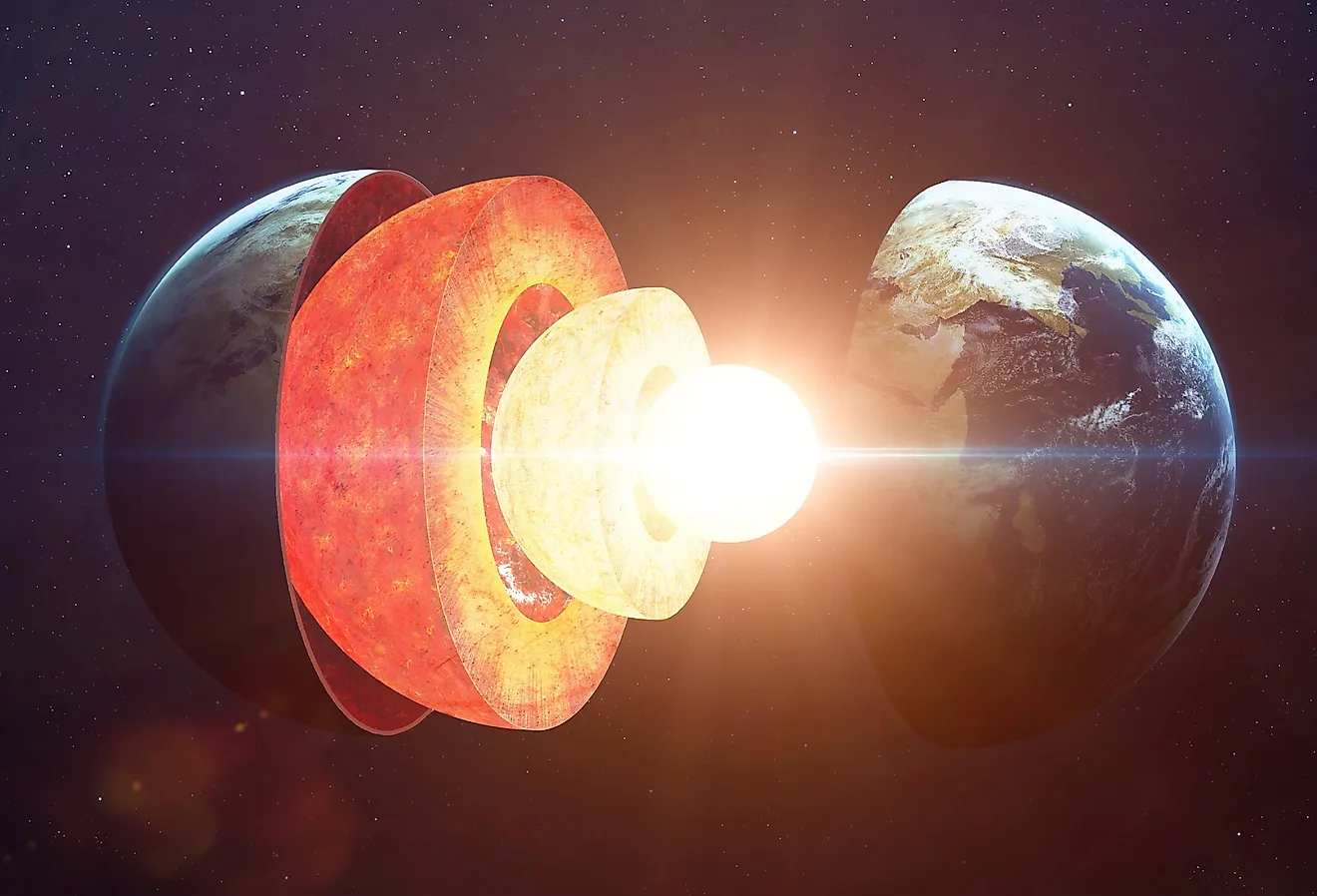
Now, scale that up to a moon. Ganymede's outer shell is mostly ice, about 95 miles (150 kilometers) thick. Commercial airliners cruise around seven miles up, so the ice on Ganymede is more than thirteen times the height of everything a passenger jet flies through. Under that much insulation, the moon's internal heat and the pressure of the overlying ice can keep water liquid even though the surface never warms past about -171 degrees Fahrenheit (-113 Celsius).
The Aurora That Gave the Ocean Away

No instrument built can see through 95 miles of ice, so the case for Ganymede's ocean had to be made indirectly. The moon's magnetic field drives aurorae, ribbons of electrified gas circling its poles, produced by the same basic process that lights up polar skies on Earth. Ganymede also sits deep inside Jupiter's own immense magnetic field. When Jupiter's field shifts, Ganymede's aurorae rock back and forth in response.
Joachim Saur of the University of Cologne calculated how much that rocking should differ with and without a buried sea. Salt water conducts electricity, so a hidden ocean would generate a secondary magnetic field that opposes Jupiter's and dampens the motion. Using Hubble Space Telescope observations taken in 2010 and 2011, his team measured a rocking of roughly 2 degrees rather than the 6 degrees a dry moon would show. The finding was published in March 2015 and stands as the strongest evidence yet for the ocean.
Sixty Miles of Water, in Permanent Darkness

Estimates put Ganymede's ocean at around 60 miles (100 kilometers) deep. Challenger Deep is the lowest point in any ocean on Earth and bottoms out just under seven miles down. Ganymede's sea is close to ten times deeper than the deepest water on this planet. NASA's assessment is that it contains more water than everything on Earth's surface combined. No light reaches any of it. Sunlight stops at the ice, and Jupiter's neighborhood receives less than a thirtieth of the sunlight Earth does before the ice even gets a chance to block it. Anything living in that ocean would have to make a living some other way.
Earth offers a precedent. Hydrothermal vents on the ocean floor support dense communities that never see the sun, where bacteria pull energy from sulfur compounds and larger animals feed on the bacteria. A widely held hypothesis holds that life on Earth started at vents like those. Whether Ganymede's ocean touches rock at all is the unresolved question. Some interior models place a layer of high-pressure ice at the bottom of the sea, which would seal the water off from the mineral chemistry that makes vent ecosystems possible.
Ganymede Is Not the Only Ocean Out There

Ganymede probably holds the largest subsurface ocean in the solar system, though Callisto and Saturn's moon Titan are serious candidates, and every one of these volume estimates carries wide uncertainty. What is no longer in dispute is that Earth's ocean is not the biggest one around. Europa remains the more promising target for life despite having a smaller ocean. Its ice shell runs no more than about 15 miles (25 kilometers) thick, and its water is thought to sit directly against warm rock, an arrangement Ganymede may lack. Saturn's small moon Enceladus goes further still and sprays its ocean into space through fractures at its south pole, which means a spacecraft can sample that water without ever landing.
What Juice Will Look For

The European Space Agency launched the Jupiter Icy Moons Explorer, known as Juice, on April 14, 2023. The spacecraft is expected to reach the Jupiter system in July 2031, spend three years making close flybys of the icy moons, and in December 2034, enter orbit around Ganymede. That maneuver will make it the first spacecraft in history to orbit a moon other than our own.
Juice carries ice-penetrating radar and a magnetometer designed specifically to read what the crust is hiding, alongside a laser altimeter that will measure how much the surface flexes under Jupiter's pull. A shell riding on liquid water flexes differently from a solid one. If the instruments confirm what Hubble implied, the largest body of liquid water in the solar system will turn out to be nowhere near a planet. It will be a hundred kilometers of salt water in total darkness, locked under an ice sheet no one has landed on, and the question of whether anything is alive in it will still be waiting for an instrument built to answer it.