What The Psyche Mission Could Tell Us About Planetary Cores
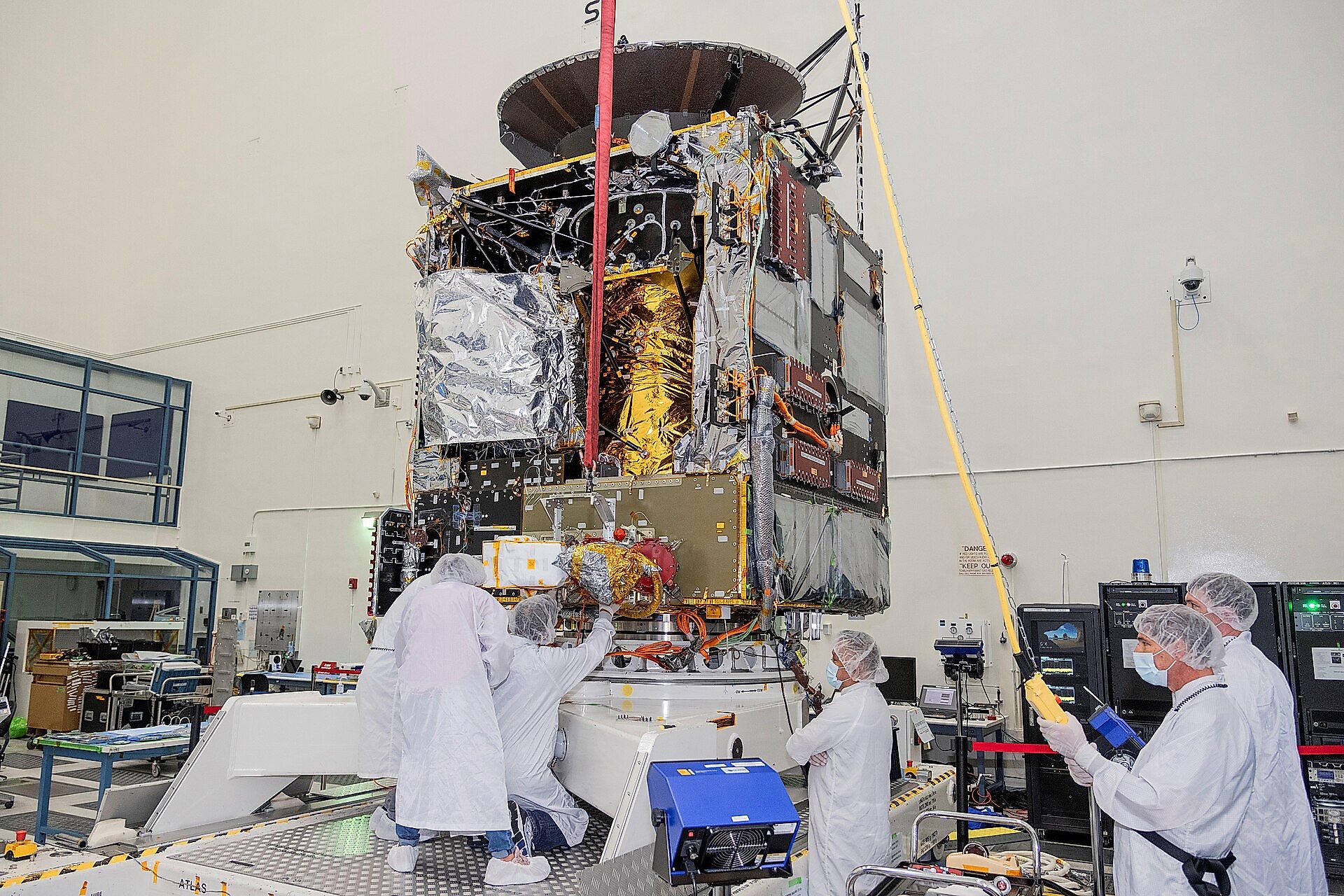
Earth's metallic core begins about 1,800 miles below its surface, so to learn more about planetary cores, NASA's Psyche spacecraft is making a 2.2-billion-mile journey. Its mission is to study Psyche, an asteroid about 173 miles wide at its broadest point, with gravity so weak that lifting a car there would feel roughly like lifting a large dog. Launched on October 13, 2023, the Psyche spacecraft completed a gravity-assist flyby of Mars in May 2026 and is scheduled to begin orbiting the asteroid in August 2029. Its prime science mission will last at least 26 months.
The Asteroid's Metal Make-up is a New Research Opportunity

Located in the main asteroid belt between Mars and Jupiter, the asteroid Psyche, sometimes referred to as 16 Psyche, stands out because of the large amount of metal thought to be present. The mission will mark the first close exploration of an asteroid whose surface contains substantial amounts of metal.

One leading hypothesis is that Psyche, which was discovered in 1852, contains material from the iron-rich interior of a planetesimal, one of the building blocks from which planets formed. Repeated collisions during the violent early history of the solar system may have stripped away much of the surrounding rocky material, leaving part of its interior exposed. Scientists are not certain that this happened. Psyche could instead be the remains of another type of metal-rich object that formed differently. Determining which explanation fits the asteroid is one of the mission's central goals. If Psyche does contain material from an ancient planetary core, scientists will have access to something normally buried thousands of miles beneath the surfaces of rocky planets.
How Psyche Will Help Scientists Understand Earth

Earth's core is composed primarily of iron and nickel, along with lighter elements, yet scientists cannot reach it directly. Much of what researchers know about the core comes from indirect evidence, including the way seismic waves move through the planet. Psyche gives researchers another metal-rich body with which to test ideas about how planetary interiors develop. Current analysis based on measurements including radar observations and thermal properties suggests that metal accounts for roughly 30% to 60% of Psyche's volume, with much of the remainder likely consisting of rocky silicate material.
The spacecraft's instruments should provide a much clearer picture. Its multispectral imager will map minerals across the surface, while a gamma-ray and neutron spectrometer will identify chemical elements. Scientists will also look for lighter elements such as sulfur, potassium, and silicon that are expected to occur in Earth's high-pressure core. Those findings could help researchers refine models of how metallic cores separated from the rocky material around them as young planets formed.
A Magnetic Clue Could Reveal A Lost Core

One of the strongest clues to Psyche's history may be invisible. The spacecraft's magnetometer will search for traces of an ancient magnetic field preserved in the asteroid's material. A body as small and solid as Psyche would no longer generate the type of magnetic field produced inside a molten planetary core. However, some of its material could have retained magnetism acquired billions of years ago while cooling within an active magnetic field. Finding that remnant magnetism would provide strong evidence that Psyche once formed part of the molten core of a larger planetary body. That would make the asteroid something close to a planetary interior turned inside out, giving scientists a chance to study material that normally remains inaccessible beneath layers of crust and mantle.
The Psyche Mission Could Answer Long-Standing Questions
The Psyche mission could also reveal the chemical conditions under which planetary cores formed. Scientists will determine whether Psyche developed under conditions that were more oxidizing or reducing than those associated with Earth's core. In simpler terms, they will examine how much oxygen became chemically incorporated into its metallic compounds, providing clues about the environment in which the asteroid formed.
Together, these measurements could bring astronomers closer to understanding how rocky planets developed during the early solar system. From 2029 onward, scientists may finally learn whether a 173-mile-wide object circling between Mars and Jupiter is a surviving piece of an ancient planetary interior. If it is, Psyche could offer our closest look yet at the kind of material that remains hidden nearly 1,800 miles beneath our feet on Earth. Sometimes, you've got to go a long way to learn about what's right beneath your feet.