What The Hubble Tension Could Break In Cosmology
Two of the most precise instruments ever built to measure the universe are looking at the same expanding cosmos, and they can't agree on how fast it's growing. Not by a rounding error or by a fluke. The gap has survived years of better telescopes, sharper data, and increasingly precise attempts to find the mistake. If there is one, astronomers haven't found it. It's a bit like two of the world's most accurate clocks, both checked and recalibrated for years, that still refuse to show the same time. You don't blame the clocks. You start to wonder if time itself is running differently than you thought.
Whatever is causing the discrepancy, it isn't sitting quietly in some corner of astrophysics. The number that scientists can't pin down helps determine the universe's age, how it will end, and whether the theory that has explained the cosmos for decades still holds up. That disagreement has a name: the Hubble Tension. It could become one of the biggest challenges modern cosmology has ever faced.
The Two Numbers That Won't Agree

The universe has been expanding since the Big Bang about 13.8 billion years ago. Exactly how fast it's expanding today is one of the most important numbers in astronomy, because that single figure feeds into how old the universe is, how it evolved, and even how it will end. Astronomers have two independent ways to measure it, and each one looks at the universe like a snapshot from a different point in its life.
The first studies the cosmic microwave background, the faint afterglow left over from the Big Bang itself. It's essentially a baby picture of the universe, captured when it was only 380,000 years old. Reading the patterns frozen into that ancient light gives an expansion rate of about 67.4 kilometers per second per megaparsec (km/s/Mpc).
The second method looks at the universe as it is today by measuring distances to nearby galaxies using pulsating Cepheid stars. Their regular brightening and dimming reveal their true brightness and, from that, how far away they are.
Combine those distances with how fast each galaxy is moving away, and the SH0ES team measures an expansion rate of about 73 km/s/Mpc. Astronomers have been wrestling with this discrepancy for nearly a decade.

Back in 2016, a team using the Hubble Space Telescope measured more than 2,000 Cepheid stars across 19 nearby galaxies to pin down the expansion rate with unprecedented precision. They arrived at an expansion rate of about 73.2 km/s/Mpc, a result already too far off from the early-universe prediction to be a coincidence.
"Maybe the universe is tricking us, or our understanding of the universe isn't complete," said Alex Filippenko, one of the astronomers behind that measurement. A decade of better telescopes and larger surveys later, the gap he flagged has only held firm.
A megaparsec equals about 3.26 million light-years, so the disagreement isn't over a tiny decimal. It's over how quickly space expands across enormous cosmic distances.
Picture two radar guns clocking the same car. Both are certified, calibrated, and accurate to a fraction of a percent. One reads 67 miles per hour. The other reads 73. Neither gun is broken. That's the position cosmologists are stuck in, except the car is the entire universe. When scientists first noticed the gap, they assumed better instruments would close it. The opposite happened.
In April 2026, the H0 Distance Network Collaboration published new findings combining multiple independent distance-measuring methods rather than relying on just one. Their result, 73.50 km/s/Mpc, closely matched earlier measurements from the SH0ES collaboration, reinforcing that the mismatch with the early-universe number is real and not going away.
Why Scientists Stopped Blaming The Data

The simplest explanation was that a hidden error had crept into one of the methods. If astronomers could find it, the whole tension might vanish. So they went looking. Researchers systematically stripped out individual distance indicators, entire datasets, and even whole observatories from the analysis, one at a time, to see whether any single source was secretly responsible.
It's a bit like unplugging appliances one by one to find which one is tripping the breaker, except every appliance left the lights flickering. No matter which piece was removed, the disagreement remained.
That result matters more than it might sound. It means the tension isn't hiding in one bad dataset or one flawed technique. It's showing up everywhere astronomers look, which makes it increasingly hard to explain away as an ordinary measurement error.
What Might Actually Be Broken

If the tension isn't a mistake, then the standard model of cosmology, the framework that has explained the universe for decades, may be missing a piece. Scientists have proposed several candidates, though none have been confirmed.
One leading idea is early dark energy: a burst of repulsive force that may have briefly sped up the expansion of the infant universe before disappearing entirely, like a firework whose shockwave keeps racing outward long after the flash has vanished. If real, it would have altered the ancient light astronomers use to calculate the early-universe number, throwing the comparison off in a way no telescope could catch directly.
Another possibility involves particles that have never been detected, such as sterile neutrinos or a form of dark radiation. If these briefly added extra energy to the young universe, they could have changed how quickly it expanded in ways that still show in today's measurements. Another possibility is that gravity or dark energy doesn't work the way scientists think it does today.
John O'Meara, Chief Scientist and Deputy Director of Keck Observatory, has said that cosmology as it's currently understood "may be broken." If the discrepancy isn't a measurement problem, he added, scientists "will have to come up with new physics." So far, none has emerged as the leading explanation. But if one proves correct, it could reshape one of astronomy's most successful theories of how the universe works.
The Bigger Picture: Why the Hubble Tension Matters

If the Hubble Tension really does point to new physics, the consequences reach far beyond a single number. The age of the universe depends heavily on the expansion rate. Shift that number, and every estimate resting on it shifts too, from when the first stars switched on to when the Milky Way itself came together.
It could also mean the universe contains matter or energy nobody has directly detected yet, or that gravity behaves differently across cosmic distances than physicists have long assumed. It could also mean the standard model of cosmology is incomplete. Either possibility would mean rewriting a chapter of physics that has held up for decades.
The Universe Can't Be Younger Than Its Own Stars

Knowing the universe's age isn't just bookkeeping. It sets a hard limit on everything cosmology is allowed to claim, because nothing inside the universe can be older than the universe itself.
For years, astronomers faced what became known as the "age crisis." Measurements of the oldest stars suggested they were older than the universe itself, a contradiction that wasn't largely resolved until the discovery that the universe's expansion is accelerating, which led to the modern picture of a universe about 13.8 billion years old.
That history is why the Hubble Tension matters so much. An expansion rate of about 73 km/s/Mpc, measured from nearby galaxies, points to a universe that's about 13 billion years old. A slower rate of about 67 km/s/Mpc, inferred from the cosmic microwave background, points to an age closer to 14 billion years.
Every star, galaxy, and cluster in the sky has to fit inside whichever number turns out to be correct.
In 2026, astronomers measured the ages of more than 150,000 ancient stars across the Milky Way. They found that the oldest stars matched a universe about 14 billion years old, consistent with the age implied by the cosmic microwave background rather than the younger age suggested by the faster local expansion rate.
The James Webb Space Telescope has uncovered another mystery. Some of the earliest galaxies appear larger and more developed than astronomers expected for such a young universe. Scientists are still debating whether these galaxies formed unusually quickly, whether their masses have been overestimated, or whether models of early galaxy formation need to be revised. Like the Hubble Tension, the findings suggest that the universe may not have evolved exactly as current theories predict.
The Search for an Answer

Scientists still don't know whether the Hubble Tension comes from a hidden flaw in the data or a genuine gap in the theory. Closing that question requires a completely independent way to measure the expansion rate, something that doesn't rely on the cosmic microwave background or the traditional distance ladder at all.
One promising method uses gravitational lensing, where the gravity of a massive galaxy bends and delays light from a much more distant object, like a natural magnifying lens hundreds of thousands of light-years wide. By measuring how long that bent light takes to arrive along its different paths, a technique called time-delay cosmography, astronomers can calculate the expansion rate independently. So far, those measurements keep landing on about 73.3 km/s/Mpc, adding more weight to the idea that the tension is real.
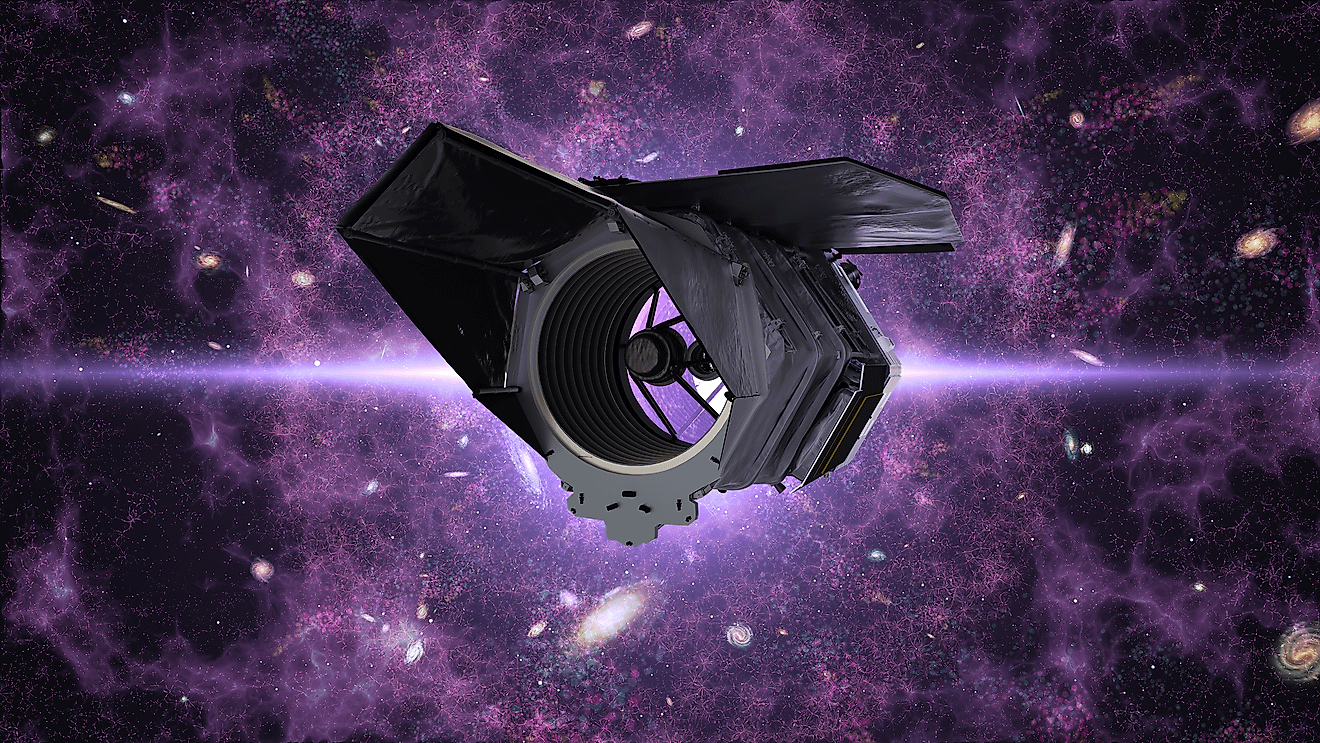
The Vera C. Rubin Observatory alone is expected to discover thousands of new gravitational lenses, potentially pinning down the expansion rate to about 1 percent precision, enough to finally show whether the Hubble Tension is an error in the data or a message from new physics.
A Universe That May Not Add Up Yet
For most of the 20th century, astronomers assumed modern instruments would eventually converge on one number for how fast the universe expands. Instead, decades of better measurements have handed cosmology one of its biggest open questions.
Two methods, one reading light older than the first stars, the other studying galaxies close enough to measure directly, keep arriving at answers that can't both be true under the current rules. Ruling out simple error has only made the mystery harder to dismiss.
Whether the Hubble Tension eventually fades or reveals genuinely new physics is still unknown. But somewhere between a number inferred from the Big Bang's afterglow and one measured in nearby galaxies, the rulebook of cosmology may have a missing chapter.