What's the Coldest Place in Space?
Step outside on the coldest night of your life and the air might bite at around minus 40. Now keep going. Deep space sits at roughly minus 455 degrees Fahrenheit, a chill so complete that the empty stretches between stars barely hold any heat at all. Heat is really just particles bumping into one another, and space has so few particles that there is almost nothing left to bump. Yet somewhere out there, one dying star has managed to grow colder than the void around it. The coldest known spot in the universe is the Boomerang Nebula, a cloud of gas blown off a fading star, sitting just a single degree above the lowest temperature physics allows.
Movies love the idea that space would freeze you the instant you stepped into it. The reality is stranger and slower. Without air to carry heat away from your skin, your body would actually lose warmth gradually, and it would take a couple of hours to freeze solid. The cold of space is real, but it works nothing like a walk-in freezer.
How Cold Is Space, Really?

Take away every star, planet, and speck of dust, and the leftover temperature of space settles at about minus 455 degrees Fahrenheit, or 2.7 Kelvin. Temperature comes down to motion. Atoms in a hot object jitter fast, atoms in a cold one barely move, and if they ever stopped completely, they would reach what scientists call absolute zero. Space hovers just a few degrees above that floor.
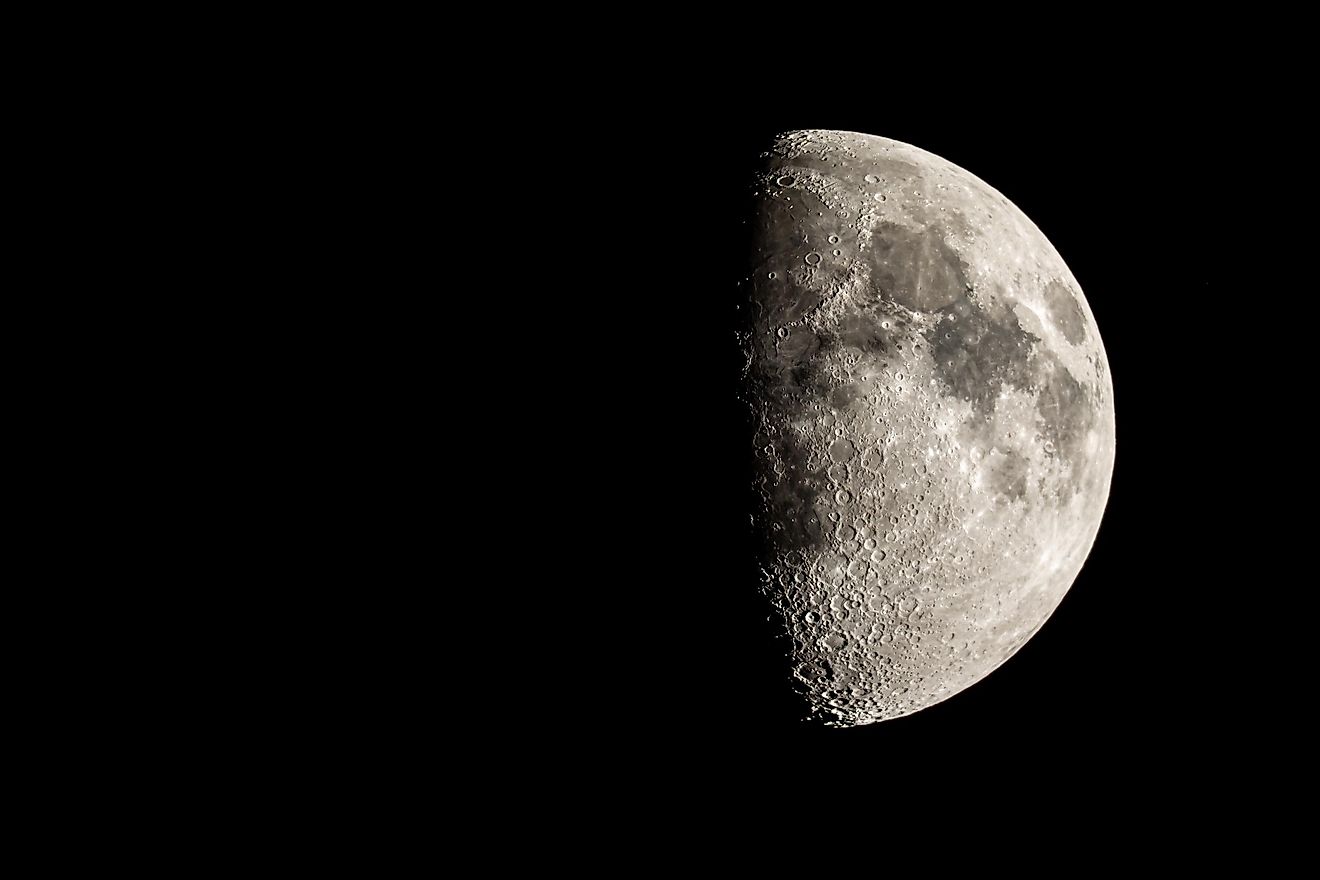
Our own neighborhood runs much warmer, because we are surrounded by things that generate and trap heat. The Sun pours out energy, and planets, moons, and drifting rock all hold onto some of it. The Moon shows how wide the swing can get. On the side facing the Sun, the surface climbs to roughly 250 degrees Fahrenheit, while the side turned away plunges to around minus 300. That is a 500-degree gap between lunar day and night, on a single airless world.
So why does space refuse to touch absolute zero, even in its emptiest corners? A faint radiation left over from the Big Bang fills the entire universe. Astronomers call it the cosmic microwave background, and it carries a temperature of about 2.7 Kelvin. That ancient glow warms every cubic inch of the cosmos, ever so slightly, and it sets the baseline that nothing natural was thought to fall below. There is also a hard rule working against perfect cold: you cannot strip the last trace of heat out of anything in a finite number of steps. Absolute zero is a limit to approach, never a place to arrive.
Meet the Boomerang Nebula, the Coldest Natural Place in the Universe

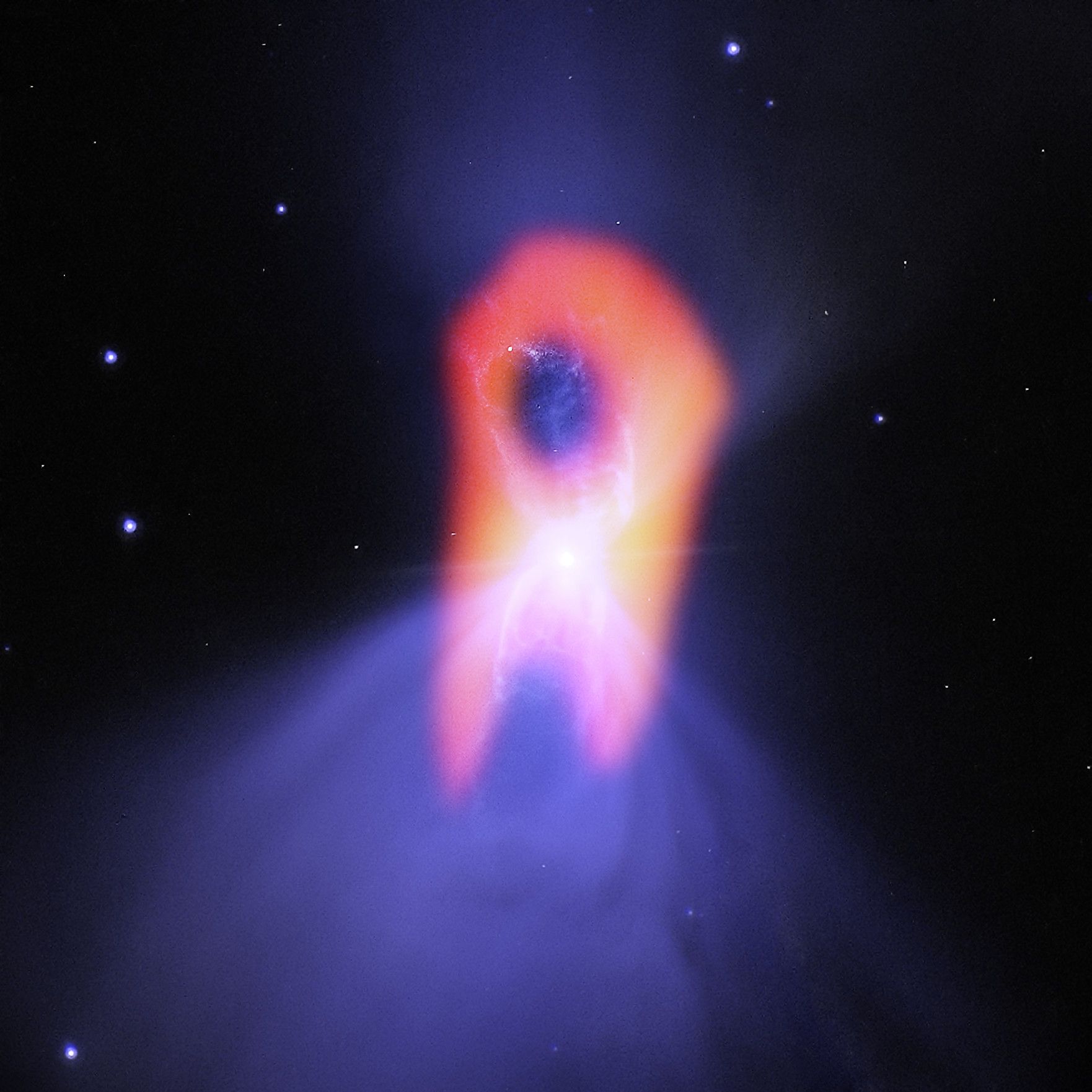
About 5,000 light-years away in the constellation Centaurus lies a cloud that breaks the rule. The Boomerang Nebula measures roughly 1 Kelvin, close to minus 458 degrees Fahrenheit, which puts it a single degree above absolute zero. That makes it colder than the Big Bang's afterglow and, as far as anyone has found, the only natural object that dips below the background temperature of space itself.
The nebula picked up its name in 1980, when astronomers Keith Taylor and Mike Scarrott studied it through a ground-based telescope in Australia. They could make out only a faint, curved asymmetry in its lobes, enough to suggest a boomerang. Fifteen years later, in 1995, Raghvendra Sahai and Lars-Ake Nyman turned the 15-metre Swedish-ESO telescope in Chile toward it and discovered the record-setting cold. Sharper images from the Hubble and later the ALMA array revealed a shape closer to a bow tie: a bright central point where the star sits, wrapped in faint arcs and ghostly filaments spreading into two smooth lobes.
Why Is the Boomerang Nebula So Cold?

The Boomerang is a young example of a planetary nebula, which despite the name has nothing to do with planets. It marks the closing chapter of a star much like our Sun. As such a star dies, it flings its outer layers into space and leaves behind a dense, hot core that will eventually cool into a white dwarf. The gas around it usually glows, lit by radiation from that core.
What sets the Boomerang apart is the sheer speed of the gas rushing outward. Sahai and his colleagues traced the cold to that violent expansion. The material blasts away so fast that it does the same thing a can of compressed air does when you spray it: rapid expansion drains energy and the temperature crashes. On a cosmic scale, the outflow expands faster than the cosmic microwave background can warm it back up, so the gas drops below even that ancient floor.
The dying star still hurls gas outward at more than 300,000 miles per hour, and it has been shedding roughly a Sun's worth of material over the past 1,500 years or so. That pace is far heavier than most similar stars manage, which is a big part of why the Boomerang got so extraordinarily cold. It will not stay that way forever. As the star finishes collapsing into a white dwarf, the surrounding gas is expected to heat up, and how long the nebula holds its title as the coldest place in space is anyone's guess.
Other Surprisingly Cold Places in Space

The Boomerang holds the record, but plenty of other places in the universe run shockingly cold. Scattered across the galaxy are vast interstellar clouds of gas and dust that sit between 10 and 20 Kelvin, and their densest cores can sink to around 7 Kelvin. These are the cold nurseries where new stars slowly gather and ignite.
Closer to home, Pluto stays brutally cold year round. Surface temperatures there range from about minus 375 to minus 400 degrees Fahrenheit. Orbiting some 3.6 billion miles from the Sun, it receives almost no warmth, and the light is faint enough that noon on Pluto looks about as bright as Earth does in the last minutes before sunset.

Triton, the largest of Neptune's 16 known moons, is another deep freeze. When Voyager 2 flew past in 1989, it clocked the surface at around minus 391 degrees Fahrenheit. The surprise is that such a frigid world is also geologically restless: Triton is one of the few places in the solar system with active eruptions, spewing plumes of nitrogen even at those punishing temperatures.
Black holes make the list too, though they remain one of the harder puzzles in physics. Their gravity is so overwhelming that no matter or light can escape once it crosses the edge. Their temperatures cover an enormous range. Some register barely above absolute zero, while others, ringed by superheated infalling matter, blaze at millions of degrees.
Living in the Cold
The universe runs cold almost everywhere, hovering just above absolute zero across the empty gulfs between stars. What makes the Boomerang Nebula remarkable is that it went further, cooling itself below the faint warmth left by the Big Bang and claiming the title of the coldest natural spot ever found. And it earned that record through nothing more exotic than a dying star exhaling its last layers too fast to keep warm. Studying it gives astronomers a rare look at how stars end their lives, how matter behaves at the outer edge of cold, and where the physical limits of the universe truly sit. Our own Sun will follow a similar path in about five billion years, which means the Boomerang is, in a sense, a preview of our own distant future.