What Is The Most Volcanic World In The Solar System?
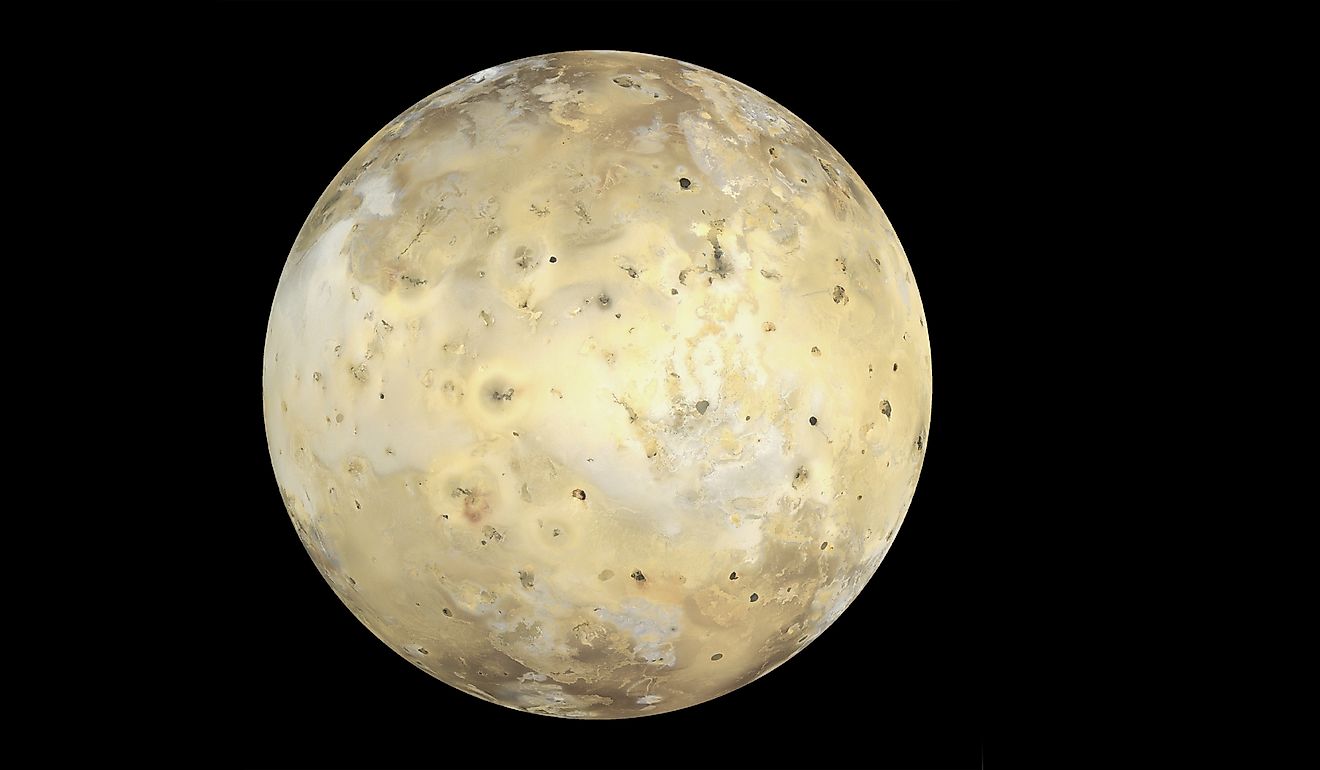
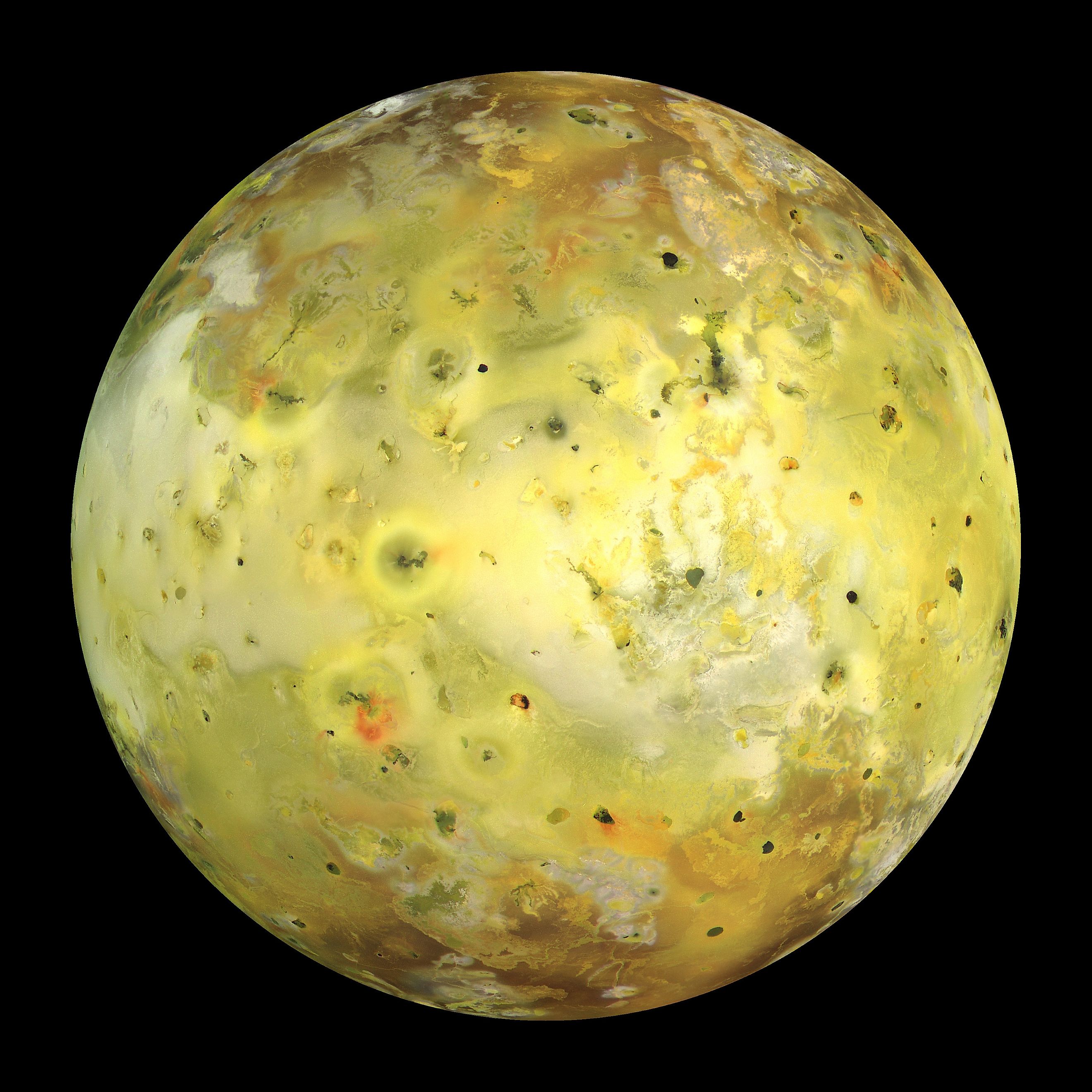
The most volcanically active world in our solar system isn't a planet, but rather Jupiter's moon Io. This moon has at least 400 volcanoes, many of which are erupting right now. They throw fountains of lava dozens of miles high and plumes so large that telescopes on Earth can track them. These violent eruptions are driven by gravitational forces from the massive gas giant Jupiter. Stand on that surface, and the ground under your feet would rise and fall by the height of a thirty-story building. Jupiter itself would hang overhead roughly 36 times wider than the full Moon appears from Earth.
Size, Orbit, and Surface Conditions

Io closely orbits the gas giant Jupiter, at a distance of around 262,000 miles. It completes one orbit every 1.769 Earth days. It also sits in a gravitational resonance with the neighboring moons Europa and Ganymede, whose timed tugs pull its orbit into an irregular ellipse. In terms of size, it is 2,260 miles in diameter, which is 100 miles larger than Earth's moon, at 2,160 miles. It has a thin atmosphere composed of sulfur dioxide.
Because it orbits so close to Jupiter, it experiences very large tidal forces, which cause its surface to form bulges as much as 330 feet in solid ground. On Earth, tidal forces only account for about 60 feet in water, rather than on land. The moon also regularly passes through Jupiter's magnetic field lines, experiencing powerful electrical forces of up to 400,000 volts. Due to its distance from the Sun, the surface temperature is quite cold, averaging -202 degrees Fahrenheit. But this can be interrupted by volcanic eruptions. Io also orbits deep inside Jupiter's radiation belts, and its surface absorbs roughly 3,600 rem a day, several times the dose that would kill a person.
What causes its volcanic activity?

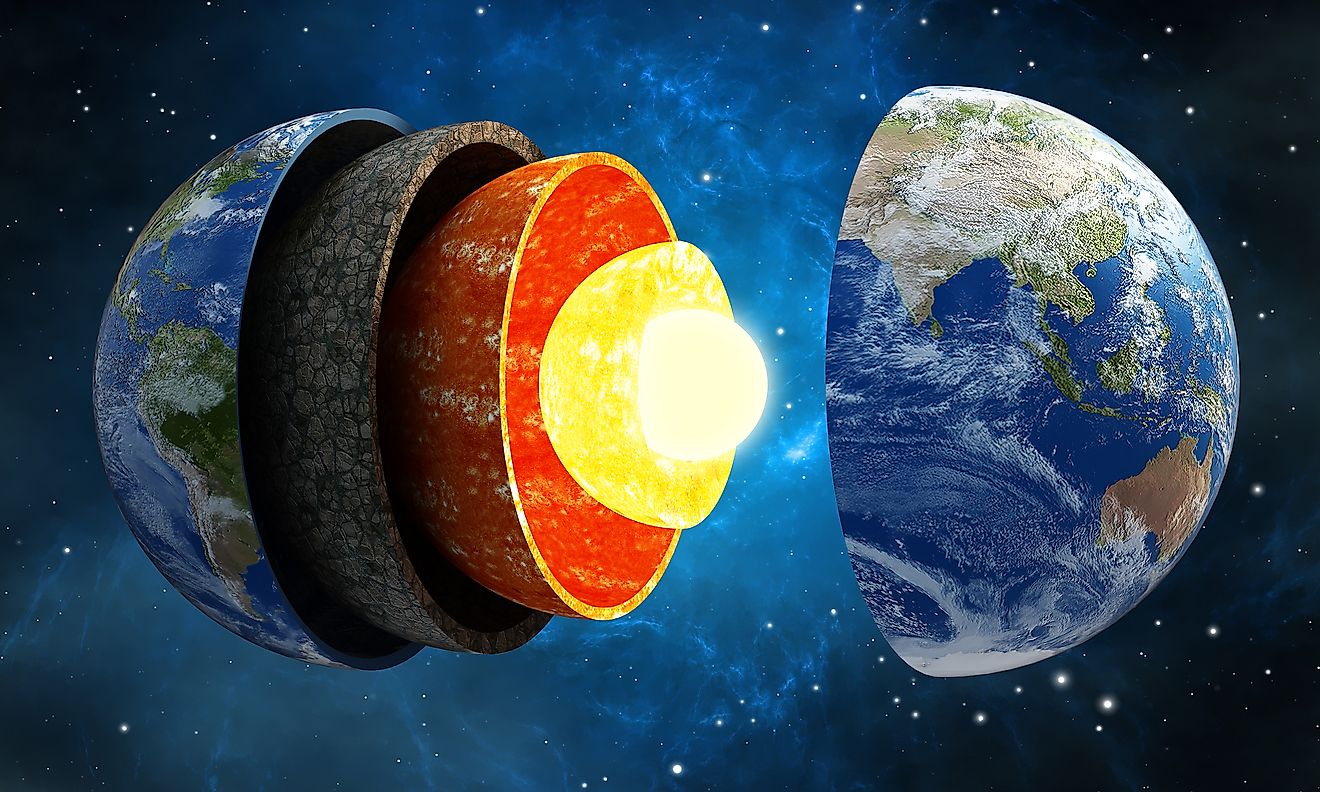
While Earth's volcanic activity is driven by plate tectonics, Io's volcanoes erupt due to Jupiter's gravity. As it circles around Jupiter, it comes close to the neighboring moons Europa and Ganymede. This gradually pushes it closer to Jupiter, in turn increasing Jupiter's gravitational pull on the moon and warping its shape.
However, as it moves farther from Jupiter, this pull weakens. This process of rubbing rocks against each other generates significant friction and high heat. The heat melts the frozen rock into magma, sending it shooting out of volcanoes. The lava that results can exceed 1,832 degrees Fahrenheit, and the biggest volcanoes throw fountains of it dozens of miles above the surface. That being said, there is another body in the solar system that has more volcanoes than Io, but it is less volcanically active: Venus.
What about Venus?

The planet Venus technically has more volcanoes than Io, with estimates putting the total anywhere between 100,000 and more than 1 million. However, just over 1,600 have been identified. Venus is surrounded by a thick atmosphere, with a surface pressure 90 times that of Earth at sea level. The atmosphere is made mostly of carbon dioxide, which traps a great deal of heat on the planet, making it the hottest planet in the solar system, with temperatures reaching 880 degrees Fahrenheit. The clouds on Venus are made of droplets of sulfuric acid, which fall as rain and boil away before they ever reach the ground.
Confirming that activity from orbit is the hard part. The planet shows no major evidence of plate tectonics, such as linear volcanic chains, ridges, and continents, and its permanent cloud deck blocks the direct view that would settle the question. What activity there is likely takes the form of slow lava flows rather than explosive eruptions. The crushing air pressure and the near-total absence of water both work against anything more violent. Scientists believe the events stay isolated and regional.
A 2025 review in the journal Geochemistry weighed all the evidence and concluded that Venus is "volcanically active today," with the strongest case at three sites: Idunn Mons, Maat Mons, and Aramaiti Corona. The same review found that the resurfacing appears to reflect ongoing regional events rather than the planet-wide catastrophes proposed by older models.
Four points of light beside Jupiter

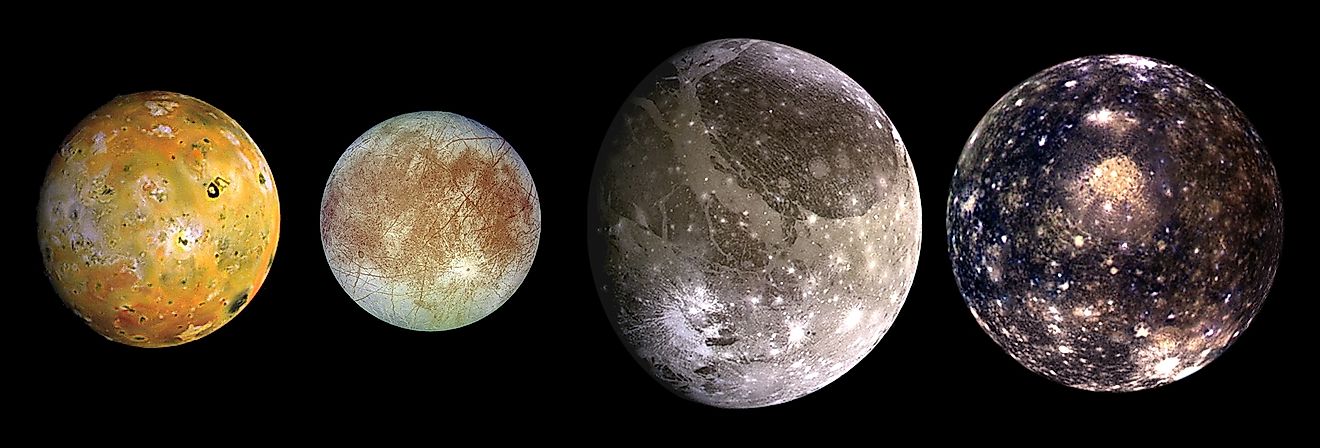
Io was discovered alongside Ganymede and Europa by the Italian astronomer Galileo Galilei. On January 7, 1610, Galileo was using his homemade telescope to observe Jupiter when he noticed three lights orbiting it. At first, he believed them to be stars, but their movement remained fixed around Jupiter rather than following star movement. While studying it, he discovered a fourth light. Two months later, he published his book, The Starry Messenger, which discussed these four satellites. This discovery lent credence to the Copernican view of space, in which the planets revolved around the Sun rather than the Earth, a view that had been dominant since the Classical period.

Galileo proposed that the moons be named after the Medici family in Florence. The German astronomer Simon Marius, following a suggestion from Johannes Kepler, instead named them after mythological figures associated with the Roman god Jupiter and published the names in 1614. Astronomers spent the next three centuries calling the moons by number, and Marius's names did not come into general use until the mid-twentieth century. In Greek mythology, Io is the daughter of the river god Inachus and is the first priestess of Hera, the wife of Zeus.
Missions to Io

There have been several missions to Io from multiple spacecraft dating back to the 1970s. Pioneer 10 reached Jupiter in December 1973, and Pioneer 11 followed a year later, with Pioneer 11 taking the first close measurements of Io. The first spacecraft to capture volcanism was Voyager 1 in 1979, which captured a powerful volcanic eruption on its surface. The closest views of Io came from the Galileo spacecraft, named after the man who discovered the moon. It arrived in 1995 and worked the Jupiter system for roughly eight years, capturing images of Io's volcanic surface and its eruptions across six close flybys.

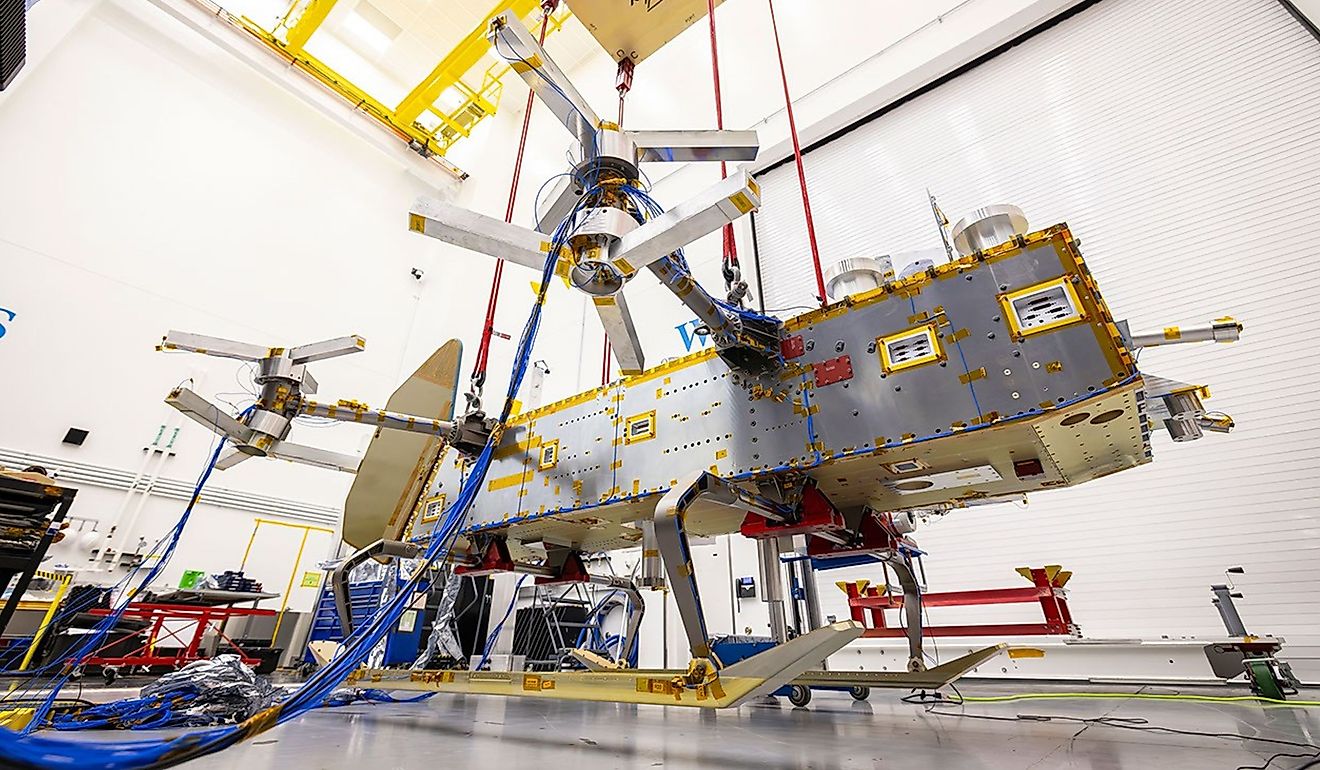
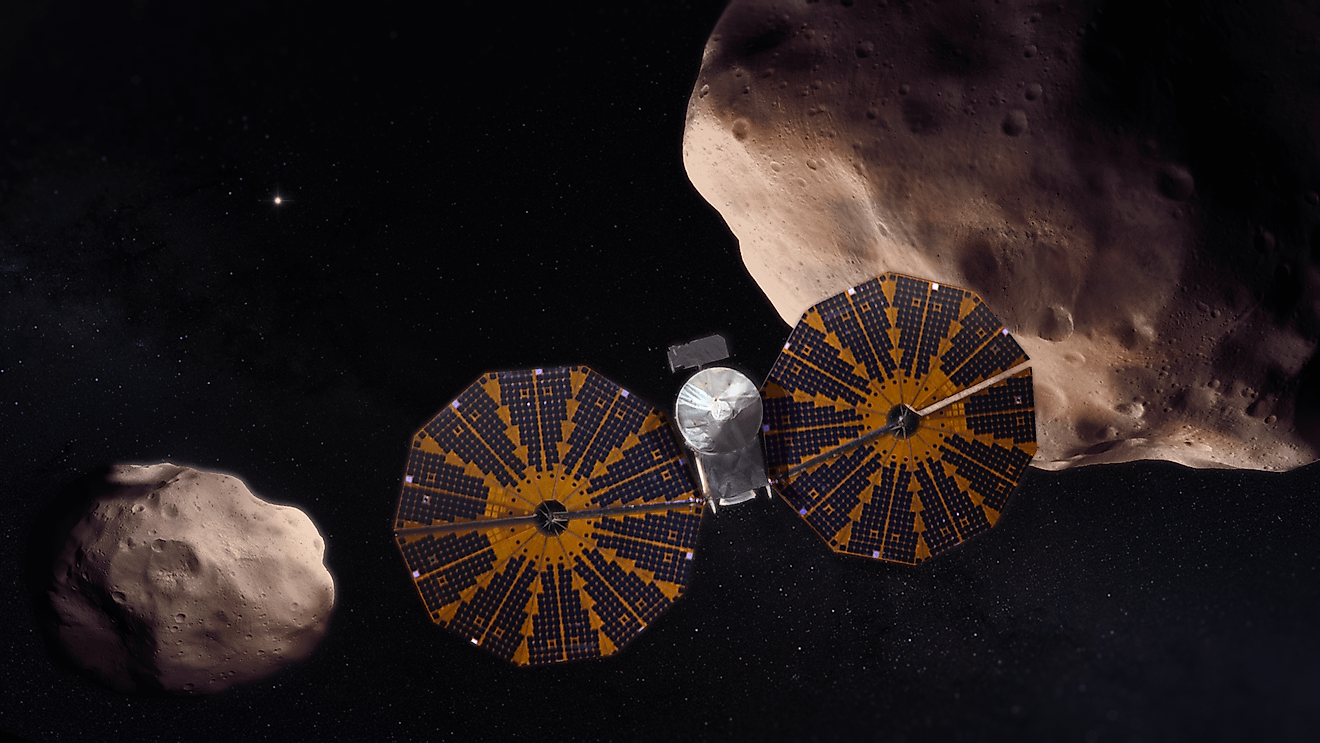
The most recent close data comes from Juno, which dropped to within about 930 miles of the surface on two passes, one in December 2023 and one in February 2024. Its Jovian Infrared Auroral Mapper tracked heat sources across the surface and returned the sharpest views yet of Loki Patera, a lava lake roughly 125 miles across and the largest volcanic depression on the moon. The Io work was incidental to Juno's main assignment at Jupiter, and the mission's funded extension ran through September 2025. Surviving those passes takes real armor. Juno keeps its computer and power systems inside a titanium vault with walls a third of an inch thick, built for the harshest radiation environment NASA has ever flown a spacecraft into, apart from the Sun itself.
Io is a world of extremes

Io is more than 483 million miles away from the Sun and is overshadowed by the biggest planet in the solar system, Jupiter. Under normal circumstances, it would be a cold rock, but due to the volcanic activity driven by Jupiter's gravity, its icy surface is punctuated by explosions of heat hotter than Venus's surface. Because of its volcanic nature, it is unlikely to support any form of life, unlike some of Jupiter's other moons. The most interesting aspect of Io is that it erupts in immense volcanic bursts not from normal tectonic activity but from the same force that influences Earth's tides: gravity.