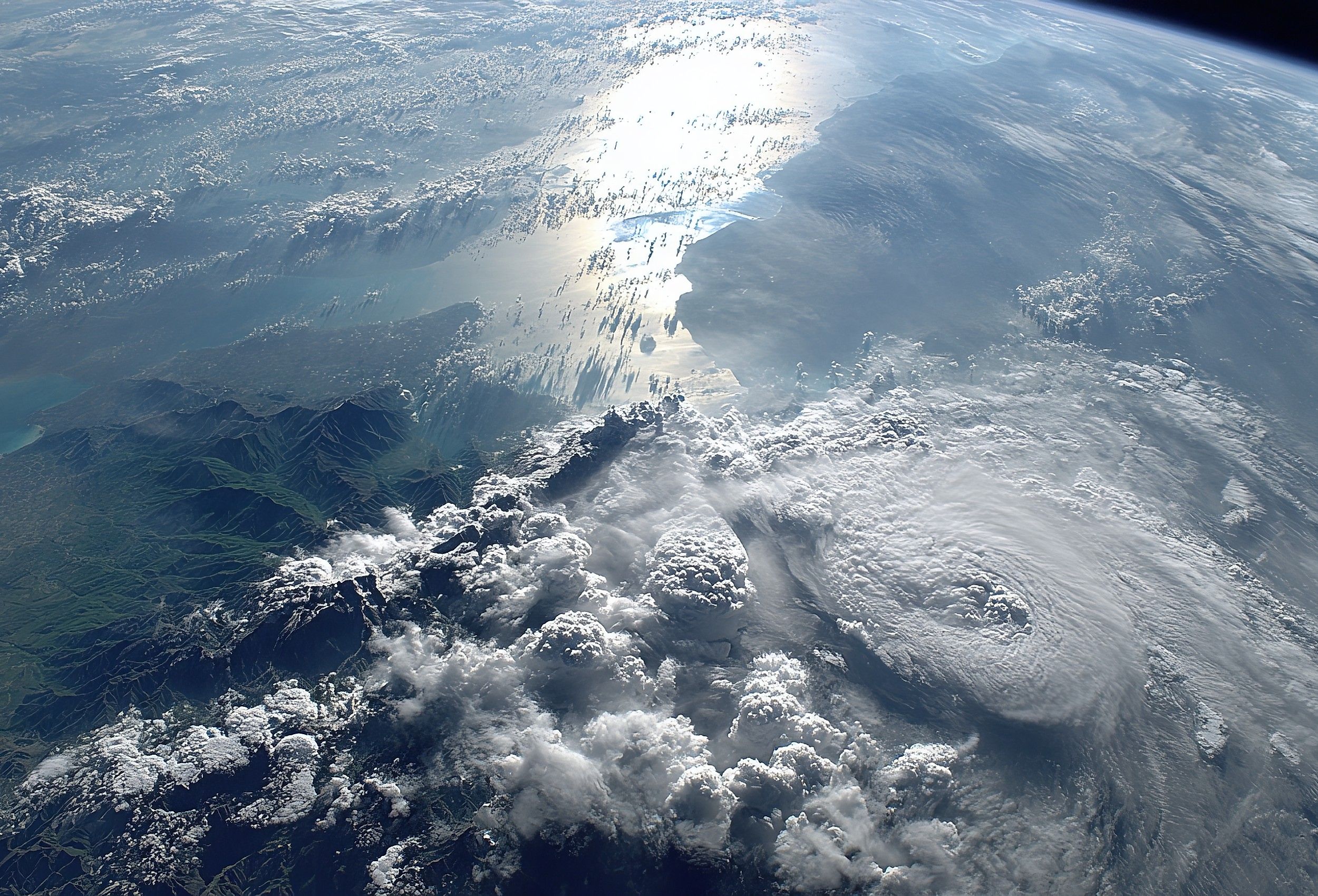
What if Earth Stopped Spinning?
Right now, without feeling a thing, you are being carried east at close to the speed of a passenger jet. That motion is so steady and so old that nothing in daily life registers it, which is exactly why the question of what would happen if it stopped is worth asking. Earth has spun since it formed from the swirling disk of dust and gas that built the Solar System, and it keeps spinning because angular momentum is conserved, though tidal friction from the Moon has slowly stretched the length of the day across billions of years. What a stoppage would actually do depends entirely on how it happened. A sudden halt of the solid planet and a slowdown over geological time lead to very different disasters, some arriving in minutes and others taking ages to unfold.
Loss of Magnetic Field

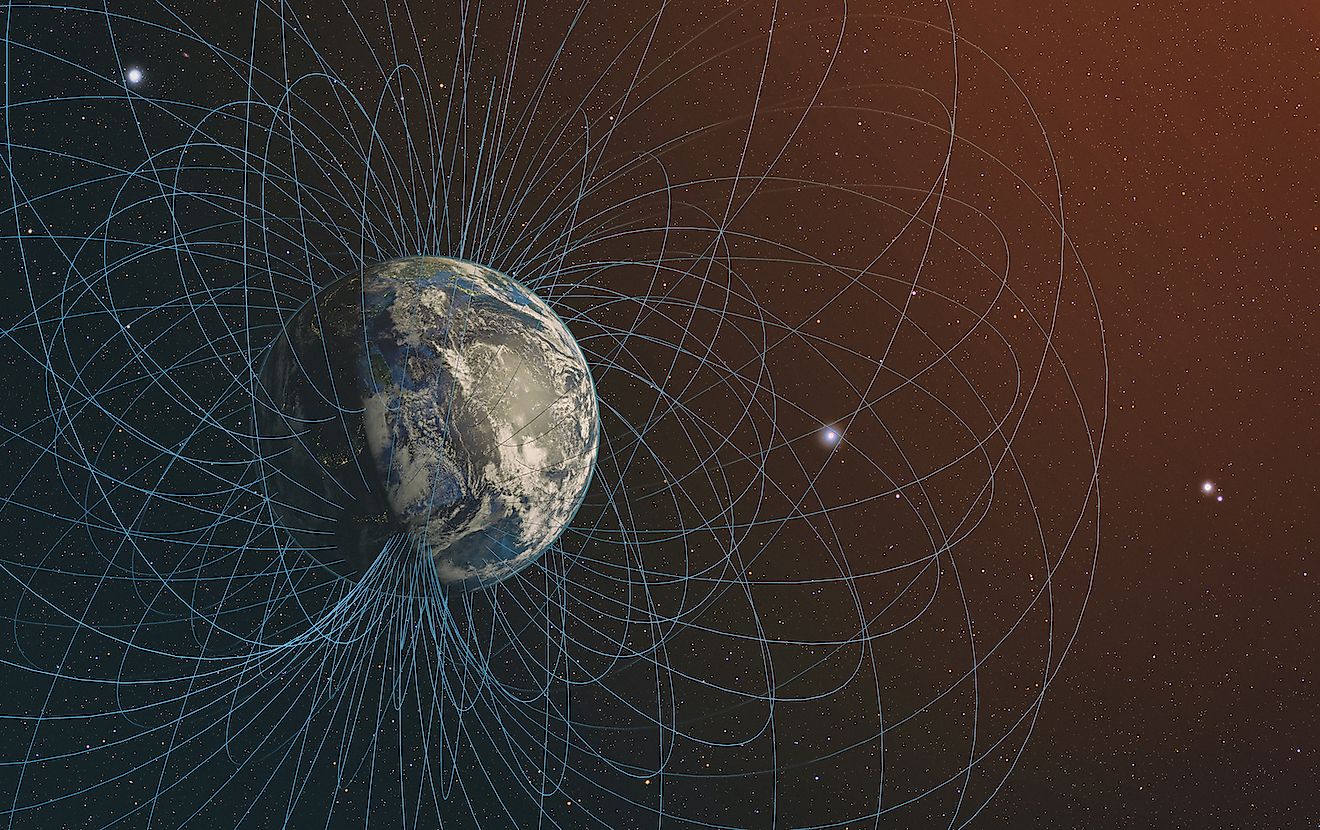
Over time, the planet's magnetic field could weaken as the geodynamo changed, leading to drastic long-term consequences. The magnetic field is generated by the geodynamo, where the liquid iron in Earth's outer core is constantly moving. The movement of liquid iron generates electric currents, producing the geomagnetic field that surrounds the planet. Earth's rotation helps organize the convective flows that generate its magnetic field, but how the geodynamo would respond to a hypothetical stoppage is uncertain because the outcome would depend on what happened inside the liquid outer core. If the field disappeared, the Earth would be directly exposed to the harmful environment of space.
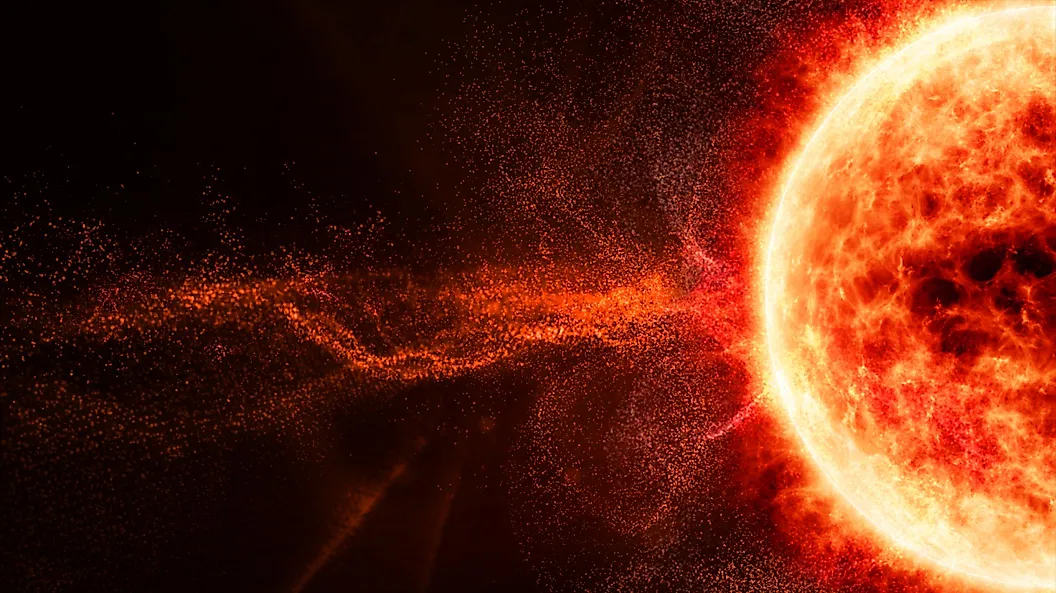
The Sun produces a high-speed stream of particles called the solar wind. Earth's magnetic field deflects much of this wind around the planet. Without a global magnetic field, the solar wind would interact more directly with the upper atmosphere, but the long-term effect on atmospheric loss would be complex and cannot be reduced to the inevitable stripping of Earth's air and water. The magnetic field also shields us from deep-space radiation. Radiation exposure would increase most strongly in space and at high altitudes, while Earth's thick atmosphere would continue shielding the surface from much of the incoming particle radiation. Magnetic field loss would also disrupt modern infrastructure. Compasses and magnetically navigating animals would lose a global directional reference. Satellites, radio communications, and some power systems could face greater exposure to space weather.
Massive Tsunamis and Ocean Shifts

Immediately after Earth stopped spinning, some of the most devastating tsunamis and flooding imaginable would begin. If Earth halted instantly, the atmosphere, oceans, and unsecured objects would keep moving eastward at close to their original speed. At the equator, that is roughly 1,037 mph (1,670 km/h), decreasing with latitude, and the result would be extreme winds and ocean surges. As the oceans continued moving at these tremendous speeds, colossal waves would sweep across the globe. The resulting flooding would devastate settlements and ecosystems across large coastal and inland areas, with severity varying by latitude and terrain.
Over time, the oceans would redistribute toward the North and South Poles, completely transforming the Earth's geography. One simplified Esri thought experiment maps the outcome as three broad zones: a Northern Ocean, a Southern Ocean, and an equatorial megacontinent. In that model, the gradual loss of centrifugal effects lets water inundate vast high-latitude areas while exposing land around the middle of the planet. The map illustrates the idea rather than forecasting a result. Water pulled away from the equator would leave a continuous landmass there, with deserts and mountainous regions.
Mega-Earthquakes

As the planet gradually adjusted to its new shape, it could trigger an unprecedented series of mega-earthquakes. The Earth's constant rotation produces an equatorial bulge that gives it its imperfect shape. Without rotation, the force maintaining that shape would disappear, leaving gravity dominant and gradually pulling the planet toward a more spherical form. Relaxation of the bulge could place enormous stress on the crust and trigger fault movement, although the location and severity of any resulting earthquakes would be highly uncertain.
As Earth moved toward this sphere-like shape, the land at the equator would gradually move downward, while the land at the North and South Poles would rise. This redistribution of mass would strain the crust further, potentially triggering earthquakes in vulnerable regions. No defensible maximum magnitude can be calculated from a thought experiment like this one. The largest instrumentally recorded earthquake remains the magnitude 9.5 event that struck southern Chile in 1960, and no known fault is large enough to produce a magnitude 10. The changing stresses could cause prolonged seismic activity and might disturb some volcanic systems, but globe-spanning continental fractures and widespread eruptions cannot be predicted from this scenario.
Immense Time Changes

On a nonrotating Earth, the familiar relationship between clocks, daylight, and the 24-hour solar day would disappear. The 24-hour day humans are accustomed to would be replaced with a year-long cycle where time is defined by changing seasons. Our current 24-hour day occurs because the Earth rotates on its axis relative to the Sun. Without that rotation, the only thing that changes our position with the Sun is the Earth's annual orbit. If Earth stopped rotating relative to distant stars but continued orbiting the Sun with its axis similarly oriented, one solar day would last about one orbital year, and most locations would experience months-long periods of daylight and darkness.
With the Sun moving so slowly across the sky, it would drift about one degree per day. This would collapse our notion of clock-based time, making our current system of clocks and time zones far less useful. The biological disruption would be immense. Months-long daylight and darkness would radically reorganize temperatures, winds, and ocean circulation. The disappearance of the Coriolis effect would compound those changes. Ecosystems and human societies would have to reorganize with them, although the exact biological outcome is uncertain.
Will Earth Stop Spinning?

Earth is not likely to suddenly stop spinning, but working through the thought experiment shows how deeply rotation shapes the planet. It controls the length of the day, helps organize winds and ocean currents, contributes to Earth's equatorial bulge, and influences the motion of its liquid core. Without it, Earth would become almost unrecognizable.