What Happens When A Satellite Burns Up In The Atmosphere
A dead satellite can slam into Earth's upper atmosphere at roughly 17,000 miles per hour, fast enough to cross the continental United States in about 10 minutes. Within minutes, solar panels can rip away, metal can melt or vaporize, and a spacecraft that survived years in orbit can shatter dozens of miles above the ground. Most of it never reaches the surface. Some dense titanium and steel components, however, can survive the fall, while scientists are still trying to determine what happens to the cloud of vaporized metal left behind. Learn what burns up, which dense parts reach Earth, and what the vaporized metal leaves behind.
Falling Back To Earth
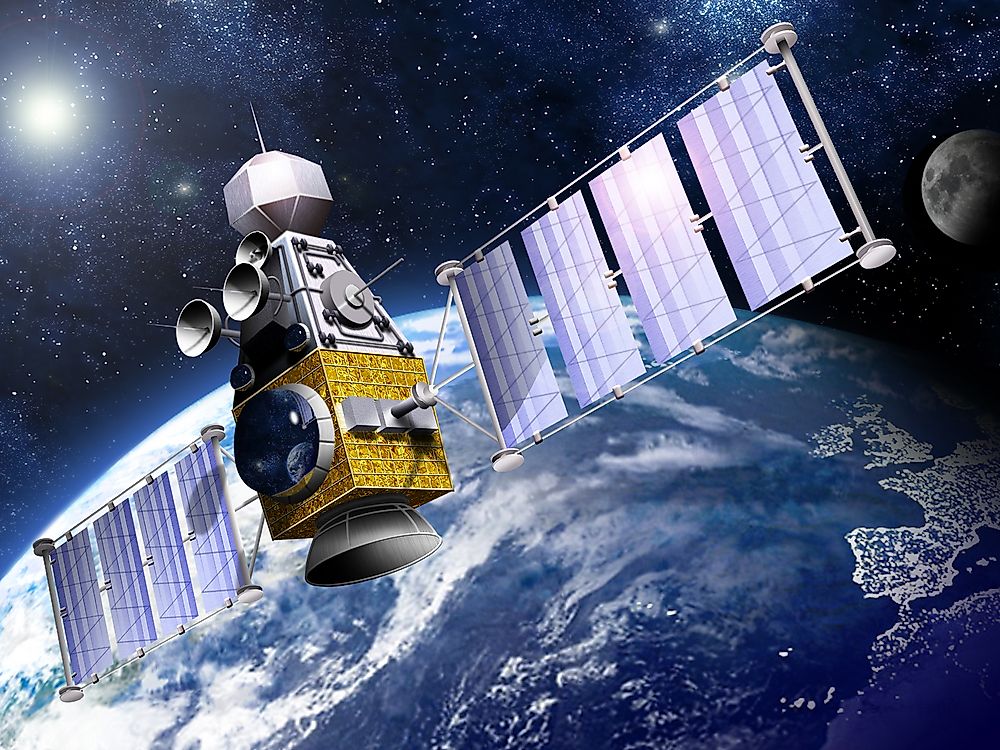
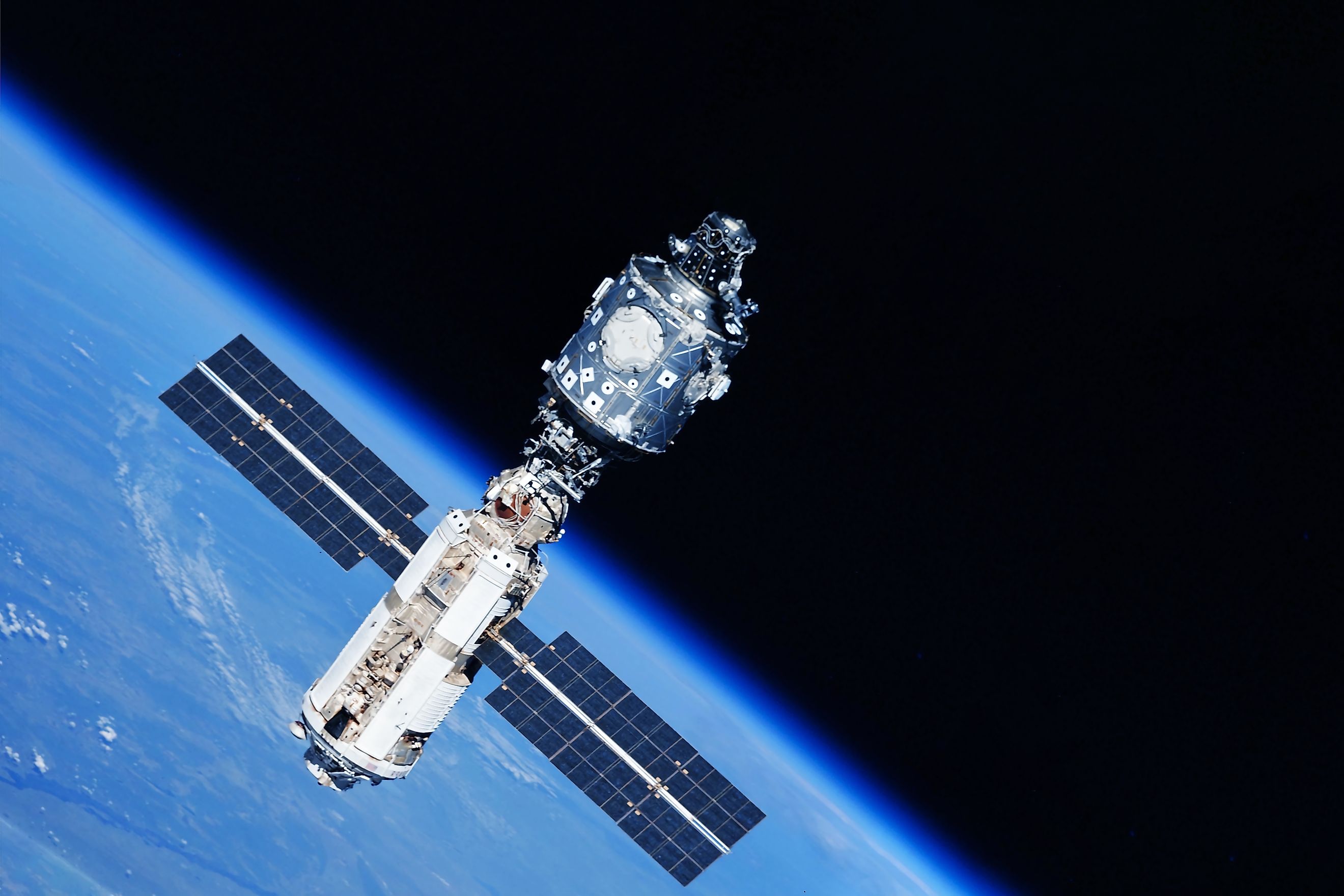
A satellite in low Earth orbit is essentially falling around the planet. Earth's gravity constantly pulls it downward, but the spacecraft is moving sideways so quickly that the curved surface of Earth keeps dropping away beneath it. At around 250 miles above Earth, for example, a spacecraft typically moves at roughly 17,000 miles per hour. That is why the International Space Station can circle the planet in about 90 minutes.
There is still a trace of Earth's atmosphere at those heights. Individual air molecules collide with a satellite and create drag. Over months or years, that drag can steal enough orbital energy to lower the spacecraft's altitude. Once it descends into denser air, the process accelerates. Not every satellite meets the same fate. Operators can deliberately push some low-orbit spacecraft toward a controlled re-entry, while satellites much farther from Earth may be moved into disposal or "graveyard" orbits instead. An uncontrolled spacecraft in a decaying low orbit, however, eventually reaches a point where returning to Earth becomes unavoidable.
The Atmosphere Becomes A Blast Furnace

At orbital speed, a re-entering spacecraft slams into the atmosphere so violently that the gas ahead of it cannot move aside quickly enough. The air becomes compressed and heated, forming a blisteringly hot region around the vehicle. NASA designs returning spacecraft to withstand entry environments that can reach several thousand degrees Fahrenheit.
The effect can look like a meteor streaking across the sky. Gas around the object begins glowing, and some of it becomes plasma, meaning the heat has stripped electrons from atoms. Meanwhile, exposed aluminum, plastics, insulation, wiring, and other satellite materials begin weakening, melting, and vaporizing. An unprotected human could not survive this environment. Crewed capsules require thick heat shields specifically to keep the extreme heat outside from reaching the people inside. A dead satellite has no such protection because it was generally never designed to return intact.
The Satellite Can Explode

The first obvious casualties may be the spacecraft's most fragile structures. NASA notes that solar arrays can tear away at roughly 56 to 59 miles above Earth as aerodynamic forces become too strong for their mounting points. The main body of a spacecraft typically breaks apart somewhat lower, between about 45 and 52 miles above the surface.
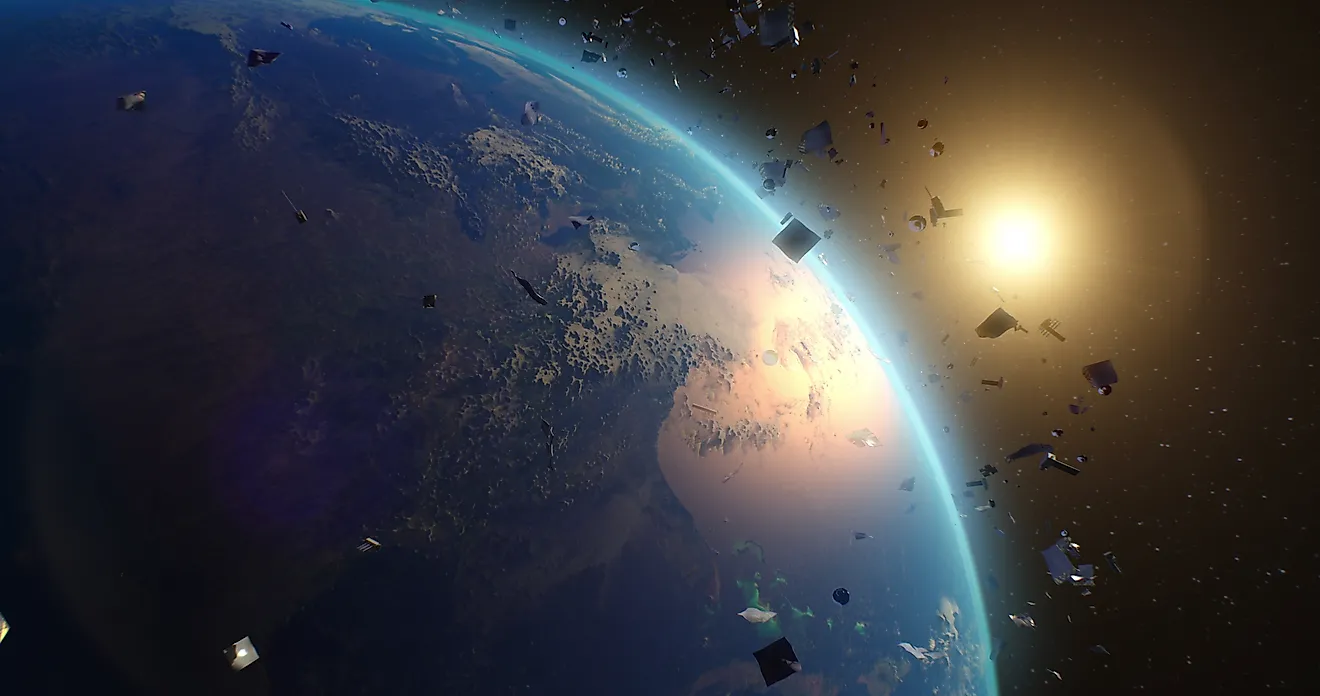
The European Space Agency puts the typical main breakup altitude at around 75 kilometers, or 47 miles. At that point, the satellite can suddenly resemble a glowing swarm rather than one spacecraft. Panels separate, internal equipment spills out, and fragments begin following slightly different paths through the atmosphere.
Equipment protected inside the satellite is suddenly exposed directly to the heat. A reaction wheel or fuel tank might have remained relatively cool while surrounded by spacecraft panels. Once those panels disappear, the component is sitting directly inside the re-entry furnace. The debris can spread surprisingly far. ESA estimates that fragments from a breakup can produce an impact footprint stretching hundreds of kilometers along the spacecraft's path.
Most Of The Satellite Does Not "Burn"
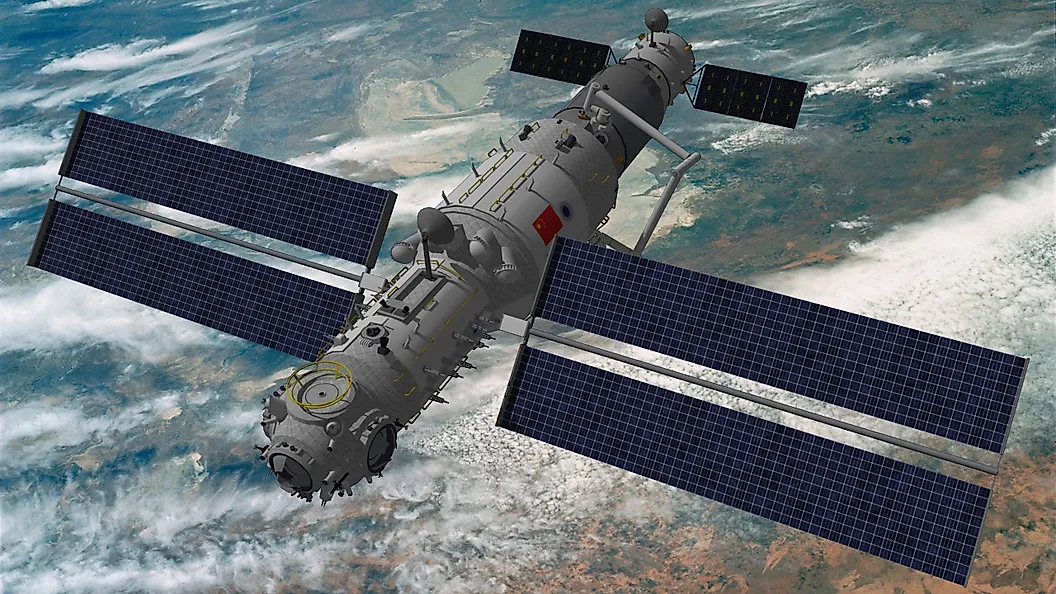
For much of the spacecraft, disappearance is a better description than burning. Aluminum structures can melt and vaporize. Paints, insulation, electronics, and composite materials break down. Molten droplets can be stripped from larger pieces. The spacecraft's atoms are simply transformed and scattered through the atmosphere. Imagine throwing a metal machine into a furnace hot enough to turn parts of that machine into vapor while simultaneously blasting it with a wind moving many times the speed of sound. Re-entry adds another complication: the satellite may be tumbling wildly as different pieces heat unevenly.
Eventually, much of the original spacecraft exists only as microscopic particles, gases, and tiny droplets drifting through the upper atmosphere. This process is known as "demise" in spacecraft engineering. Engineers increasingly try to design satellites so that as much of the vehicle as possible demises before anything can reach the ground. ESA's "Design for Demise" work has even examined joints and structures intended to break apart earlier, exposing internal hardware to destructive heating for longer.
Some Pieces Can Reach The Ground

Dense components made from materials with high melting temperatures can survive re-entry. NASA identifies titanium, stainless steel, and similar materials as more likely to endure re-entry than lightweight aluminum structures. ESA has highlighted pressure tanks, propellant tanks, optical instruments, solar-array mechanisms, and reaction wheels as components that can be difficult to destroy completely.
Once a surviving piece has lost most of its tremendous sideways speed, atmospheric drag slows it dramatically. It then falls much more like an ordinary object than a hypersonic spacecraft. A satellite fragment reaching the ground is no longer moving at 17,000 miles per hour. Even so, a heavy metal tank falling at terminal velocity can obviously cause serious damage.
Fortunately, Earth gives falling spacecraft an enormous target filled mostly with empty space. Oceans cover about 71% of the planet's surface, and large portions of the remaining land are sparsely populated. Space agencies can also deliberately steer particularly large spacecraft toward remote ocean regions when controlled re-entry is possible.
What Stays In The Sky

Debris that reaches the ground is easy to picture. The material that never comes down may prove more important in the long term. When satellites vaporize, their metals can condense into microscopic aerosol particles that remain high in the atmosphere. Scientists have already detected more than 20 elements associated with spacecraft re-entry inside particles collected from the stratosphere. A 2023 study found that roughly 10% of sampled stratospheric sulfuric-acid particles larger than 120 nanometers contained aluminum and other metals linked to spacecraft.
Researchers still do not know exactly what increasing amounts of this material will do. A 2025 NOAA-backed study examined a future in which more than 60,000 satellites occupy low Earth orbit. Its simulations suggested that large amounts of aluminum oxide released by repeated re-entries could alter temperatures and winds in parts of the middle atmosphere. Exactly how those particles would affect ozone chemistry remains uncertain.
A Satellite's Last Few Minutes
From orbit, the end can happen astonishingly quickly. A spacecraft that has spent years circling Earth can enter appreciable atmosphere, shed its solar panels, break apart roughly 50 miles above the planet, and lose most of its mass before anything reaches the surface. What appears from the ground as a brief streak of light is actually a machine being dismantled molecule by molecule at hypersonic speed. The larger unanswered question is shifting away from whether satellites can safely disappear. Scientists increasingly want to know where all that disappeared material goes. If tens of thousands of spacecraft eventually turn into metallic smoke in Earth's atmosphere, the final legacy of the satellite age may not be debris scattered across the ground, but an artificial layer of material accumulating invisibly above our heads.