Speed Of Sound VS Speed Of Light
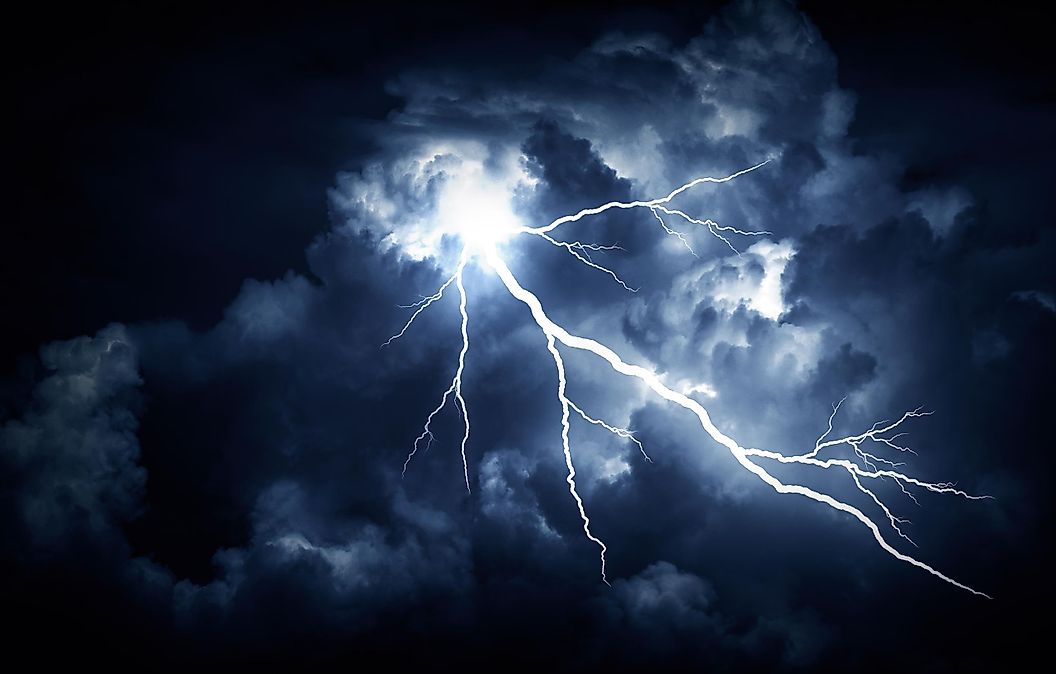
Watching a thunderstorm from a few miles away gives you the full comparison for free. The flash of lightning arrives almost instantly, while the thunder takes its sweet time, rolling in seconds later—despite both events starting at the same moment from the same lightning bolt. That little delay shows just how much faster light is compared to sound. Light is about 880,000 times quicker! Plus, they each follow very different rules about what they can go through, what slows them down, and whether anything can outrun them.
The Raw Numbers
At sea level, in Earth's atmosphere where the air is 59 degrees Fahrenheit (15 degrees Celsius), sound travels at approximately 761 miles per hour or 1,225 kilometers per hour. That's roughly 340 meters per second, which means it could cross a football field in just about a third of a second. Such a fascinating speed!
Light in a vacuum travels at an astonishing 671 million miles per hour, or about 1.08 billion kilometers per hour. Physicists prefer to express this as 299,792,458 meters per second — and the word "exactly" truly matters here. Since 1983, we've defined the meter based on the distance light travels in vacuum in 1/299,792,458 of a second, which means the speed of light isn't just something we measure; it's a fixed constant. When you improve your laboratory equipment, you're not getting a better value for c; you're simply refining your measurement of a standard meter.
Sound Needs Something To Shove

Sound is basically a pressure wave that moves by softly nudging molecules into each other, kind of like a ripple spreading out. Without molecules, sound has nowhere to go, which is why space stays silent. This is really the biggest difference between the two.
Many people think of sound simply as 'traveling through air,' but this view doesn’t do justice to its complexity and wonder. Sound propagates through all elastic mediums, with its speed increasing in stiffer materials. For example, in fresh water, sound moves around 1,480 meters per second, which is more than four times faster than in air. In steel, it exceeds 5,000 meters per second, and in diamond—one of the hardest materials—sound travels approximately 35 times faster than in air. So, next time you press your ear to a steel rail, you’ll likely hear an approaching train well before its sound reaches you through the air. This isn’t just a story; it's an amazing demonstration of how stiff materials influence sound propagation.
Light is truly amazing because it doesn't need anything else to travel. Electromagnetic waves carry their own oscillating fields and can glide effortlessly through a vacuum. That's why we can enjoy looking at galaxies billions of light years away in the vast emptiness of space, yet we can't hear any of them.
Why Sound Slows Down When You Climb

Here's where a common misunderstanding happens. People often say that the speed of sound in a gas depends on air density, but that's not quite right. In fact, for an ideal gas, the pressure and density terms cancel each other out. What truly influences it is the temperature and the specific makeup of the gas.
Here's some fascinating information about how sound travels at different altitudes! At sea level, sound moves at approximately 340 meters per second. At 36,000 feet, where a cruising airliner is gently flying and the air temperature is around minus 57°C, the speed drops to about 295 meters per second. Although the air is much thinner there, it’s the cold temperatures that primarily cause this decrease. This is the main reason why aircraft speeds are often expressed as a Mach number instead of just a standard airspeed: Mach 1 varies depending on the outside temperature, making it a flexible reference.
Light Is Constant, With One Large Asterisk

People often mention that the speed of light is always constant, but it's important to add a little clarification first. What's truly unchanging is c in a vacuum. Whether you're standing still or moving toward the light source at half its speed, you'll measure the same value. This surprising behavior formed the foundation of Einstein's special relativity in 1905, and it's actually much more fascinating than just the raw speed itself.
Light moving through matter is quite fascinating, as it slows down significantly. In water, it slows to about 225,000 kilometers per second, while in ordinary glass, it's roughly 200,000. In diamond, the speed drops even further to around 125,000 kilometers per second, less than half of its speed in a vacuum. This ratio, known as the refractive index, isn't just a technical detail; it's what makes lenses work, allows prisms to split white light into a spectrum of colors, and causes a straw to appear bent at the waterline.
Some Things Really Do Outrun Light

Since light slows down in a medium, particles sometimes manage to surpass it there. For instance, around a nuclear reactor core, electrons often move faster than light in that water. They can't break the universal speed limit in vacuum, but they can easily go beyond the local one, causing the water to glow with an eerie blue. That glow is known as Cherenkov radiation, which is like an optical shockwave, similar to the sonic boom a supersonic jet leaves behind.
The vacuum limit is a fundamental rule of the universe. Anything with mass would need infinite energy to reach the speed of light, so objects with mass can never get there. Instead, massless particles like photons are compelled to travel at exactly that speed. This limit isn't just about how fast things can go; it also governs how information and causality work, making it more like a foundational principle than just a speed limit.
Breaking The Sound Barrier

The sound barrier is broken on a schedule. Chuck Yeager achieved this milestone on October 14, 1947, when he flew the Bell X-1 Glamorous Glennis past it, air-launched from a B-29 over Rogers Dry Lake and reaching 42,000 feet before the run. The Mach meter rose from 0.965 to 1.06. Yeager later said the transition was smooth, which was the ultimate goal after years of engineers worrying that aircraft might shake apart at Mach 1.
Bullets and bullwhips both have the amazing ability to do it, creating a crack that’s like a tiny sonic boom from the tip going faster than sound. On Earth, we've already solved the challenge of exceeding the speed of sound back in the late 1930s. But surpassing the speed of light? That's not an engineering hurdle at all, it's a whole different realm of possibilities!
Counting The Gap Yourself

Let's talk about thunderstorms, because calculating the distance is quite simple. Sound travels about a mile every five seconds, or approximately a kilometer every three seconds. To estimate how far away the storm is, just count the seconds from seeing the flash to hearing the thunder, then divide that number by five. That gives you the distance in miles. The light from the flash arrives almost instantly, so it doesn't really add any noticeable time to your measurement.
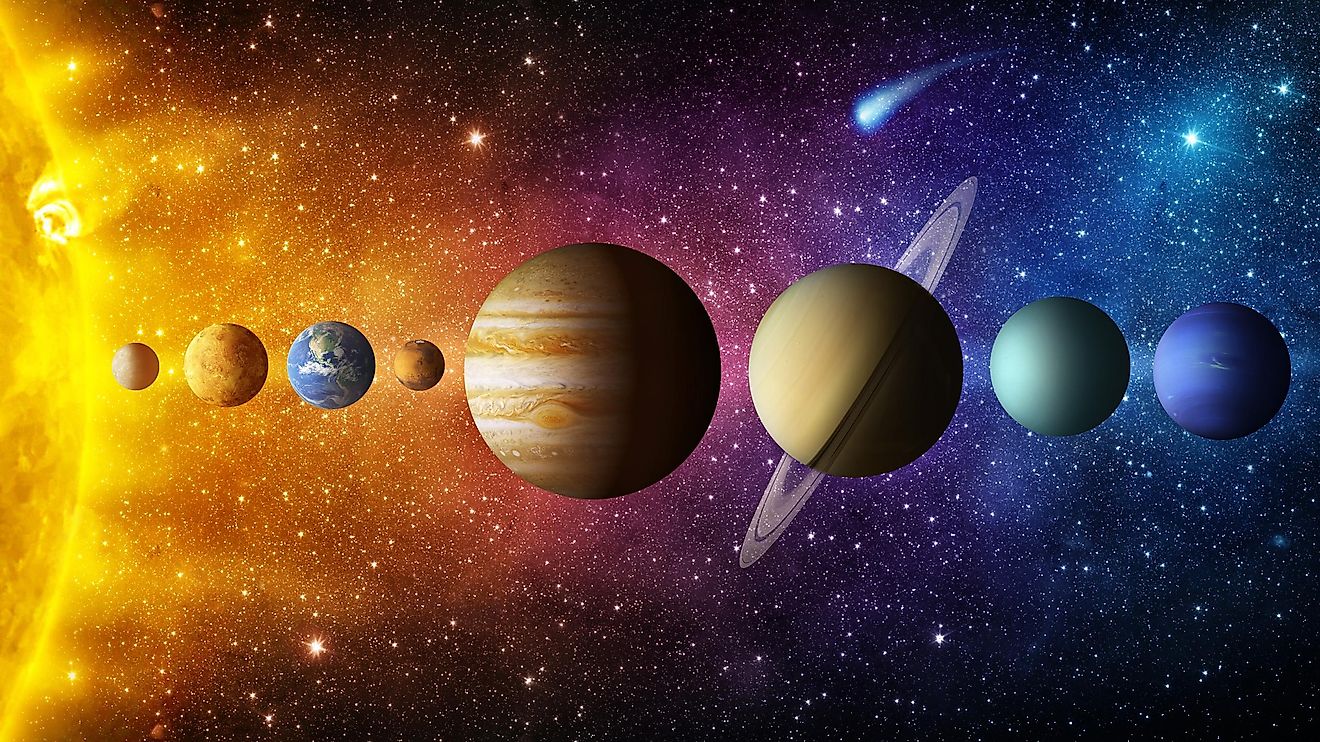
Imagine scaling things up and noticing how odd it gets! Sunlight takes roughly 8 minutes and 20 seconds to travel the 93 million miles to Earth, so the sunlight you see is always just a little bit behind the current moment. Moonlight takes only 1.3 seconds. And think about this, light from the Andromeda Galaxy has been on its journey for 2.5 million years before reaching your eyes. If sound could make such a trip from the Sun, traveling at 761 miles per hour, it would need over 14,000 years to arrive!
Two Speeds, Two Sets Of Rules
The difference between them goes beyond just one being a larger number. Sound is a mechanical wave that relies on a medium and changes speed depending on the temperature of that medium. Light, on the other hand, is an electromagnetic wave that doesn't need a medium at all and always travels at a fixed speed in a vacuum—so consistent that we redefined the meter based on it. One is a property of the material it moves through, while the other is a fundamental property of the universe itself. That’s why breaking the sound barrier required a rocket plane and a test pilot, but breaking the light barrier isn’t something anyone is rushing to do.