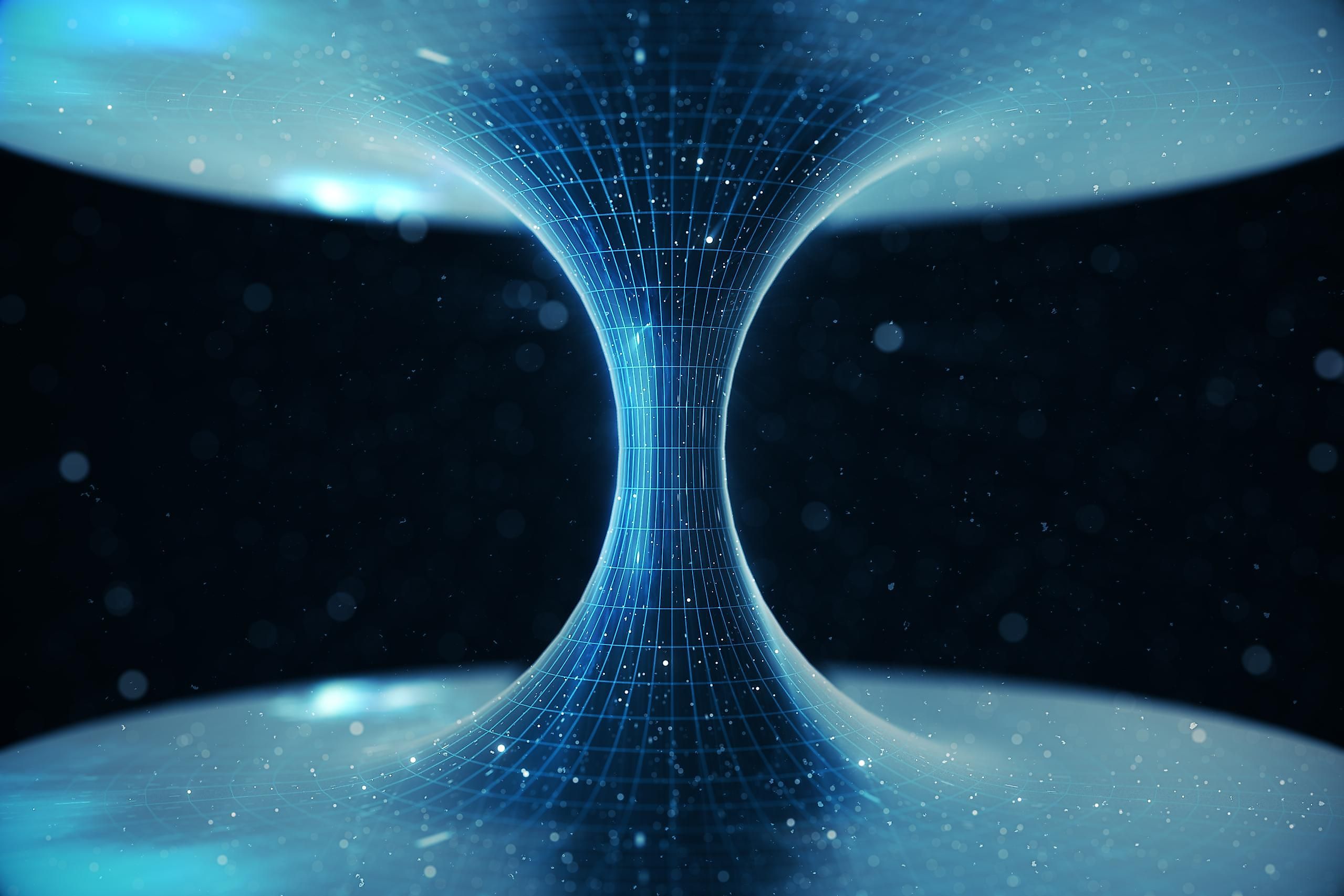
Is There More Than One Universe?
In an infinite number of universes where every possibility exists, there is a version of you that, at this very moment, is reading this article with two heads and three eyes. It may sound ridiculous, but according to some scientific theories, it is possible.
The original meaning of the word universe comes from the Latin universum, meaning "the whole." It contains every planet, every star, and every atom. By that definition, there cannot be more than one universe. If the universe contains everything that exists, how could there be anything else?
When scientists talk about multiple universes, they are usually referring to separate universes that exist outside the continuous spacetime that we live in, or multiple universes within a larger, all-encompassing spacetime. Some theories suggest that an infinite number of universes could exist, including worlds that are almost identical to our own (which could contain other versions of you) as well as unimaginably different planets, creatures, and even particles.
Why Do Some Scientists Think Multiple Universes Could Exist?
Eternal Inflation and the Cosmological Multiverse

Most scientists agree that the universe began with the Big Bang around 13.8 billion years ago. Rather than a big explosion, it's better to think of the Big Bang as the rapid expansion of space itself from an extremely hot, dense state. According to the widely accepted inflation theory, a period of extremely rapid expansion occurred immediately after the Big Bang.
During this brief moment, the universe expanded exponentially. In less than a fraction of a second, it expanded by a factor of 1030 or more. Inflation is thought to have ended almost as suddenly as it began. Over the next few moments, the energy driving this expansion is thought to have become a hot, dense mixture of elementary particles and radiation, leaving the universe as an extremely hot soup of tiny particles. The universe remained too hot for electrons to combine with atomic nuclei to form complete atoms for around 380,000 years. Once it had cooled enough, atoms formed for the first time. Around nine billion years later, our solar system began to form.

Scientists are still trying to understand what caused inflation to begin and what caused it to end. Some theories suggest that the energy responsible for inflation may not have disappeared and could still be producing new universes. It could be that each universe has its own 'Big Bang' creation moment, and that new universes are constantly being created by similar events.
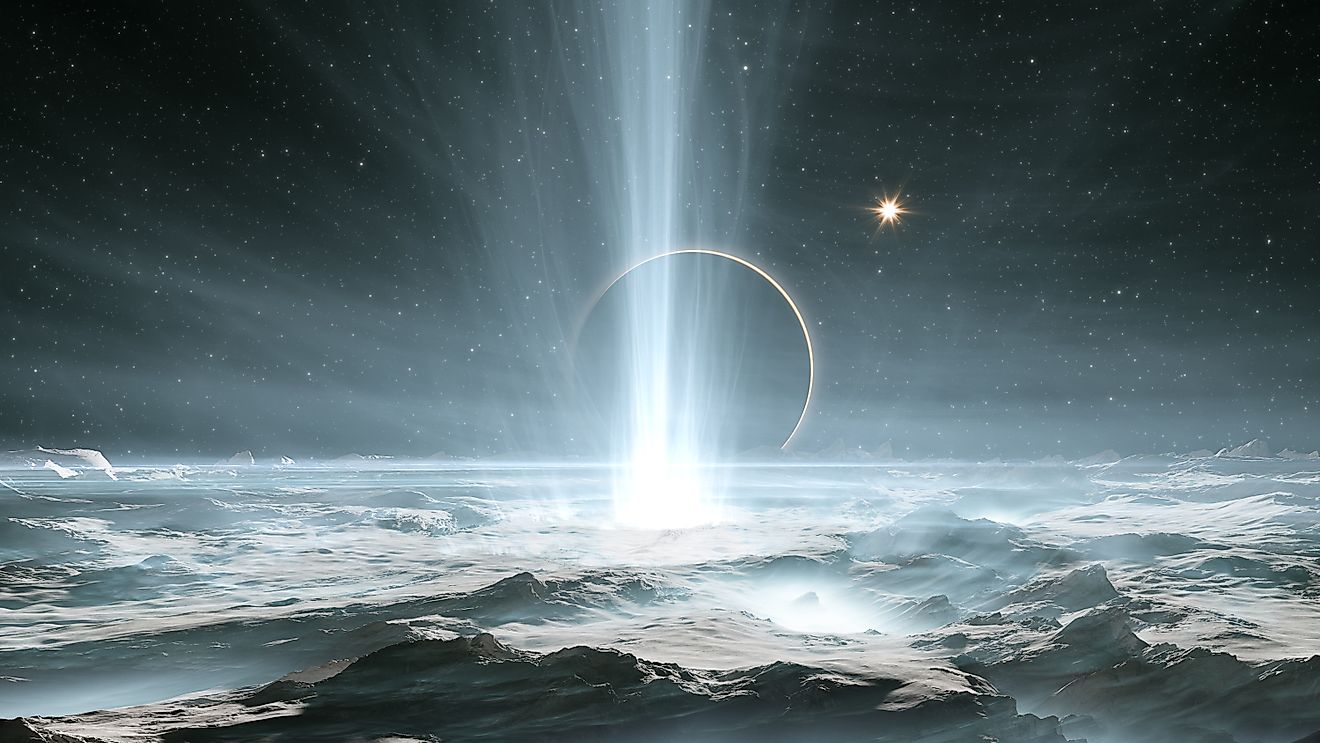
In the eternal inflation hypothesis, an all-encompassing spacetime continues expanding. Within this, bubbles of space stop inflating and form individual "pocket universes". Tiny quantum fluctuations during inflation could make one universe develop slightly differently from another, producing universes with different physical properties that may look nothing like anything we could imagine.
String Theory

String theory suggests that the fundamental building blocks of matter are tiny, one-dimensional vibrating strings of energy. The way these strings vibrate determines the particles and forces they produce, including quarks and gravity.
The problem is that the math of string theory only works if the universe contains 10 or 11 dimensions, and we only seem to have three spatial ones. These extra dimensions would be incredibly small and impossible to see with current technology, but they could still influence the universe because their shapes affect how the strings vibrate.
Scientists do not know the shapes of these hidden dimensions, and there may be an enormous number of possible configurations. Some researchers suggest that each possible arrangement could correspond to a different universe within a multiverse. The String Landscape idea suggests that there may be a huge number of possible ways for the extra dimensions predicted to be shaped. Each shape could correspond to a universe with its own unique physical laws.
Quantum Mechanics
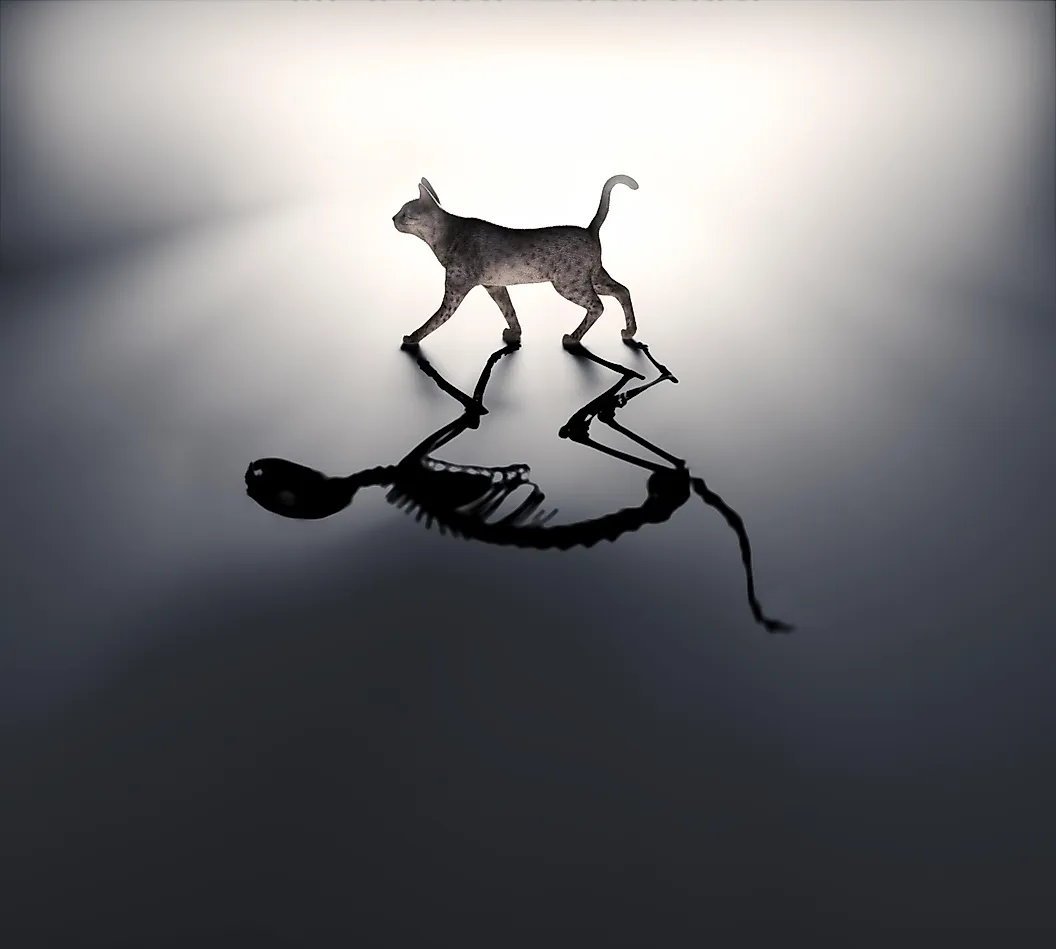
In quantum mechanics, which explores the tiny world of atoms and subatomic particles, these particles seem to exist in multiple possible states at once until they are measured. They are so small that we cannot observe them directly, so scientists describe them using a mathematical model called a wave function. This wave function represents the probability of finding a particle in different locations rather than giving it one definite position. When the particle is measured or interacts with its surroundings, the wave function appears to collapse to a single state.
According to the Many Worlds interpretation of quantum mechanics, rather than the wave function collapsing into a single outcome, every possible outcome exists in a separate world that branches off from the one we observe. In the famous thought experiment, Schrödinger's cat is both alive and dead until we check inside the box. In one world, the cat is alive, and in another, the cat is dead. Both realities exist simultaneously in different universes that branched apart when the observation was made.
Baby Universes, Primordial Black Holes and Brane Cosmology

Some speculative theories also propose the existence of baby universes. In these models, quantum gravitational processes could create new regions of spacetime that split off from a parent universe and evolve independently, making any future interaction extremely unlikely.
Another idea suggests that our own universe could exist inside a black hole within a larger universe. Some physicists have even proposed that primordial black holes, which may have formed fractions of a second after the Big Bang, could contain baby universes.
Other theories suggest there may be extra dimensions in which multiple universes exist close together but remain invisible to one another, like separate sheets of paper, or membranes ("branes") floating alongside each other within a larger multiverse. Some versions of brane cosmology propose that the Big Bang was triggered by the collision of two of these branes.
Is There Any Evidence For Multiple Universes?

Scientists have searched for evidence that other universes might exist, but there is currently no proof.
Some cosmologists have looked at the cosmic microwave background (the faint afterglow of the Big Bang) to try to find "scars" from colliding bubble universes. They created an algorithm to search through the cosmic microwave background and found some possible candidates, but this is not proof that other universes exist.
At present, none of the major multiverse theories have been confirmed by observational evidence. They also haven't been disproven.
Criticisms

There is currently no direct evidence for the multiverse, so these ideas remain unproven. Many physicists remain skeptical. One criticism is that multiverse theories violate Occam's Razor, the principle that the simplest explanation is usually preferred over more complicated alternatives.
Others argue that many multiverse theories are unfalsifiable and therefore belong more to philosophy than science. Some multiverse theories suggest that these other universes can never be observed or tested, so how could we ever prove that they exist?
On the flip side, some physicists argue that the mathematics behind inflation and string theory naturally predicts multiple universes, whether we can observe them or not. Some would argue that it is more likely that other universes exist than that ours is the only one.
Could Humans Ever Reach Another Universe?
Even if we did manage to travel to another universe, we might not last very long.
If the laws of physics were different, the atoms and molecules that make up the human body might not behave in the same way. Chemistry itself could function differently, meaning that we are likely to dissolve the second we arrive. We could also find ourselves in a universe that has very similar properties to our own, and perhaps even meet a version of ourselves over there.
So, is there more than one universe? The answer is: maybe. There is currently no evidence that the multiverse exists, but there is also no evidence proving that it does not. Some scientists dismiss the idea as little more than science fiction, while others see it as a natural consequence of quantum mechanics and cosmic inflation.
We don't know whether bubble universes are constantly forming within a much larger "master universe," but current theories suggest it is possible. Science still has many unanswered questions, and there are significant gaps in our understanding of the fundamental nature of reality. As scientists learn more about the universe, we may discover that reality is stranger, and bigger, than we can imagine.