Does Space Ever Truly End?
The observable universe is about 92 billion light-years across. That's 92 with nine zeroes after it. Yet, that staggering distance may represent only a small fraction of all space. At its apparent boundary, there is no known wall for a spacecraft to strike and no cliff where matter drops into nothingness. The observable limit exists because signals from more distant regions have not had enough time to reach Earth since the universe began. Scientists are not entirely sure what lies beyond it. Space may continue forever, or it may curve back into itself without ever forming an edge. Scientists can measure the universe we see, but they still cannot determine where or even if space truly ends.
The Last Light Humans Can See

Every view into deep space is also a view into the past. Sunlight reaches Earth in about eight minutes, while light from the nearest large galaxy, Andromeda, has traveled for roughly 2.5 million years. The oldest electromagnetic signals astronomers can directly observe began traveling toward us more than 13 billion years ago.
Astronomers can look roughly the same maximum distance in every direction, but that doesn't fully reveal the shape or total size of outer space. The oldest light they can detect is the cosmic microwave background, released about 380,000 years after the Big Bang. The CMB marks the earliest epoch visible with ordinary light because the universe was opaque before then, while regions beyond the particle horizon remain unseen because no signal from them has had time to reach us.
The observable universe is much wider than 13.8 billion light-years. Space expanded while ancient light traveled, carrying the regions that released it farther away. Those regions are now about 46 billion light-years from Earth, making the visible universe roughly 92 billion light-years across.
The Cosmic Horizon Isn't a Wall
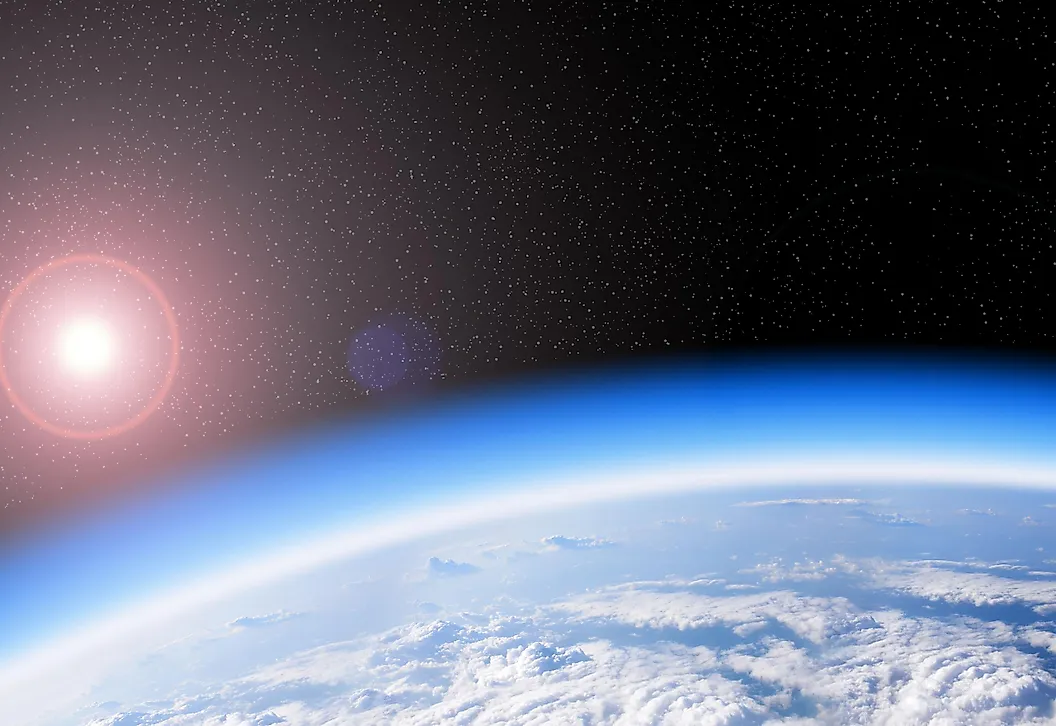
Nothing in modern cosmology suggests that a spacecraft would eventually strike a wall where space suddenly stops. The particle horizon marks the greatest comoving distance from which any signal could have reached us since the early universe, not a physical border around space.
The full universe could extend infinitely, or it could have a limited size without possessing an edge. Some models suggest that space may curve or connect back to itself, allowing it to continue without ever meeting an outer boundary. Scientists haven't determined which model is correct.
What lies beyond the observable horizon, therefore, remains unknown. It may contain more galaxies and empty space, but no signal from those regions has reached us. The horizon marks the end of what humans can currently observe, not a confirmed end to space itself.
Space May Extend Forever

One possibility is that space has no total size at all. Some cosmological models describe space as infinite in extent, with cosmic expansion increasing the distances between unbound regions over time. In an infinite universe, there would be no last galaxy, no outer border, and no point where a traveler could say there was nothing left ahead. Even after crossing billions of light-years, more space would remain.
An infinite universe would also have no true center. Earth appears central only because observations begin here, just as another observer would appear central from their own location. The universe wouldn't need to expand into anything outside itself because space is the thing expanding.
Scientists cannot confirm infinity by looking farther. Telescopes can reveal only the observable universe, so any endless region beyond it would remain impossible to measure in full.
A Finite Universe May Have No Edge
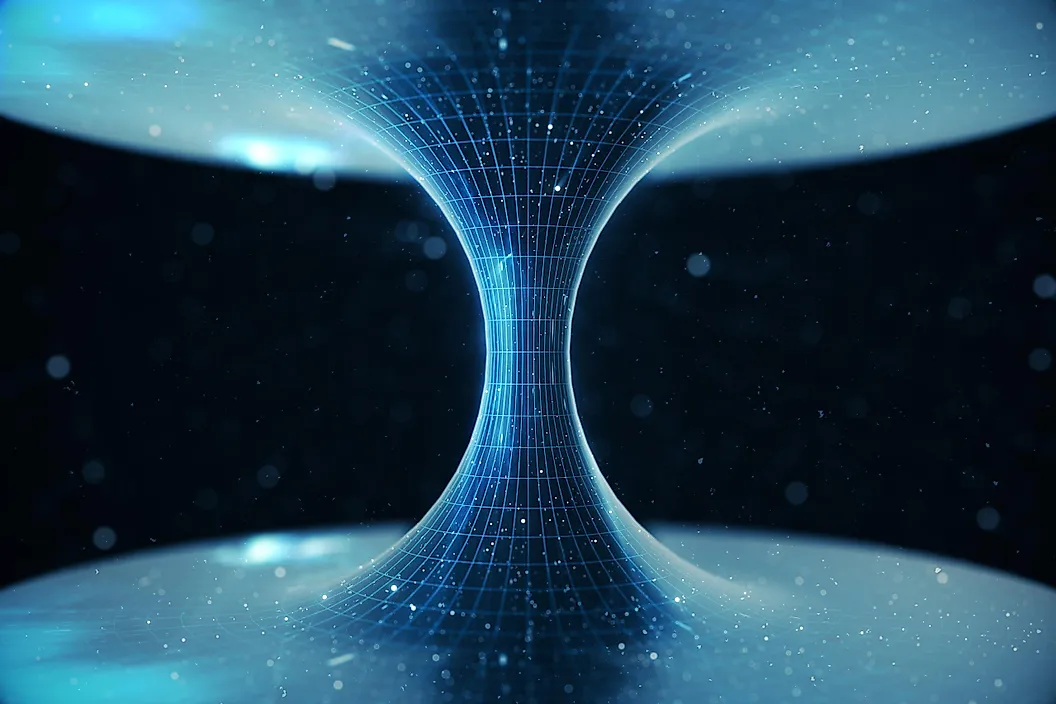
Space could have a limited total size without ending at a wall. Earth's surface offers a simple comparison. It covers a measurable area, yet someone can travel around the planet without ever reaching an edge.
A finite universe could work in a similar way across three dimensions. Space itself might curve back around, allowing a spacecraft moving in one direction to eventually return to its starting region. The traveler wouldn't cross a border, pass through a portal, or suddenly reverse direction. The path would remain continuous the entire time.
This idea doesn't prove that the universe is finite. It simply shows that "finite" doesn't have to mean enclosed by an outer wall. Space could have a limited size while still giving every traveler more distance ahead.
Ancient Light Could Reveal the Shape of the Universe

Scientists cannot view the universe from outside, so they study the oldest light within it. Small temperature patterns in the cosmic microwave background help reveal how space behaves across enormous distances.
Current measurements indicate that the observable universe is extremely close to flat in the Euclidean sense. This means observations are consistent with nearly Euclidean geometry across the observable universe, although they do not determine the full universe's global shape or topology.
Astronomers also search this ancient light for repeated patterns. If the universe curves back around or connects to itself, light from the same region might reach Earth along different routes. That could create matching circles in separate areas of the sky. Planck observations found no convincing matches, ruling out several finite models small enough to produce visible repetition.
The results narrow the possibilities without settling the question. Space could be infinite, or its full shape could be too large for its curvature or repeated patterns to appear within the observable universe.
Distant Galaxies Are Slipping Beyond Reach

Seeing a galaxy doesn't mean humans could ever reach it. Its light may have started traveling toward Earth billions of years ago, when the galaxy was much closer. During that journey, the space between galaxies continued to expand.
That expansion is now accelerating for reasons scientists still don't fully understand. Astronomers use the name dark energy for whatever is driving it. If the standard ΛCDM expansion history continues, some galaxies visible through ancient light lie beyond our cosmological event horizon, so a signal sent today will never reach them. This is different from the observable horizon. One marks what humans can currently see, while the other limits which regions humans could ever contact.
A spacecraft would face the same limit. Even if it traveled close to the speed of light, the distance ahead could increase too quickly for the ship to overcome. The crew would see ancient light from a galaxy while remaining permanently unable to visit it or send a message there.
Over immense periods, many distant galaxies will fade from view as their light becomes increasingly stretched and faint. Future observers may see a far emptier sky, even though those galaxies and the space between them haven't necessarily ceased to exist.
Humans May Never See the Full Universe

Science doesn't like speaking in absolutes, but it's likely humans may never see the entire universe. Better telescopes may reveal more distant galaxies, but they cannot show regions whose light will never reach Earth. Every observation depends on some form of information crossing space. If that information remains beyond the cosmic horizon, no instrument can recover it.
This creates a limit that technology may never overcome. Scientists can measure the universe's expansion, study ancient light, and rule out some possible shapes. They cannot inspect all of outer space or prove that it continues forever. An infinite universe cannot be observed in full, while a finite universe may be too large for its curvature to appear within the region humans can see.
The answer may therefore remain permanently incomplete. Astronomers can describe the observable universe with increasing precision, yet the full size and shape of outer space could always extend beyond the evidence available to humans.
Beyond the Last Visible Light
Space has a visible limit, but no confirmed physical end. The observable universe reaches about 46 billion light-years from Earth in every direction, while the full universe may extend far beyond anything humans can detect. It could continue forever, or it could curve back on itself without forming a wall or outer border.
Scientists may improve their measurements and rule out more possible shapes, but some answers could remain permanently hidden. Even a civilization that survived for billions of years might never see every part of existence, leaving the true size of outer space beyond the reach of every telescope and traveler.