The Strangest Sounds NASA Has Recorded In Space
A black hole 250 million light-years away has been "singing" a note so low that NASA had to speed it up 144 quadrillion times before human ears could pick it up. That is only the start. Spacecraft have caught chirping robots, howling wolves, and hail-on-a-tin-roof noises in the cold, airless dark. Some of these recordings are real pressure waves. Others are radio signals translated into sound. All of them would fit a science fiction soundtrack. Here are some of the strangest sounds that NASA has ever recorded in space.
How You Record in the Vacuum

Keep in mind that most of space is a near-perfect vacuum, so there is no air to carry sound the way it does on Earth. But space is not empty of waves. Planets, moons, and the Sun are surrounded by charged gas called plasma, and that gas rattles with electric and magnetic waves. Spacecraft instruments detect them, and scientists shift them into the range of human hearing. The result is not a microphone recording of the void. It is a translation, and the results can be unsettling. NASA has even bundled a set of them into a compilation of 22 space sounds, released ahead of Halloween.
A Black Hole's Deep Notes

In 2003, NASA's Chandra X-ray Observatory found ripples in the hot gas of the Perseus galaxy cluster. Pressure waves from the black hole at its center were pushing through the gas, and those ripples could be translated into a single note about 57 octaves below middle C. That's far too low for any human to hear. It is more than a quadrillion times deeper than the limits of human hearing. In 2022, NASA released a new version. Researchers extracted the waves outward from the center, then raised them by 57 and 58 octaves, which is 144 quadrillion and 288 quadrillion times their original pitch. A radar-like sweep around the image lets you hear waves traveling in different directions. The idea that space has no sound comes from the vacuum between stars and planets. A galaxy cluster is different. It is packed with gas, which gives sound waves something to travel through.
The Hum From Beyond Our Solar System

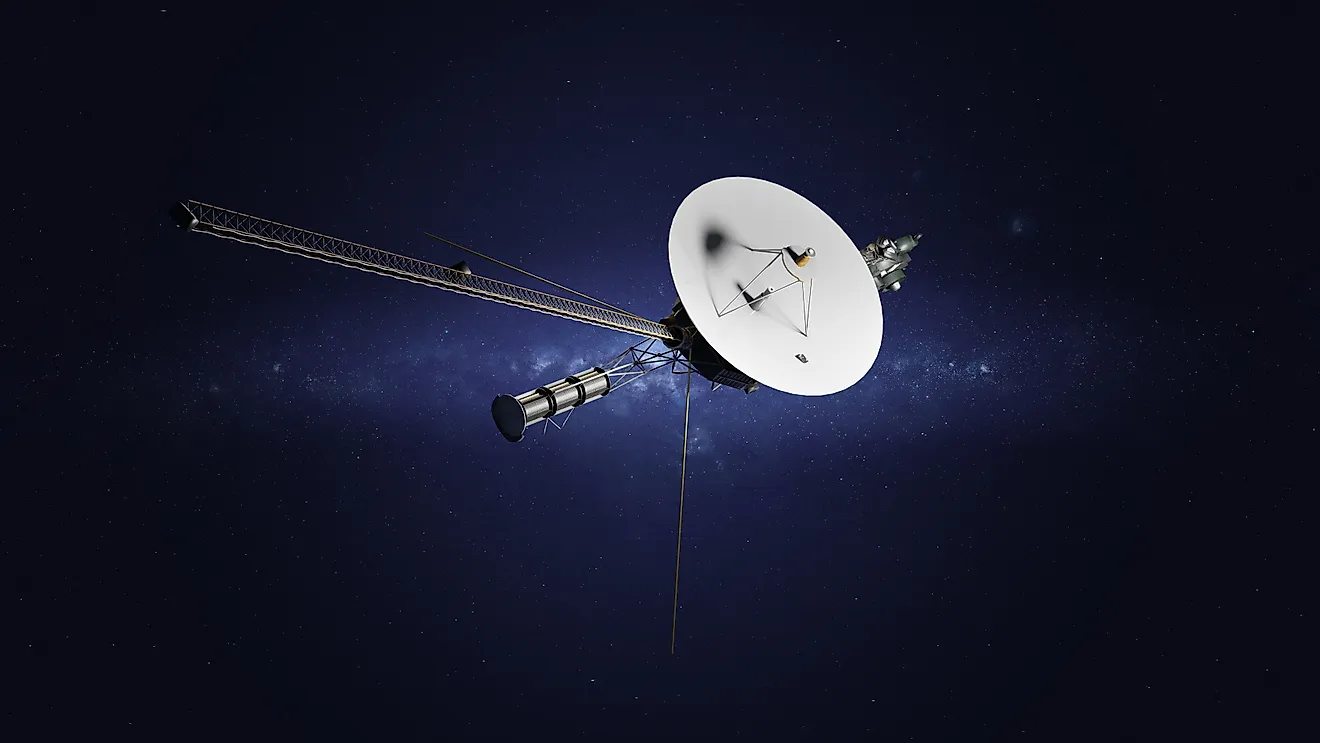
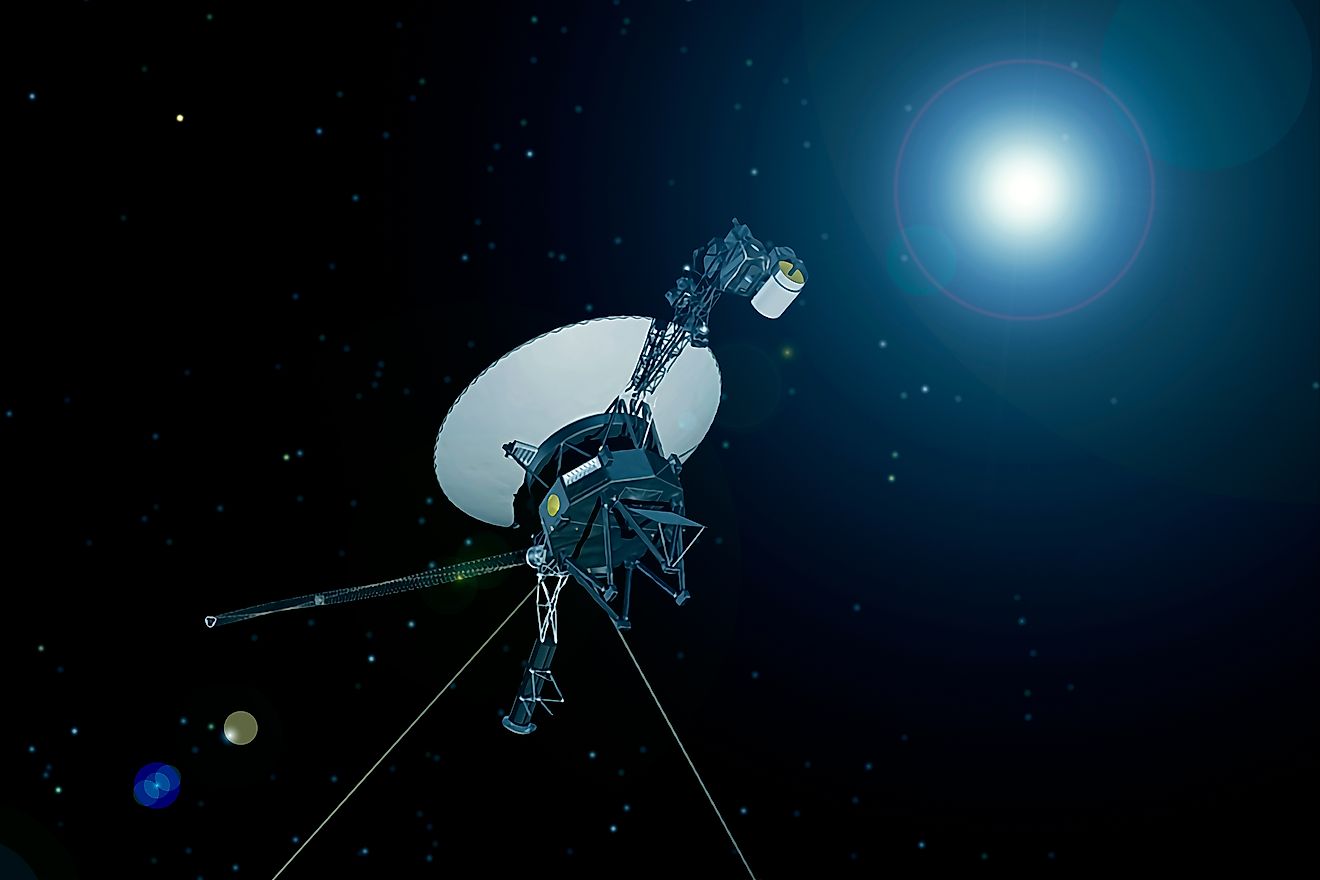
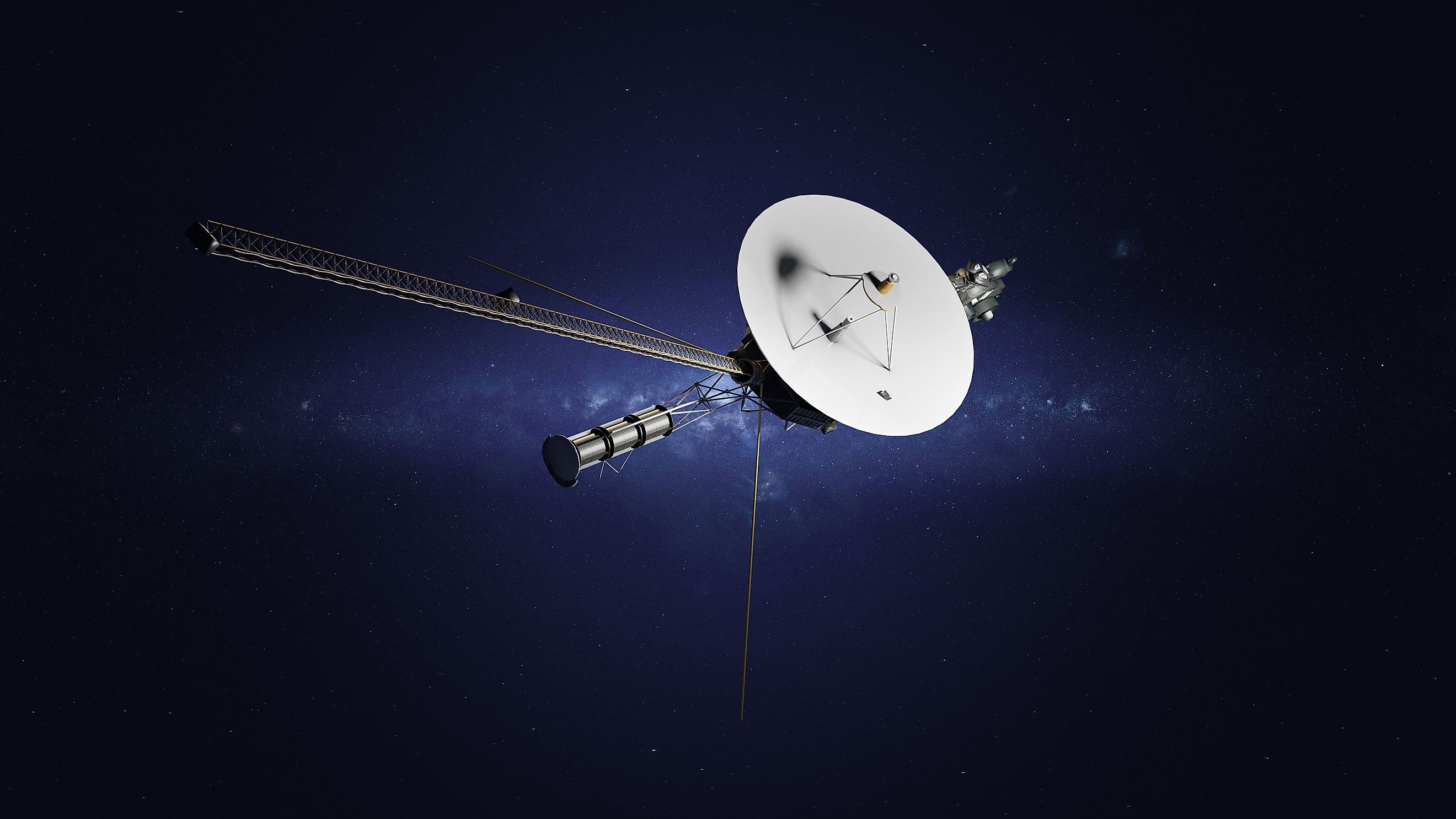
More than 16 billion miles (25.9 billion kilometers) from Earth, Voyager 1 has spent years listening. The spacecraft crossed into interstellar space in 2012, traveling at about 38,000 mph (61,000 km/h). In 2021, Cornell researchers working with Voyager's plasma wave data reported something no one expected: a faint, persistent drone coming from the gas between the stars. It's not a sound in the everyday sense. It shows up as vibrations in a very narrow frequency band. But the signal was there in the quiet stretches between bursts from the Sun, and one researcher compared the interstellar medium to a gentle rain. The hum was first detected in 2017. The probe that picked it up was launched in 1977 and sends its signal home with about 22 watts, roughly the power of a fridge light bulb.
Wolves, Birds, and Alien Lasers Around Earth

NASA's Van Allen Probes flew through the radiation belts around Earth and recorded plasma waves that sound like howling wolves, chirping birds, or alien lasers. The twin spacecraft launched in August 2012 and studied the belts for about seven years, until both ran out of fuel in 2019. Lightning strikes launch some of them. The electromagnetic pulse from a bolt travels up along Earth's magnetic field lines, and the higher frequencies outrun the lower ones, so listeners hear a falling whistle. Another type, called chorus waves, makes a whooping noise. Those waves can push electrons to higher energies, and some of those electrons can damage satellites and communications systems.
Ganymede's Chirps

On June 7, 2021, NASA's Juno spacecraft swept past Jupiter's moon Ganymede at 41,600 mph (67,000 km/h), more than 50 times the speed of sound on Earth. It came within 645 miles (1,038 kilometers) of the surface. Juno's Waves instrument recorded radio emissions between 10 and 50 kilohertz. NASA shifted them into the audible range to make a 50-second track full of chirps, beeps, and shrieks. Halfway through, the pitch jumps. That marks the spacecraft crossing into a different region of Ganymede's magnetic environment. Ganymede is bigger than Mercury, and it is the only moon in the solar system known to have its own magnetic field.
Saturn's Shrieks and Hailstorms

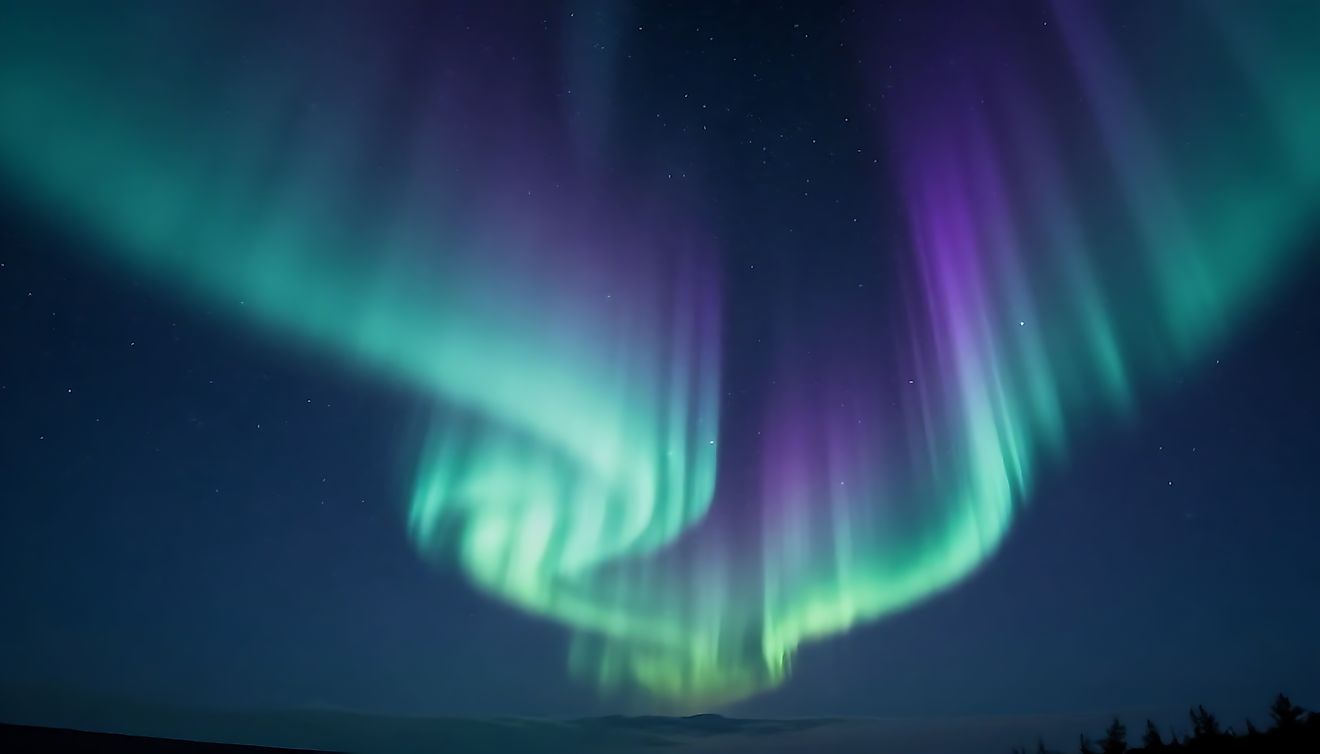
Saturn is one of the loudest planets in radio terms. Cassini began detecting its radio emissions in April 2002, from a distance of 234 million miles (374 million kilometers). The waves are tied to Saturn's auroras. NASA's team lowered their frequency by a factor of 260 to make them audible, revealing rising and falling tones that sound like a Halloween soundtrack. Researchers noted that the radio emissions from Earth and Saturn sound remarkably alike. Cassini also heard the ring system itself. When the spacecraft passed through a gap in Saturn's rings, impacts from dust particles, converted into audio, sounded like hail hitting a tin roof. Later, during its final orbits, Cassini recorded powerful plasma waves linking Saturn and its moon Enceladus. Sixteen minutes of data were compressed into 28.5 seconds of whooshing sound.
Sounds on Mars

While most of the sounds on this list are translations, Mars gave us the real thing. NASA's Perseverance rover carries microphones, and it recorded its first sounds on February 19, 2021, one day after landing. It has picked up wind, the rover's own mechanical whine, the buzz of the Ingenuity helicopter, and the crack of its laser zapping rocks. Analysis of those recordings revealed a surprise. Sound travels more slowly on Mars, as low-pitched sounds travel at about 240 meters per second, compared with roughly 343 meters per second on Earth. Higher-pitched sounds, like the laser clacks, travel about 10 meters per second faster than low ones, like the helicopter's rotor hum. The cause is the thin, cold, carbon dioxide-rich atmosphere. On Earth, every pitch travels at the same speed. Sounds on Mars are also about 20 decibels weaker than on Earth. Future astronauts would live in a quieter world where high notes arrive slightly ahead of low ones.
A Growing Space Soundtrack
The collection is still growing. In November 2026, NASA's Chandra X-ray Observatory released an album of four new sonifications of star-forming regions, using data from Chandra, Hubble, Webb and Spitzer. In the Carina Nebula's "Cosmic Cliffs" region, individual baby stars become short, string-like sounds. In the Rho Ophiuchi cloud, infant stars that violently flare in X-rays are heard as high-pitched, glassy tones. None of these are recordings in the literal sense. Each is a map of light turned into music, one pixel at a time. One day, probes may travel far enough to listen to the hum of other regions of interstellar space. Researchers say Voyager's drone could help them measure the density of the gas between the stars without waiting for a solar eruption. Until then, a 1970s spacecraft powered by a trickle of electricity has already sent back the sound of the space between the stars.