What JUICE Will See At Ganymede
One of Jupiter's moons, Ganymede, lies under an icy crust that could be about 95 miles (150 kilometers) thick, roughly the driving distance between New York City and Philadelphia. Scientists believe that a deep saltwater ocean sits beneath that ice. Is it possible that Ganymede has the necessary organic compounds to support microbial life? The European Space Agency's spacecraft, JUICE (Jupiter Icy Moons Explorer), is set to test many of space scientists' hypotheses about this giant moon. In December 2034, JUICE will become the first spacecraft ever to orbit a moon other than our own, and what it finds may lead to surprises that scientists have not even considered asking about.
About Ganymede

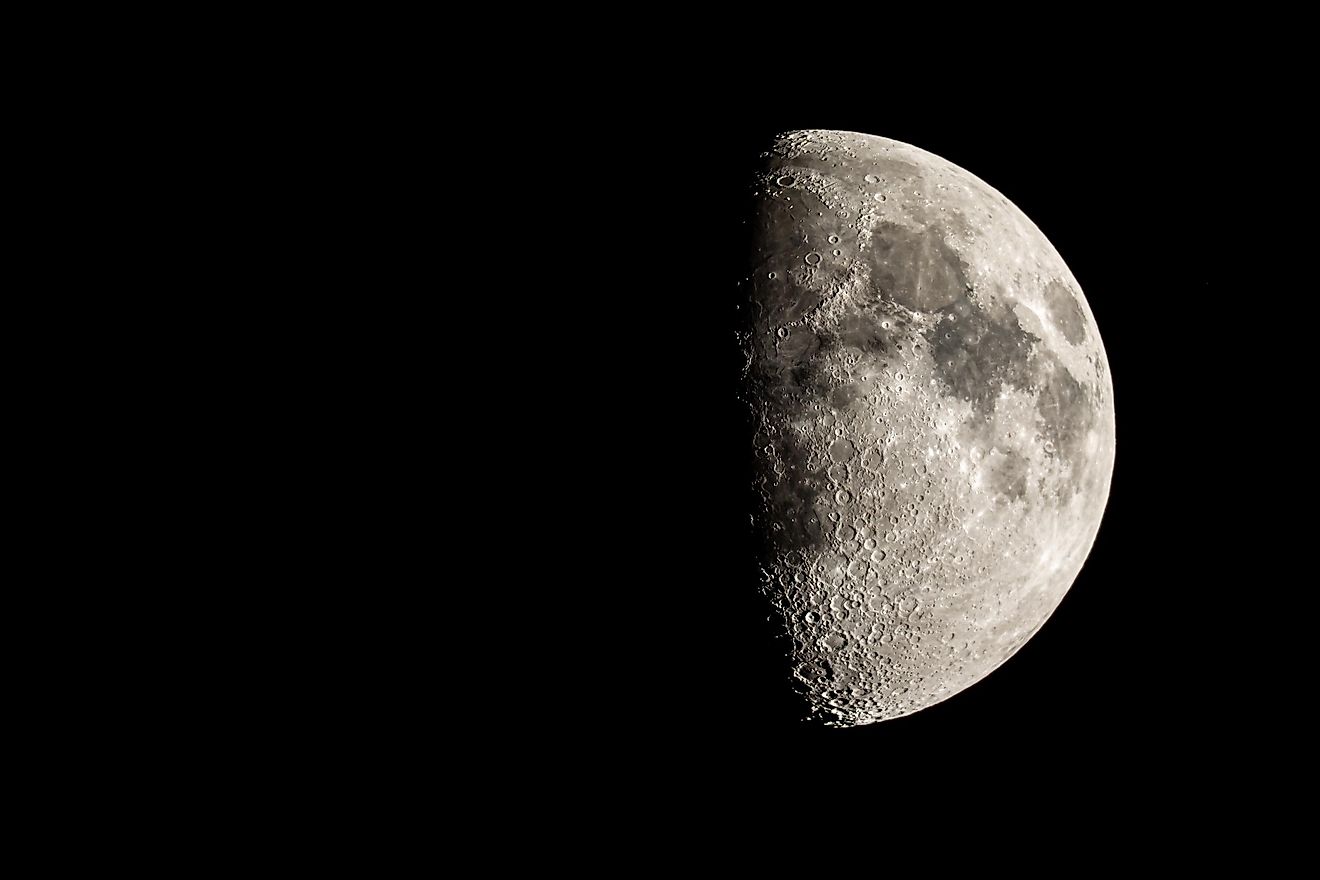
Ganymede is the largest moon in our solar system, orbiting the largest planet, the gas giant Jupiter, the fifth planet from the Sun. If you were standing on Ganymede, Jupiter, only 665,000 miles away, would be looming right above you. Jupiter has four large moons and more than a hundred smaller ones, some of which may be passing asteroids caught in its gravitational pull. Ganymede was first discovered by Galileo Galilei, the Italian astronomer, on January 7, 1610. It most likely formed from material left over after Jupiter took shape and is about 4.5 billion years old, just like the rest of the solar system. It is about 1.5 times wider than our Moon, about 3.5 times larger in volume, and larger than the planet Mercury. At 3,273 miles in diameter, crossing it would be about the same as driving from Minneapolis, Minnesota, to Alaska. Like our own Moon, it always shows the same face to its parent planet, and each revolution takes about seven Earth days. According to NASA, daytime surface temperatures range from about -297 to -171 degrees Fahrenheit.
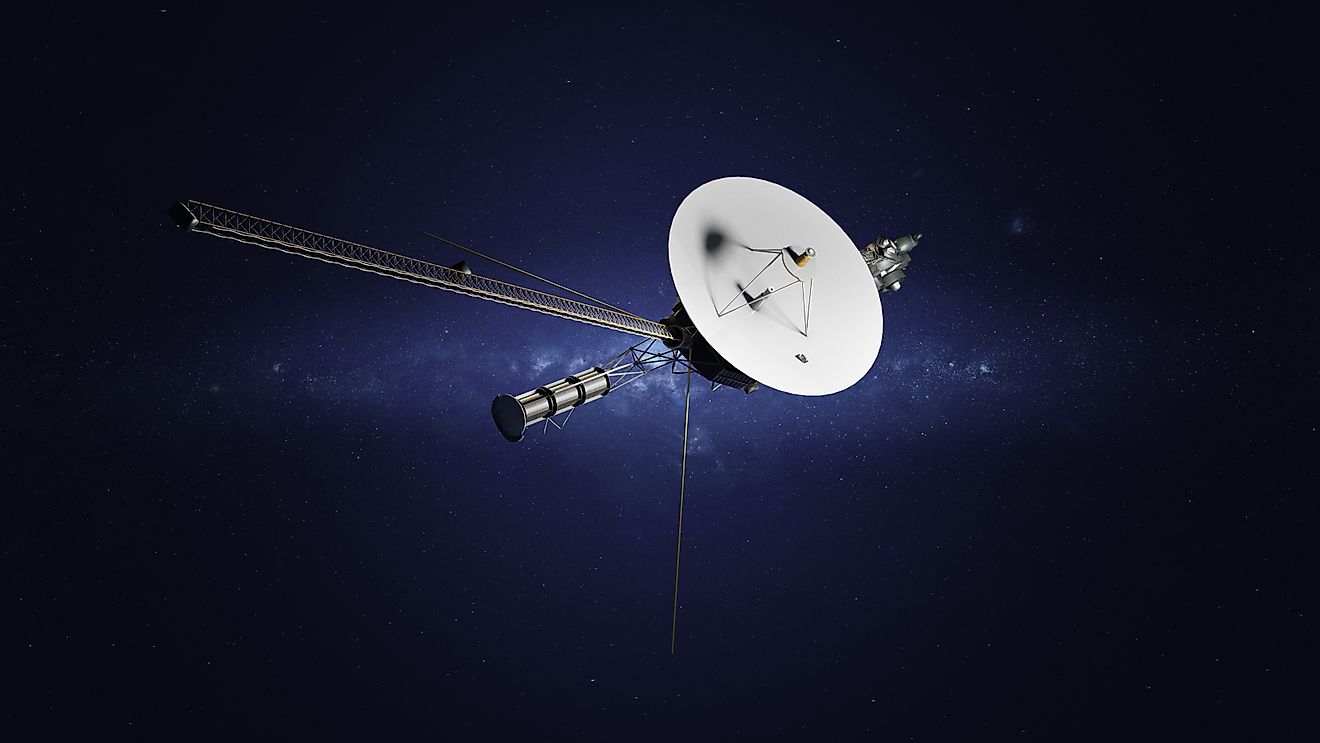
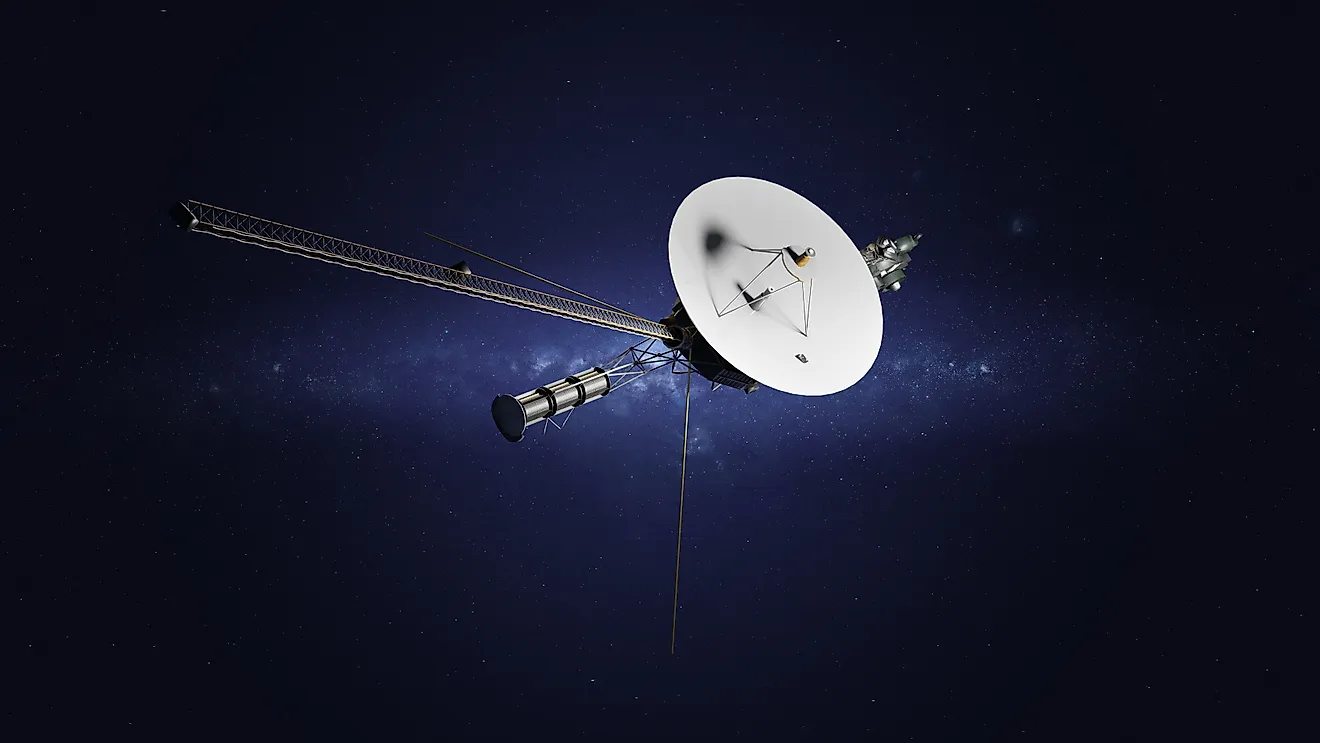
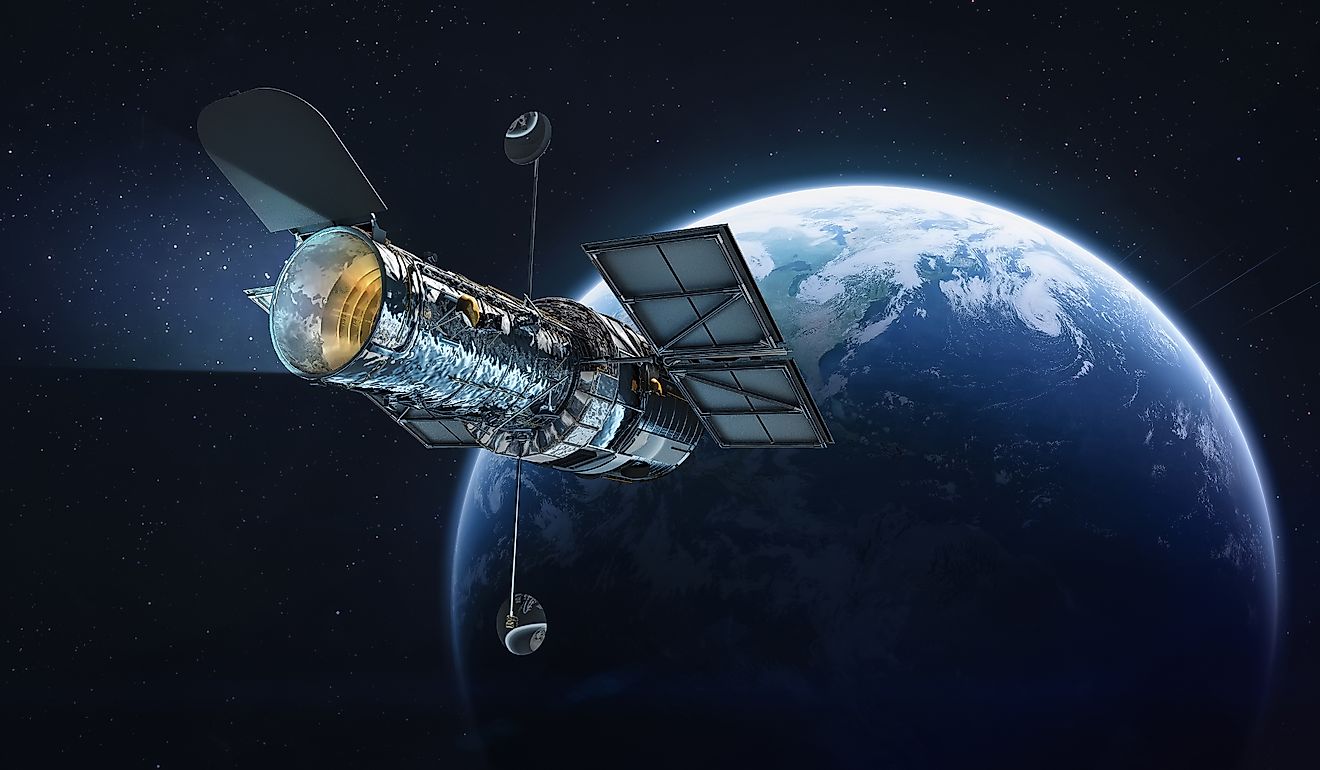
Pioneer 10 took the first close-up images of Ganymede in 1973, and Voyager 1 and Voyager 2 followed in 1979. The Galileo spacecraft reached Ganymede in 1996 and revealed that the moon has its own magnetic field, even capturing whistling and crackling sounds. NASA's Juno spacecraft returned far more detailed images during a 2021 flyby, showing large craters and fractures from tectonic faults. None of these missions were designed to study Ganymede specifically, and their photos were taken during flybys. Juno also detected mineral salts and organic compounds on the surface, and NASA's Hubble Space Telescope found evidence of a thin oxygen atmosphere, likely coming from Ganymede's icy surface.
About JUICE's Mission

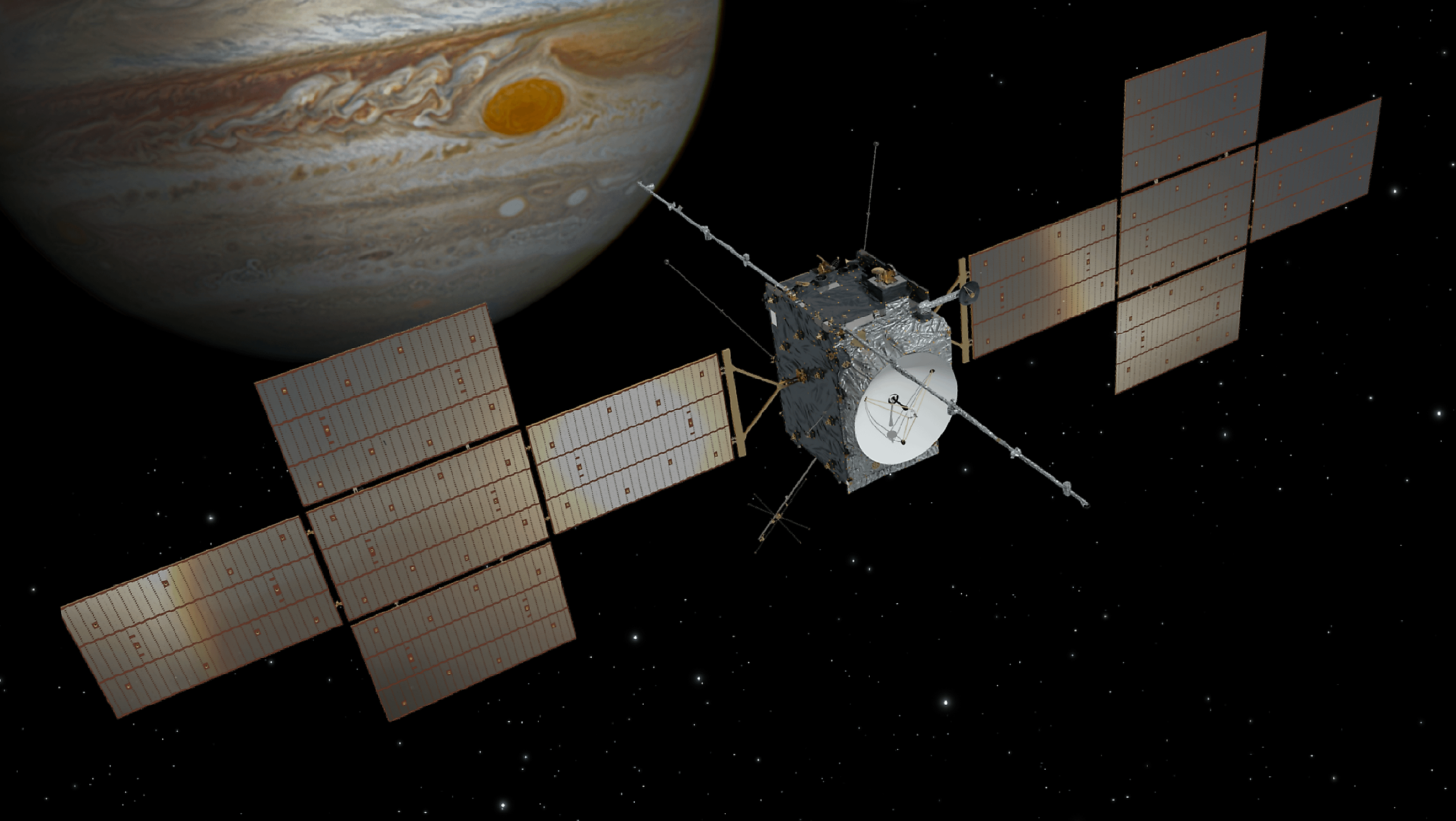
The European Space Agency launched JUICE on April 14, 2023, aboard an Ariane 5 heavy-lift rocket, more than a decade after selecting the mission in 2012. Its solar arrays span about 89 feet from tip to tip, roughly the length of an NBA basketball court, and they are the largest ever flown on an interplanetary mission. The arrays power the spacecraft's computers and scientific instruments far from the Sun. Once it reaches Jupiter, JUICE will make 35 flybys of Ganymede, Europa, and Callisto, with 12 of those dedicated to Ganymede, 21 to Callisto, and two to Europa. After those are complete, it will spend about nine months orbiting Ganymede for closer study.
JUICE travels with 10 advanced instruments. There is radar to probe beneath the icy crust, radio science to test the strength of the moon's gravity, a laser altimeter to measure changes in surface height that could indicate tides created by Jupiter's gravitational pull, and a magnetometer to study the ocean's properties, among other instruments. A camera called JANUS is on board to map the moon's full surface in color and capture 3D detail of selected regions. At a resolution of up to about 2.6 yards per pixel, its photos are expected to reveal craters, fractures, and ice formations with clarity.
The Thick Icy Crust and the Ocean Beneath It

Experts believe that Ganymede's ice crust could be about 95 miles thick, and this mission will measure it carefully. On the surface of the crust are ancient craters alongside much younger long grooves and large tectonic fractures in various regions. Grooved terrain like this suggests that Ganymede's icy shell was pulled under tension by tectonic forces at some point in its history. These features will be mapped, and scientists hope to learn what created them. They also want to know if the frozen crust moves and shifts. Is there any seismic activity beneath all that ice?
Perhaps the most important question in this mission concerns the deep saltwater ocean that scientists strongly believe lies beneath the frozen crust. It is not known how deep this ocean is or how far the craters and plates on the surface extend down toward it. Importantly, does any of the water underneath ever make its way to the surface? It is also thought that beneath this ocean there may be another thick layer of ice that surrounds it. That second layer of ice would likely sit above a rock mantle and an iron-rich core that creates Ganymede's magnetic field.
A Magnetic Field and Auroras

Ganymede is the only moon in our solar system with its own magnetic field, and studying that field is one of the main reasons scientists predict a deep ocean below the crust. Magnetic fields cause auroras, and Ganymede has bright ones at both poles. In 2015, the Hubble Space Telescope revealed that Ganymede's auroras do not shift back and forth as much as expected, even given the interplay between Ganymede's own magnetic field and Jupiter's. Something was interfering with the magnetosphere, and a deep salt ocean was a likely culprit, as salty water conducts electricity and can create its own magnetic field.
This could explain the four-degree difference in the anticipated "dancing" of Ganymede's auroras, and it remains some of the strongest evidence that the ocean exists. There is still much more to learn. Where do the two magnetic spheres of Ganymede and Jupiter meet, and how do they interact over time? JUICE will use an ultraviolet spectrograph to observe how particles from Jupiter that slam into Ganymede affect its magnetic field. Alongside the magnetometer, these measurements could help scientists estimate how deep and how salty the hidden ocean is, details that no spacecraft has been able to confirm so far.
Is Life Possible on Ganymede?

Ganymede is thought to have more liquid salt water than all of Earth's oceans, rivers, and lakes combined. It may provide favorable conditions for microbial life, although no life has been detected so far. Scientists think the combination of rock minerals and water may provide the building blocks for the development of life. JUICE will scan Ganymede's surface for possible biosignatures and study how deep its ocean lies. Even so, an icy shell roughly 95 miles thick stands between the surface and that water, so any life in the ocean could stay out of reach of direct study for a long time.
How Will the Mission End?

JUICE will continue to orbit Ganymede until September 2035. At that time, its mission will end, and it will be allowed to fall to the surface of Ganymede. The Committee on Space Research (COSPAR) has created a planetary protection protocol that determines how spacecraft can safely interact with alien moons and planets. According to this protocol, if the possibility of current life is suspected, a spacecraft must not interfere with the surface for fear of contaminating it. The mission to Ganymede is considered category II because life on this moon, if it exists, is unlikely to be present on the surface. Unlike Jupiter's moon Europa, Ganymede shows no geological processes that could force subterranean water to the surface. For this reason, JUICE was not sterilized prior to takeoff, and it is considered safe for it to impact the surface of Ganymede.
Europa, on the other hand, has much stronger evidence for the possibility of life in some form, because geological activity could force its subsurface water to the surface, although it is not known whether microbial life exists on that moon either. Water plumes have been observed on Europa, and it is believed to have a significantly thinner crust. It has been designated as category III. If, during the JUICE mission, scientists find that some of the subterranean ocean beneath Ganymede's crust leaks to the surface, the spacecraft's disposal method would have to be carefully reconsidered. It is likely that impact would then be planned for a part of the surface where no water is present.
The JUICE Mission

The JUICE spacecraft has the potential to answer some of the biggest questions experts have about Ganymede's icy crust and the ocean below it. Over roughly four years of flybys and orbits, it will measure the thickness of the ice, map the surface in color, and track how Ganymede's magnetic field interacts with Jupiter's. Its exploration of Ganymede and other parts of Jupiter's moon system could reveal the possibility of life outside of Earth, and when its mission ends in 2035, it will leave behind the most detailed portrait yet of the largest moon in the solar system.