Space
What Is The Oldest Rock Ever Found?
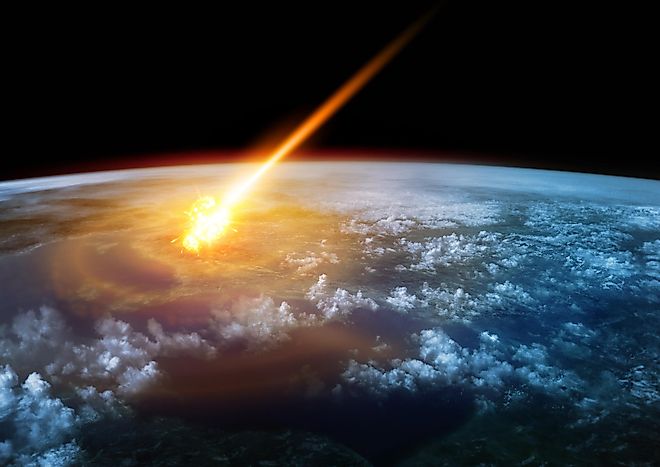
The oldest rock ever found is the Murchison Meteorite, dated to be around 7-billion years old, older than the solar system itself.
What Is The Universe Made Of?
The universe is composed of matter and energy, yet most of those ingredients come in the form of dark matter and dark energy.
The Largest Asteroid In The Solar System
The largest asteroid in the solar system is Vesta, an asteroid within the Asteroid Belt with a diameter of 326 miles across.
NASA Crashes Spacecraft Into An Asteroid
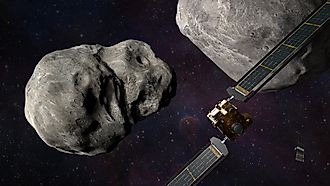
DART is a spacecraft launched by NASA in 2021 with the goal of striking the asteroid head-on and altering its trajectory.
The Different Types Of Telescopes
Telescopes can be categorized into three general types: reflector telescope, refractor telescope, and Catadioptric telescopes.

What Is A Super-Earth?
A super-Earth is a type of planet that has a mass of 1.5 to 10 times greater than Earth’s. Over 1,500 super-Earths have been found.
What Is The Closest Nebula?
The closest nebula to our solar system is the Helix Nebula, a planetary nebula located around 650 light years away in the constellation Aquarius.
How Many Stars Are In The Milky Way?
The Milky Way Galaxy contains between 100-billion to 400-billion stars, which is estimated based on the mass of the Milky Way.
The Oldest Star In The Universe
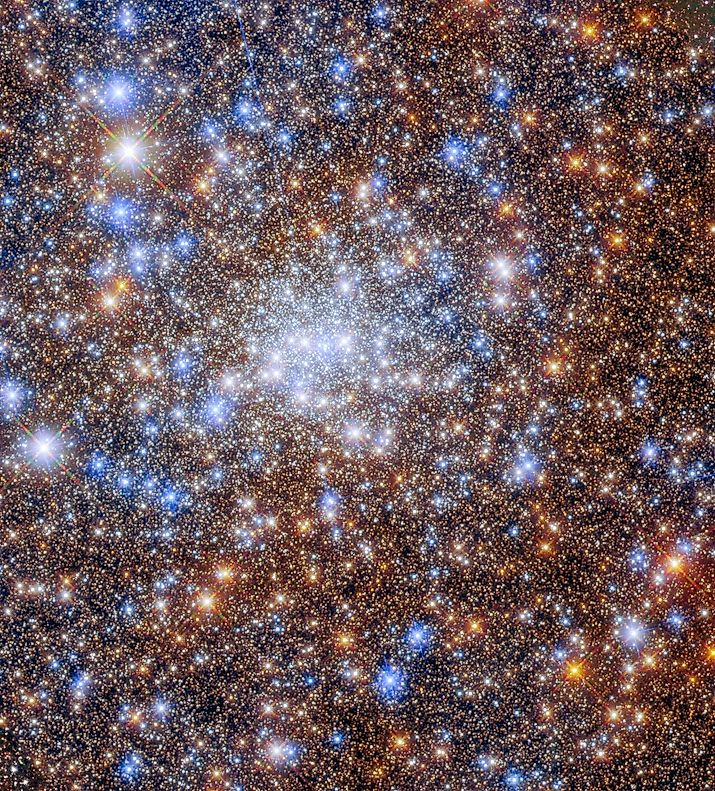
The oldest star ever discovered is nicknamed Methusalah, and its age is estimated at being greater than 12-billion years.
The Solar System With Four Habitable Planets
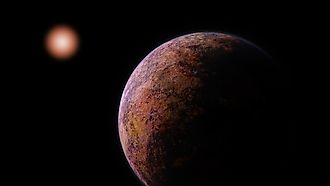
The TRAPPIST-1 solar system contains seven known planets, four of which orbit within the habitable zone of the central star.
Is Earth A Planet?
The Earth is one of eight known planets that orbit the sun. Earth’s gravity is strong enough to make it spherical and clear its orbit of debris.
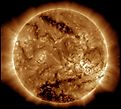
What Are Sunspots?
Sunspots are darker, colder regions on the sun’s surface. They are associated with the formation of both solar flares and coronal mass ejections.
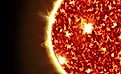
What Is The Biggest Star Ever Found?
The largest star ever found is a hypergiant called UY Scuti. Located 5,219 light years away, it is 1,700 times larger than the sun.
How Old Is The Milky Way?
The Milky Way is estimated to be around 13-billion years old based on the age of subgiant stars within the Milky Way Galaxy.
Why Does Uranus Spin On Its Side?
Unlike all the other planets, Uranus spins on its side. The reason for this is likely due to a planetary collision that occurred billions of years ago.
What Is Retrograde Motion?
Real retrograde is when an object moves the opposite direction than expected, while apparent retrograde motion is due to perspective.
Jupiter Is About To Be At Its Closest Approach in 59 Years
On September 26, 2022, Jupiter will be closer to the Earth than at any point in the last 59 years. Jupiter will be located 365-million miles away.
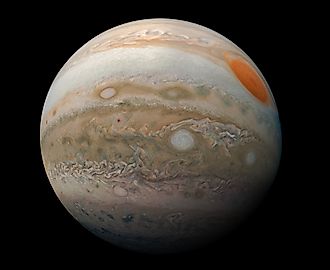
Why Is Neptune Blue?
Neptune is blue because of the amount of methane within its atmosphere, which absorbs red light and reflects blue light.
The Largest Planet Ever Found
To date, the largest planet found is a gas giant designated ROXs-42Bb. The exoplanet is 9 times the mass of Jupiter and 2.5 times the size of Jupiter.
Latest James Webb Image Shows The Orion Nebula
The Orion Nebula is one the largest and closest star-forming regions in the Milky Way. The latest image from JWST shows it in unprecedented detail.
The 5 Largest Nebulae in The Universe
Nebulae are vast clouds of stellar material. They vary significantly in size, from the size of a solar system to being over a million light years across.
What Are Type 1A Supernovae?
Type 1A Supernovae are caused by the explosion of stellar remnants, called white dwarfs, that exceed their upper mass limit of 1.4 solar masses.
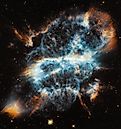
The Five Closest Spiral Galaxies
Most galaxies are extremely far away from our solar system, yet some are relatively close compared to the size of the universe.
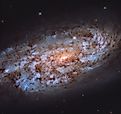
What Is The Coldest Place In The Universe?
The coldest known place in the universe is the Boomerang Nebula, where temperatures average at minus 458 degrees Fahrenheit.
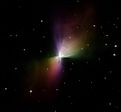
Are We Made Of Stardust?
Most elements heavier than hydrogen form within the cores of massive stars. The elements that make up our bodies were once inside massive stars.
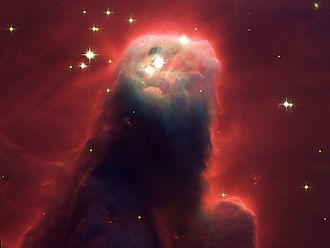
What Was The First Observatory?
An observatory is defined as a building that contains a telescope used for astronomical observations. The first observatory was built by Galileo in 1609.

Why Is Mars Red?
The surface of Mars is mostly red due to the oxidation of chemicals on the surface. Thus, Mars is red due to the surface being rusty.
Does It Rain Diamond On Uranus And Neptune?
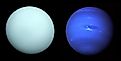
Uranus and Neptune are both home to diamond rain that forms from carbon molecules breaking apart and crystallizing in their interiors.
How Big Are Saturn’s Rings?
Saturn’s rings are over 170,000 miles across. Saturn is surrounded by seven main rings, each of which vary significantly in size.
Does The Moon Emit Light?
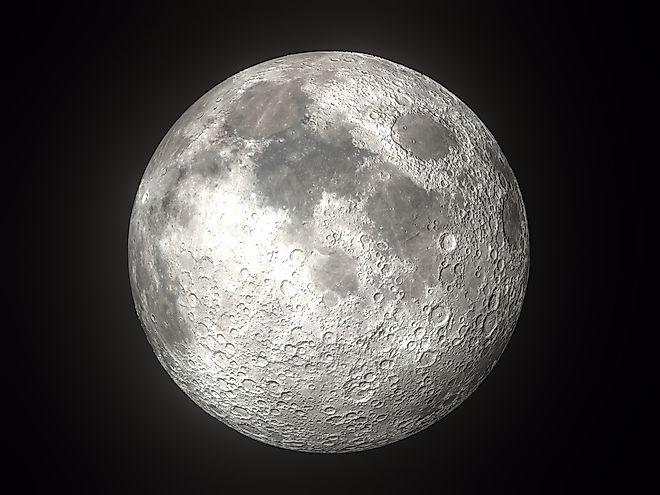
The moon is the second brightest object in Earth’s sky. The moon does not emit visible light, and instead, reflects incoming light from the sun.
Does The Sun Have An Atmosphere?
The sun has an atmosphere that is generally divided into three different layers: the photosphere, chromosphere, and the corona.
What Are Parsecs?
A parsec is a unit of distance used in astronomy that equates to 3.26 light years. Parsecs are generally used to measure vast distances in space.
What Color Is The Sun?
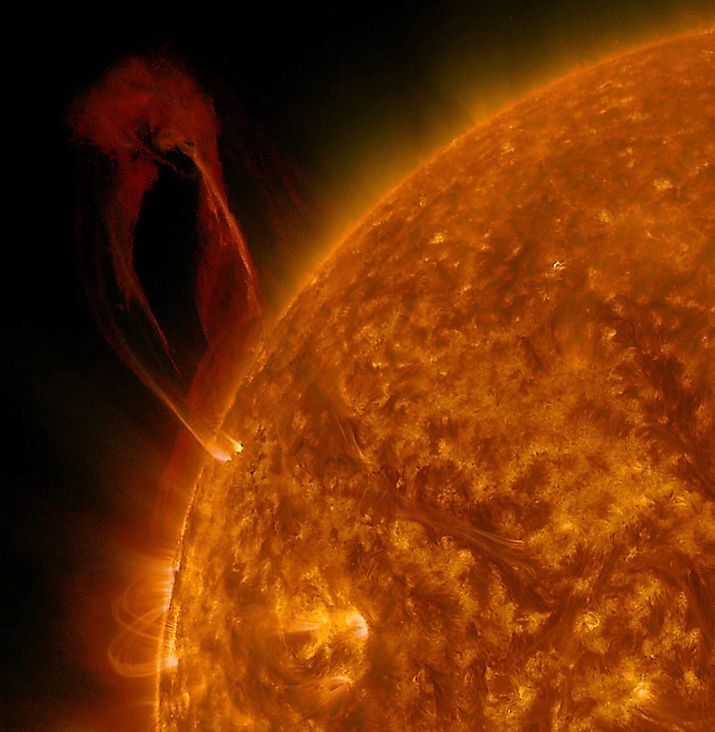
The color of the sun is dependent on a number of factors, such as the sun’s surface temperature, Earth’s atmosphere, and how the human eye sees color.
How Far Is Each Planet?
The distance between the sun and each planet varies significantly. Mercury is the innermost planet, while Neptune is the outermost.
How Many Constellations Are There?
There are a total of 88 constellations that are recognized by the International Astronomical Union, which are divided between the two Hemispheres.
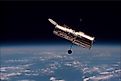
World’s 5 Strongest Telescopes
Telescopes are the primary tool used to study the universe. The strength of a telescope is dependent upon its location and mirror size.
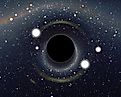
The Smallest Black Hole In The Universe
The smallest black hole ever discovered is called the Unicorn, located around 1,500 light years away. It is only three times the mass of the sun.
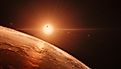
What Is The Closest Star?
The closest star to the sun is Proxima Centauri. Proxima Centauri is a red dwarf star located a mere 4.2 light years away.
Is The Speed Of Light Constant?
The speed of light moves at a constant speed of 186,000 miles per second. That speed is constant regardless of one’s speed or position.
What Is An Einstein Ring?
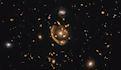
An Einstein Ring is a rare form of gravitational lensing, wherein the warping of space bends the path of light and magnifies distant objects.