Space
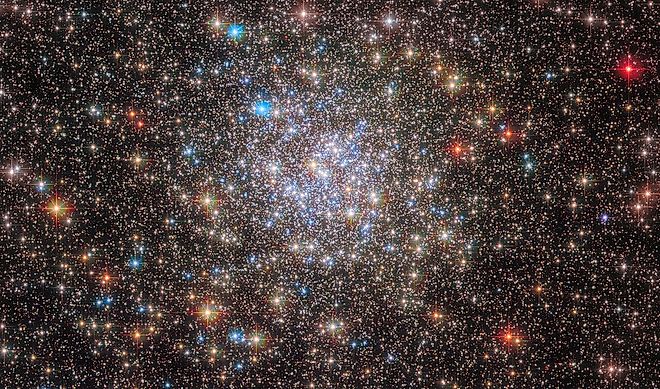
How Often Are Stars Born?
Scientists estimate that four solar masses worth of stars are born every year in our galaxy, yet that rate will vary from galaxy to galaxy.
Hubble Observes Black Hole Devour a Star
Hubble recently observed a supermassive black hole 300-million light years away devouring a star, an event known as a tidal disruption event.
What Is The Longest Space Mission?
The longest space mission to date is the Voyager mission, which began in 1977 and is still ongoing. The mission has now lasted over 45-years.
New Research Suggests Light Pollution Is Worse Than Previously Thought
Light pollution is the phenomenon by which artificial light reduces the amount of visible stars. Recent data suggests light pollution is getting worse.
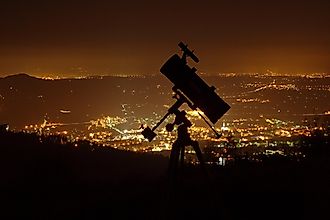
Could Plants Be Detected on Other Planets?
Plant life on exoplanets could potentially be detected through the amount of infrared radiation that plants reflect back into space.
Does The Moon Rotate?
While we only ever see the same side of the moon from Earth, it does rotate. It takes the moon roughly 27.3 days to complete one rotation.
Does The Moon Have a Name?
The moon does not have an official name. While moon was once the official name of Earth’s moon, it is now used to define all natural satellites.
How Big Was The Asteroid That Killed The Dinosaurs?
At the end of the Cretaceous Period 66-million years ago, the Earth was struck by a 6-mile wide asteroid that caused a mass extinction event.
How Big Is The Sun?
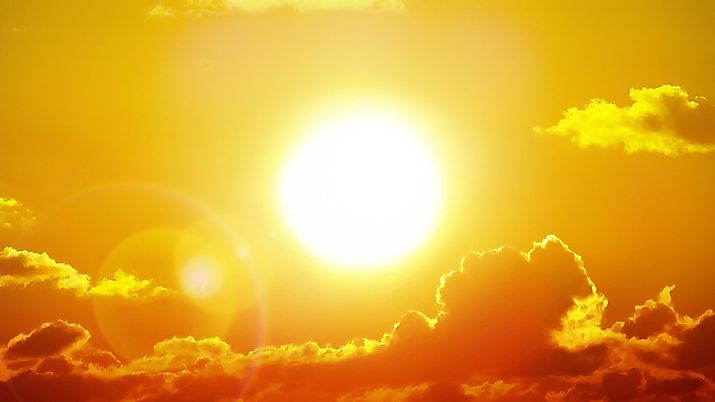
The sun is the largest object in the solar system with a diameter of 864,938 miles (1.39-million kilometres), which is 110 times larger than Earth.
New Research Explains The Formation of Super-Earths
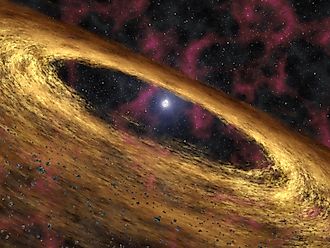
A new model seeks to explain the formation of super-Earths by assuming stars are surrounded by multiple planetary disks upon formation.
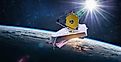
James Webb Telescope Finds Its First Exoplanet
The James Webb Telescope has recently confirmed the existence of its first exoplanet, designated as LHS-475b. The planet is a rocky world similar to Earth.
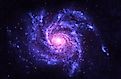
New Evidence Suggests Galaxies May Have Formed Earlier Than Thought
The James Webb Telescope has observed what could be the oldest galaxies, suggesting that galaxies formed much earlier than previously thought.
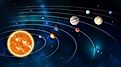
When Was Each Planet Discovered?
The existence of the classical planets has been known since ancient Babylon. Uranus was discovered in 1781 and Neptune was discovered in 1845.
Io: The Volcanic Moon of Jupiter
Io is the innermost of the four Galilean moons of Jupiter and is the fourth largest moon in the solar system. Io is also the most geologically active moon.
How Fast Is The Universe Expanding?
Ever since the universe formed 13.8-billion years ago, it has been expanding. That rate of expansion is about 73-kilometres per second per megaparsec.
How Strong Is Earth’s Gravity?
The Earth’s gravity averages at 32.2-feet per second squared (9.81-meters per second squared), yet it can vary depending on altitude and latitude.
How Many Moons Does Earth Have?
The Earth has one large moon, yet on occasion, an asteroid or meteor may fall into Earth orbit and become a small, temporary moon.
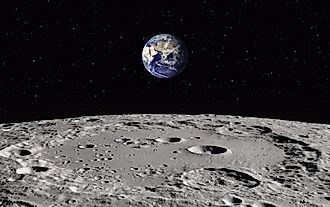
Once In 50,000 Years Comet Will Soon Be Visible
On February 1, 2023, the comet C/2022 E3 (ZTF) will pass near the Earth for the first time in 50,000-years, and will be visible in the Northern Hemisphere.
How Far Away Is Pluto?
Pluto orbits the sun at a distance of 3.7-billion miles (5.9-billion kilometres), yet that distance can vary significantly due to Pluto’s eccentric orbit.
How Many Humans Have Been To The Moon?
There has been a total of 24 people to have walked on the moon, all of which walked on the moon during the Apollo missions from 1969 to 1972.
How Big Is The Moon?
Earth’s moon is the fifth largest moon in the solar system with a diameter of 2,159-miles (3,475-kilometers), making it about 25% the size of Earth.
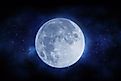
Scientists Find Planet Spiralling Towards Its Star
Scientists have uncovered an exoplanet spiralling towards its host star. Called Kepler-1658b, it will likely be engulfed by its star in 3-million years.
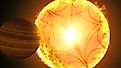
What Is The Largest Moon In The Solar System?
The largest moon in the solar system is Jupiter’s moon, Ganymede. With a diameter of 3,273-miles (5,268-kilometres), it is larger than the planet Mercury.
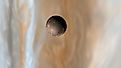
What Is The Farthest Planet From Earth?
The farthest known planet from Earth is Neptune, which orbits at an average distance of 2.7-billion miles (4.3-billion kilometres) from Earth.
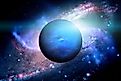
What Is The Closest Planet To Earth?
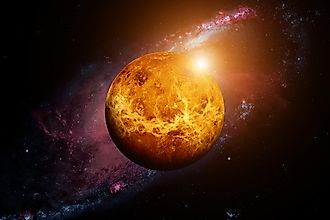
The closest planet to Earth varies between Mercury and Venus, yet Venus has the closest approach to Earth at 24-million miles (38-million kilometres).
How Old Is The Universe?
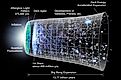
The universe is approximately 13.8-billion years old. This age is calculated through the age of the oldest stars and the rate of the universe’s expansion.
Are Saturn’s Rings Solid?
The rings of Saturn are not solid structures, but rather, they are composed of countless particles of rock, ice, and dust.
What Is The Oldest Planet Ever Found?
The oldest planet ever found is an exoplanet nicknamed Methusalah. It has an estimated age of 12.7-billion years, making it 2.8 times older than Earth.
What Is Jupiter Made Of?
Jupiter is the largest planet in the solar system and the fifth planet from the sun. As a gas giant, Jupiter is composed mostly of hydrogen and helium.
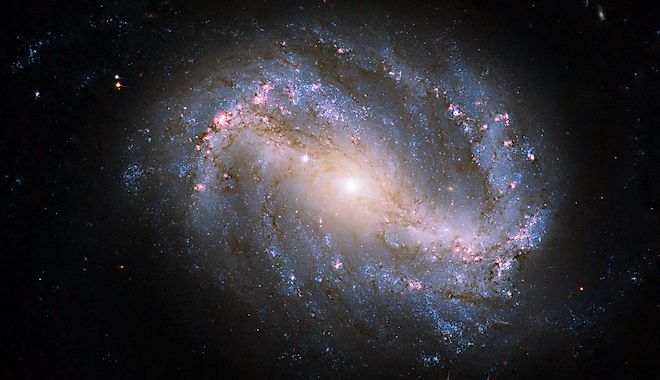
The Different Types of Galaxies
Galaxies are classified as one of four main types. There are spiral galaxies, elliptical galaxies, irregular galaxies, and peculiar galaxies.
How Much of the Universe is Dark Matter?
Dark matter is a mysterious form of matter that does not interact with regular matter except through gravity. It makes up 85% of all matter in the universe.
What Is The Smallest Planet In The Solar System?
The smallest planet in the solar system is Mercury, which has a diameter of 3,032-miles (4,879-kilometres), which is only 1.4 times larger than the moon.
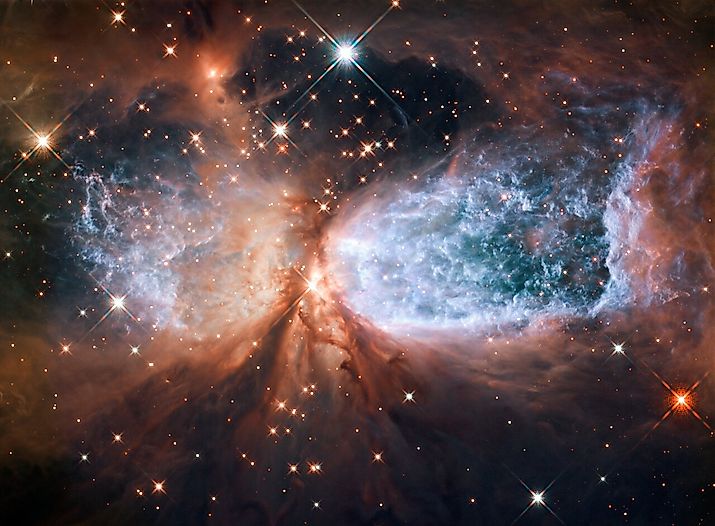
10 Stunning Images Taken By Hubble
The Hubble Space Telescope launched in 1990, and ever since then, it has given scientists thousands of unprecedented images of planets, stars, and galaxies.
How Mars Lost Its Atmosphere
Mars lost most its atmosphere and surface water due to a lack of a magnetic field. Without a magnetic field, solar radiation stripped Mars of its atmosphere.
Why Are Planets Round?
In order for an object to be a planet, one of the defining criteria is that it be spherical. Planets are round due to the force of gravity.
How Long Do Stars Live?
How long a star lives for is dependent on its mass and temperature. The lower a star’s mass and temperature, the longer it will exist for.
How Long Does It Take Sunlight To Reach Earth?
The sun is closest star to the Earth, yet it still takes sunlight approximately eight minutes to travel from the sun to the Earth.
How Old Is The Sun?
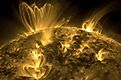
The sun has an estimated age of about 4.6-billion years. This number is calculate through the radiometric dating of asteroids in the solar system.
What Are Fast Radio Bursts?
Fast Radio Bursts (FRB) are bursts of radio waves that come from deep space. Despite hundreds detected, their origin remains a mystery.
What Are The Planets Made Of?
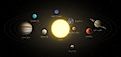
The planets are divided into three types: rocky, gas giant, and ice giant. These planet types are determined by composition.